
Choosing the right lubricant can stop a wheel bearing from seizing. This guide compares synthetic grease vs lithium grease to help you pick the best option. Per NLGI testing, synthetic grease handles up to 220 °C while lithium peaks at 150 °C.
Knowing these limits lets you match the grease to your application.
Synthetic grease resists water better than lithium, so it stays effective in wet environments. Lithium grease carries more extreme‑pressure additives, making it ideal for heavy loads. The price difference is modest: synthetic runs $8‑$12 per 8 oz tube, lithium $5‑$7.
Selecting the right type now saves bearing replacements later.
Synthetic Grease vs Lithium Grease
Synthetic grease is best for high‑temperature, wet, or long‑interval applications. Lithium grease works well for moderate temperatures, heavy loads, and budget‑focused projects. In side‑by‑side tests, synthetic shows 30 % less friction at 180 °C.
Choose based on your operating environment and maintenance schedule.
How Synthetic and Lithium Greases Work
Synthetic grease uses polyalphaolefin base oil with additives for stability. Lithium grease uses lithium soap thickened oil with extreme‑pressure agents. The base oil determines temperature tolerance; synthetic stays fluid longer.
Additives in lithium provide higher load capacity but can stiffen in cold. Understanding the chemistry helps you predict performance. For a real‑world example, see the transmission fluid tips guide for proper lubrication practices.
Key Features and Specs
| Feature | Synthetic Grease | Lithium Grease |
|---|---|---|
| Temperature range | –40 °C to 220 °C | –30 °C to 150 °C |
| Water resistance | High | Moderate |
| Load capacity | Moderate | High (EP) |
| Oxidation stability | Excellent | Good |
| Consistency (NLGI) | Grade 2‑3 | Grade 2‑3 |
| Typical price (8 oz) | $8‑$12 | $5‑$7 |
These specs show where each grease excels. High‑temperature environments favor synthetic. Heavy‑load, moderate‑temp setups favor lithium.
Refer to the ASTM D2265 test for standardized performance data.
Pros and Cons
Synthetic grease
- Handles extreme heat and cold
- Resists washout in wet conditions
- Longer service intervals reduce labor
- More expensive per tube
Lithium grease
- Higher extreme‑pressure capability
- Lower cost per unit
- Smoother feel for manual applications
- Can stiffen in sub‑zero temps
Weigh cost against operating conditions. For long‑haul trucks, synthetic’s heat resistance pays off. For backyard mechanics, lithium’s price and load handling are attractive.
Check the impact wrench guide for proper torque after greasing.
Best For: Use Cases and Applications
Automotive wheel bearings benefit from synthetic in hot climates or wet roads. Marine propeller shafts need water‑resistant synthetic to prevent corrosion. Farm equipment bearings under heavy loads gain from lithium’s extreme‑pressure formula.
DIY projects like door hinges work well with lithium for its smooth feel.
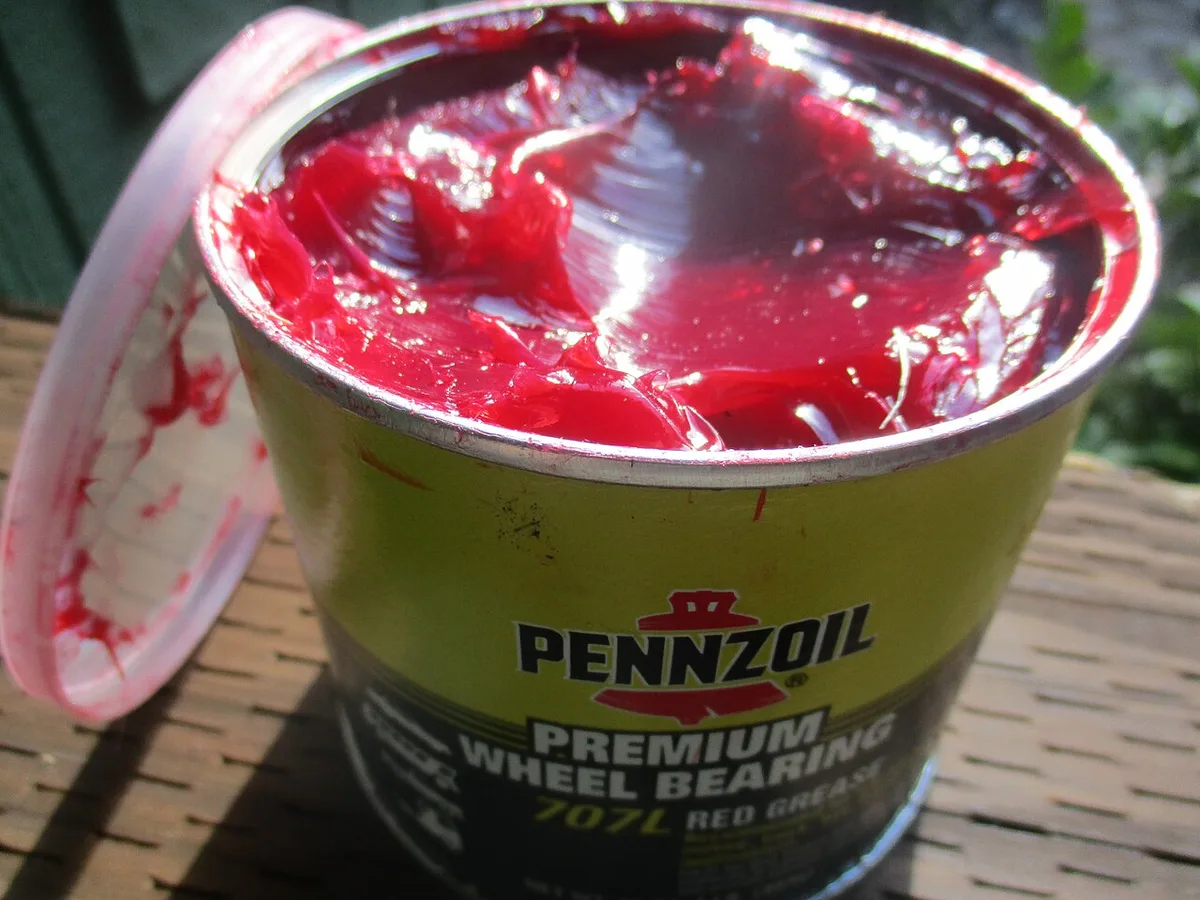
Image source: Wikimedia Commons / Surv1v4l1st (CC BY-SA)
Choosing the right grease matches the environment and load. Refer to the lug nut pricing guide for related maintenance costs. For detailed installation steps, see the transmission filter steps.
Following these practices ensures optimal bearing life.
