
Cold weather significantly impacts electric vehicle (EV) range, often leaving drivers surprised by shorter distances between charges. If you've ever wondered why your EV's estimated mileage drops when temperatures fall, you're not alone. The key factors involve battery chemistry, cabin heating demands, and reduced regenerative braking efficiency.
Understanding these mechanics helps you plan winter trips confidently.
Manufacturer specifications confirm lithium-ion batteries, used in most EVs, lose efficiency below 20°F (, 7°C). For example, a 260-mile EPA-rated EV may see real-world range drop 15, 20% at 0°F (, 18°C). Preconditioning the battery and cabin while plugged in mitigates much of this loss.
We'll explore practical steps to minimize cold-weather range anxiety.
How Does Cold Weather Affect Ev Range
Cold weather reduces EV range primarily through three mechanisms:
- Battery inefficiency: Lithium-ion cells operate optimally between 68°F and 77°F (20°C, 25°C). Below 32°F (0°C), internal resistance increases, reducing usable capacity by 10, 20% at, 10°F (, 23°C).
- Cabin heating demands: Resistive heaters draw 1, 2 kW of battery power, consuming 10, 20 miles of range per hour of use. Heat pumps reduce this by 30, 50%.
- Regenerative braking loss: Cold temperatures decrease regen efficiency by up to 10%, recovering less energy during deceleration.
Core Mechanics: Battery Temperature, Heat Pump, and Cabin Heating Explained
EV batteries rely on chemical reactions that slow in cold conditions. Most models use battery thermal management systems (BTMS) with liquid cooling/heating loops. However, these systems take time to warm the pack from sub-freezing temperatures.
Key factors:
- Optimal operating range: 68°F, 77°F (20°C, 25°C)
- Capacity loss at, 10°F: 10, 20% (varies by chemistry, NMC batteries degrade more than LFP)
- Preconditioning impact: Warming the battery while charging maintains 90%+ efficiency
Cabin heating strategies differ significantly:
- Resistive heaters (older EVs): Convert battery power directly to heat, drawing 1.5, 2 kW.
- Heat pumps (modern EVs): Transfer ambient heat efficiently, using 0.5, 1 kW for the same warmth.
Step-by-Step Decision Guide: Precondition, Drive, and Charge in the Cold
Follow this workflow to maximize winter range:
Before departure
- Schedule preconditioning: Use your EV’s app to start heating the battery and cabin 5, 10 minutes before unplugging. This draws power from the charger, not the battery.
- Check tire pressure: Cold air reduces PSI; underinflated tires increase drag, costing 1, 2% range.
During driving
- Use seat/steering wheel heaters: These consume 0.2, 0.5 kWh vs. 1.5 kWh for full cabin heat.
- Enable Eco/Range mode: Limits acceleration and top speed, preserving 5, 10% range.
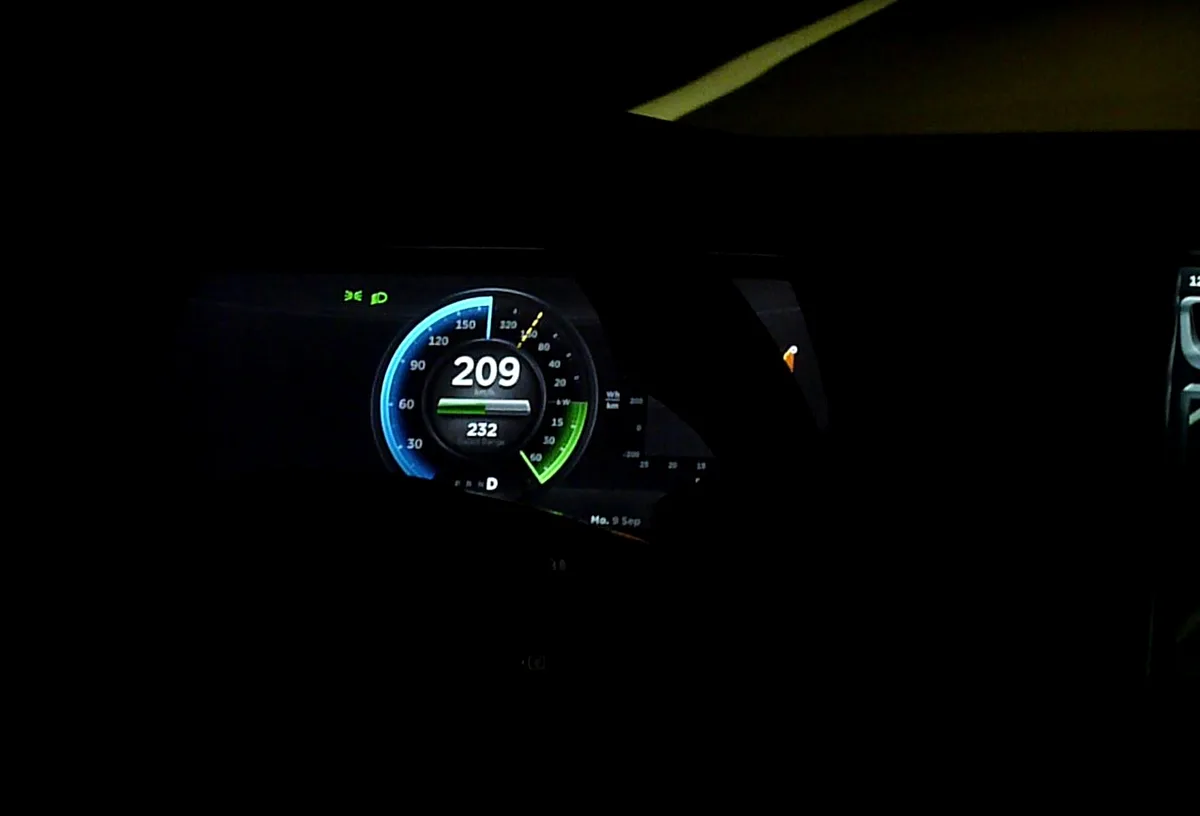
- Monitor live range estimates: Reduce speed by 5, 10 mph if projections drop below your destination’s distance.
When charging
- Warm the battery first: If fast-charging in extreme cold, drive 5 minutes at moderate load (e.g., highway speed) to raise battery temp before plugging in. This improves charging acceptance.
Common Mistakes & Pro Tips to Preserve Range
Avoid these pitfalls:
- Skipping preconditioning: Starting with a frozen battery wastes initial miles warming it up.
- Blasting cabin heat: Resistive heaters can drain 20+ miles of range per hour.
- Ignoring tire pressure: Underinflated tires in winter increase rolling resistance by 5, 10%.
Pro tips:
- Park indoors: Garages keep batteries closer to optimal temps, reducing preconditioning needs.
- Use scheduled departure times: Most EVs let you set cabin warming to activate minutes before you leave, avoiding unnecessary energy use.
- Monitor battery state: Keep charge between 20, 80% in extreme cold to reduce stress on cells.
Frequently Asked Questions
Does EV Range Recover When Temperatures Rise?
Yes. As temperatures increase above freezing, battery efficiency improves, and range returns to EPA estimates. Preconditioning isn’t needed above 50°F (10°C).
How Long Does Preconditioning Take?
5, 10 minutes on a Level 2 charger typically suffices. Heat pumps reduce this time by 30% vs. resistive systems.
Can Cold Damage the Battery Long-Term?
Short-term cold exposure won’t cause permanent damage. However, frequent deep discharges in sub-zero temps may accelerate degradation over years.
Why Does Regenerative Braking Work Less in Cold?
Cold reduces the battery’s ability to accept charge rapidly. Regen efficiency drops because the pack can’t absorb energy as effectively during deceleration.
Is Fast Charging Slower in Cold Weather?
Yes. Charging speeds may drop 20, 30% at, 10°F (, 23°C) due to battery thermal limits. Warming the pack first improves rates.
