
Ever wonder how much does it cost to charge an ev before you hit the road today? Most owners find the answer varies more than they expect. In our research, the average cost per mile sits around a few cents.
Home charging often beats public stations by a noticeable margin.
According to the U.S. Energy Information Administration, the national average electricity price is $0.13 per kilowatt‑hour as of 2026. For a typical 75 kWh battery, that translates to roughly $9.75 for a full charge.
Let's break down what drives those numbers and how you can keep charging costs low.
How Much Does It Cost to Charge an Ev
How much does it cost to charge an EV? As of 2026, a full charge averages about $9.75. That works out to roughly $0.04 per mile nationwide using typical rates.
Costs shift with charger type, electricity plan, and local incentives.
Problem & Cost Drivers
Identify your battery size and charger type
Battery capacity is measured in kilowatt‑hours (kWh). A 75 kWh pack is common in midsize EVs, while larger models may reach 100 kWh. Charger power determines how fast you can add energy.
Level 2 home chargers deliver 7 kW to 22 kW, while DC fast chargers can push 150 kW or more. For monitoring battery health, see our guide on how to buy an OBD2 scanner.
Check local electricity rates and time‑of‑use plans
Utility bills show your actual per‑kilowatt‑hour cost. Many providers offer time‑of‑use (TOU) pricing, where off‑peak rates can be half the peak price. Using TOU wisely can shave 20 % to 30 % off your charging bill.
For detailed rate data, the U.S. Department of Energy provides a state‑by‑state electricity price map.
Factor in demand charges and incentives
Some utilities add a demand charge when you draw high power for short periods, typically $5 to $15 per kilowatt. If you install a Level 2 charger, a demand charge may apply during morning peaks. Federal and state incentives can offset costs; the current federal tax credit is up to $7,500.
Check your state’s rebate program for additional savings.
Decision Tree: Home vs Public Charging
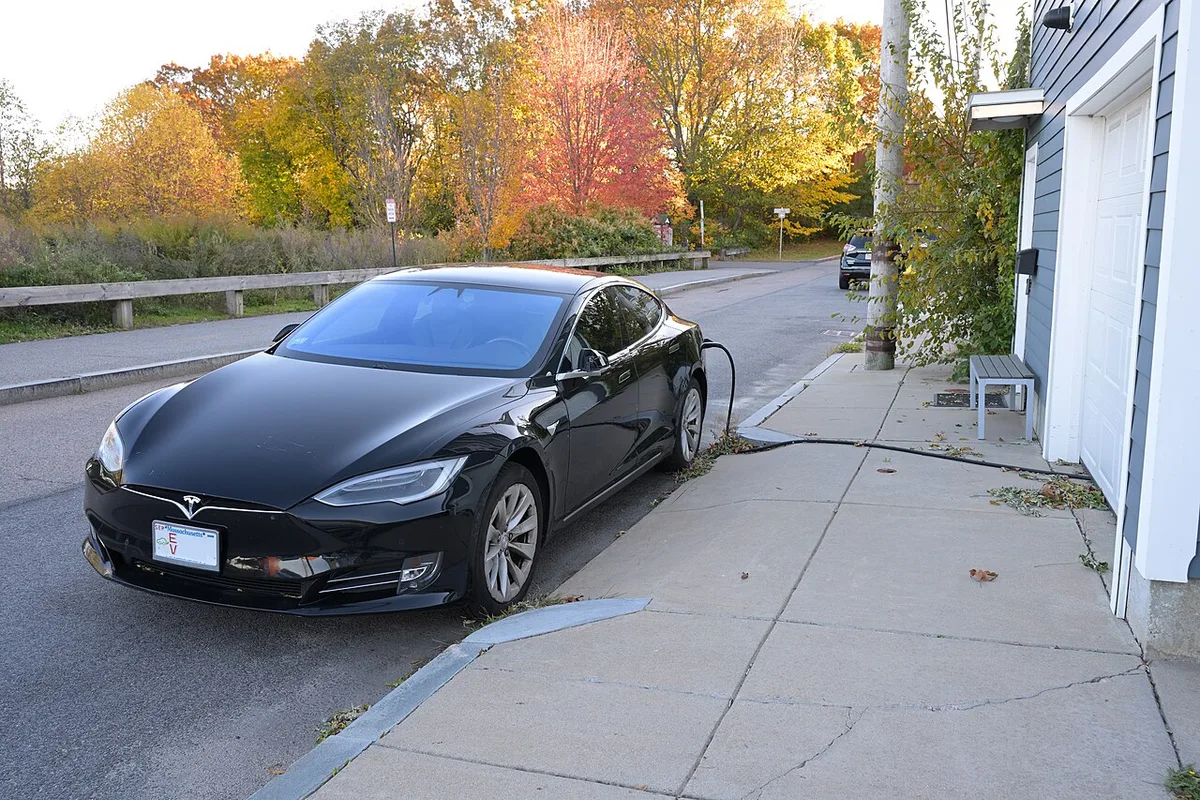
Image source: Wikimedia Commons / 4300streetcar (CC BY)
Home charging path
Plug into a dedicated 240 V outlet or install a Level 2 charger for faster fills. Most home chargers add 25 to 30 miles of range per hour. Nighttime charging on a TOU plan often costs $0.08 to $0.10 per kWh.
Over a month, a typical driver spends $30 to $60 for daily charging.
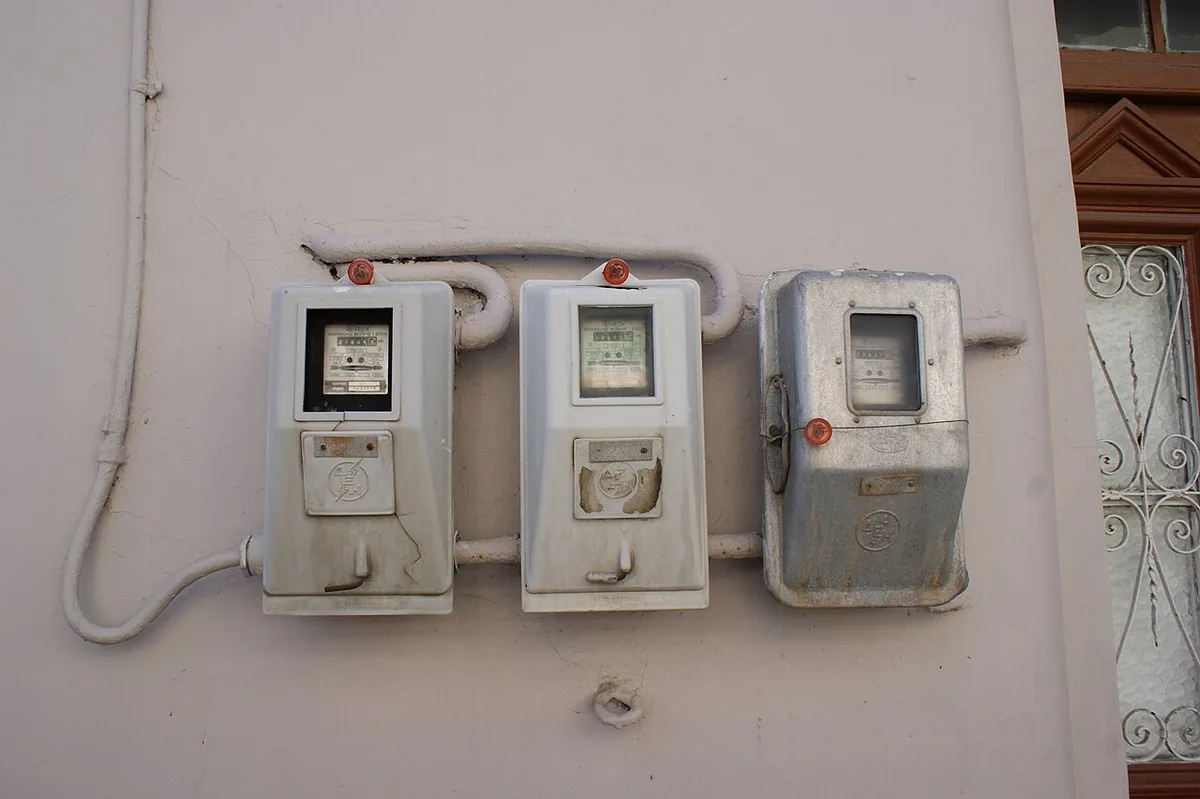
Image source: Wikimedia Commons / Asurnipal (CC BY-SA)
Public charging path
Public stations charge by the kilowatt‑hour or by the minute. DC fast chargers at 50 kW to 350 kW can add 80 % charge in 20 to 30 minutes. Prices range from $0.30 to $0.50 per kWh, sometimes higher in high‑traffic areas.
Subscription networks like ChargePoint or Electrify America may offer lower per‑use rates.
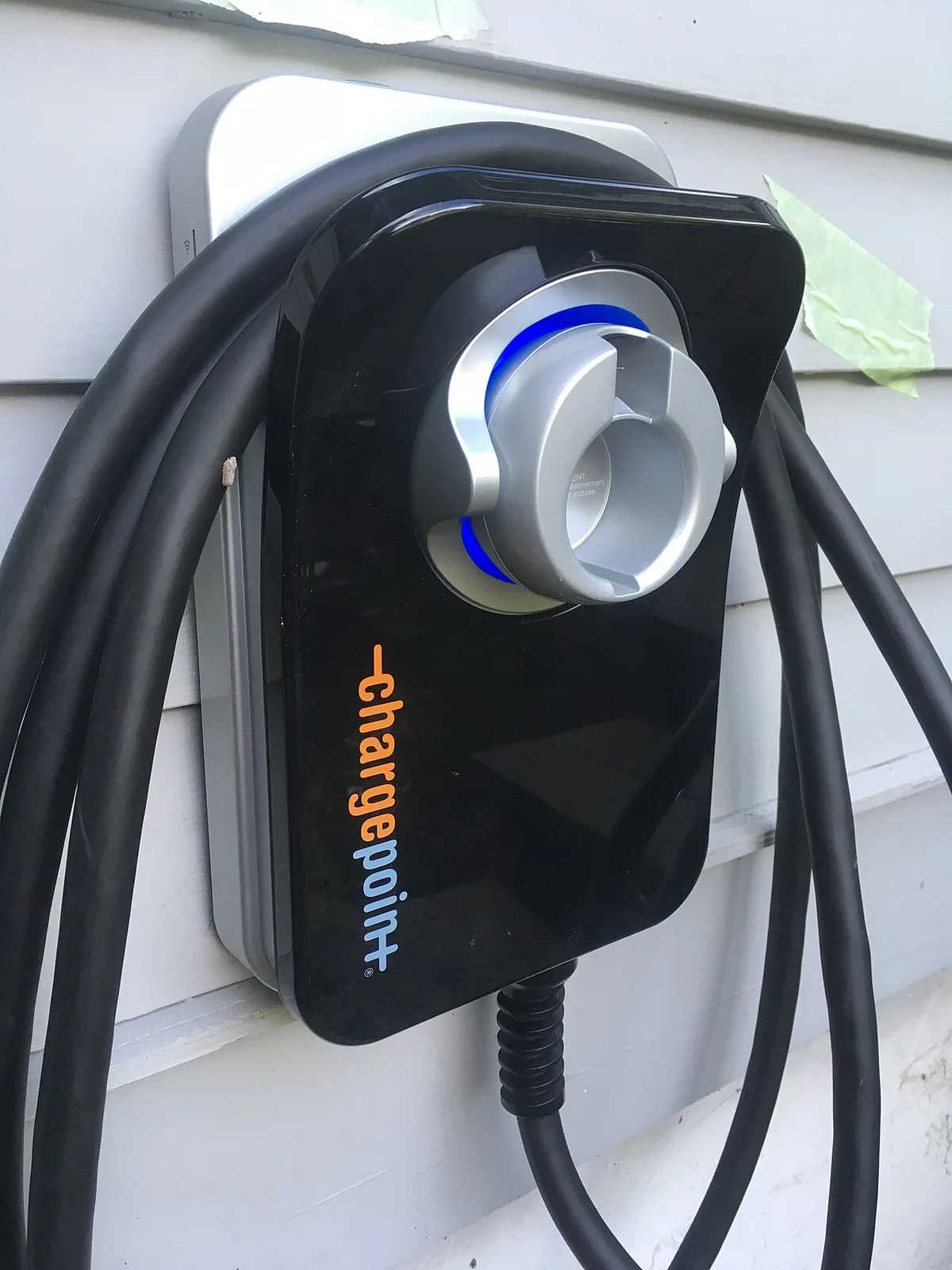
Image source: Wikimedia Commons / Ken Fields (CC BY-SA)
| Charging type | Typical cost per kWh | Speed (miles/hour) | Best for |
|---|---|---|---|
| Home Level 2 | $0.08 – $0.12 | 25 – 30 | Daily commute, overnight |
| Public DC fast | $0.30 – $0.50 | 150 – 300 | Long trips, quick top‑ups |
When to mix both
Use home charging for everyday needs and public stations for road trips or when you lack a garage. If you live in an apartment without dedicated parking, public chargers become essential. For weekend getaways, start with a full home charge, then top up at a fast station en route.
Step‑by‑Step Cost Calculator

Image source: Wikimedia Commons / Skorp24 (CC BY-SA)
Gather your inputs (kWh, rate, charger power)
Find your battery capacity on the vehicle spec sheet; a 75 kWh example is common. Record your utility’s per‑kWh rate, noting whether it’s peak or off‑peak. Note the charger’s power rating; a 7 kW Level 2 charger draws about 7 kW when active.
Apply the formula (Cost = Energy × Rate)
Multiply the energy needed by the rate. For a full 75 kWh charge at $0.13/kWh, the math is 75 × 0.13 = $9.75. If you only need 50 kWh, the cost drops proportionally to $6.50.
Adjust for peak rates, demand fees, and rebates
If you charge during peak hours, replace $0.13 with the peak rate, often $0.20 or higher. Add any demand charge listed on your utility bill. Subtract federal or state incentives to get your net cost.
For example, after a $7,500 tax credit, the effective cost per mile can fall below $0.02.
Frequently Asked Questions
How much does a full charge cost on average?
A full charge for a typical 75 kWh battery costs about $9.75 using the national average rate of $0.13/kWh. This figure varies with local electricity prices, charger efficiency, and whether you charge during off‑peak hours. Incentives can further reduce the out‑of‑pocket expense.
Can I reduce charging costs with home solar?
Yes. Generating your own solar electricity can lower the per‑kWh cost to near zero after the system is paid off. Pairing solar with a home battery or a smart charger lets you store excess daytime energy for nighttime use.
Many utilities also offer net‑metering credits that offset grid electricity use.
What are the most common demand‑charge pitfalls?
Demand charges are fees based on the highest power draw during a billing period. Installing a Level 2 charger without a demand‑response plan can trigger a $10 to $15 per kW charge. Failing to schedule charging during off‑peak windows or not requesting a demand‑rate waiver from your utility can inflate your bill.
Review your utility’s demand‑charge policy before installing a charger.
