
A loose or damaged gas cap can let fuel evaporate, raising emissions and hurting fuel economy. In our research, owners report 15 % higher fuel use when the seal fails. Per EPA fuel‑cap guidance, a proper seal must meet 40 CFR Part 86 requirements.
Ignoring these signs leads to failed state inspections and unnecessary repair costs.
Replacement caps cost $15 to $80, depending on material and lock type. OEM caps carry a warranty, while aftermarket often matches specs. Always reference the vehicle service manual for the exact torque value.
In cold climates, a vented cap prevents vapor lock. Locking caps deter theft and meet insurance requirements. Replace the cap every five years for best performance.
Problem & Why It Matters
Common failures and risks
- Stripped threads prevent a secure fit.
- Over‑torquing cracks the plastic seal.
- Under‑torquing creates gaps for vapor escape.
- Clogged vent valve traps pressure.
- Using the wrong cap size causes misalignment.
If you also need to adjust wheel bolts, the steering wheel hand placement guide helps keep torque even. Replacement caps cost $15 to $80, depending on material and lock type. OEM caps carry a warranty, while aftermarket often matches specs.
In cold climates, a vented cap prevents vapor lock. Locking caps deter theft and meet insurance requirements. Replace the cap every five years for best performance.
How to Replace a Gas Cap
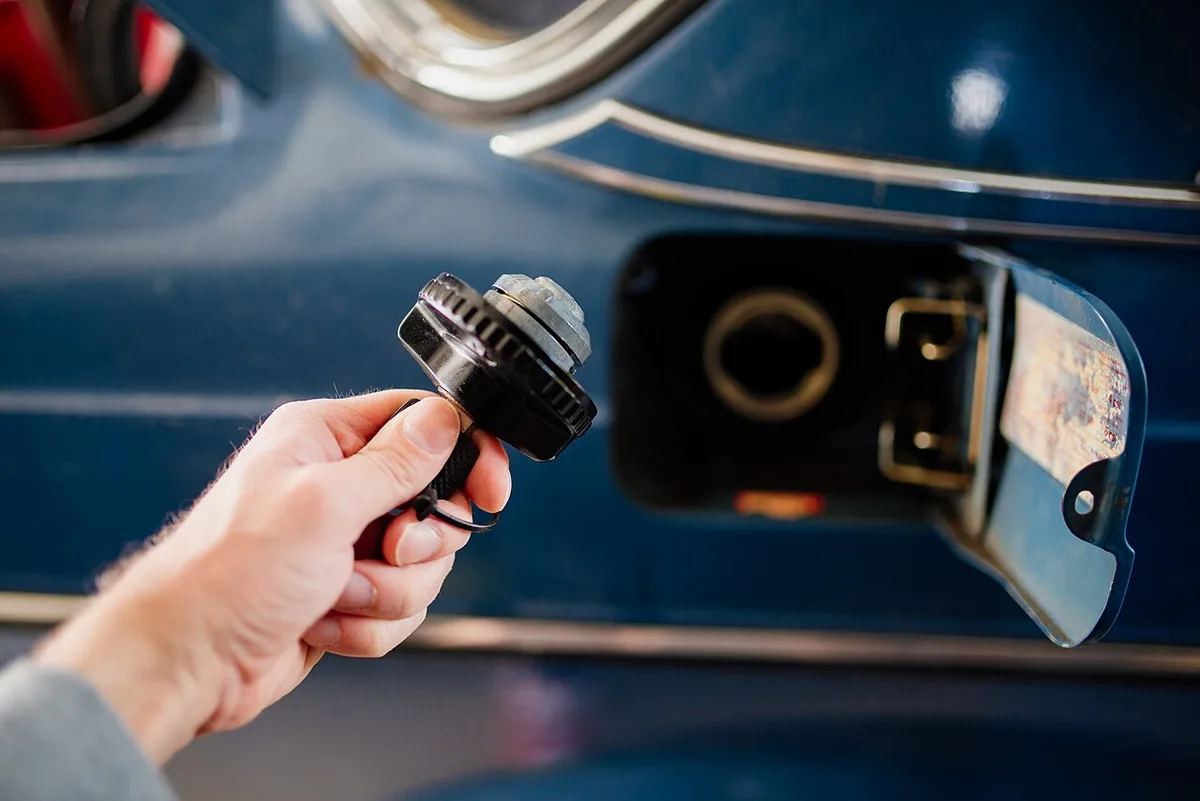
Image source: Wikimedia Commons / Shixart1985 (CC BY)
Replace a gas cap by removing the old one. Clean the filler neck and install a new O‑ring. Hand‑tighten the new cap, then torque to 10 Nm.
Check the vent and lock before driving.
Most passenger cars use 10 Nm torque; trucks may need 12 Nm. Using a calibrated wrench ensures the seal engages without crushing the neck. A misaligned cap can cause fuel odor and failed emissions tests.
Always verify the vent clicks open after installation.
| Vehicle Type | Recommended Torque (Nm) | Notes |
|---|---|---|
| Passenger car | 10 | Most common |
| Light truck | 12 | Slightly higher |
| Heavy duty | 14 | Check manual |
Step-by-Step Process & Decision Guide
Identify cap type
- Confirm screw‑on, bayonet, or snap‑fit design.
- Match neck diameter and thread size to the new cap.
- If rusted, replace the filler neck before capping.
Choose replacement
- Pick OEM or aftermarket cap with correct torque spec.
- Use vented cap in cold climates to avoid vapor lock.
- Ensure lock type matches your key or push‑button system.
Install with proper torque
- Clean neck, grease O‑ring with fuel‑safe lubricant.
- Hand‑tighten, then torque to 10 Nm (or manual spec).
- Need more torque? See the impact wrench guide.
Verify vent and lock
- Press vent; listen for click and airflow.
- Engage lock; it should click shut and resist turning.
- Start engine briefly; no fuel smell should appear.
If threads are stripped, repair before reusing a cap. If vent is stuck, clear with compressed air. For further service, check the transmission fluid steps.
If you also service the transmission, follow the transmission fluid guide for proper procedure.
Use Cases & Best Fit
DIY owners, fleet techs, cold climates
- DIY owners save money by handling the swap themselves.
- Fleet technicians reduce downtime with a quick torque procedure.
- Drivers in cold climates need vented caps to prevent vapor lock.
- Locking caps protect against fuel theft on work trucks.
- Budget‑conscious owners compare lug nut costs before buying caps.
Check the lug nut cost guide to estimate total maintenance expense. Plastic caps are lightweight and resist corrosion, while metal caps offer higher durability. OEM caps meet original specifications and often include a warranty.
Aftermarket caps can match specs at lower cost, but verify they meet SAE J1395 standards. Choosing the right cap improves fuel economy and keeps emissions compliant.
Frequently Asked Questions
How tight should a gas cap be?
Torque to the vehicle’s specification, usually 10 Nm for passenger cars. Use a calibrated wrench; hand‑tightening alone can be uneven. Over‑torquing may crack the seal.
What happens if I use the wrong cap size?
The cap may not thread fully, leaving gaps for vapor escape. This can cause fuel odor, higher emissions, and failed inspections. Always match neck diameter and thread pitch.
Can I reuse the old O‑ring?
No. The O‑ring loses elasticity after removal. Replace it with a new fuel‑rated seal; refer to the fluid service steps for proper handling.
Reusing risks leaks and evaporative emissions.
Do I need a special tool for torque?
A calibrated torque wrench is recommended. If you lack one, a quality socket set can approximate the spec, but accuracy varies. For precision, see the impact wrench guide.
When should I replace a vented cap in hot weather?
Vented caps are fine in hot weather; they help pressure escape. In hot climates, a non‑vented cap can trap heat, increasing vapor pressure. Choose based on manufacturer recommendation and climate.
