
An automatic transmission works by using a torque converter and planetary gears to shift ratios automatically. You can drive without pressing a clutch pedal.
Manufacturer specifications indicate that modern units have 8 to 10 forward gears plus reverse. This setup lets the engine run efficiently at different speeds. We’ll explore the components and power flow next.
How Does an Automatic Transmission Work
An automatic transmission works by using a torque converter to multiply engine torque at startup. It then uses planetary gears to change ratios as speed increases.
The system applies clutches based on speed and load. This happens automatically as you drive.
The lock-up clutch can eliminate slip at cruise. Overall, it provides smooth operation.
Why a Cutaway Explains an Automatic Transmission Better Than a Parts List
A parts list only tells you what is inside the case. It does not show how the parts move and interact during operation.
A cutaway view reveals the torque converter in action. You can see the impeller spinning and the stator redirecting fluid for torque multiplication.
This visual makes it clear how the system couples and uncouples without driver input. Without images, understanding the power flow becomes difficult.
Cutaway diagrams from manufacturer manuals illustrate the exact sequence of clutch apply and gear selection. They help you grasp why shifts feel seamless under load.
To see the difference, compare a static photo to a cutaway animation of the torque converter stall and coupling. The dynamic view shows the fluid redirection and one-way clutch freewheeling.
We recommend looking at these diagrams before attempting any fluid checks or repairs. They clarify the complex process without guessing.
For more on related car maintenance, see how to add transmission fluid.
Follow the Power From the Flexplate Through the Torque Converter
The power starts at the engine crankshaft. It transfers to the flexplate, which bolts to the torque converter housing.
Inside the converter, the impeller pushes fluid to spin the turbine. The stator then redirects the fluid for torque multiplication at stall.
As the turbine speeds up, the stator freewheels. This process continues until the lock-up clutch engages.
The converter housing connects to the input shaft. It delivers power to the valve body and pump.
This sequence explains why the engine revs do not drop when you accelerate from a stop. Manufacturer diagrams show this exact path in cross section.
The fluid coupling starts at stall speed around 1500 to 2500 rpm. It transitions to coupling mode as turbine speed rises.
For reference, per SAE International standards for transmission testing, this power path remains consistent across most passenger vehicles.
If your symptoms involve engine interaction, check why do my spark plugs have oil on them.
How a Planetary Gearset and Clutch Packs Pick Each Ratio
The planetary gearset uses a sun gear, planet carrier, and ring gear to create different ratios. Holding elements fix the carrier or ring to produce each gear step.
To hold the carrier, a brake band stops the planets from rotating. This makes the sun gear drive the output at a reduced speed.
For other ratios, different clutches engage the ring or sun. Each combination creates unique ratios for acceleration and cruising.
Holding the sun, carrier, or ring
For low gears, the carrier is held by a brake band. The ring gear then drives the output.
For high gears, the ring gear is held. The sun gear drives the output directly.
The sun gear is held for reverse. This setup gives the needed reduction ratio.
Valve body, solenoids, and the lock-up clutch
The valve body routes hydraulic pressure to the clutches and bands. Solenoids control the pressure for smooth apply.
The lock-up clutch engages the turbine to the cover for direct drive. This eliminates slip during cruising.
The transmission control module sends signals based on speed and throttle inputs. It commands the exact clutch engagement for each shift.
For routine maintenance, see how to change automatic transmission fluid filter.
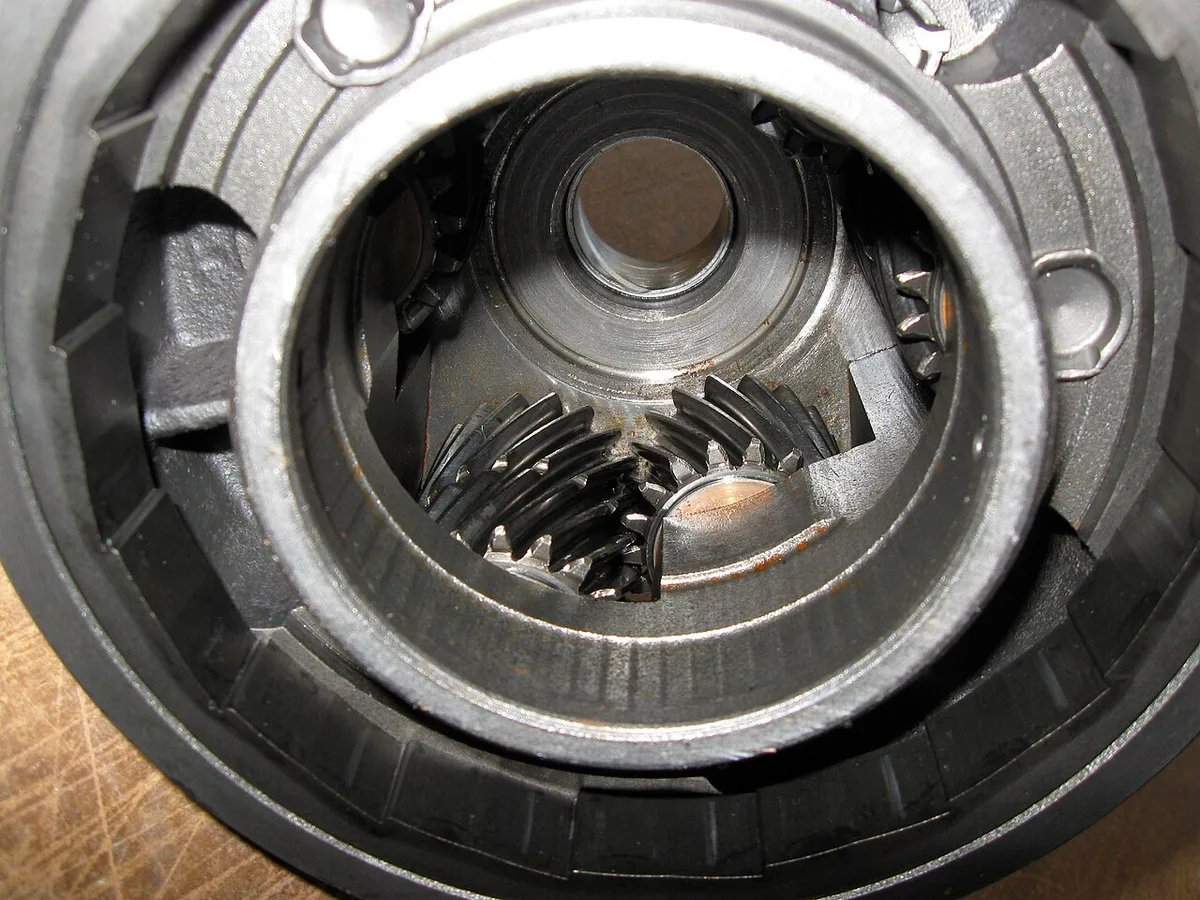
Image source: Wikimedia Commons / Elacy (CC BY-SA)
What the Diagram Gets Wrong When a Shift Flares, Shudders, or Delays
Many diagrams show ideal conditions. They do not show what happens when clutches slip or fluid pressure drops.
A flare happens when the engine revs rise between gears. This indicates a slipping clutch pack.
Shudder often comes from partial lock-up issues or worn multi-plate packs. Delays occur from low line pressure or bad solenoids.
These problems rarely appear in basic cutaways. Real-world symptoms require checking actual fluid condition and pressure.
If your vehicle shows these issues, an OBD2 scanner can help map the exact shift point.
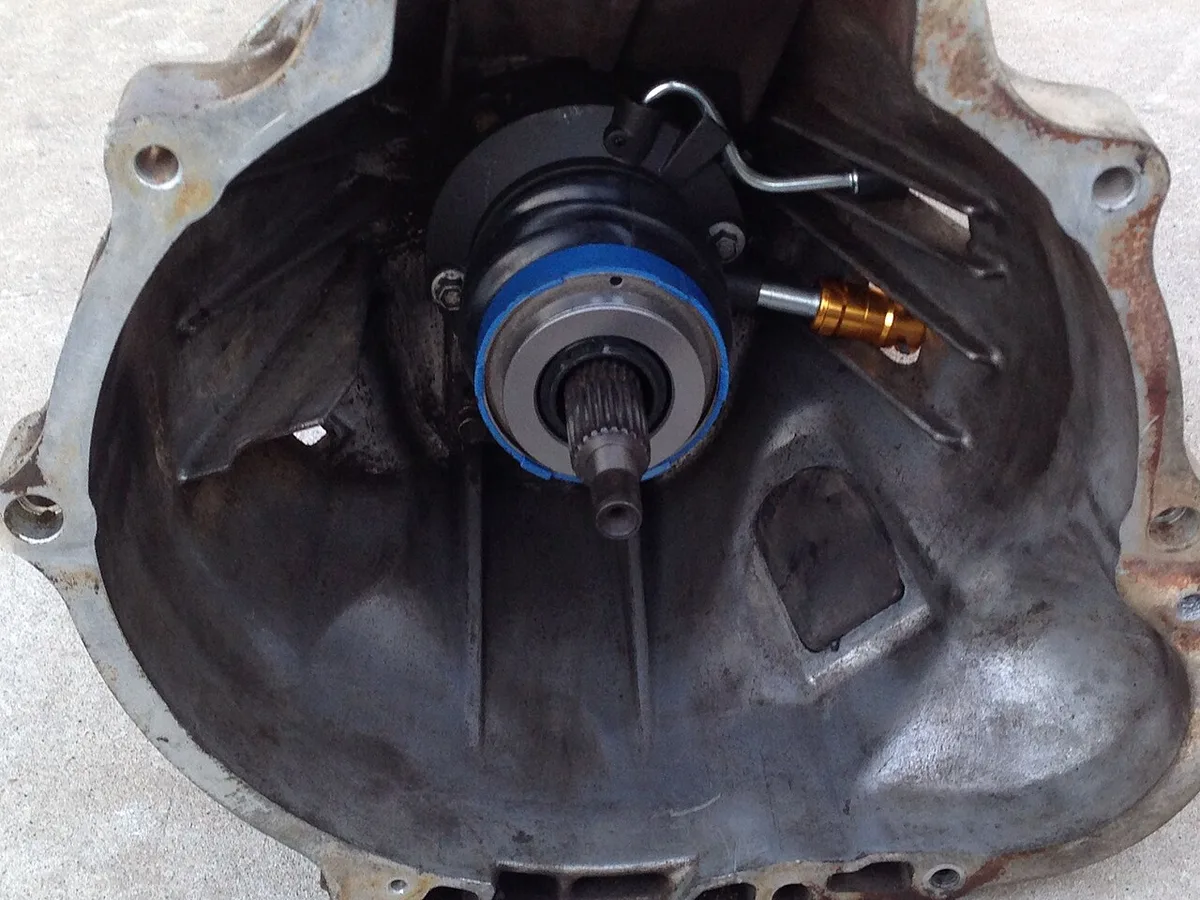
Image source: Wikimedia Commons / J.C. Fields (Talk) (Uploads) (CC BY-SA)
Common errors include ignoring the one-way sprag in the stator. Diagrams often omit the accumulator cushioning that prevents harsh shifts.
Per the Bosch Automotive Handbook, pressure mapping reveals valve body wear long before the car fails.
For more on car recovery and towing, see what is car recovery point.
FAQ
How does an automatic transmission differ from a manual
An automatic uses a torque converter and planetary gears instead of a clutch pedal and shift lever. It shifts ratios automatically based on speed.
Why does my transmission shudder at low speeds
Shudder often comes from partial lock-up clutch slip or fluid contamination. Check the fluid level and condition first.
What fluid should I use in my automatic transmission
Use the manufacturer specified ATF like Dexron or Mercon. Wrong fluid can cause shifting issues or damage.
How often should I change the transmission fluid
Change per manufacturer interval, often every 30,000 to 60,000 miles. Dirty fluid leads to overheating and wear.
Can I add transmission fluid myself
Yes, but check level with engine running and in Park. Low fluid causes delayed engagement.
What causes delayed engagement in reverse
Worn clutches or low fluid level are common causes. See how to add transmission fluid if needed.
