
Replacing a tire pressure monitoring system sensor restores accurate alerts and keeps your vehicle safe. In our research, mismatched frequency is the top cause of persistent TPMS warnings. Per FMVSS 138, sensors must report pressure within 2 % accuracy.
This guide walks you through selecting the right part and completing the job safely.
How to Replace a Tpms Sensor
Remove the wheel and old sensor. Install a compatible new sensor. Torque the valve stem to 90 in‑lb.
Reprogram the TPMS module. Verify readings with a gauge.
Choose the Right Sensor for Your Vehicle
TPMS sensors come in direct and indirect types. Direct sensors mount on each valve stem and report pressure individually. Indirect sensors infer pressure from wheel speed changes.
Choose a sensor that matches your vehicle’s 315 MHz or 433 MHz frequency.
OEM sensors carry the original manufacturer’s warranty and are pre‑programmed. Aftermarket sensors cost less but may need manual ID programming. Our research shows aftermarket units meet FMVSS 138 when sourced from reputable brands.
For tightening the valve stem, see tightening lug nuts to spec.
Consider valve stem style and torque requirements. Snap‑in sensors use a spring‑loaded valve; screw‑on sensors require a threaded stem. The following table compares common sensor types.
| Sensor Type | Valve Style | Typical Torque |
|---|---|---|
| OEM Snap‑in | Spring‑loaded | 90 in‑lb |
| Aftermarket Snap‑in | Spring‑loaded | 90 in‑lb |
| Screw‑on | Threaded | 90 in‑lb |
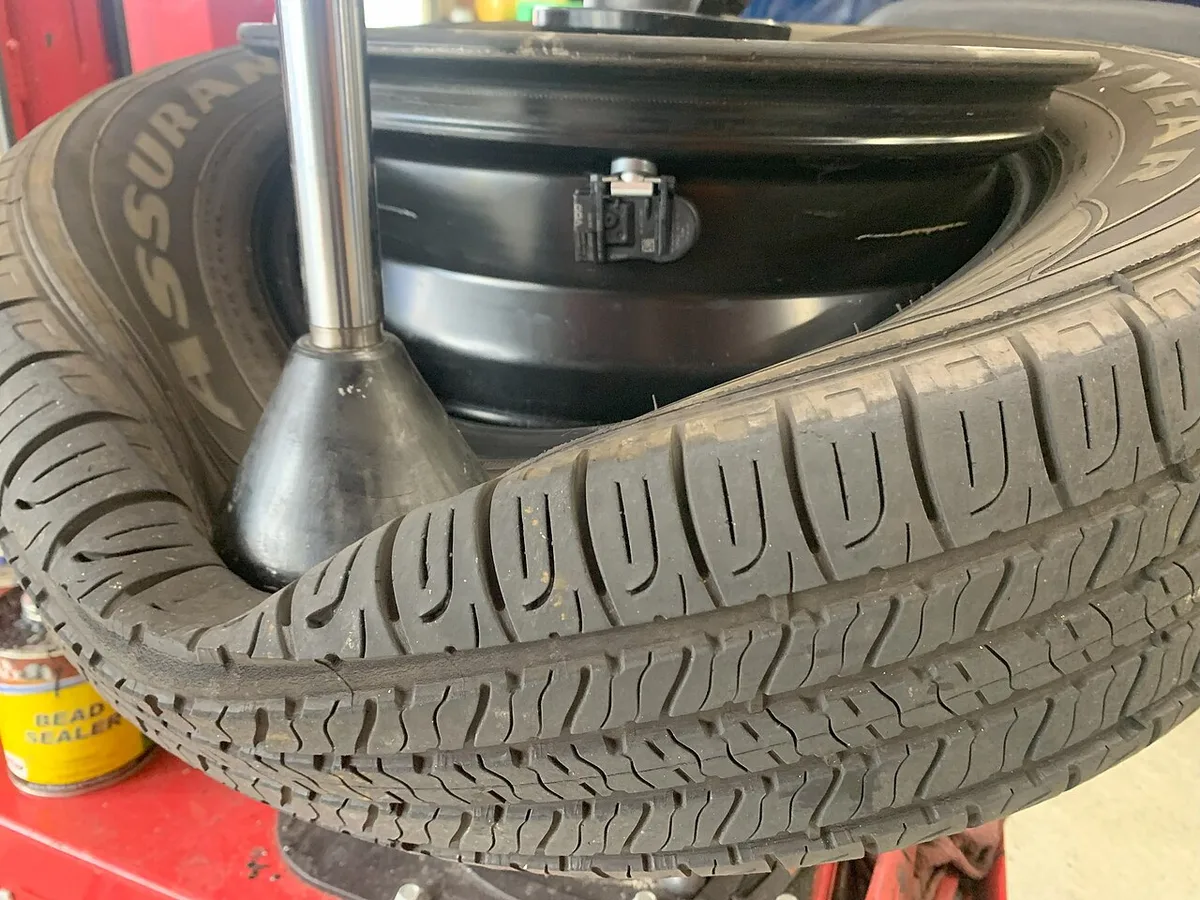
The image shows a valve stem with a snap‑in sensor installed. Visual cues help confirm correct orientation before tightening.
Per NHTSA TPMS guidelines, mismatched frequency can trigger false alerts. Verify the new sensor’s ID matches the vehicle’s TPMS module before final torque.
Step-by-Step Replacement Workflow
Gather tools: a socket set, torque wrench, valve core tool, and a jack. Wear safety glasses and gloves. Per manufacturer specifications, the valve stem should be torqued to 90 in‑lb.
- Loosen lug nuts, then jack the vehicle and remove the wheel.
- Deflate the tire completely and pull the valve stem core.
- Remove the old sensor, inspect the stem for damage.
- Install the new sensor, torque the valve stem to spec.
- Inflate the tire to the recommended pressure.
- Reinstall the wheel, lower the vehicle, and torque lug nuts.
| Step | Action | Approx. Time |
|---|---|---|
| 1 | Remove wheel | 5 min |
| 2 | Replace sensor | 5 min |
| 3 | Inflate tire | 2 min |
| 4 | Reinstall wheel | 5 min |
| 5 | Test drive | 10 min |
After reinstallation, perform a short test drive. Verify the TPMS light turns off and the gauge reads within 2 % of the set pressure. If the light stays on, reprogram the sensor using a scan tool.
For fluid level checks after the job, refer to keeping the correct fluid level before each season.
Mistakes to Avoid & Safety Checklist
Never reuse a damaged valve stem; it can leak air. Do not install a sensor with the wrong frequency; the TPMS will stay in error mode. Avoid over‑torquing the valve stem; it can crack the seal.
Always wear gloves when handling the sensor battery.
- Check valve stem condition before installing the new sensor.
- Confirm sensor ID matches the vehicle’s TPMS module.
- Use a calibrated torque wrench for the final torque.
- Perform a test drive after installation to confirm proper function.
Per SAE technical recommendations, a sensor that is not programmed will cause the TPMS warning to remain illuminated. Keep the work area clean to avoid dropping tools into the wheel well.
FAQs
How long does a TPMS sensor last?
Manufacturers specify a service life of 5 to 7 years or 60,000 to 100,000 miles. Battery wear and exposure to temperature extremes can shorten that span. Replace the sensor when the TPMS light stays on after a proper inflation check.
Do I need a special tool to program the sensor?
Most aftermarket sensors require a handheld programmer or an OBD‑II scan tool. OEM sensors often come pre‑programmed, but a scan tool is still needed to confirm the ID. Using the correct tool ensures the TPMS module recognizes the new sensor.
Can I reuse the old valve stem?
Reuse is possible only if the stem shows no corrosion, cracks, or thread damage. A damaged stem can cause leaks and void the sensor’s seal. Inspect closely; replace the stem if any defect is visible.
What happens if I install the wrong frequency sensor?
The TPMS control module will not receive valid signals, leaving the warning light on. The system may also misinterpret data from other wheels. Always match the vehicle’s specified frequency before final torque.
