
Common Oil Leak Symptoms & When to Replace
Spotting oil stains, cracked valve cover, and reduced lubrication
Valve Cover Gasket Materials & Visual Identification
Rubber vs. silicone vs. reinforced composite – what to look for
Matching OE vs. aftermarket gasket types
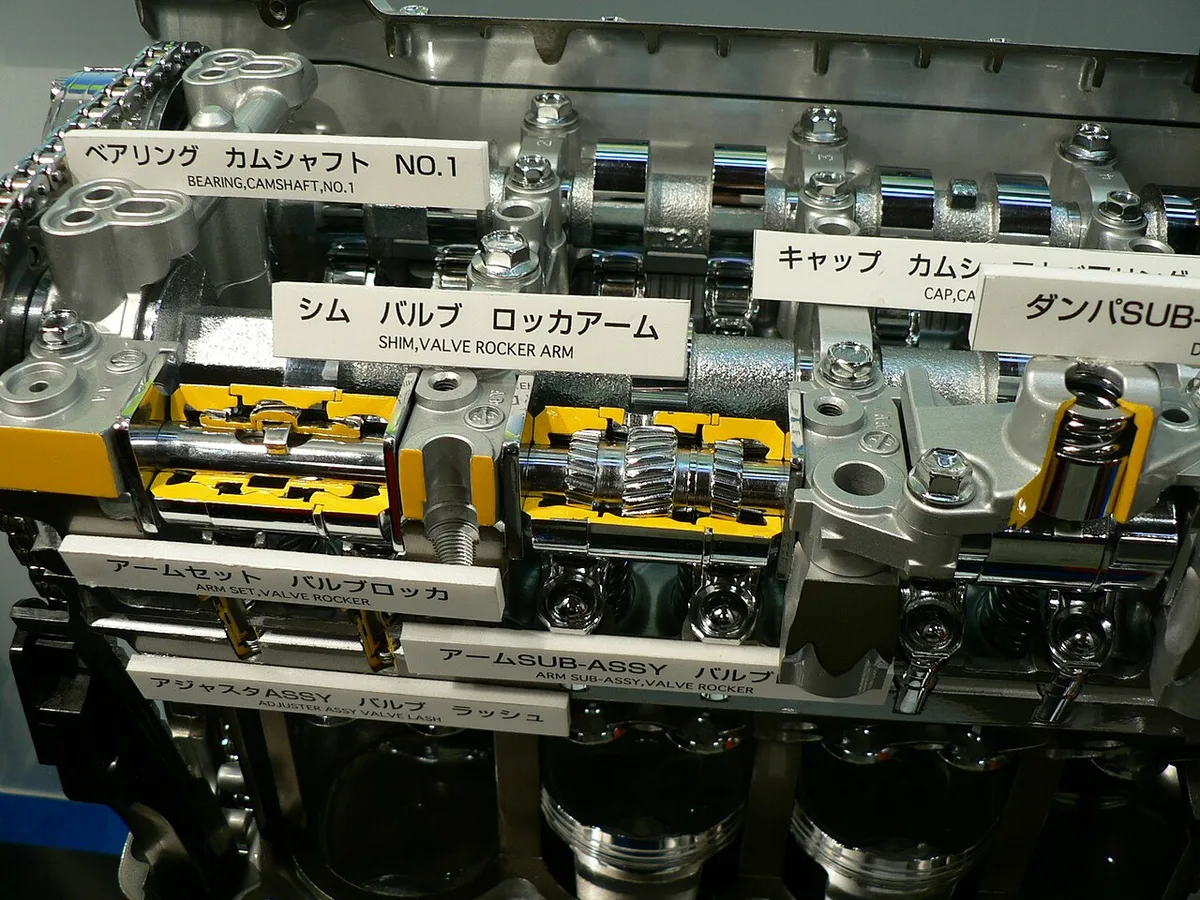
Image source: Wikimedia Commons / 160SX (talk) (CC BY-SA)
Safety Precautions & Preparation
Battery disconnect, wheel chocks, and protective gear
Required tools: torque wrench, socket set, scraper, brake cleaner
Step-by-Step Visual Removal Process
Removing bolts: torque sequence and star pattern
Cleaning mating surface: visual cues of old gasket residue
Inspecting valve cover for warping or damage
Gasket Installation & Reassembly Checklist
Placing the new gasket: OE placement vs. aftermarket kit
Torque specifications per engine (Toyota 2AZ‑FE, Ford 5.4L)
Leak test: visual signs of proper seal
Common Mistakes & Visual Pitfalls
Over‑torquing bolts: cracked cover or stripped threads
Mis‑aligned gasket: pinching or gaps
Skipping cleaning: residual oil causing leaks
Frequently Asked Questions
How long does the job take and what tools are essential?
Can I reuse the old valve cover if it’s not warped?
What are the torque specs for common engines?
