
A cracked or leaking fuel line can turn a routine drive into a safety hazard. You’ll notice a strong gasoline smell, puddles under the car, or the engine sputtering unexpectedly. Ignoring these symptoms of a bad fuel line can lead to fuel fires or costly engine damage.
Quick action saves both money and peace of mind.
Per SAE J30, fuel lines on gasoline engines are rated for a minimum of 30 psi and often up to 80 psi. In our research, vehicles with visible leaks typically show pressure drops below this threshold. Knowing these signs lets you move straight to the diagnosis steps below.
7 Warning Signs of a Bad Fuel Line
Symptoms of a Bad Fuel Line
A bad fuel line shows leaks, cracks, or strong fuel odor.
Engine may misfire, idle rough, or stall unexpectedly.
Fuel pressure often falls below the 30 psi minimum.
Visible wetness around connections indicates a failing hose.
Replace the line immediately to prevent fire hazards.
How a Fuel Line Works and Why It Fails
The fuel line carries gasoline from the tank to the engine under pressure. It consists of a flexible hose, often reinforced rubber, nylon, or stainless steel, plus fittings and clamps. Over time, heat, vibration, and fuel chemistry can degrade the material.
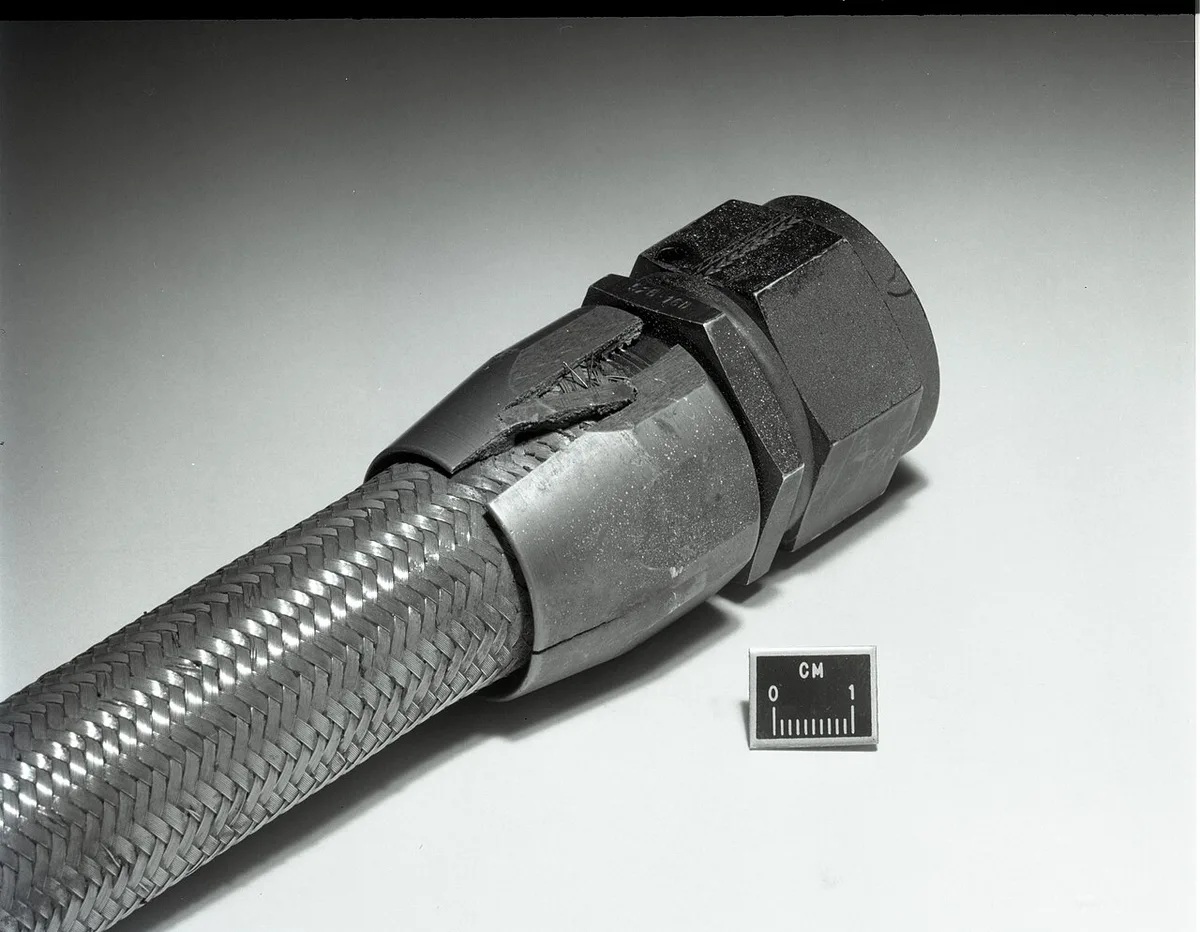
Image source: Wikimedia Commons / Martin Brown
Cracks typically start where the hose bends or contacts sharp edges. Pressure fatigue can cause pinhole leaks after years of service, especially on high‑performance applications. Ethanol‑blended fuel accelerates swelling and cracking in rubber lines.
| Material | Typical Pressure Rating | Temperature Range | Common Use |
|---|---|---|---|
| Reinforced rubber | 30‑50 psi | –40 °F to 200 °F | Standard gasoline lines |
| Braided nylon | 50‑80 psi | –20 °F to 250 °F | High‑performance, ethanol |
| Stainless steel | 80‑100 psi | –40 °F to 300 °F | Diesel, extreme heat |

Image source: Wikimedia Commons / Kim Shiflett
Before you replace the line, verify the transmission fluid level to ensure the system is sealed. If the engine misfires, also check spark plug condition for related issues. Refer to the SAE J30 standard for detailed test requirements.
Step-by-Step Diagnosis and Replacement
- Relieve fuel pressure by disconnecting the battery and opening the fuel cap.
- Inspect all connections for cracks, abrasion, or wet spots.
- Attach a fuel pressure gauge; readings below 30 psi indicate a leak.
- Use an impact wrench to remove stubborn clamps quickly.
- Pull the old line off fittings; catch any remaining fuel in a pan.
- Install the new fuel line, torque clamps to manufacturer spec, and reconnect the battery.
- Start the engine and watch for leaks; replace the fuel filter to prevent debris from entering the new line.
- Lift the vehicle safely on sturdy ramps before accessing the line for final checks.
Image source: Wikimedia Commons / Cjp24 (CC BY-SA)
After installation, run the engine at idle and then rev to confirm stable pressure. If the check‑engine light stays on, re‑inspect for loose connections. Keep a fire extinguisher nearby throughout the process.
Safety, Legal, and Compliance Must‑Knows
Wear safety glasses, gloves, and fire‑resistant clothing at all times. Fuel vapors are highly flammable; work in a well‑ventilated area away from open flames. Dispose of old fuel and hoses according to local hazardous waste regulations.
Check the NHTSA recall database for any active recalls on your vehicle’s fuel system. If you’re unsure about fluid levels, refer to the manufacturer’s service manual for exact specifications. When in doubt, have a certified technician perform the replacement.
FAQs About Fuel Line Issues
Can I repair a cracked fuel line?
A cracked fuel line should be replaced rather than repaired. Temporary fixes can leak under pressure and create fire hazards. Use a new hose rated for your vehicle’s pressure and temperature.
If you lack tools or experience, seek professional help.
How often should I replace the fuel hose?
Most manufacturers recommend replacement every 30,000 to 50,000 miles or when cracks appear. Severe heat, ethanol fuel, or frequent vibration can shorten that interval. Inspect the hose during routine maintenance and replace at the first sign of wear.
What pressure rating do I need for my engine?
Select a hose rated at or above your engine’s peak operating pressure. Gasoline engines typically run 30‑50 psi; high‑performance or diesel engines may need 80‑100 psi. Always match the rating in the service manual.
Do I need a special tool for fuel line clamps?
Standard hose clamps can be tightened with a screwdriver or socket. Quick‑release clamps may require a special tool for even torque. Using an impact wrench on bolt‑type clamps ensures consistent pressure without over‑tightening.
If you’re unsure, a technician can handle the clamps safely.
