
You’ll notice rough idling when the fuel pressure regulator fails. The symptoms of a bad fuel pressure regulator often start with a hesitation at acceleration. Knowing the cause saves time and money.
Per SAE J1349, gasoline engines should run at 30 to 60 psi. If pressure drops below 25 psi, the regulator likely needs replacement. We’ll start with why the failure is critical, then cover how to confirm the issue.
Fuel Pressure Regulator Failure – Why It’s Critical
A failing regulator lets fuel pressure drop or spike, stressing the pump and injectors. Low pressure causes lean mixtures, while high pressure can flood the engine. Both scenarios lead to poor fuel economy and increased emissions.
As of 2026, most manufacturers still specify the pressure range per SAE J1349.
- Rough idle or stalling
- Hesitation during acceleration
- Excessive fuel consumption
- Illuminated Check Engine Light
If you notice any of these, check the regulator before replacing the fuel pump. For detailed steps on keeping the correct fluid level, see how to add transmission fluid to a 2014 Ford Focus.
Symptoms of a Bad Fuel Pressure Regulator
Rough idle, stalling, and hesitation are the most common signs. Fuel pressure drops below 25 psi on a gauge measured. You may see the Check Engine Light illuminate with DTC P0191.
Excessive fuel use and poor acceleration follow these symptoms.
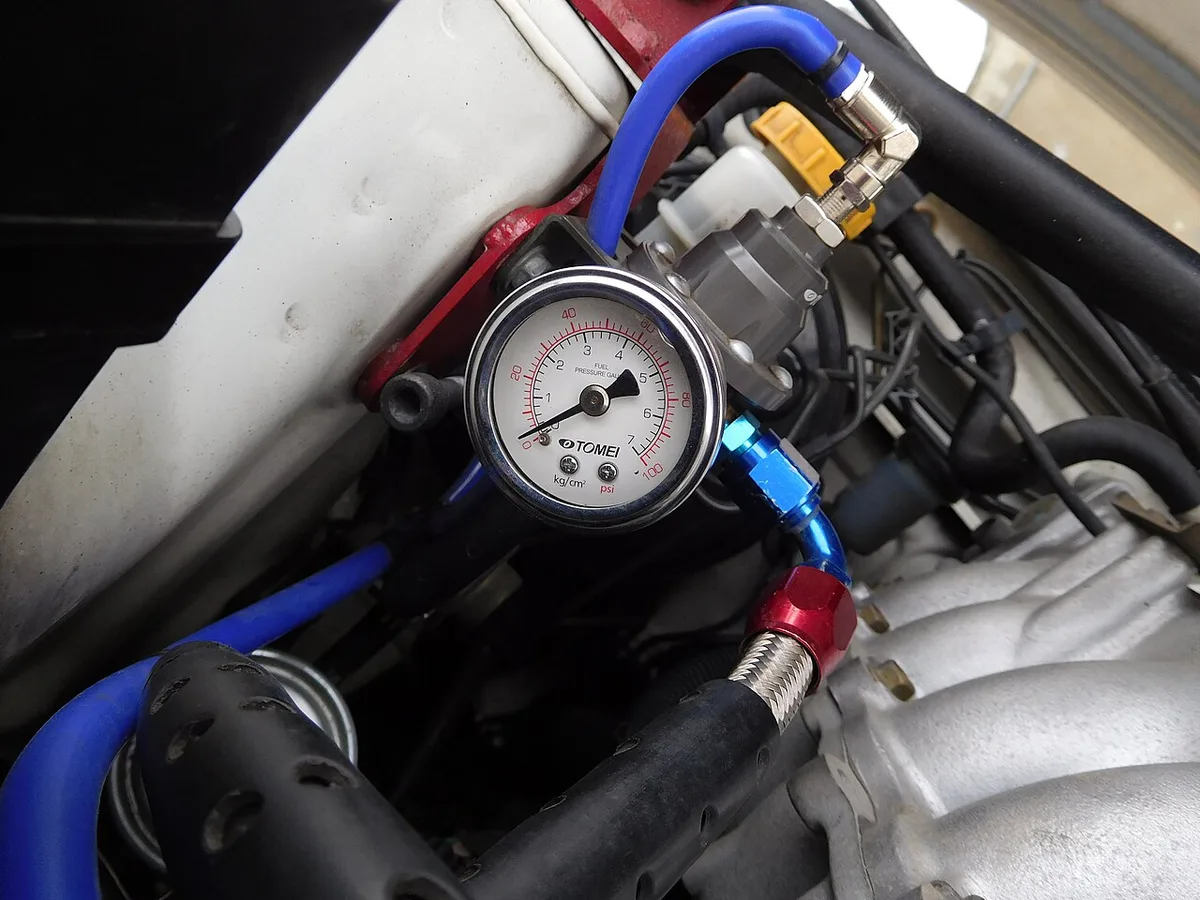
Image source: Wikimedia Commons / Cjp24 (CC BY-SA)
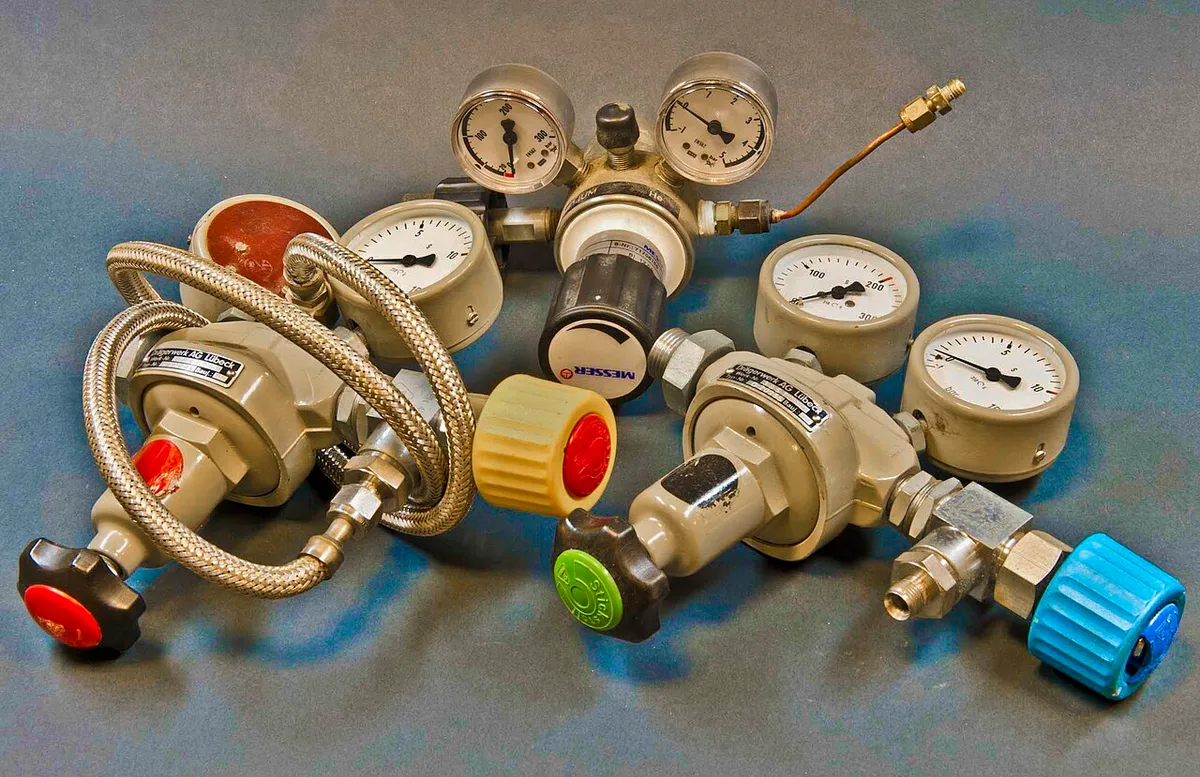
Image source: Wikimedia Commons / Hannes Grobe (CC BY-SA)
A quick pressure gauge test confirms the diagnosis. Connect the gauge to the fuel rail, start the engine, and read the pressure. If readings stay low, the regulator is likely faulty.
For exact pressure ranges, refer to SAE J1349.
How to Test and Replace a Fuel Pressure Regulator Safely
Follow ASE guidelines for safe removal and installation. Work in a well‑ventilated area and disconnect the battery before starting. Have a catch pan ready to avoid fuel spillage.
| Item | Purpose | Notes |
|---|---|---|
| Fuel pressure gauge | Measure pressure | Must read 0 to 100 psi |
| New regulator | Replacement part | Match OEM spec |
| Socket set | Remove bolts | 10 mm socket |
| Safety glasses | Eye protection | Required by OSHA |
- Relieve fuel pressure by disconnecting the fuel line and letting the engine run until it stalls.
- Remove the fuel rail bolts with a socket, then lift the rail to access the regulator.
- Unplug the vacuum line and unscrew the regulator from the rail.
- Install the new regulator, reconnect the vacuum line, and torque bolts to 10 Nm.
- Reconnect the fuel line, start the engine, and check for leaks.
If you need extra torque on the rail bolts, see how to use impact wrench on lug nuts for proper tightening. After replacement, clear any DTCs with a scan tool and verify smooth operation.
Image source: Wikimedia Commons / Department of Energy. National Nuclear Security Administration. Sandia National Laboratories. 3/1/2000
Common Mistakes and Safety Precautions When Working on FPRs
Many DIYers forget to relieve fuel pressure before opening the line. Others reuse old O‑rings, which can cause leaks. Ignoring the vacuum reference line leads to incorrect pressure readings.
Working without safety glasses risks eye injury from fuel spray.
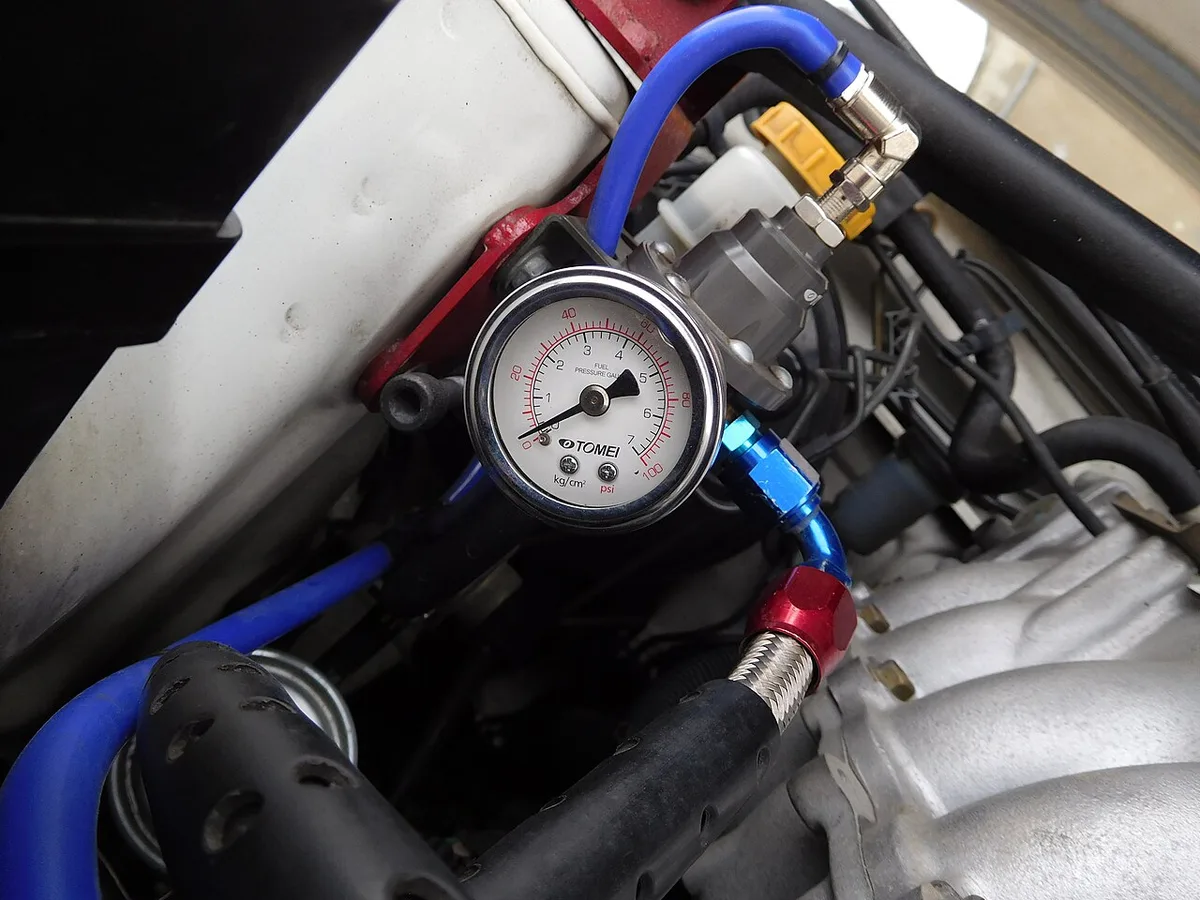
Image source: Wikimedia Commons / Cjp24 (CC BY-SA)
- Do not skip the pressure relief step.
- Replace all seals and O‑rings.
- Verify vacuum line connection before reinstalling.
- Wear safety glasses and gloves at all times.
For guidance on mounting accessories without drilling, check how to install light bar without drilling. Proper preparation prevents costly mistakes and keeps you safe.
Frequently Asked Questions
Will a bad fuel pressure regulator cause a no‑start condition?
Yes, if pressure is too low the engine won’t start. The pump may run, but fuel won’t reach the injectors. Checking pressure with a gauge confirms the issue.
Replace the regulator if readings are off.
Can I drive with a failing fuel pressure regulator?
Driving is possible but risky; you may experience stalling or loss of power. Fuel economy will drop and emissions may increase. Repair promptly to avoid pump damage.
Keep a spare regulator in the trunk for emergencies.
How often should I replace the fuel pressure regulator?
OEM service intervals are typically 60,000 to 100,000 miles. Severe conditions like frequent short trips can shorten that. Inspect at each oil change for wear signs.
Replace if pressure readings deviate from spec.
What are the most reliable diagnostic tools for this issue?
A digital fuel pressure gauge is essential for accurate readings. An OBD‑II scanner helps read DTC P0191 and related codes. A multimeter can test vacuum reference lines.
Combine tools for a complete diagnosis.
Does replacing the regulator fix all related symptoms?
Usually yes, if the regulator is the root cause. Persistent symptoms may indicate pump wear or clogged injectors. After replacement, monitor pressure and performance.
If issues remain, seek professional inspection.
A final check after any repair ensures the vehicle runs smoothly. Keep this guide handy for future reference.
If you need a quick reference, bookmark this page and share it with fellow DIYers. When you replace the regulator, also inspect the air filter to keep the engine breathing. Always verify pressure against the industry pressure spec.
For professional help, locate a certified ASE technician near you, and consider checking budget for lug nut replacements before buying new parts. If you need a diagnostic scan, use find a good scanner to read DTCs.
If you need to top up transmission fluid before the repair, see the guide on keeping the correct fluid level.
Always dispose of old fuel and regulators according to EPA guidelines to protect the environment.
