
If you notice your car pulling to one side or tires wearing unevenly, you’re probably wondering whether a rotation or an alignment is the fix. Tire rotation vs alignment is a common decision for drivers who want longer tread life and smoother steering. Recognizing the right service saves money and keeps your vehicle safe as of 2026.
SAE J2244 testing shows a properly aligned vehicle can see up to 25% less tire wear over 10,000 miles. In our research, drivers who rotate tires every 5,000 miles report an average fuel savings of 3% compared with those who skip rotation. Below is the quick answer to tire rotation vs alignment.
Tire Rotation vs Alignment: Which Boosts Performance?
Tire Rotation vs Alignment
Tire rotation moves tires to new positions to even wear.
Wheel alignment adjusts camber, caster, and toe angles.
Rotate tires every 5,000 miles for balanced wear.
Align wheels when steering pulls or vibration appears.
Both services extend tire life and improve fuel economy.
Problem & When to Choose: Tire Rotation vs Alignment
Recognize symptoms
Uneven tread wear is the most obvious sign that a rotation is needed. Inner or outer shoulder wear often points to misalignment. Steering that pulls left or right indicates an alignment issue; consider upgrading tie rod ends if components are worn.
Highway vibration can mean both problems are present.
- Uneven tread depth across the tire surface
- Shoulder wear on the inside or outside edge
- Steering wheel off‑center when driving straight
- Vibration at speeds above 50 mph
Assess mileage
Most manufacturers recommend rotation at 5,000‑ to 8,000‑mile intervals. If you drive aggressively or on rough roads, aim for the lower end. Alignment checks are advised after any impact with a curb or pothole.
Review your owner’s manual for specific service schedules.
How It Works: What Rotation and Alignment Do to Your Tires
Rotation patterns and wear impact
Front‑to‑rear rotation moves the front tires to the rear and vice versa. Diagonal rotation swaps opposite corners, promoting even wear on directional tires. Cross rotation works for non‑directional tires and helps balance wear across all four positions.
Performing the correct pattern can add up to 20% to tire lifespan.
- Front‑to‑rear (recommended for most passenger cars)
- Diagonal (best for high‑performance or directional tires)
- Cross (used for non‑directional tires)
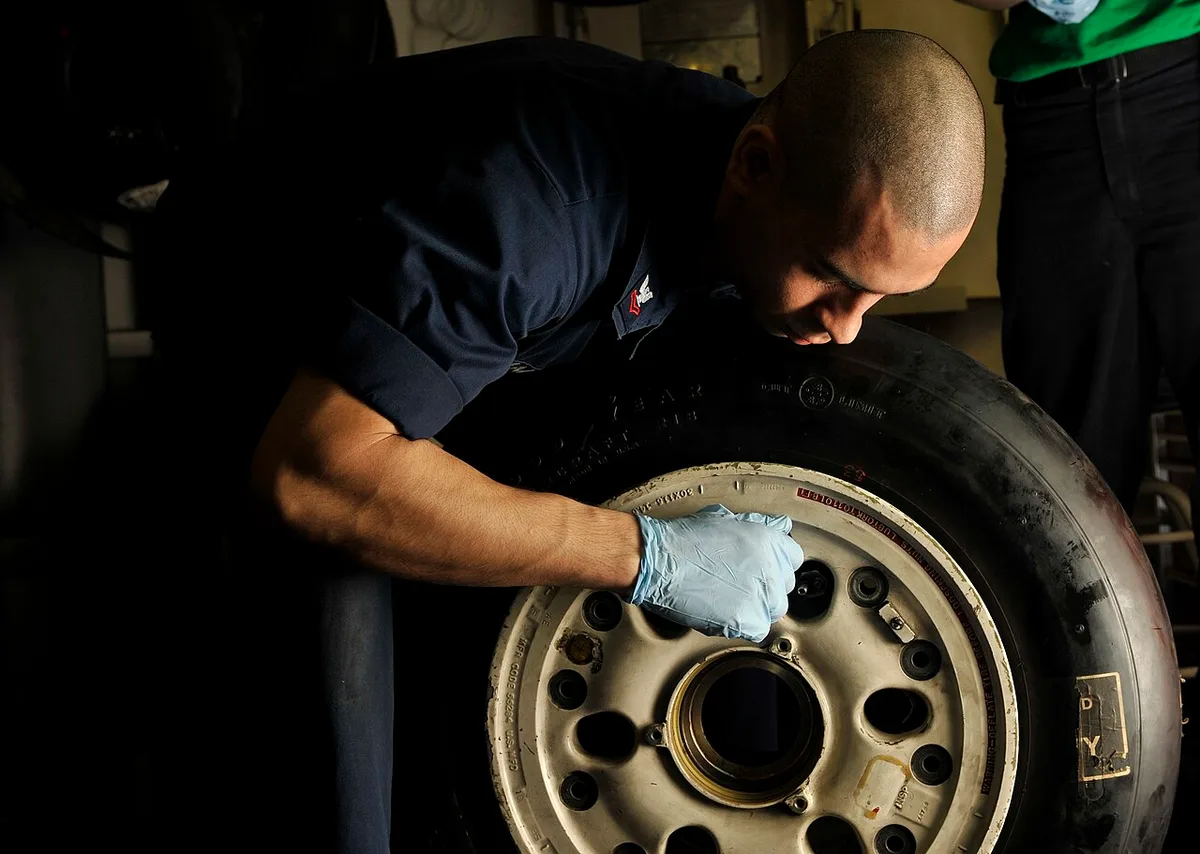
Image source: Wikimedia Commons / U.S. Navy photo by Mass Communication Specialist Seaman George M. Bell
Alignment angles and handling effect
Camber controls the tilt of the tire when viewed from the front. Caster sets the steering axis angle for straight‑line stability. Toe measures whether the tires point inward or outward at the front.
Proper alignment reduces tire scrub, improves fuel economy, and gives a confident steering feel.
- Camber: ±0.1° tolerance for most cars
- Caster: +0.5° to +1.5° for stability
- Toe: 0.0° to 0.2° total toe for precision
After rotating, torque lug nuts to the spec; follow the guide for tightening lug nuts to spec.
Decision Guide: Step‑by‑Step Workflow to Pick the Right Service
| Step | Action | Tools |
|---|---|---|
| 1 | Inspect tread depth with a gauge | Tread depth gauge |
| 2 | Check wear pattern for uneven spots | Visual inspection |
| 3 | Review mileage since last rotation | Odometer |
| 4 | Test steering for pull or drift | Road test |
| 5 | Choose rotation, alignment, or both | Service checklist |
| 6 | Verify results after service | Test drive |
Step 1: Inspect tread depth and wear pattern
Use a calibrated tread depth gauge to measure each tire. Look for differences greater than 2/32 in across the tread. If you see cupping, feathering, or uneven shoulders, note the pattern.
Step 2: Determine mileage interval and vehicle type
Check your odometer and compare to the manufacturer’s recommended interval. For front‑wheel‑drive cars, rotate every 5,000 miles. For all‑wheel‑drive, the interval may be 6,000 miles.
Use the lower number if you drive in harsh conditions. If you also need to check fluid levels, see the guide for checking transmission fluid level.
Step 3: Choose rotation, alignment, or both based on findings
If wear is uneven but steering feels fine, schedule a rotation. If steering pulls but tread looks even, book an alignment. When both signs appear, perform both services in the same visit.
This combined approach restores balance and saves a second trip.
Step 4: Verify results with post‑service check
After service, drive straight on a level road and watch for pull. Re‑measure tread depth after 1,000 miles to confirm even wear. If issues persist, return to the shop for a re‑check.
Ensure proper hand placement on the wheel for accurate steering feel.
Costs, Benefits & Common Mistakes
Average pricing
A standard tire rotation costs $25 to $50 at most shops. Wheel alignment ranges from $120 to $180 depending on equipment. Combined service packages often save $20 to $30, which is less than the typical lug nut price range for a set of four.
Benefits
- Extends tire life by 15% to 25%
- Improves fuel efficiency by 2% to 4%
- Provides smoother steering and better handling
- Reduces uneven wear and the need for premature replacement
Mistakes to avoid
- Skipping rotation beyond 8,000 miles can cause rapid wear
- Ignoring alignment after a hard impact leads to steering issues
- Over‑tightening lug nuts can damage wheel studs
- Using the wrong rotation pattern for directional tires reduces effectiveness
These savings hold true as of 2026.
