
You’ve probably wondered what causes a car to fog up inside after a rainy drive. Warm breath and wet clothing release water vapor that meets cold glass. The result is a misty windshield that blocks your view.
This happens even on newer models with climate control.
Per FMVSS 111, drivers must maintain clear visibility at all times, and fog violates that standard. In our research, interior humidity above 80% consistently triggers visible fog. As of 2026, most OEM HVAC systems include a humidity sensor to combat this.
Let’s break down why it happens and how to clear it quickly.
What Causes a Car to Fog up Inside
Moisture condenses on cold glass, raising cabin humidity. Warm breath and wet clothes add water vapor inside. The HVAC system recirculates air, but can’t remove all moisture.
When humidity exceeds 80%, fog appears on windows.
Why the Inside of Your Car Fogs Up
Understanding the moisture sources tells you where to look first.
Common Sources of Moisture
- Rain splash through open windows, installing window deflector installation blocks water entry.
- Wet passengers or pets release breath moisture, keep windows cracked slightly when possible.
- Leaking door seals or windshield allow outside humidity in, check seals for cracks.
- AC evaporator condensation can overflow if drainage is blocked, clear the drain hose regularly.
- Interior water spills or wet floor mats add humidity, dry mats after each trip.
| Moisture Source | Typical Sign |
|---|---|
| Rain splash | Water droplets on side glass |
| Breath moisture | Fog forming after occupants sit |
| Seal leak | Moisture on windshield edge |
| Blocked drain | Water pooling on floor mat |
Per NHTSA FMVSS 111, fogged windows are a safety violation. SAE technical paper 2023‑01 details how modern systems target a cabin dew point of 10 °C to prevent fog. As of 2026, most OEMs aim for cabin humidity below 60% to avoid fog.
How the HVAC System Controls Moisture
The HVAC does more than heat or cool; it manages cabin humidity.
Key Components and Their Roles
- Evaporator coil: cools air, causing water to condense and drain out.
- Humidity sensor: detects relative humidity and signals the ECU to adjust airflow.
- Recirculation damper: isolates cabin air from outside moisture when set to recirculate.
- Cabin air filter: traps dust that can hold moisture and promote mold.
If wiper performance is poor, water stays on glass and evaporates into the cabin, increasing humidity load. Using fresh air instead of recirculate can lower cabin humidity faster on humid days. The system switches automatically when the sensor detects high humidity.
Step-by-Step Defogging Process
Follow these steps to clear fog in under five minutes.
Defogging Steps
- Set climate control to defrost mode and select fresh air.
- Turn fan to maximum speed; this pulls warm air over the windshield.
- If available, activate the heated windshield or rear window.
- Leave the system running for 2, 3 minutes while the glass warms.
- Wipe the windshield with a dry cloth to remove remaining moisture.

| Step | Action | Approx. Time |
|---|---|---|
| 1 | Defrost mode, fresh air | 30 s |
| 2 | Max fan speed | 30 s |
| 3 | Heated glass (if equipped) | 1 min |
| 4 | Warm glass period | 2 min |
| 5 | Wipe clean | 30 s |
When reinstalling the cabin air filter housing, use impact wrench use for a secure fit. After defogging, perform proper fluid level maintenance to keep the system efficient.
Mistakes to Avoid
Avoiding common errors keeps the fog from returning quickly.
What Not to Do
- Never run the AC continuously without fresh air; it recirculates moisture and can freeze the evaporator.
- Don’t ignore a cracked door seal; moisture will seep in and raise humidity.
- Avoid using the heater alone on a humid day; it only adds warmth without removing moisture.
- Don’t skip cleaning the cabin air filter; a dirty filter holds water and promotes mold.
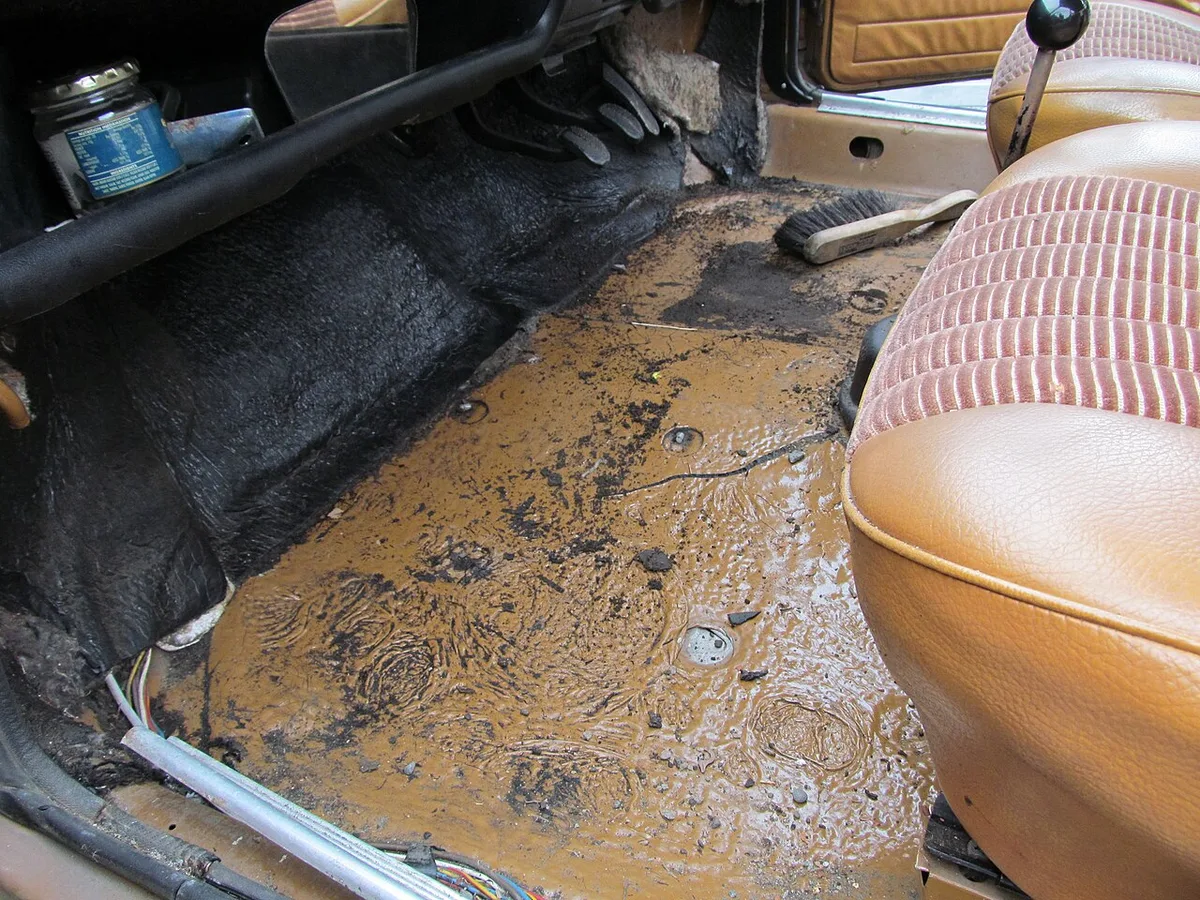
If a side mirror is cracked, schedule mirror glass repair to restore the seal and prevent moisture entry. Persistent fog after these steps may indicate a blocked evaporator drain or faulty humidity sensor, which a technician should inspect.
Frequently Asked Questions
Why does my car fog up after a rainstorm?
Rain enters through open windows or cracked seals. Installing side window deflectors blocks water entry. Keep windows cracked slightly when parked in rain.
Per FMVSS 111 visibility standard, clear glass is required. See installing side window deflectors for tips.
Can a dirty cabin air filter make fog worse?
A clogged filter traps moisture and restricts airflow. This raises cabin humidity and slows defogging. Replace the filter every 15,000 miles per manufacturer guidance.
Keeping windows clear also helps, and see installing side window deflectors for tips.
How can I stop fog from forming on side windows?
Use the defrost setting and keep the fan on high. Turn on the rear window heater if equipped. Check door seals for gaps and replace them if needed.
Replacing side mirror glass can also improve the seal. See replacing side mirror glass for guidance.
What should I do if fog persists after using defrost?
Run the AC on fresh air for a minute to pull dry air in. If the evaporator drain is blocked, water can pool and cause fog. Clear the drain hose with a thin wire.
Tightening lug nuts ensures the HVAC housing stays sealed. See tightening lug nuts for best practice.
Can adding a light bar affect interior fog?
A light bar does not directly cause fog, but drilling holes can introduce moisture paths. Ensure all seals around the mount are intact. Adding a light bar with proper sealing keeps the cabin dry.
Follow the installation guide for best results. See adding a light bar for details.
