
If your check‑engine light just lit up and you scanned the car, you might have seen a code called P0401. It sounds like a mystery, but it simply tells you the exhaust gas recirculation (EGR) system isn’t flowing enough exhaust gas. In plain terms, P0401 means the EGR valve or its related parts aren’t doing their job, which can cause rough idle, lower fuel economy, and a stubborn check‑engine light.
According to SAE J1979, this is a generic powertrain code that applies to most 1996‑and‑later vehicles with OBD‑II. Let’s break down what it means and how you can fix it without getting lost in jargon.
Problem & Quick Answer
What is P0401?
P0401 is a diagnostic trouble code (DTC) that signals “EGR system insufficient flow.” The “P” denotes a powertrain issue, and the “0401” points specifically to the EGR circuit. It’s a generic code, so the exact symptoms can vary by make and model, but the root cause is always that the EGR valve isn’t allowing enough exhaust gas to recirculate.
Why the code triggers the check‑engine light
The Powertrain Control Module (PCM) monitors EGR flow using a sensor or by watching engine load and RPM. When the measured flow falls below the calibrated threshold, the PCM logs P0401 and turns on the malfunction indicator lamp (MIL). The light stays on until the issue is repaired and the code is cleared, even if the engine still runs.
What P0401 Means & How the EGR System Works
EGR system overview
The EGR system recirculates a controlled amount of exhaust gas back into the intake manifold. This lowers combustion temperatures, reduces NOx emissions, and helps the engine run efficiently. The system consists of an EGR valve, vacuum or electronic actuator, hoses, and sometimes a cooler.
Code breakdown (P‑code, generic vs manufacturer‑specific)
All P‑codes follow the same structure: the first digit “P” for powertrain, the second digit “0” for a generic (not manufacturer‑specific) code, and the remaining three digits identify the specific fault. Because P0401 is generic, the repair steps are broadly applicable, but some OEMs add extra diagnostic notes in their service bulletins.
Key components that cause insufficient flow
- EGR valve, carbon buildup or a stuck valve restricts flow.
- Vacuum actuator, cracked hoses or a failed diaphragm prevent the valve from opening.
- EGR position sensor, a faulty sensor can mislead the PCM into thinking the valve isn’t moving.
- Intake manifold leak, unmetered air bypasses the EGR system, making the PCM think flow is low.
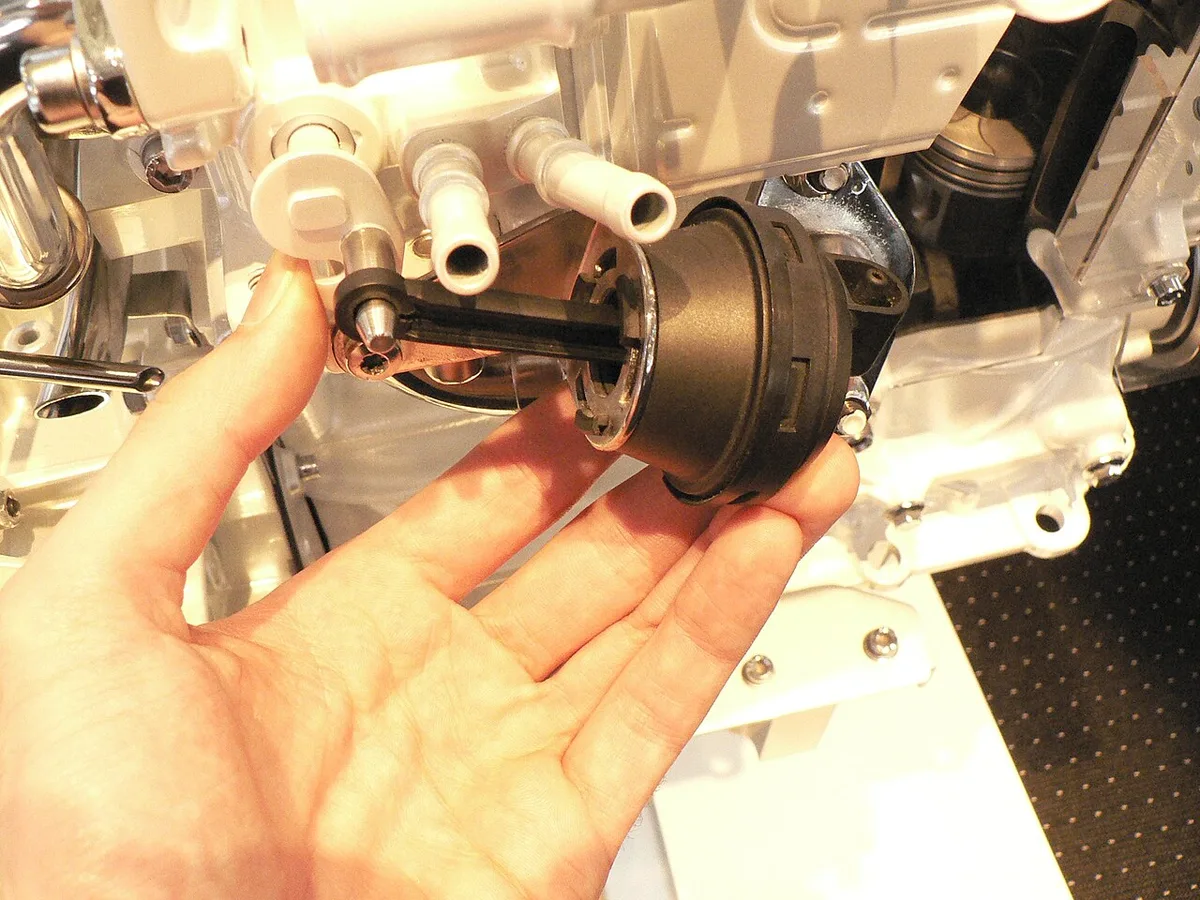
Image source: Wikimedia Commons / Ton1~commonswiki (CC BY-SA)
How to Diagnose and Fix P0401
Diagnostic workflow (scanner → test drive → visual inspection)
- Connect an OBD‑II scanner, read all stored codes, and note any related codes.
- Clear the codes and perform a short test drive to see if P0401 returns.
- Visually inspect the EGR valve, hoses, and sensor for obvious damage or carbon.
Common repair steps and tools
- Clean or replace the EGR valve, use a carburetor cleaner and a soft brush; replace if stuck.
- Replace cracked vacuum hoses, a simple hose clamp and new hose often solve the issue.
- Test the EGR position sensor with a multimeter; replace if out of spec.
- Check for intake leaks using a smoke machine or propane torch trick.
| Repair Item | Typical Cost | Labor Time |
|---|---|---|
| EGR valve replacement | $80‑$250 | 0.5‑1 hr |
| Vacuum hose repair | $15‑$40 | 0.2‑0.5 hr |
| Sensor replacement | $30‑$90 | 0.3‑0.6 hr |
Mistakes to avoid
- Don’t replace the valve without first checking hoses and sensors; you’ll waste money on a part that wasn’t the problem.
- Never clear the code and assume the issue is gone; always verify with a test drive.
- Ignoring related codes (e.g., P0400 or P0402) can lead you down the wrong repair path.
Who It Affects & Cost Considerations
Typical drivers and vehicle types
P0401 shows up on a wide range of gasoline‑engine cars from the late 1990s onward, especially those with vacuum‑operated EGR valves. Drivers who notice rough idle, stalling, or a drop in fuel economy are the most likely to see this code.
Average repair cost and time
Most DIY repairs fall between $100 and $300 total, including parts and a few hours of labor. Professional shops typically charge $150‑$250 for diagnosis and repair, often completing the job in one to two hours.
When to seek professional help
If you’re uncomfortable removing the intake manifold or if the EGR valve is buried deep in the engine bay, a mechanic can handle it safely. Also, if the code persists after basic repairs, a shop can run a more thorough diagnostic and check for PCM updates.
FAQs
Can I keep driving with P0401?
You can drive short distances, but the engine may run poorly and emissions may increase. Continued driving can damage the catalytic converter, so address it promptly.
How often should the EGR valve be replaced?
Most EGR valves last 60,000‑100,000 miles. If you see frequent carbon buildup or the valve sticks, replace it rather than cleaning repeatedly.
Does P0401 affect emissions test results?
Yes. A malfunctioning EGR system will cause elevated NOx readings, and the vehicle will likely fail an emissions inspection until repaired.
What if the code returns after a repair?
Re‑inspect the vacuum lines, sensor, and intake for leaks. If everything looks good, consider a PCM reflash or replace the EGR valve again, as some units are defective from the start.
