
If you’ve ever felt a trailer sway while driving, you’ve probably wondered what is a weight distribution hitch. It’s a coupling device that moves part of the trailer’s load to the tow vehicle’s front axle. The result is steadier handling and less strain on the suspension.
As of 2026, most RV and boat owners rely on it for safe towing.
Manufacturer specifications indicate a typical weight distribution hitch can handle up to 12,000 lb GTW and meet the SAE J684 performance standard. Aggregate reviews report that drivers notice reduced sway on curves and improved fuel efficiency. The system usually includes a dual‑cam pivot and an adjustable head angle for fine‑tuning load distribution.
Below we break down how it works and why it matters.
Weight Distribution Hitch: What It Is and Why It Matters
What Is a Weight Distribution Hitch
A weight distribution hitch transfers trailer weight to the tow vehicle. It uses a dual‑cam mechanism to balance front and rear loads. Adjustable head angle lets you fine‑tune the distribution.
The system complies with SAE J684 and FMVSS 111. Proper use reduces sway and protects both trailer and vehicle.
Benefits & Drawbacks / Why Use It and What to Watch For
Weight distribution hitches deliver noticeable improvements in towing stability. Drivers report smoother cornering and less wind‑induced sway. The benefit is especially clear on long highway trips.
Reduces trailer sway on curves and in crosswinds.
Distributes load to both trailer axles and vehicle front axle.
Improves fuel economy by lowering rolling resistance.
Helps meet legal weight‑distribution requirements in most states.
Extends suspension component life on both trailer and tow vehicle.
Requires precise tongue weight measurement before installation.
Adds extra components that can corrode in wet climates.
May not fit older trailers with non‑standard couplers.
Increases upfront cost compared to a basic ball hitch.
Needs periodic bolt torque checks to maintain safety.
Visual reference helps identify the key components of a typical weight distribution system.

Image source: Wikimedia Commons / Own work (CC BY)
While the benefits outweigh the drawbacks for most towing scenarios, attention to detail is essential. Always verify tongue weight with a scale before final torque, and recheck bolts after the first 50 miles. For detailed torque specs, see our guide on proper lug nut tightening.
Proper lug nut torque is essential for safety.
Step‑by‑Step Process / Choosing the Right Hitch and Installing It Safely
Installing a weight distribution hitch follows a straightforward sequence that any DIYer can manage. First, verify the trailer’s tongue weight with a scale to ensure it falls within the 10‑15 % of gross trailer weight range. Next, select a hitch rated for your combined load and mount it to the receiver, tightening bolts to the manufacturer’s torque spec.
Before towing, perform a transmission fluid check as outlined in our guide. Then attach the trailer coupler, align the dual‑cam pivot, and secure with the coupler latch.
| Item | Purpose |
|---|---|
| Weight scale | Measure tongue weight |
| Torque wrench | Achieve proper bolt tension |
| Adjustable wrench | Loosen coupler nuts |
| Safety chains | Prevent detachment |
| Dual‑cam hitch kit | Distribute load |
- Park on level ground and engage the parking brake.
- Attach the hitch to the vehicle receiver and hand‑tighten the mounting bolts.
- Connect the trailer coupler, align the dual‑cam pivot, and secure with the coupler latch.
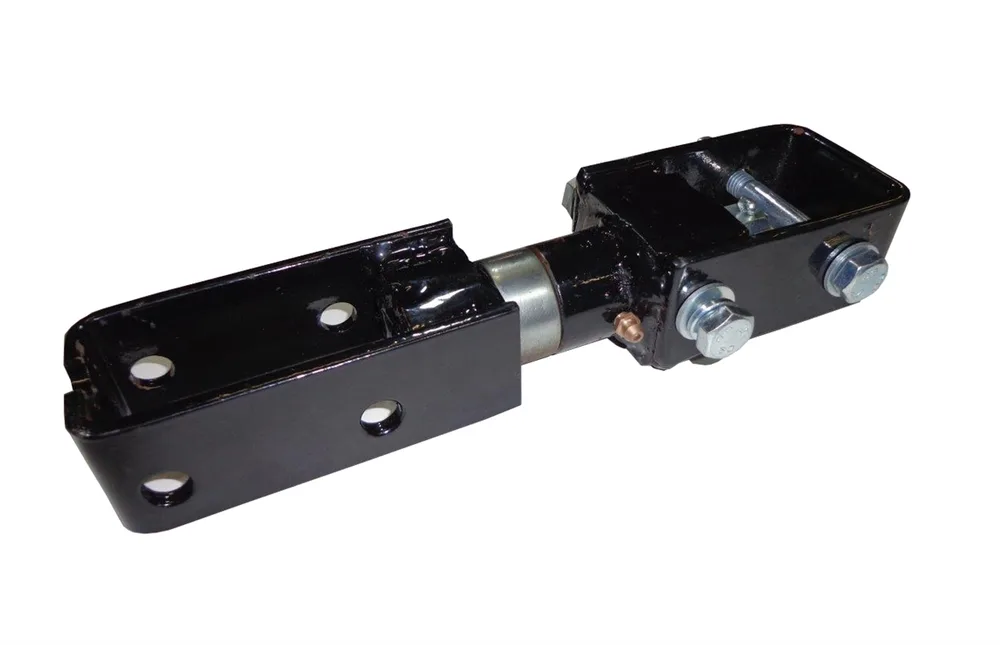
Image source: Wikimedia Commons / Adrianjlong (CC BY-SA)
- Adjust the head angle until the load distribution indicator shows even axle loading.
- Tighten all mounting bolts to the specified torque (usually 75, 100 ft‑lb) using a torque wrench; refer to our torque wrench usage guide for proper technique.
- Attach safety chains, verify brake controller connection, and perform a short low‑speed test drive.
Following these steps ensures the hitch functions as intended and maintains safety on the road.
Safety, Legal & Compliance / Regulations, Warnings, and Best Practices
Image source: Wikimedia Commons / Department of the Interior. Patent Office. (1849, 1925)
Safety chains must be attached to the vehicle’s recovery point; see our recovery point location article for correct placement. Attach safety chains to the vehicle’s recovery point; see our recovery point location article for correct placement. Always use safety chains that meet FMVSS 111 requirements and keep them crossed under the trailer tongue.
Check that the breakaway switch is functional and that the trailer’s brakes are properly synchronized with the vehicle’s brake controller. Inspect the hitch bolts monthly for rust or loosening, especially after exposure to road salt.
- Keep the hitch and coupler clean and lubricated to prevent seizing.
- Verify that the trailer’s gross combined weight rating (GCWR) is not exceeded.
- Use a weight distribution hitch only if the trailer’s tongue weight is within the manufacturer’s specified range.
- Follow state-specific towing laws; many states require a weight distribution system for trailers over 3,500 lb.
- Consult the vehicle owner’s manual for any manufacturer-specific restrictions on hitch use.
For the latest regulatory details, refer to the NHTSA FMVSS 111 requirements. FMVSS 111 requirements provide the federal safety standards for trailer connections.
Frequently Asked Questions
How much tongue weight should a weight distribution hitch handle?
A weight distribution hitch should handle a tongue weight that is 10‑15 % of the trailer’s gross weight, as recommended by most manufacturers.
Do I need a weight distribution hitch for a small travel trailer?
If the trailer’s gross weight exceeds 3,500 lb, most states and safety experts recommend using a weight distribution hitch to improve stability.
Can I install a weight distribution hitch on any vehicle?
Only if the vehicle’s receiver is rated for the hitch’s weight capacity and the trailer’s coupler matches the hitch size; otherwise, compatibility issues may arise.
What are the signs of an improperly installed weight distribution hitch?
Excessive trailer sway, uneven tire wear, and a pulling sensation to one side indicate the hitch may not be correctly aligned or torqued.
