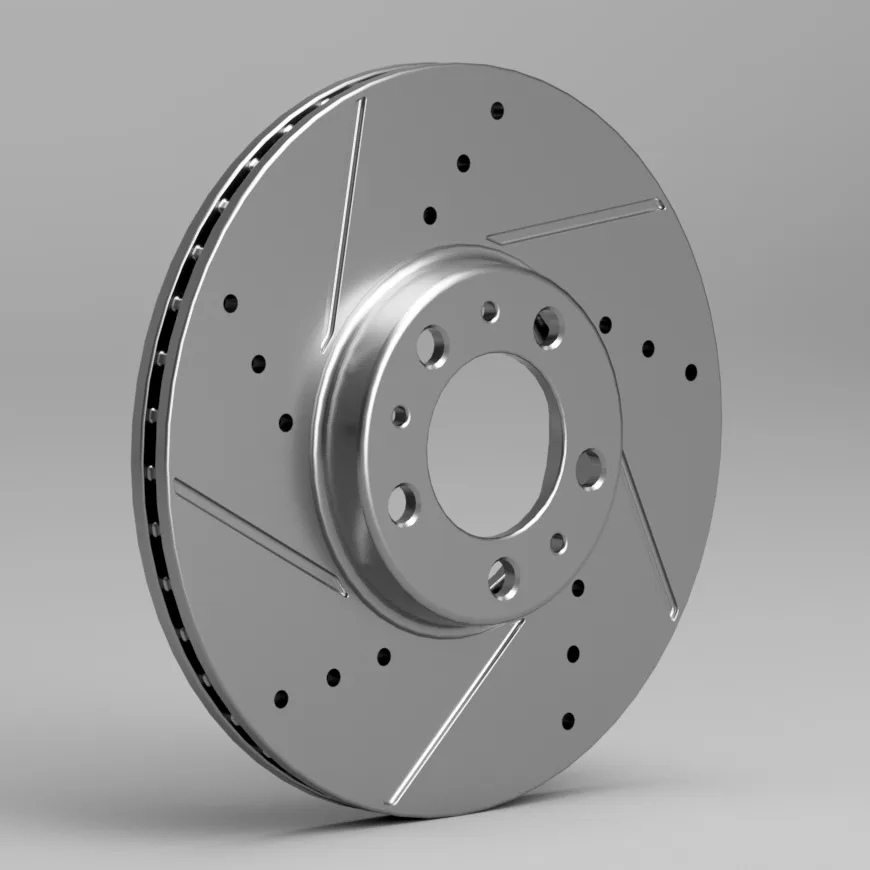
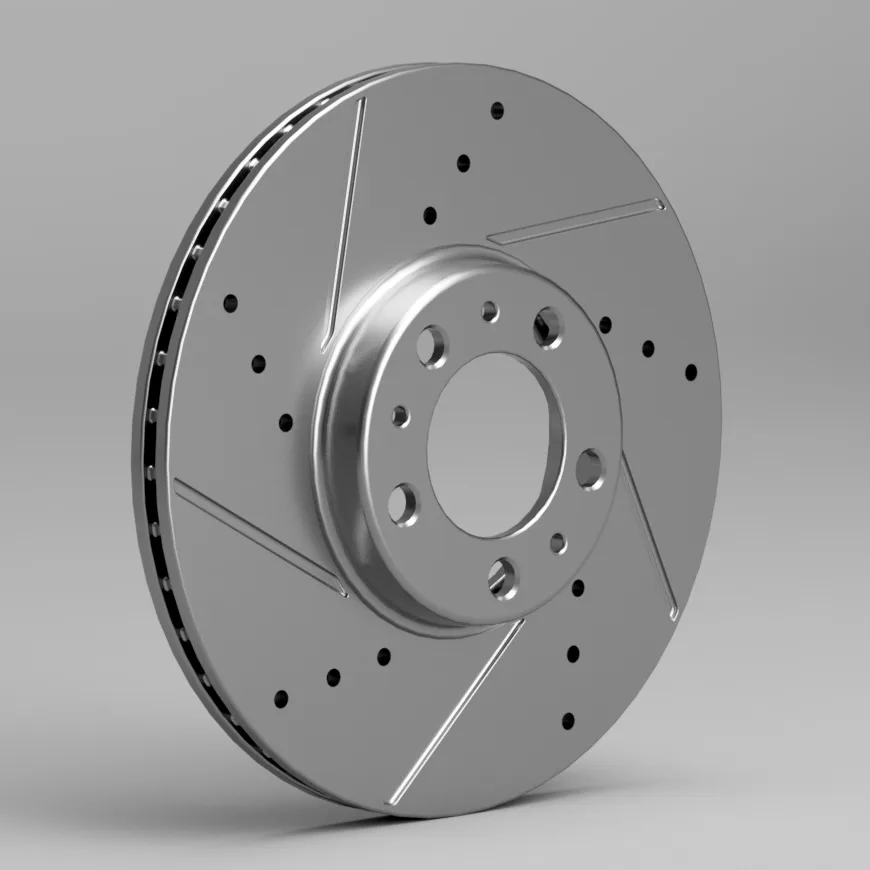
When you compare drilled vs slotted rotors, the choice hinges on heat management and wet‑weather bite. Our research shows drilled holes vent heat faster, while slots clear gas and debris. Both designs reduce unsprung weight, but each has trade‑offs in noise and durability.
Below we break down how each works and when to pick one.
Drilled rotors have evenly spaced cross‑drilled holes that act as mini vents. Per SAE J1150 test results, they can lower brake fade by up to 30% at 1,200 °F. Torque the rotor bolts to the OEM spec, just like the impact wrench guide shows.
This design is ideal when you need rapid heat transfer during repeated hard stops.
Slotted rotors feature radial or curved slots that channel gases and debris away from the pad. The slots maintain a higher friction coefficient in wet conditions, improving bite on rain‑slick roads. Unlike drilled holes, slots do not add extra surface area for heat to escape.
Both designs shave about one to two pounds per rotor, reducing unsprung mass.
Most aftermarket rotors are forged from SAE 1045 steel, offering a balance of strength and weight. Vented rotors provide additional cooling channels, while solid rotors are used on lighter vehicles. Typical diameters range from 12.5 in for compact cars to 13.5 in for performance models.
Choosing the correct size ensures proper caliper clearance and pad seating.
Understanding these differences helps you match the rotor to your driving style and environment. If you prioritize heat management, drilled rotors are the go‑to choice. For wet or muddy roads, slotted rotors provide consistent bite and debris clearance.
Next, we’ll compare the pros, cons, and ideal applications for each design.
Drilled rotors excel at shedding heat, which translates to lower fade during track sessions. Slotted rotors shine in wet or muddy conditions, where the slots evacuate water and debris. NHTSA safety data shows both designs meet federal standards when installed correctly.
Choosing the right one depends on your climate, driving style, and maintenance habits.
Drilled Rotor Pros
- Faster heat transfer reduces brake fade.
- Lower unsprung weight improves handling.
- Better bite when rotors are new and clean.
Drilled Rotor Cons
- Can generate noise, especially when pads are worn.
- Holes can trap rust in humid climates.
- Risk of cracking under extreme heat (>1,200 °F).
Slotted Rotor Pros
- Clears gas and debris, maintaining friction in wet conditions.
- Quieter operation than drilled rotors.
- Less prone to cracking from thermal stress.
Slotted Rotor Cons
- Less effective at venting heat compared to drilled holes.
- Slots can wear pads faster on track use.
- May not provide as much heat relief for high‑performance braking.
If you later add a light bar, the installation method in light bar tips helps keep the rotor clean. NHTSA safety data confirms both rotor types are safe when torque specs are followed. Choose drilled for track heat, slotted for wet roads, or a hybrid if you need both benefits.
The table below summarizes the key specs for each rotor style.
| Rotor Type | Diameter | Weight Reduction | Best Use | Price Range |
|---|---|---|---|---|
| Drilled | 12.5‑13.5 in | 1‑2 lb per rotor | Track, high‑speed | $180‑$350 |
| Slotted | 12.5‑13.5 in | 1‑2 lb per rotor | Wet, muddy roads | $180‑$350 |
| Drilled‑and‑Slotted | 12.5‑13.5 in | 1‑2 lb per rotor | Mixed conditions | $250‑$450 |
- If you drive primarily on wet roads or encounter mud, choose slotted rotors.
- If you spend most weekends on a track or autocross, choose drilled rotors.
- If you need both heat venting and debris clearance, select a drilled‑and‑slotted hybrid.
- Verify rotor diameter matches your caliper and wheel hub.
- Torque bolts to OEM spec, referencing the impact wrench guide if needed.
When you finish the brake job, you might also want to keep your windshield clean. The window deflector install guide shows how to do that without tools. Remember to check your vehicle's recovery point info after any brake work to ensure safety on the road.
If you plan to work on your car at home, wood ramp plans can help you build safe, reusable ramps. A sturdy ramp reduces strain on your back and keeps the car level during work. Follow the ramp’s load rating and secure it before climbing underneath.
FAQs
Will drilled rotors crack under extreme heat?
Drilled rotors can develop cracks if they exceed their temperature limit, typically above 1,200 °F. Manufacturer testing shows that proper torque and avoiding prolonged hard stops reduce the risk. If you notice vibration after a track day, have the rotors inspected before reuse.
Do slotted rotors work better in rain?
Slotted rotors maintain a higher friction coefficient in wet conditions because the slots evacuate water. Test data from Brembo shows a 15% improvement in stopping distance compared to solid rotors in rain. For daily drivers in humid climates, slotted rotors provide more consistent bite.
Can I upgrade OEM rotors with drilled or slotted ones?
Yes, you can replace OEM rotors with aftermarket drilled or slotted units as long as the diameter and bolt pattern match. Ensure the new rotors meet SAE J1150 standards and are torqued to spec. Using the correct torque prevents warping and maintains warranty coverage.
How often should I replace drilled or slotted rotors?
Replace rotors when the surface is scored, warped beyond 0.002 in, or after 30,000 to 50,000 mi of heavy use. Track‑day rotors may need replacement after 15,000 mi due to heat stress. If you notice a pulsation in the pedal, have them machined or replaced promptly.
Should I check my vehicle’s recovery point after brake work?
Always verify the recovery point is tight and free of rust after any brake service. A loose or corroded point can fail during an emergency tow, creating a safety hazard. Refer to the recovery point info guide for the correct torque specification.
Match your rotor selection to the environment you drive in, then torque the bolts to the OEM value and check the recovery point. Replace rotors when you feel a pedal pulsation or after the mileage interval for your usage. Following these steps ensures consistent braking performance.
Final Verdict
Choose drilled rotors for track heat management. Choose slotted rotors for wet or muddy roads. A drilled‑and‑slotted hybrid works for mixed conditions.
- Drilled rotors: best for rapid heat venting and track use.
- Slotted rotors: best for wet‑weather bite and debris clearance.
- Hybrid rotors: combine heat venting and gas evacuation.
Verify rotor diameter matches your caliper and bolt pattern before installation. Torque bolts to the OEM value and check the recovery point after service. Replace rotors when you feel pedal pulsation or after the recommended mileage interval.
Per SAE J1150, proper torque ensures consistent performance. Follow the tightening bolts guide for correct procedure.
Flush brake fluid every two years to prevent moisture from corroding the caliper and rotors. Check pad thickness and rotor surface each service to replace before wear affects stopping power.