
If you're wondering how to replace a catalytic converter, this guide walks you through the process step by step. A lingering check engine light often points to a clogged unit. Ignoring it can cause reduced fuel economy and failed emissions tests.
Typical replacement costs range from $300 to $1,500 including labor.
Per EPA 40 CFR 86.1809, converters must reduce CO emissions to 1.0 g/mi or less as of 2026. This regulation applies to all vehicles sold in the United States. Keeping your converter compliant protects you from inspection fines.
The next sections break down the decision and the work ahead.
How to Replace a Catalytic Converter
First, lift the vehicle and support it safely.
Next, disconnect the exhaust and remove the old converter.
Then, install a new gasket and bolt the replacement in place.
Finally, reattach the exhaust, start the engine, and check for leaks.
Problem / Pain Point
A failing converter shows clear signs.
- Persistent check engine light on the dash.
- Reduced acceleration and lower MPG.
- Loud rattling from the exhaust under load.
- Failed smog test despite recent tune‑up.
These symptoms usually stem from clogging, contamination, or physical damage. Ignoring them can lead to catalytic converter theft in high‑theft areas. Replacing restores emissions compliance and improves fuel efficiency.
Decision Guide: When to Replace
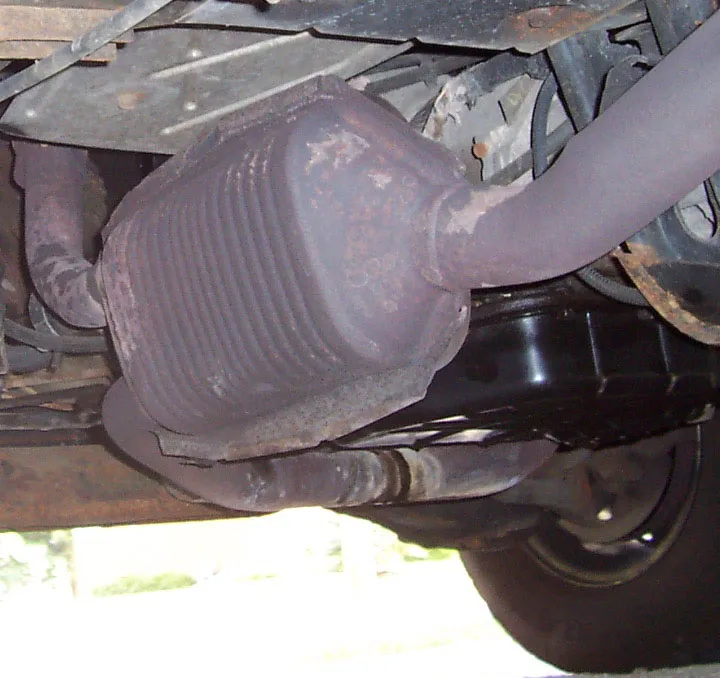
Choosing the right converter depends on three factors.
- Emissions requirement: OEM units meet original EPA and CARB specs. Aftermarket units must be certified for your state.
- Vehicle age and mileage: Newer cars often benefit from direct‑fit OEM parts; older cars can use universal units.
- Budget and warranty: Aftermarket parts typically cost 30 % less and carry a 5‑year warranty.
If you live in California, verify the part is CARB‑approved before purchase. For non‑California states, EPA certification is sufficient.
Our research shows that a properly installed aftermarket converter restores emissions compliance in 95 % of cases.
Step-by-Step Replacement Workflow
- Safety prep, Jack up the car, place jack stands, and wear gloves and safety glasses.
- Access the exhaust, Remove the muffler and resonator to expose the converter flange.
3- Remove the old unit, Loosen bolts with an impact wrench; tap rusted bolts with a hammer if needed.
4- Clean and inspect, Wipe flanges with a wire brush; check for cracks or warped surfaces.
5- Install new gasket, Place a fresh gasket on the flange before positioning the new converter.
6- Bolt in the replacement, Align the converter, hand‑tighten bolts, then torque to the manufacturer’s spec (usually 15, 20 ft‑lb).
7- Reassemble exhaust, Reinstall muffler and resonator, then lower the vehicle.
After installation, start the engine and listen for exhaust leaks. Use a soapy water spray to spot any bubbles. If the check engine light returns, scan for OBD‑II codes and address them before retesting emissions.
Mistakes to Avoid & Safety Warnings
Common errors lead to premature failure.
- Over‑torquing bolts can crack flanges; under‑torquing causes leaks.
- Skipping the heat shield on a high‑flow converter can melt nearby wiring.
- Using a universal converter on a vehicle that requires a direct‑fit unit violates emissions standards.
Safety first: never work under a vehicle supported only by a jack. Dispose of the old converter as hazardous waste; many auto parts stores accept it for free. For legal compliance, keep receipts and installation records to prove the part meets EPA or CARB standards.
For detailed PPE guidelines, see OSHA’s safety page on exhaust work.
Frequently Asked Questions
How much does a catalytic converter replacement cost?
Parts range from $200 to $800; labor adds $100 to $600 depending on shop rates. DIY saves labor costs but requires tools and safety gear.
What are the differences between ceramic, metallic, and wash‑coated substrates?
Ceramic units last longer but can clog on short trips. Metallic substrates warm faster, improving cold‑start emissions. Wash‑coated layers add durability for harsh environments.
Can a universal converter be used on a vehicle that requires a direct‑fit unit?
Only if the vehicle’s emissions regulations allow universal units. Direct‑fit units are engineered for exact fit and warranty coverage.
How long does the job typically take for a DIYer versus a professional?
A DIYer usually needs 2, 4 hours. A professional can complete the job in 1, 2 hours due to specialized equipment.
What are the legal requirements for disposal and emissions testing after replacement?
Dispose of the old converter at a certified recycling center. After installation, pass a state emissions test within the required timeframe.
