
Picking a naturally aspirated vs turbocharged engine is really about daily feel. One answers the pedal in a straight line. The other squeezes more torque from less metal, then needs a moment to wake up.
Pick for your roads, not the brochure peak.
As of 2026, many new turbos make roughly 100 to 150 horsepower per liter. A typical naturally aspirated gas engine often sits nearer 70 to 100. Labels under EPA test cycles look kindest to the turbo when you barely use boost.
Your commute can erase that gap, and the details below show who wins.
Naturally Aspirated vs Turbocharged Engine
A naturally aspirated vs turbocharged engine choice is response versus torque. A naturally aspirated engine breathes only outside air. Power climbs smoothly as engine speed rises.
A turbo uses exhaust energy to pack in more air. You get stronger midrange pull from a smaller engine.
Why Naturally Aspirated vs Turbocharged Comes Down to How You Drive
Peak horsepower on a spec sheet is a weak guide. You feel where torque arrives, and how often you ask for it.
A turbo four can feel quick in traffic because boost fills the middle of the rev range. A larger naturally aspirated engine feels honest from the first inch of pedal. It needs more revs, or more displacement, to match that shove.
Light commuting often suits the simpler engine. Passing, towing, and climbs usually suit the turbo.
A modern twin-scroll unit may spool near 1,500 to 2,500 rpm. An older single-scroll turbo still feels late. Gearing can hide that pause or put it on display.
How Each Engine Builds Power
Both engines mix air and fuel. Only the turbo forces extra air in.
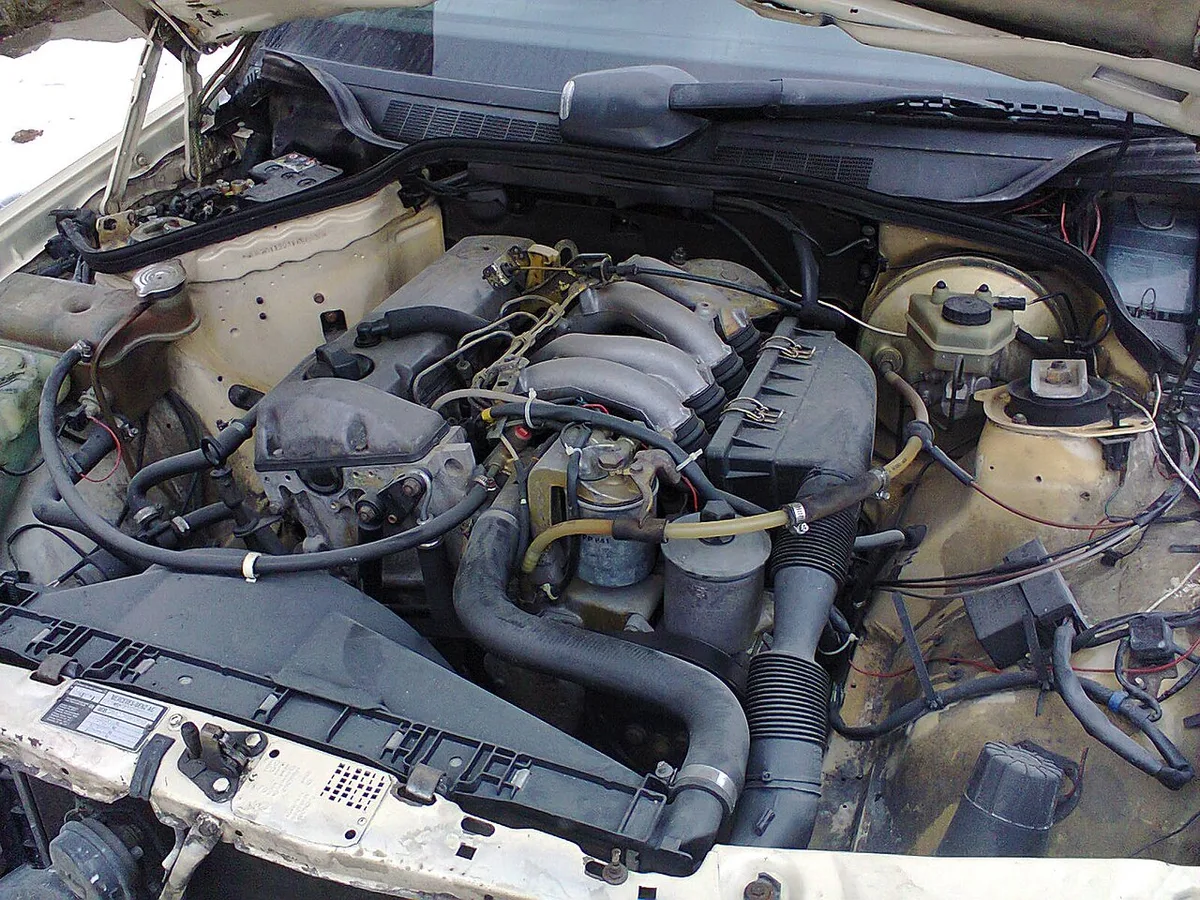
Image source: Wikimedia Commons / Didolevski (CC BY-SA)
Naturally aspirated: throttle, compression, and a linear pull
An NA engine, short for naturally aspirated, pulls air with the pistons alone. Throttle, rpm, and compression set the output.
Many gas versions run near 10:1 to 13:1. Some Atkinson-cycle hybrids sit higher and trade a little shove for economy.
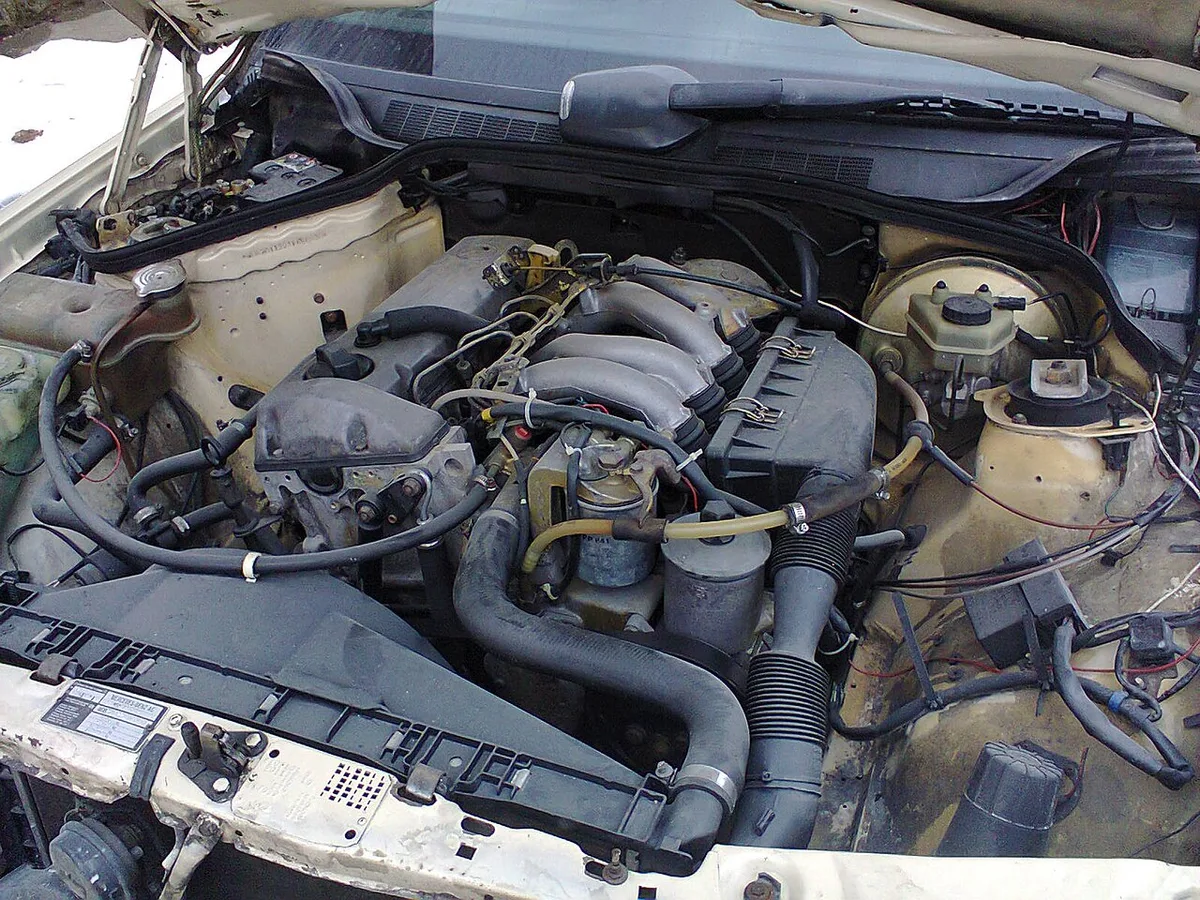
Image source: Wikimedia Commons / Didolevski (CC BY-SA)
Fewer parts sit in the intake path. There is no charge pipe to split and no wastegate to rattle. Worn rings often show up as oily plug tips before a warning light.
On an older V8, heat cycles also stress header joint seals.
Turbocharged: exhaust energy, boost, and midrange torque
A turbo is forced induction. Exhaust spins a turbine. That turbine drives a compressor.
The air then crosses an intercooler on its way into the cylinders.
Stock gas boost often sits around 6 to 20 psi above the air already around you. Sea-level pressure is about 14.7 psi. Once it is spinning, that extra air becomes extra torque.
Most new units cool the center housing with coolant and oil the bearings. Long oil intervals cook those bearings. After a hard pull, idle an older oil-cooled turbo for a minute.
A basic code reader will show low boost or knock trim if the car suddenly feels soft.
Response, Fuel Use, Heat, and Repair Cost Side by Side
Response is what you feel in the first second. Fuel use, heat, and repair bills show up later.
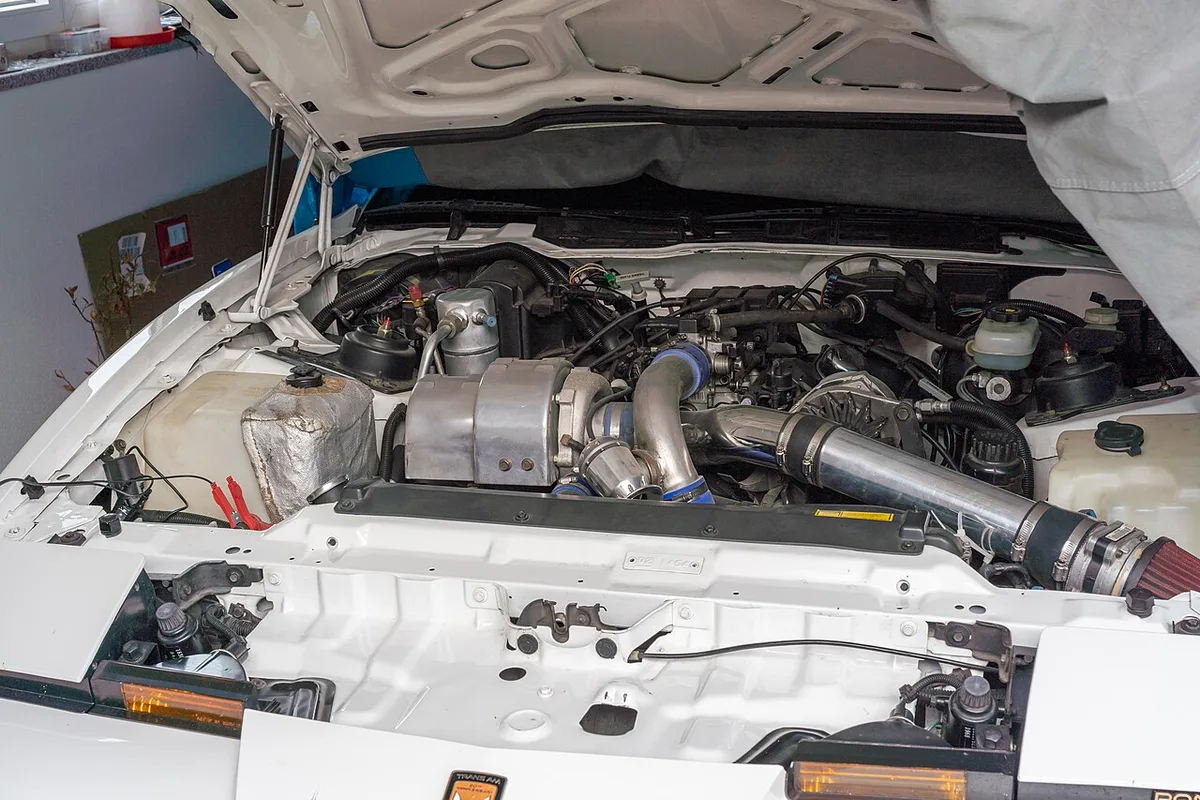
Image source: Wikimedia Commons / Tobias ToMar Maier (CC BY-SA)
| Point | Naturally aspirated | Turbocharged |
|---|---|---|
| Response | Immediate and linear | Strong after spool |
| Real-world fuel use | Steadier when you rev | Best with a light foot |
| Heat | Cooler intake charge | Heat soak after hard pulls |
| Typical repairs | Ignition, fuel, compression | Turbo, pipes, sensors |
| Altitude | Drops as you climb | Holds power longer |
| Fuel | Often regular | Often premium |
In our research, label mpg and real mpg split once boost stays on. A light foot lets the small turbo sip fuel. A heavy foot makes it drink like a bigger engine.
The U.S. Department of Energy has tracked that downsizing push for years.
Heat soak is the turbo tax in slow traffic. After a few hard pulls, hot intake air cuts power until the intercooler catches up.
Repair cost follows parts count. A tired naturally aspirated engine is often ignition, fuel, or compression. A tired turbo can mean the charger, the wastegate, the pipes, or the sensors.
With labor, that job is often four figures. Later, the price of bolting one on is its own project, not a cheap shortcut.
Which Engine Fits Commuting, Mountains, Towing, and High Miles
Match the engine to the job, not the ad.
- Commuting: Pick naturally aspirated for instant response and fewer parts. Pick a turbo if the car is heavy and you hate downshifting.
- Mountains: Pick the turbo. Naturally aspirated power falls about 3 percent per 1,000 feet. Boost holds output higher in thinner air.
- Towing: Turbo torque makes the pull easier. Heat and the gearbox take the hit, so fresh gearbox fluid belongs on the list.
- High miles: A cared-for naturally aspirated engine is usually cheaper to keep. A stock turbo with oil records can also pass 150,000 miles. Walk away from a neglected tune.
- Weekend driving: A high-rev naturally aspirated engine feels linear and usually sounds better. A turbo wins when you want punch without living at the redline.
Cold short trips are hard on both. Oil stays thick and moisture collects. A turbo that never fully warms is the fussier of the two.
Give either engine a few easy miles before a hard pull.
Frequently Asked Questions
Is a turbo more fuel efficient than a naturally aspirated engine?
On a light foot, yes. Official cycles reward a small turbo that barely makes boost. Use it for hills and passing and that gain shrinks fast.
A bigger naturally aspirated engine can then use no more fuel. Judge your own route, not the window sticker.
Do turbo engines last as long?
They can. A stock turbo with the right oil and on-time changes often clears 150,000 miles. Heat, skipped service, and extra boost are what kill them early.
A naturally aspirated engine still has fewer pricey parts to replace. Service records matter more than the badge.
What does turbo lag feel like?
It's the pause before boost. The car feels soft, then torque arrives in a lump. Many new turbos wake near 1,500 to 2,500 rpm, so the wait is short.
Older or larger turbos still hesitate. A short gear hides it. A tall gear makes it obvious.
Do turbo engines need premium fuel?
Many do. Boost and hot intake air invite knock. Many makers then specify 91 or 93 AKI.
Regular fuel, when the manual says premium, pulls timing and cuts power. That can hurt pistons over time. Read the fuel door and the owner's manual.
