
When you notice the ABS light flashing on your dash, you’re probably dealing with symptoms of a bad ABS module. This control unit coordinates the hydraulic pump, wheel speed sensors, and brake pressure during emergency stops. Ignoring it can compromise stopping distances on wet roads.
Our research shows the issue often appears after 100,000 miles.
Per FMVSS 105, the ABS must respond within 0.5 seconds of brake pedal depression to meet safety standards. If you see the warning lamp stay on, the module may be failing. In this guide we’ll cover how the unit works, how to diagnose the problem, and when to replace it safely.
Let’s start with the most obvious signs.
Symptoms of a Bad Abs Module
ABS warning light stays illuminated after start.
Brake pedal feels soft during ABS activation.
Intermittent loss of ABS during hard braking.
Diagnostic trouble codes C0265 or C0271 appear.
Vehicle fails FMVSS 105 compliance test.
How the ABS Module Works – Components & Failure Points
The ABS module receives wheel speed data. It commands the hydraulic pump to modulate pressure. Sensors send signals up to 1,000 times per second.
Water intrusion can corrode connector pins, causing intermittent signals. Software bugs may deactivate the system during panic stops. A faulty pump can fail to release pressure, leading to pedal pulsation.
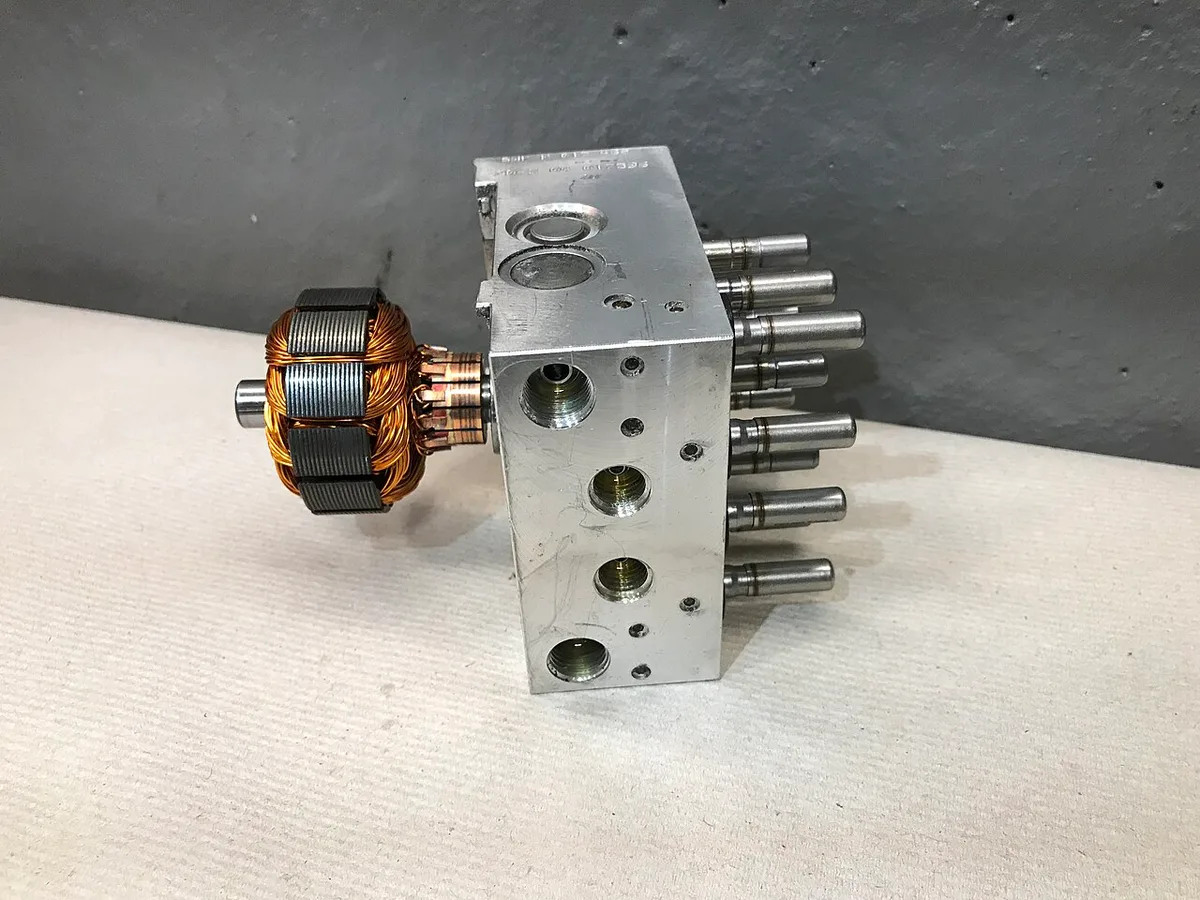
Image source: Wikimedia Commons / Samf4u (CC BY-SA)

Image source: Wikimedia Commons / Credit, X-ray: NASA/CXC/Univ. of Valparaiso/M. Kuhn et al; IR: NASA/JPL/WISE
- ABS control unit (ECU), processes sensor data.
- ABS pump (hydraulic unit), supplies pressure.
- Wheel speed sensors, detect rotation.
- Pressure regulator valve, modulates brake fluid.
- CAN‑bus interface, communicates with other modules.
| Failure Mode | Typical Symptom | Diagnostic Clue |
|---|---|---|
| Water intrusion | Intermittent ABS light, DTC C0265 | Visual corrosion on connector |
| Software glitch | ABS deactivation during hard stop | Scan for DTC C0271 |
| Pump malfunction | Pedal pulsation, reduced braking | Pressure gauge reads below 900 psi |
For accurate DTC reading, use a scan tool that supports CAN‑bus; our guide on selecting a scanner covers compatible models. Details are in the FMVSS 105 standard.
Step-by-Step Diagnosis & Safe Replacement
Follow these steps to confirm a bad ABS module and decide whether to replace it.
| Tool | Purpose |
|---|---|
| OBD‑II scanner | Read and clear DTCs |
| Multimeter | Test voltage at module pins |
| Pressure gauge (0‑1500 psi) | Verify pump output |
| Torque wrench (10 Nm) | Secure mounting bolts |
- Connect the scanner and read all DTCs.
- Clear DTCs, then perform a self‑test by pressing the brake pedal slowly.
- Inspect ABS sensor connectors for corrosion; clean or replace as needed.
- Measure pump pressure; it should read 900‑1000 psi at idle.
- If pressure is low, replace the ABS pump. Otherwise replace the control unit.
- Reinstall the module, torque bolts to 10 Nm, and clear codes again.
- Road‑test at low speed; ABS should engage within 0.5 seconds.
For proper bolt torque, see our guide on tightening lug nuts safely. For replacement specifications, refer to the manufacturer’s service bulletin.
Costs, Alternatives & When to Call a Pro
OEM modules cost $300‑$800; aftermarket units range $150‑$400 and often include a warranty.
- OEM (Bosch, Continental), higher price, exact fit.
- Aftermarket (TRW, Beck Arn), lower cost, may require reprogramming.
- Refurbished unit, budget option, verify warranty.
- Professional service, labor $100‑$200, includes diagnostic time.
If you need new fasteners, check the budget for fasteners guide. For compliance details, see the FMVSS 105 standard.
Frequently Asked Questions
What does a flashing ABS light mean?
A flashing ABS light indicates a critical fault; the system is disabled. Stop the vehicle safely and scan for DTCs. Do not drive until the module is repaired or replaced.
Per NHTSA, continued operation can increase stopping distances on wet surfaces.
Can I drive with a faulty ABS module?
You can drive, but braking performance will be reduced, especially on slippery roads. The vehicle may not meet FMVSS 105 requirements. Without ABS, emergency stops can take up to 30% longer.
Use extra caution and have the unit repaired as soon as possible. Replace the module promptly to restore safety.
How often should I test the ABS self‑test procedure?
Perform the self‑test at every oil change or after any brake work. The procedure takes less than a minute and confirms the system communicates correctly. If the ABS light stays on, repeat the test after cleaning connectors.
Document the results in your service log for future reference.
What are the most common DTCs for a failing ABS module?
C0265 indicates a communication fault between the ABS ECU and the pump. C0266 signals a pump motor circuit failure. C0271 points to a wheel speed sensor issue.
Clearing these codes after repairs confirms the fault is resolved.
When should I replace the ABS module instead of repairing it?
Replace the module if the pump pressure test fails, if corrosion is severe, or if the ECU fails a flash reprogramming. Repair is viable only for sensor or connector issues. Replacement restores full compliance with FMVSS 105.
OEM parts carry a 2‑year warranty; aftermarket units often include a 1‑year guarantee. For broader fluid maintenance guidance, see our fluid maintenance guide.
