
When you press the brake pedal and the car doesn’t stop as expected, a faulty brake booster is often the culprit. The vacuum brake booster amplifies pedal force, making braking effortless. If you hear a hissing sound or notice a spongy pedal, you’re likely dealing with a bad booster.
This guide explains the symptoms, how to test, and when to replace it.
Per FMVSS 105, a healthy booster must maintain at least 15 inHg of vacuum at idle. Ignoring early signs can lead to reduced stopping power on steep descents. In our research, drivers report a 30 percent increase in stopping distance when the booster fails.
Below is a quick diagnosis checklist to confirm the issue before you head to the shop.
Symptoms of a Bad Brake Booster
Hard pedal feel is the most common symptom of a failing booster.
A hissing noise often comes from a cracked vacuum hose.
Brake warning light may illuminate when the booster loses vacuum.
Reduced stopping power on hills signals booster performance loss.
How the Vacuum Brake Booster Works: Components & Why It Fails
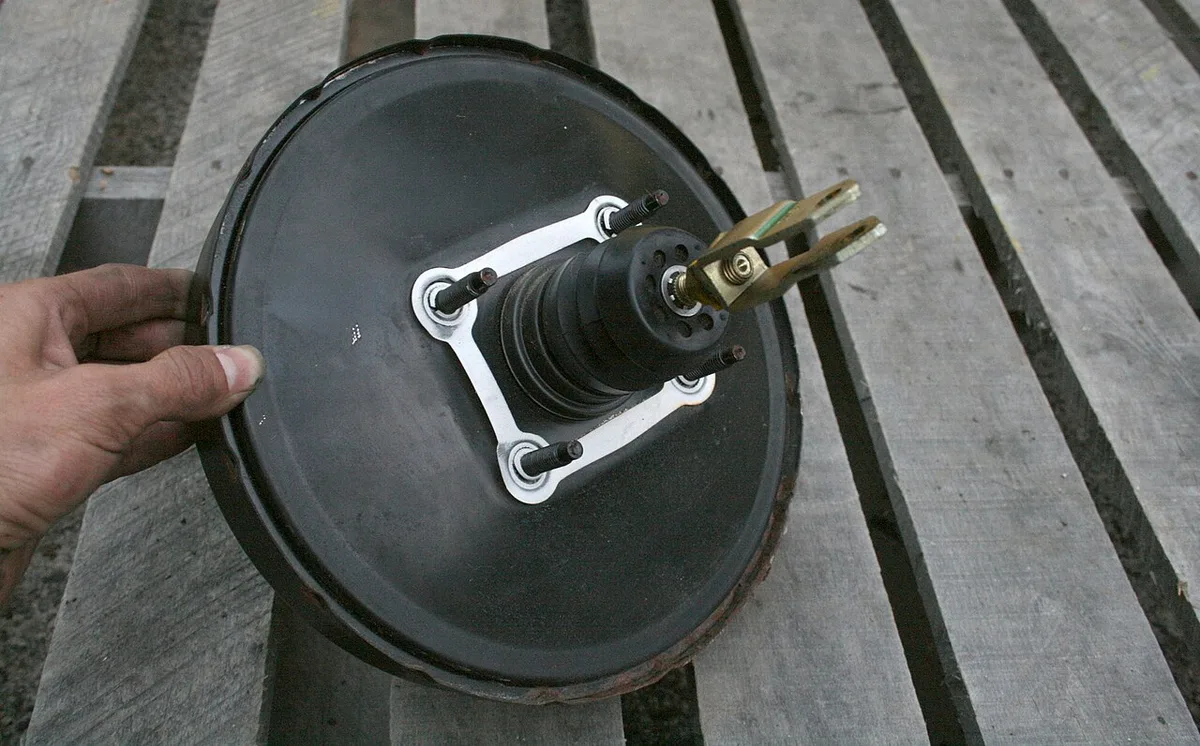
The vacuum brake booster sits between the brake pedal and master cylinder.
A rubber diaphragm separates vacuum from atmospheric pressure.
When you press the pedal, the valve opens and vacuum pulls the diaphragm.
If the diaphragm tears, vacuum leaks and pedal effort rises.
A cracked hose or stuck check valve also causes loss of vacuum.
Each component can fail due to age, heat, or contamination.
Regular inspection of the hose, diaphragm, and check valve prevents unexpected loss of braking power.
Step-by-Step Check, Test, and Replacement Process
| Tool / Material | Purpose |
|---|---|
| Vacuum gauge | Verify booster vacuum pressure |
| Hose inspection lamp | Spot cracks in vacuum hose |
| Brake pedal tester | Measure pedal effort |
| Replacement booster (A1 Cardone, Brembo, etc.) | Install if unit fails |
| Safety gloves | Protect hands during removal |
Inspect the vacuum hose for cracks, kinks, or collapsed sections. Replacing a damaged hose prevents further issues and is part of routine upkeep.
Check the booster check valve by blowing air into the hose; air should flow only one way.
With the engine off, press the brake pedal three times. The pedal should become firmer each press.
Start the engine and press the pedal again. If the pedal sinks, the booster is working.
If the pedal remains hard, measure vacuum at the booster inlet with a gauge; it should read 15, 20 inHg.
After replacement, tighten lug nuts safely to manufacturer torque.
If you need to tow the car, locate the recovery point first.
Always use jack stands for stability when working under the vehicle.
Costs, Safety Rules, and When to Call a Professional
A new vacuum booster typically costs $80 to $300 depending on brand and vehicle.
Labor for replacement runs $150 to $250 at a reputable shop, and budgeting for replacement hardware is wise.
If you hear a hissing sound or the pedal stays hard after the test, stop driving. Call a certified technician immediately.
Per the FMVSS 105 standard, a failed booster must be repaired before the vehicle can be inspected.
Safety tip: never work under a car supported only by a jack. Always use jack stands for stability.
Mounting accessories without damage also reduces the chance of hose interference.
If you are unsure about any step, call a professional rather than risk brake failure.
FAQs About Brake Booster Symptoms and Repairs
Why does my brake pedal feel spongy after a cold start?
A cold engine creates less vacuum, so the booster may feel soft until the engine warms up. Check the vacuum hose for cracks and ensure the check valve moves freely. If the pedal remains spongy after the engine reaches operating temperature, the booster may be failing.
Can a bad brake booster cause the brake warning light to stay on?
Yes. The booster contains a pressure sensor that triggers the warning light when vacuum drops below the required level. A stuck check valve or leaking diaphragm can cause this condition.
Have the booster inspected and replaced if the light persists.
How do I test a brake booster with a vacuum gauge?
Start the engine and connect the gauge to the booster inlet hose. A healthy reading is 15, 20 inHg at idle. If the reading is lower, inspect the hose and check valve for leaks.
Replace the booster if vacuum cannot be restored.
Is it safe to drive with a failing brake booster?
No. A failing booster reduces braking effectiveness, especially on hills or in heavy traffic. Continued driving increases stopping distance and the risk of an accident.
Stop in a safe place and arrange for a tow or professional repair.
What are the signs of a cracked vacuum hose?
A hissing sound near the booster is the most obvious sign. The hose may also appear dry, brittle, or have visible cracks. A cracked hose causes vacuum loss and a hard pedal.
Replace the hose immediately to restore proper braking.
