
When your car won't start, the starter motor is often the culprit. Recognizing symptoms of a bad starter motor can save you time and money. In our research, drivers report a single click or rapid clicking as the most common sign.
Ignoring these cues can lead to a dead battery or costly towing.
SAE J1115 specifies a healthy starter should draw 150 to 300 amperes during operation. As of 2026, most OEM starters meet this benchmark, while worn units drop below 100 A. Knowing the expected current helps you decide whether to test the motor or replace it.
The following sections guide you through visual checks, electrical tests, and safe replacement steps.
Symptoms of a Bad Starter Motor
A bad starter motor causes a single click or rapid clicking. The engine may crank slowly or not at all. Grinding or whining noises indicate gear wear.
Excessive battery drain points to starter failure.
How the Starter Motor Works and What to Look For
The starter motor converts electrical energy into mechanical rotation to turn the engine over. It receives high current from the battery through the solenoid. When the ignition switch signals, the solenoid engages the drive gear with the flywheel ring gear.
Per the SAE J1115 standard, proper torque and speed are critical for reliable starts.
What to look for includes visual wear on the drive gear teeth and brush condition. A worn gear shows chipped or rounded teeth, while damaged brushes appear cracked or excessively short. If you notice these signs, compare them against the OEM starter specifications before replacing.
For a quick confirmation, try a starter fluid test to rule out fuel delivery issues. If the engine still doesn’t crank after the test, the starter motor likely needs service.
Key components and typical specs include:
- Starter drive gear: 10, 12 teeth, mesh with flywheel ring gear.
- Solenoid: pull‑in coil resistance 0.5, 2 Ω, engages drive gear.
- Brushes: carbon material, rated for 80,000, 150,000 miles.
- Housing: aluminum alloy, IP54 dust protection.
- Torque rating: 150, 250 Nm at 2,000, 3,000 rpm.
Step-by-Step Test, Repair, and Replacement Process
Start by verifying battery voltage with a multimeter before touching the starter. A healthy battery should read 12.6 V at rest, low voltage mimics starter failure. Disconnect the negative battery terminal to prevent shorts while you work.
Gather a socket set, torque wrench, and a diagnostic scan tool for confirmation. Keep a car recovery point nearby in case the vehicle won’t move after testing.
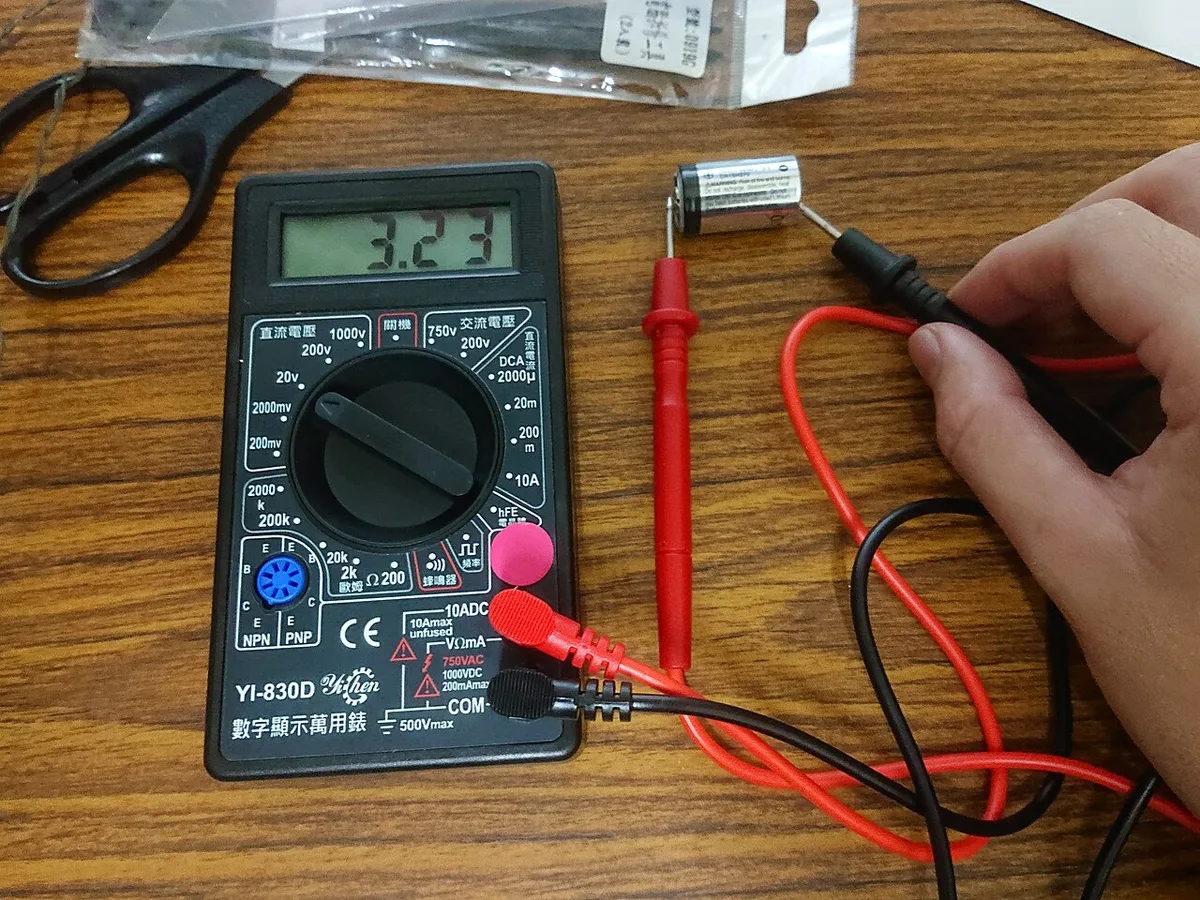
Image source: Wikimedia Commons / Jiazheng0609 (CC BY-SA)
Follow these steps to test, repair, or replace the starter motor:
- Verify battery voltage is 12.6 V; replace battery if low.
- Remove starter bolts using a socket, and note the torque sequence for re‑installation.
- Disconnect starter wiring harness and solenoid connector.
- Test starter current draw with a clamp meter, and compare to 150, 300 A spec.
- If current is low, check solenoid resistance (0.5, 2 Ω) with an ohmmeter.
- Inspect drive gear teeth for wear; replace if chipped or rounded.
- Install new starter, torque bolts to manufacturer spec using an impact wrench torque.
- Reconnect battery, start engine, and listen for normal engagement.
If the engine still fails to start after these steps, consider a professional diagnostic scan to read any stored codes.
Costs, Safety, and When to Call a Professional
Replacing a starter motor typically costs $150 to $500 for parts, plus $100 to $200 for labor. A diagnostic scan adds $50 to $150, while towing may be required if the vehicle won’t move.
Below is a quick cost reference for common services.
| Service | Approx Cost (USD) |
|---|---|
| Diagnostic scan | $50 – $150 |
| Starter motor (parts) | $150 – $500 |
| Labor (installation) | $100 – $200 |
| Emergency tow | $75 – $250 |
Cost factors to consider include:
- OEM starter: higher price, longer warranty.
- Remanufactured starter: lower cost, 90‑day warranty.
- Labor rates vary by region, urban shops charge more.
- Additional parts (bolts, gaskets) add $20, $50.
Always disconnect the negative battery terminal before removing the starter to avoid electrical shorts. Wear safety glasses and insulated gloves, and work in a well‑ventilated area. If you encounter corroded wiring, damaged flywheel teeth, or the engine still won’t crank after testing, seek a certified technician.
A shop can perform a compression test and confirm whether the starter or another component needs replacement. Perform regular maintenance like a transmission fluid top‑up to keep the drivetrain healthy.
FAQs & Final Verdict: Your Decision Guide
How do I know if my starter is bad and not the battery?
Check battery voltage first; if 12.6 V at rest and the starter draws less than 150 A, the starter is likely faulty. A single click or no crank despite a good battery points to starter failure.
Can a bad starter cause the engine to crank slowly?
Yes. Insufficient torque from worn brushes or a damaged drive gear results in slow or weak cranking. Compare the observed speed to the 2,000, 3,000 rpm specification.
Is it safe to replace a starter myself?
It is safe if you disconnect the battery, wear protective gear, and use proper torque values. Ensure the engine is cool and the area is well‑ventilated before beginning work.
What are the typical costs for starter replacement?
Parts range $150, $500, labor $100, $200, and a diagnostic scan $50, $150. Add $20, $50 for bolts and gaskets, and consider towing if the vehicle won’t move.
When should I call a professional instead of DIY?
Call a professional if you see corroded terminals, damaged flywheel teeth, or if the engine still won’t start after testing. A certified technician can perform compression checks and confirm component failure.
If you hear a single click and the engine won’t turn over, test the battery first; if voltage is good and current draw is low, replace the starter yourself or have a shop install a new unit.
