
If you notice blue smoke from your exhaust, you may have symptoms of a bad valve seal. Oil consumption that climbs past 0.5 qt per 1,000 mi is another clear warning. A rough idle or misfire often follows seal failure, especially under load.
Ignoring these signs can lead to loss of compression and costly engine work.
Per ASE testing standards, a leak‑down reading above 5 % confirms a valve seal leak. Manufacturer specifications for most gasoline engines list a minimum compression of 120 psi. When you see these numbers, it’s time to inspect the valve train.
Symptoms of a Bad Valve Seal
Symptoms of a bad valve seal include blue exhaust smoke. Oil burn may exceed 0.5 qt per 1,000 mi. Compression can drop below 120 psi on a leak‑down test.
A tapping noise often comes from the valve train.
Step-by-Step Diagnosis Workflow
Visual Inspection Checklist
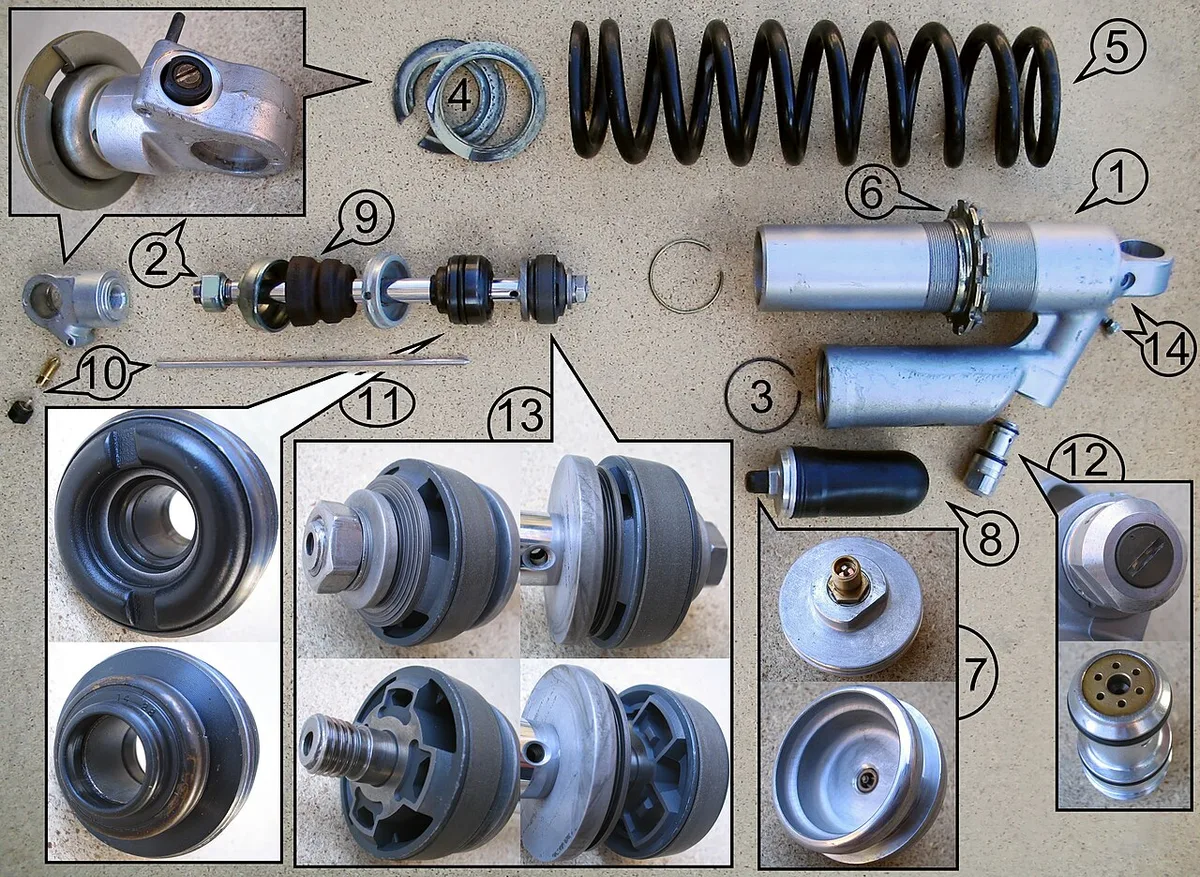
Image source: Wikimedia Commons / A7N8X (CC BY-SA)
- Look for blue oil smoke during acceleration.
- Check for oil pooling around valve stems. oil pooling signs
- Inspect valve seals for cracks or hardening. seal inspection tips
- Listen for a tapping noise from the valve train.
- Verify oil level drops faster than normal.
If any of these signs appear, move to compression testing to confirm. Document findings for each cylinder to track progress.
Compression Test Procedure
Image source: Wikimedia Commons / Cjp24 (CC BY-SA)
- Remove spark plugs to access cylinder bores.
- Attach a compression gauge to the spark plug hole.
- Crank the engine until the gauge stabilizes.
- Record psi for each cylinder; note any below 120 psi. diagnostic tool
- Repeat for all cylinders and compare readings.
Per ASE guidelines, a cylinder reading under 120 psi indicates a seal issue. Low readings that differ by more than 10 % suggest a leak.
Leak‑Down Test Interpretation
A leak‑down test measures how much air escapes under pressure. Values above 5 % mean the valve seal is compromised. If the leak is uneven across cylinders, focus on the highest reading.
oil on plugs can be a secondary clue.
Decision Tree: Replace or Repair?
- If compression is below 110 psi, replace the seal.
- If leak‑down exceeds 10 %, replace the seal.
- If valve guide is worn, replace the guide instead.
- If only oil burn is present and compression is ok, try a seal kit.
Common Mistakes & How to Avoid Them
Skipping the Leak‑Down Test
Image source: Wikimedia Commons / Peter Southwood (CC BY-SA)
Many DIYers rely only on compression numbers, missing small leaks that cause oil burn. Always run a leak‑down test to catch issues early.
Using the Wrong Seal Material
Rubber seals work up to 250 °C; PTFE (Teflon) seals handle higher temperatures and provide a tighter seal on modern GDI engines. PTFE also resists oil degradation better, extending service life. Choose PTFE for high‑performance or turbo applications.
Ignoring Valve Guide Condition
A worn guide lets the valve move sideways, breaking the seal even if the seal is new. Replace guides when clearance exceeds 0.025 in to restore proper sealing. If the valve guide is worn, replace it before installing a new seal.
Costs, Specs & When to Replace
Typical Seal Lifespan & Pricing
Most rubber valve seals last 50, 100 k miles; PTFE versions can reach 150 k miles. Aftermarket seals typically cost $8, $15, while OEM kits run $12, $28. Labor for replacement usually takes 1, 2 hrs, depending on engine layout.
OEM vs. Aftermarket Options
OEM seals meet exact factory tolerances and are recommended for emissions‑controlled engines. Aftermarket seals often use higher‑grade PTFE and can be a cost‑effective upgrade. Check the part number against the manufacturer’s catalog to ensure fit.
When Replacement Is Mandatory
Replace the seal if compression falls below 110 psi or leak‑down exceeds 10 %, as detailed in diagnostic reference. Also replace when oil consumption spikes above 0.5 qt per 1,000 mi, see lug nut pricing for cost context. If the valve guide is worn, replace it before installing a new seal.
FAQs
How do I know if a valve seal is causing oil burn?
A bad valve seal typically produces blue exhaust smoke, especially under load, and the oil level drops faster than normal. A leak‑down test showing more than 5 % air loss confirms the seal is leaking. Check for oil pooling around valve stems during inspection.
Can a bad valve seal cause a misfire?
Yes, a leaking seal reduces compression, which can make the cylinder misfire at idle or under acceleration. The misfire may appear as a rough idle, stalling, or a loss of power. Replacing the seal restores proper compression and clears the misfire.
What’s the difference between rubber and PTFE valve seals?
Rubber seals are oil‑resistant and work well up to about 250 °C, while PTFE (Teflon) seals handle higher temperatures and provide a tighter seal on modern GDI engines. PTFE also resists oil degradation better, extending service life. Choose PTFE for high‑performance or turbo applications.
Do I need special tools to replace valve seals?
You’ll need a valve spring compressor to safely remove the springs, a torque wrench for valve cover bolts, and a socket set for the cover nuts. Basic hand tools are enough; no specialty equipment is required for most overhead valve engines.
How long does a valve seal replacement take on a typical car?
On a four‑cylinder engine, expect 1, 2 hours for removal, seal replacement, and reassembly. A V6 or V8 may take 2, 3 hours due to more valves. Factor in additional time if you also replace worn valve guides.
Most DIYers complete the job in a weekend afternoon with proper preparation, see seal inspection tips for guidance.
