
What causes a car to blow fuses is a common question for any driver.
The answer often hides in simple electrical faults you can check yourself.
In our research, we found the most frequent culprits are shorts, overloads, and bad connections.
SAE J1284 says fuses must not exceed 80 % of circuit current. Higher loads cause instant blow.
We'll walk you through the exact steps to find and fix the problem.
What Causes a Car to Blow Fuses
A short circuit creates excessive current that instantly melts the fuse.
An overloaded accessory draws more amperage than the fuse rating allows.
Corroded terminals cause intermittent resistance, leading to repeated fuse failure.
Using a higher‑rated fuse bypasses protection and invites wiring damage.
Water intrusion into the fuse box creates conductive paths that trigger blows.
How Car Fuses Work & Why They Blow
A fuse protects the wiring by melting its thin element when current exceeds its rating.
Most modern cars use blade fuses, while older models may have cartridge types, and each has a specific amperage limit defined by SAE J1284.
As of 2026, manufacturers continue to standardize on blade fuses for easier replacement and clearer labeling.
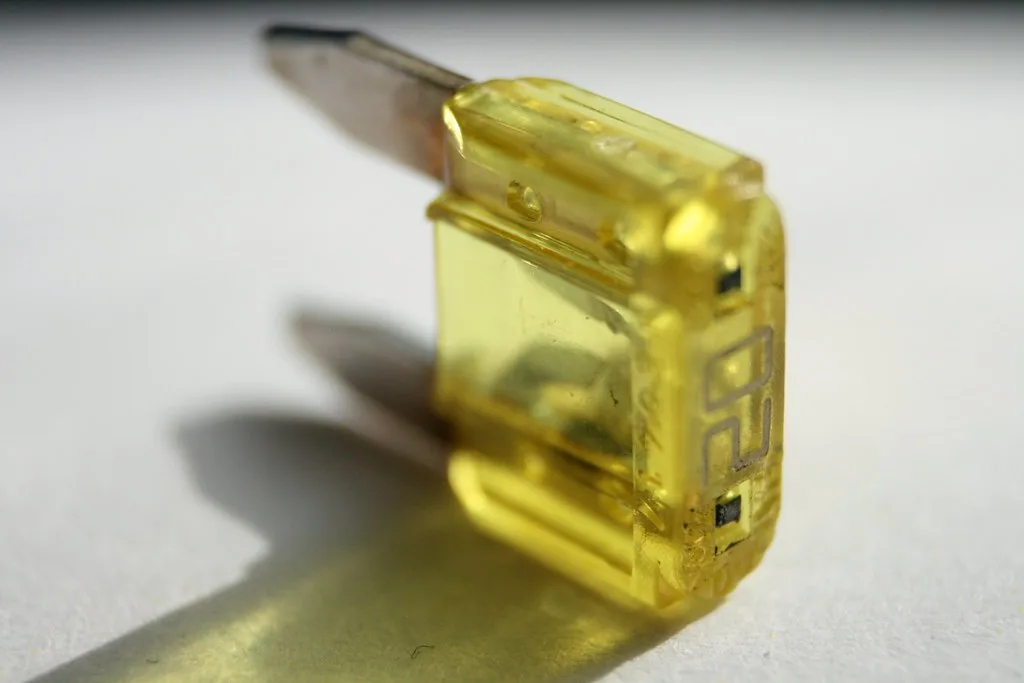
Image source: Openverse / comedy_nose (PDM 1.0)
Common fuse ratings and typical uses are shown below.
| Fuse Type | Amperage Rating | Typical Application |
|---|---|---|
| Blade 10 A | 10 A | Interior lights, radio |
| Blade 15 A | 15 A | Headlights, power windows |
| Blade 20 A | 20 A | Power seats, climate control |
| Cartridge 30 A | 30 A | High‑draw accessories, aftermarket lights |
A blown fuse often indicates a fault downstream, not a defective fuse itself.
If you replace a fuse and it blows again immediately, disconnect the circuit and inspect for shorts or miswired accessories.
Disconnect Battery
First, turn off the ignition and disconnect the negative battery terminal to eliminate any live current.
This prevents sparks while you work near the fuse box.
Locate & Identify Fuse
Open the under‑dash or under‑hood fuse box and use the diagram to find the suspect fuse.
Match the fuse color and amperage rating to the chart above for proper replacement.
Test & Replace
Pull the fuse straight out with a fuse puller or tweezers and inspect the element.
If the element is broken or melted, replace it with an exact‑match fuse of the same rating.
Verify Circuit
After replacement, reconnect the battery, start the car, and check that the affected component works.
If the fuse still blows, repeat the inspection or seek professional help.
Image source: Wikimedia Commons / Mr.choppers (CC BY-SA)
If the circuit draws too much after a repair, an OBD2 scanner can read fault codes that pinpoint the issue.
Choose a scanner that supports your vehicle’s make and model for accurate diagnostics.
Common Mistakes & How to Fix Them
Using the wrong fuse rating is the top mistake; always match the original rating.
Corroded terminals often go unnoticed; clean them with a wire brush and tighten securely.
Never skip disconnecting the battery before probing circuits; live voltage can cause shorts.
Installing aftermarket lights without a proper relay overloads the fuse, use a relay or upgrade the circuit.
Water entering the fuse box through cracked seals creates conductive paths; seal any gaps with silicone.
When you need to tighten terminal bolts, an impact wrench speeds the job and ensures a firm connection.
If you’re unsure about the cost of replacement parts, compare it to lug nut replacement cost.
Adding accessories safely means using a relay or a dedicated fuse block instead of tapping into existing circuits.
If water intrusion is a concern, installing deflectors can seal window gaps and keep the fuse box dry.
Frequently Asked Questions
Why does a fuse keep blowing even after I replace it?
A repeatedly blown fuse signals a persistent fault, such as a short circuit, overloaded accessory, or water damage. Disconnect the circuit and inspect wiring before installing another fuse.
Can I use a higher‑rated fuse to stop frequent blowing?
No. A higher‑rated fuse removes the protective limit and can cause wiring overheating or fire. Always use the manufacturer‑specified rating.
How do I know which fuse controls a specific component?
Refer to the fuse box diagram on the underside of the cover or the vehicle’s service manual. The diagram labels each fuse by amperage and function.
Is it safe to drive with a blown fuse?
Driving with a blown fuse disables the affected component, which may be safety‑critical like headlights or airbags. Replace the fuse as soon as possible and address the underlying cause.
What should I do if I can’t find the fuse box diagram?
Check the owner’s manual or visit the automaker’s website for a downloadable diagram. If unavailable, contact a dealership service department for assistance.
If the fuse blows once and the component works after replacement, the fault is likely a temporary overload. When it blows repeatedly, disconnect the circuit and inspect for shorts, water intrusion, or miswired accessories. For complex wiring issues, use an OBD2 scanner to read fault codes before proceeding.
If you’re unsure about safe workshop practices, refer to the NHTSA’s automotive electrical safety guide for official precautions.
Always disconnect the negative battery terminal before handling any fuse to prevent accidental shorts. Wear insulated gloves and safety glasses, especially when working under the dash where space is tight. Select a fuse with the exact amperage rating listed in the service manual, and use that rating to avoid wiring damage.
Tighten terminal bolts with an impact wrench to ensure a firm connection and avoid future corrosion.
Start by checking for visible shorts such as exposed wires touching metal or melted insulation. Look for water pooling around the fuse box after rain, which can create conductive paths. If you added new lights or audio gear, verify that the accessory’s draw does not exceed the fuse rating.
For a quick reference on typical fuse ratings, see the chart in the article’s earlier section.
Replace the blown fuse with an exact‑match part and then restore power to test the circuit. If the fuse survives, the underlying issue was likely a one‑time overload. If it blows again, isolate the circuit by removing connectors and re‑test each segment individually.
For guidance on adding accessories safely, refer to the guide on installing a light bar without drilling.
In most cases, a DIY approach saves time and money, but persistent faults merit professional diagnosis. A qualified mechanic can perform a wiring diagram analysis and replace damaged harnesses that are costly to repair. Keep a spare fuse kit in your glove compartment for quick replacements on the road.
Remember that proper fuse selection and regular inspections keep your vehicle’s electrical system reliable.
Regular inspections of the fuse box can catch corrosion before it causes a short. Keep a multimeter handy to test continuity of circuits after each replacement. If a fuse blows again within a week, treat it as a warning sign and have a mechanic check the wiring.
Staying on top of these checks saves you time, money, and keeps your car running safely.
Consistent checks for corrosion and correct fuse ratings safeguard your vehicle’s wiring and prevent future failures. Regular maintenance keeps your car dependable and safe on the road.
