
What causes a car to hesitate when accelerating is a common frustration for drivers.
The symptom often appears after a cold start or during heavy load.
Our research shows most cases trace to sensor or fuel delivery issues.
Ignoring it can raise repair costs and reduce safety.
Per SAE J1349 testing, throttle response should be under 200 ms in normal operation.
If you notice a lag of half a second or more, a diagnostic scan is advisable.
A quick OBD‑II check can reveal codes such as P0120 or P0171.
Below we break down the most likely culprits and how to confirm them.
What Causes a Car to Hesitate When Accelerating
A faulty throttle position sensor sends incorrect voltage.
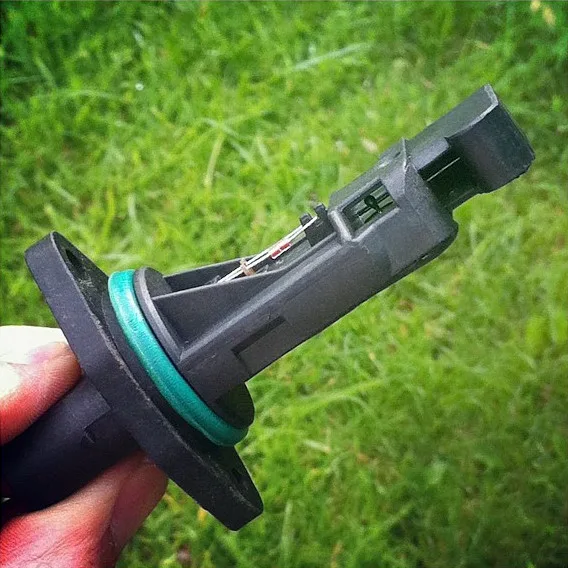
Clogged mass airflow sensor misreads engine load.
Weak fuel injectors deliver uneven spray during acceleration.
Transmission torque converter slip reduces power transfer.
Ignition coil failure causes misfire and hesitation.
These issues are confirmed by OBD‑II codes P0120 or P0171.
Most drivers first notice the lag in city traffic, where quick throttle response matters.
Addressing the cause early prevents more costly repairs down the road.
Key Components Behind the Lag
Understanding the parts that control throttle response helps you pinpoint the fault.
A worn throttle shaft or dirty throttle body can also cause hesitation even when sensors read correctly.
- Throttle position sensor (TPS) reports pedal position to the ECU.
- Mass airflow sensor (MAF) measures incoming air for fuel calculation.
- Fuel injectors spray precise fuel timing; choose a scanner helps verify flow.
- Transmission torque converter transmits power; adding transmission fluid can restore slip.
- Ignition coil pack provides spark; oil on spark plugs may indicate misfire.
| Symptom | Likely DTC |
|---|---|
| Delayed throttle response | P0120 |
| Rough idle, stumble | P0171 |
| Misfire during acceleration | P0300 |
If a recall exists for a faulty throttle body, the NHTSA recall database will list the affected VIN range.
When the throttle body is stuck open or closed, cleaning often restores smooth operation.
Step-by-Step Diagnosis & Fix
Connecting the right scanner and interpreting codes is the first step toward a fix.
Each test isolates a specific system, reducing guess work and saving time.
- Connect an OBD‑II scanner and read all stored codes.
- Clear codes and perform a short test drive to confirm the symptom.
- Check TPS voltage with a multimeter; expect 0.5 V at idle and 4.5 V at wide open throttle.
- Measure fuel pressure; it should stay between 30 and 45 psi.
- Inspect ignition coils for cracks; replace if resistance is out of spec.
- If transmission slip is suspected, flush and refill with manufacturer‑specified fluid; transmission filter replacement may be required.
- Look for vacuum leaks around the intake manifold; a cracked hose can mimic hesitation.
Per SAE J1349, a response time under 200 ms is normal; if the lag persists after these checks, consider a professional ECU reflash.
If you’re uncomfortable with multimeter tests, a local shop can perform the same checks for a modest fee.
Mistakes to Avoid & Safety Warnings
Skipping a step or using the wrong tool can turn a simple fix into a costly repair.
Always disconnect the battery before accessing electrical components to avoid shorts.
- Resetting codes without fixing the root cause can hide a serious fault.
- Using starter fluid in the intake can damage sensors; starter fluid use is not recommended.
- Ignoring a check‑engine light may lead to catalytic converter failure.
- Performing fuel pressure tests without relieving system pressure can cause injury.
- Installing a used throttle body without cleaning can repeat the problem.
- Forgetting to clear the throttle memory after cleaning can leave the ECU thinking the throttle is stuck.
Always wear safety glasses and work in a well‑ventilated area; keep the vehicle’s battery disconnected when accessing electrical components.
After any repair, perform a short test drive to confirm the hesitation is gone.
Frequently Asked Questions
Can a dirty air filter cause hesitation?
A clogged air filter restricts airflow, which can make the MAF sensor misread and cause the ECU to reduce fuel, resulting in hesitation. Cleaning or replacing the filter is a simple first step that often restores normal response immediately and improves overall performance.
How much does a throttle body replacement typically cost?
Throttle body replacement usually costs between $300 and $600 for the part, plus $150 to $250 for labor at a shop, totaling roughly $450 to $850. Prices vary by vehicle make and regional labor rates as of 2026. [transmission filter replacement] may also be needed if the converter is slipping.
Is hesitation dangerous in heavy traffic or when towing?
Yes, delayed throttle response can create unsafe gaps in traffic and cause sudden power loss when towing, increasing collision risk. If you notice the symptom, pull over safely and address the issue before continuing, especially with a load at highway speeds and reduce vehicle control.
Should I replace the whole throttle body or just clean it?
Cleaning the throttle body can restore function if carbon buildup is the sole cause, but a worn or faulty TPS or motor often requires replacement. Inspect the housing for wear; if the shaft moves freely and the sensor reads correctly, cleaning may suffice.
Can a software update fix hesitation issues?
ECU reflash updates can correct timing and fuel trim errors that cause hesitation, especially when a manufacturer issues a service bulletin for a known fault. If your vehicle has an outstanding recall or TSB, a dealer flash may resolve the problem without hardware replacement.
Can a bad battery cause hesitation?
A weak battery can cause the ECU to enter a “limp mode,” reducing throttle response until voltage stabilizes. Testing the battery voltage with a multimeter and replacing it if it drops below 12.2 V at rest often resolves the issue.
