
When you turn the key and hear a click but the engine won’t spin, the starter can’t engage. The sound can be a single click, a rapid double click, or a series of clicks. Each pattern points to a different component, so identifying it narrows the repair.
A weak battery often fails to spin the starter. A starter solenoid that sticks open produces a single click but no rotation. A failing ignition switch fails to close the circuit, causing a click only.
Corroded or loose battery terminals create intermittent clicks during cranking attempts. A dead fuel pump relay can mimic a starter click when the engine stalls.
Problem Overview: Clicking Noise When Starting
A clicking noise when you turn the key usually means the starter can’t engage. The sound can be a single click, a rapid double click, or a series of clicks. Each pattern points to a different component, so identifying it narrows the repair.
- Single click often indicates a battery or starter solenoid issue.
- Rapid double click typically signals an ignition switch or key fob problem.
- Intermittent clicks suggest loose or corroded terminals.
- No click at all may mean the starter motor is seized.
| Click Pattern | Likely Cause | Quick Test |
|---|---|---|
| Single click | Battery low / solenoid stuck | Measure voltage, tap solenoid |
| Rapid double click | Ignition switch / key fob | Turn key, check switch voltage |
| Intermittent click | Loose/corroded terminals | Inspect and clean terminals |
| No click | Starter motor seized / wiring | Listen with stethoscope, check fuse |
Per ASE testing standards, a healthy battery should deliver at least 300 A for a 4‑cylinder engine. A load test confirms the battery can sustain that current under load. Use the pattern you hear to choose the right test and avoid unnecessary part replacements.
If the pattern is unclear, a multimeter can confirm the exact fault.
Quick Diagnosis Flow: Decision Tree
When a car clicks but won’t start, a quick decision tree saves time. We’ll walk through the most likely causes in order of probability. Each step tells you what to check and what to do next.
| Step | Action | What to Look For |
|---|---|---|
| 1 | Measure resting voltage | 12.6 V or higher |
| 2 | Inspect terminals | Clean, tight, no corrosion |
| 3 | Listen to click pattern | Single click vs. rapid double |
| 4 | Test starter draw | 300–600 A current |
| 5 | Verify ignition signal | Key turn sends voltage |
- If voltage < 9.6 V → recharge or replace battery.
- If voltage OK but no crank → test starter solenoid.
- If rapid double click → check ignition switch or key fob battery.
- If click but no fuel pump hum → inspect fuel pump relay.
- If all checks pass → consider flywheel tooth damage.
Safety first: disconnect the negative battery terminal before probing any circuit. Wear insulated gloves and safety glasses to avoid electric shock. Per NHTSA FMVSS 111, the starter circuit must deliver at least 300 A for a 4‑cylinder engine.
If you’re unsure, a professional diagnostic can confirm the cause.
Image source: Wikimedia Commons / Swapnil EP (CC BY-SA)
Common Causes & First Checks
Most clicking noises stem from three main areas: the battery, the starter circuit, or the ignition system. Each has a distinct click pattern and a simple test you can perform. Knowing which to check first speeds up the fix.
- Battery low voltage: measure resting voltage. Replace if below 9.6 V.
- Corroded terminals: clean with a wire brush and tighten to 5 Nm.
- Starter solenoid stuck: tap gently; if it engages, replace solenoid.
- Ignition switch failure: turn key, check for voltage at switch.
- Flywheel tooth damage: inspect flywheel; replace if teeth are missing.
If the starter won’t engage, you might try spraying starter fluid into the spark plug hole for a quick test. A multimeter helps confirm voltage; a scan tool can read fault codes. If the click persists after these checks, schedule a professional diagnostic to avoid further damage.
Mistakes to Avoid & Safety Tips
Even experienced drivers can miss simple checks that lead to costly repairs. Skipping the voltage test often leads to replacing a good starter. Over‑tightening terminals can damage the battery post and cause intermittent clicks.
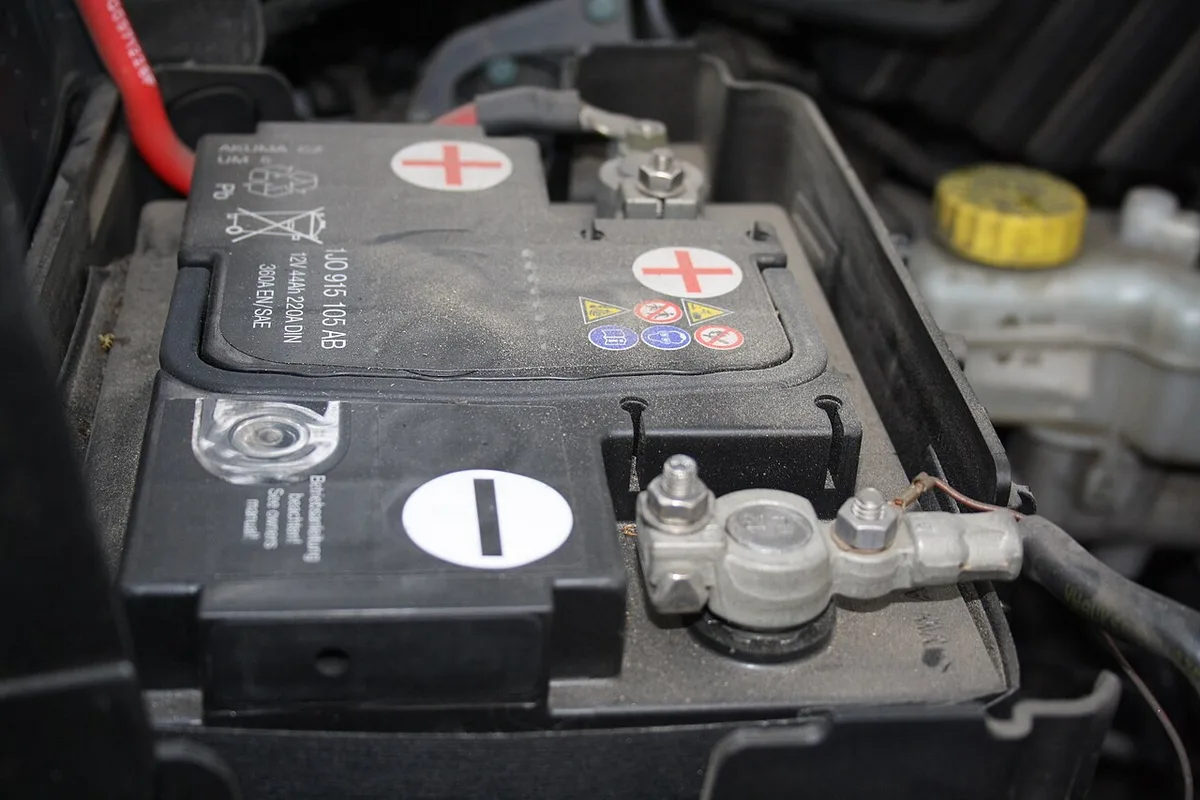
Image source: Wikimedia Commons / Frettie (CC BY)
- Skipping voltage check before jump‑starting: you may think the battery is dead when it’s just low.
- Over‑tightening terminals: excessive torque can crack the battery post.
- Ignoring corrosion: dirty connections cause voltage drop and false clicks.
- Not disconnecting the negative battery terminal: risk of short circuit or electric shock.
- Using incorrect starter fluid: can flood the engine if sprayed into the spark plug hole.
Always disconnect the negative battery terminal and wear insulated gloves when probing circuits. Safety glasses protect your eyes from sparks if a connection arcs. Per ASE, a visual inspection of the battery case for cracks is part of a complete check.
A load test confirms the battery can sustain the required cranking amps. Following these precautions prevents damage and keeps you safe while diagnosing the click. If you’re still unsure, a professional can finish the diagnosis quickly.
Frequently Asked Questions
Why does the car click once but not start?
A single click usually means the battery voltage is too low to spin the starter or the starter solenoid isn’t engaging. Check the voltage first; if it’s below 9.6 V, recharge or replace the battery. If voltage is good, test the solenoid or have a shop verify the circuit.
Can a bad fuel pump relay cause a click?
Yes. A faulty fuel pump relay can drop voltage to the fuel pump, creating a click that sounds like the starter. The relay often clicks when the engine stalls, so listen for the pump’s hum after the click.
Replacing the relay usually resolves the issue.
How often should I replace the battery?
Most automotive batteries last 3, 5 years in normal use. In hot climates or if you frequently make short trips, aim for replacement every 4 years. A load test at a service center confirms whether the battery can still deliver the required cranking amps.
What’s the difference between a single and rapid click?
A single click points to a battery or starter solenoid problem, while a rapid double click usually indicates an ignition switch or key fob issue. The pattern helps you choose the right test: measure voltage for a single click, and check the switch signal for a double click.
