
Yes, do hybrids need oil changes, and the answer isn't the one most people expect. The gasoline engine under that hood still burns fuel, still builds combustion byproducts, and still needs clean lubricant. What changes is how often, and why.
Manufacturer schedules for most full hybrids land at 10,000 miles or 12 months, whichever comes first. Toyota's hybrid manuals, for instance, call for 0W-16 oil meeting API SP and ILSAC GF-6A. That interval only holds if your driving counts as normal service, and plenty of hybrid owners don't qualify.
Here's how to work out which branch you're actually on.
Do Hybrids Need Oil Changes
Yes, hybrids need oil changes. The gasoline engine still burns fuel and contaminates its oil. Electric motors don't change that basic fact.
Follow the interval in your owner's manual. Most hybrids land at 10,000 miles or 12 months. Short trips and cold weather shorten that window.
Why Your Hybrid's Engine Lives a Harder Life Than You'd Guess
Here's the part that surprises people. A hybrid's engine often works in the worst possible way for motor oil. Not harder in the sense of high rpm or heavy load.
Harder in the sense of constant thermal cycling and never quite warming up.
A conventional car starts once, warms up, and stays warm for the whole drive. A hybrid might fire the engine six or eight times in a single trip. Each of those starts is a cold start from the oil's point of view.
Each one dumps a little more moisture and unburned fuel into the crankcase.
Image source: Wikimedia Commons / Automotor Journal
The cold start problem, in plain terms
When an engine sits, oil drains back to the pan. On startup, the pump has a second or two to push it back up to the camshafts and bearings. That's normal and every engine deals with it.
What's different on a hybrid is frequency. City driving in a full hybrid can run the engine 40 to 70 percent of trip time, in short bursts. So you get many more start events per thousand miles than a gas-only car ever sees.
Fuel dilution is the real villain
Cold combustion leaves unburned fuel on the cylinder walls. Some of it slips past the piston rings and into the oil. In a warm engine, that fuel boils off through the PCV system and gets burned.
In a hybrid that never reaches full operating temperature, it stays. Oil thinned by 3 to 5 percent fuel loses film strength fast. SAE technical papers on hybrid engine lubrication have flagged this pattern for years.
Rising fuel dilution is one of the first things a used oil analysis catches.
Moisture, emulsion, and the milky cap
Short trips in cool weather create another issue. Water vapor from combustion condenses inside the crankcase instead of venting. Mix that water with oil and you get a pale emulsion.
You've probably seen it as a mayonnaise-like sludge under the oil filler cap. A thin film is common in winter and usually harmless. A thick layer, or a dipstick that reads milky, means the oil isn't getting hot enough to shed water.
Low load is gentle, but it isn't free
There's a fair counterargument here. Hybrid engines run at low rpm and light load, often on the Atkinson cycle, which is easier on bearings than a hard-working turbo four. Wear metals in used oil analysis from highway-driven hybrids often come back genuinely low.
The catch is that wear protection and oil degradation are two different things. Your bearings may be happy while your oil's additive package is being consumed by moisture and fuel. That's why mileage alone is a poor guide.
What the engine actually experiences
| Factor | Gas-only car, city | Full hybrid, city | PHEV, charged daily |
|---|---|---|---|
| Cold starts per 100 miles | Few | Many | Very few but very cold |
| Time at full operating temp | Most of the trip | Sometimes never | Rarely |
| Fuel dilution risk | Moderate | High | High per engine hour |
| Engine hours per 10,000 miles | High | Low to moderate | Very low |
| Oil change urgency driver | Miles | Miles and time | Time, mostly |
If your driving looks like that middle column, you're the reader this whole topic exists for. Watch for the early warnings too. Oil that's breaking down often shows up elsewhere first, like oil fouling on the plugs or a dipstick that smells strongly of fuel.
The Three Hybrid Types and How Each One Changes the Math
Not every hybrid carries the same oil burden. The architecture under the floor changes the interval, the oil spec, and the failure mode. Sort yourself into one of these three before you pick a number.
Full Hybrids (HEV)
A full hybrid runs on electricity alone at low speed and blends in the engine as needed. Toyota's Hybrid Synergy Drive, Honda's two-motor system, and Ford's power-split design all work this way.
The engine cycles constantly. It also has no traditional starter, so restarts are smooth and frequent. Oil specs skew thin, usually 0W-16 or 0W-20, because thin oil cuts internal friction and helps the engine spin up instantly.
Typical published interval: 10,000 miles or 12 months on the normal schedule. Severe service often drops to 5,000 miles or 6 months.
Plug-In Hybrids (PHEV)
A PHEV has a bigger battery and a charge port. Models like the Toyota RAV4 Prime, Ford Escape PHEV, and Hyundai Tucson PHEV can cover most commutes on electricity alone.
Here's the twist. A PHEV owner who charges every night and drives 20 miles a day might log 8,000 miles in a year with the engine running for maybe 900 of them. The oil sees almost no heat cycles.
That sounds great until you remember oil degrades while it sits.
PHEVs also tend to accumulate the worst per-hour contamination. Every engine start is a cold start, because the engine only wakes up when you demand power or the battery runs low. Most manuals still hold you to the 12-month clock regardless of miles.
Mild Hybrids and 48-Volt Systems
A mild hybrid, or MHEV, is a normal engine with a belt-driven motor-generator and a small 48-volt battery. Ram eTorque and Mercedes EQ Boost are familiar examples. It assists acceleration and smooths stop-start.
It cannot drive the wheels on its own.
From an oil standpoint, a mild hybrid is close to a conventional car. The engine runs almost all the time, so it reaches operating temperature normally. The main difference is more restart events in traffic.
Follow the standard schedule and you're fine.
Side by side
| Hybrid type | Engine-on share | Typical oil spec | Practical interval driver |
|---|---|---|---|
| Full hybrid (HEV) | 40 to 70% in city | 0W-16 or 0W-20 | Miles, adjusted for short trips |
| Plug-in hybrid (PHEV) | Under 20% if charged daily | 0W-16 or 0W-20 | Months, almost regardless of miles |
| Mild hybrid (MHEV) | 90%+ | 0W-20 or 5W-30 | Miles, standard schedule |
One naming warning before you go further. The word "hybrid" gets attached to all sorts of parts that have nothing to do with a hybrid drivetrain, including parts that borrow the name for marketing reasons. Don't let that confuse your service list.
How the Oil Life Monitor Actually Thinks: Percentage, Not Miles
That "Oil Life 30%" readout on your dash is not a countdown timer. It's an estimate built by an algorithm, and it's one of the most misunderstood features in a modern hybrid.
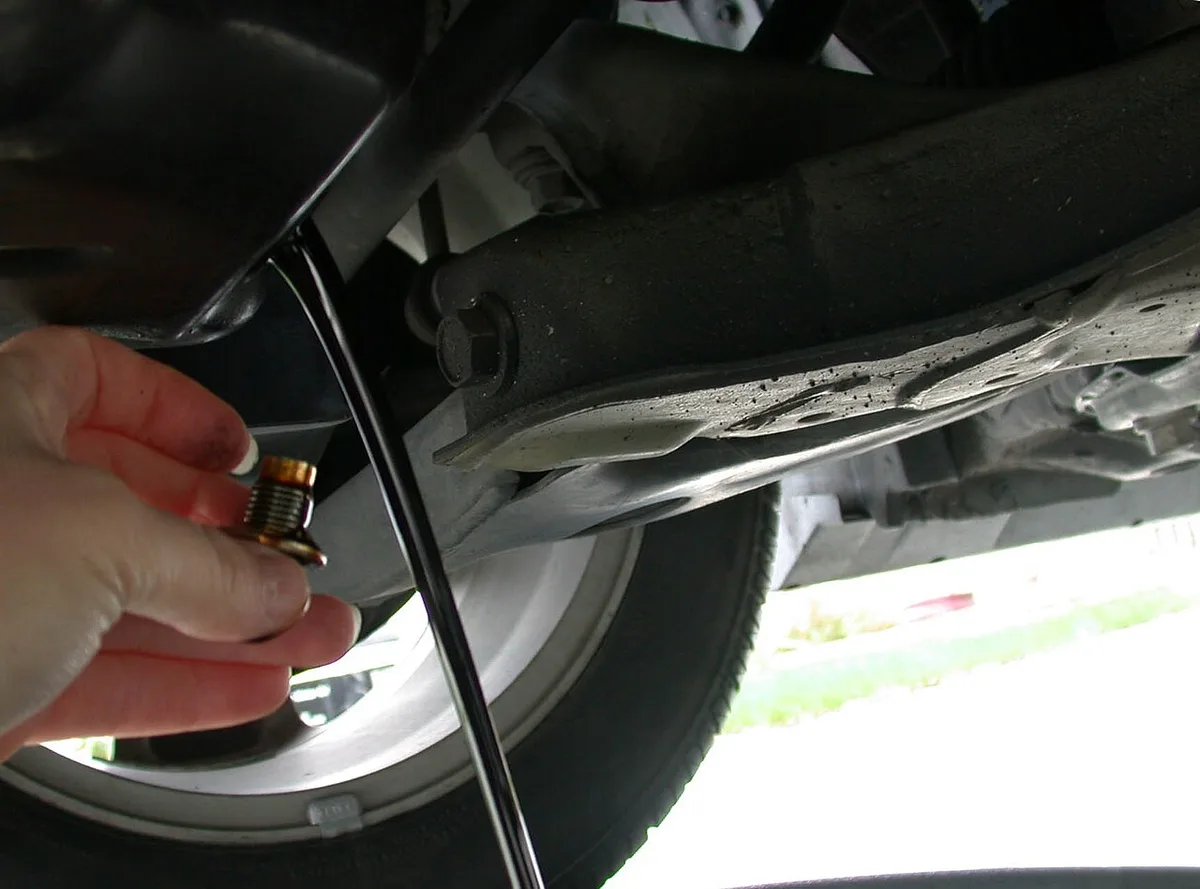
Image source: Wikimedia Commons / Dvortygirl (CC BY-SA)
What the algorithm is counting
An oil life monitor (OLM) tracks several inputs at once and blends them into a single percentage. Most systems weigh:
- Cumulative engine revolutions, not just miles driven
- Engine coolant temperature at startup and during the drive
- How often the engine reaches full operating temperature
- Run time and idle time
- Sometimes ambient temperature and trip length patterns
Toyota's system and Honda's Maintenance Minder both work on this principle. GM's Oil Life System does too. The percentage falls faster when the engine does short, cold, stop-start work.
That's exactly why a hybrid can show 20 percent oil life at 4,500 miles while a highway-driven sedan shows 60 percent at 7,000. The hybrid did more damaging work per mile.
The percentage is a guide, not a permission slip
Manufacturers publish both a mileage interval and a time interval. The OLM doesn't always know about the calendar. If your PHEV shows 70 percent oil life after 14 months of light use, the 12-month rule still applies.
In our research, dealer service bulletins and owner's manuals consistently treat the time limit as a hard floor. Oil oxidizes, additive packages deplete, and moisture accumulates even in a parked car.
Resetting it correctly
If/then logic keeps this simple.
- If you changed the oil and filter, reset the monitor through the dash menu. The exact button sequence varies by model and lives in your manual.
- If you reset it without changing the oil, stop. You've just erased the only record the car keeps.
- If the menu won't cooperate, a capable scan tool can force the reset on most models.
- If you bought the car used and the monitor reads oddly high, treat it as unverified and change the oil.
The dipstick still matters
Some hybrids make checking the level awkward. You may need to cycle the ignition into a maintenance or inspection mode so the engine stays running. Others hide the dipstick behind a plastic engine cover.
Either way, check the level a few days after a service. A quick-lube shop unfamiliar with hybrids has been known to underfill these engines or use the wrong viscosity. As of 2026, 0W-16 is common but still not universal on every shelf, so verify the jug before it goes in.
The Condition Variables That Decide Your Interval
Now the part that actually sets your number. Five variables move a hybrid from the normal schedule to the severe one. Any two of them together and you should be running the shorter interval.
Engine-On Time vs. Odometer Miles
Odometer miles assume the engine ran for all of them. In a hybrid, that assumption breaks. Two owners can drive identical 12,000-mile years, and one engine may have run twice as long as the other.
The closer your engine-on share gets to a conventional car, the more your interval looks conventional. The lower it gets, the more you should lean on months rather than miles, because the oil is aging while the odometer sleeps.
Trip Length and Cold Starts
Short trips are the single biggest factor. A 10-minute commute in cool weather may never bring the oil above 60°C. Water and fuel stay in the sump.
If most of your drives are under 10 miles, treat yourself as severe service even if the manual's language is vague about it. Most manuals count repeated short trips as a severe condition in their own right.
Climate, Dust, and Towing
Cold climates multiply condensation. Hot climates raise thermal load and speed up oxidation. Dusty regions load the air filter and the oil with grit.
Towing and mountain grades push oil temperature and shear.
Per API and ILSAC guidance, oil certification matters more in these conditions, not less. A full synthetic meeting the exact spec in your manual holds up better than a blend when the margins tighten.
Time Sitting Still: The 12-Month Rule
Oil doesn't need mileage to degrade. It oxidizes in the presence of air, absorbs moisture through temperature swings, and slowly loses its additive package. A PHEV that sits charged for weeks is a perfect laboratory for this.
Twelve months is the near-universal ceiling in manufacturer schedules. Some European schedules stretch longer, but those assume specific long-life oils and different service cultures. If your car is a US or UK model, plan on an annual change at minimum.
Severe service triggers at a glance
| Trigger | Why it matters | What to do |
|---|---|---|
| Repeated trips under 10 miles | Engine never dries out | Halve the interval |
| Winter climate with short drives | Condensation and emulsion | Halve the interval, check the cap |
| Dusty or gravel roads | Airborne grit in the oil | Shorten interval, inspect the intake |
| Towing or heavy loads | Heat and shear stress | Follow the severe schedule |
| Long idle periods or heavy traffic | Low-speed engine hours | Use months, not miles |
| PHEV with mostly electric miles | Oil ages without heating | Annual change, no exceptions |
The adjacent services people forget
While you're under there, remember that engine oil isn't the only fluid on a schedule. The transmission service interval on a hybrid is usually longer than a conventional automatic's, but it isn't infinite, and the transmission service schedule is easy to overlook when the oil changes are already infrequent.
Inverter coolant and engine coolant both have their own timelines too. If you're planning to handle the work yourself, a solid set of ramps makes the job safer and faster than jack stands on a sloped driveway. Just check the load rating before you trust them with a battery-heavy hybrid.
And when you price parts, expect the same spread you see on anything simple, like a replacement bulb at the counter. Oil and filters vary widely by source.
Decision Branch 1: Normal Service or Severe Service?
Most hybrid owners assume they sit on the normal schedule. A good number don't, and the manual is the only thing that settles it. Open yours to the maintenance section and read the severe service list line by line.
If your driving matches any two items on that list, run the shorter interval. That's the practical version of the rule most manufacturers imply but rarely spell out.
Here's what typically lands a car in severe service:
| Severe condition | What your week looks like |
|---|---|
| Repeated short trips | Most drives under 5 to 10 miles |
| Extended idling or stop-and-go | Rideshare work, dense city traffic, long school pickup lines |
| Towing or heavy cargo | Trailer, boat, or a loaded roof box on hills |
| Dusty or gravel roads | Unpaved driveways, farm roads, construction zones |
| Extreme cold | Sustained temperatures below roughly -10°F (-23°C) |
| Mountainous terrain | Long climbs and engine braking descents |
If you drive under 10 miles a trip, you're severe
That's the one that catches the most hybrid owners. The engine never reaches full temperature, so moisture and fuel never boil off. Ten months of that pattern does more oil damage than 15,000 highway miles.
If that's your life, halve the published normal interval. A 10,000-mile schedule becomes 5,000 miles. A 12-month schedule becomes 6 months.
If you commute 40 miles on open highway, you're probably normal
Long, steady drives at operating temperature are the best thing you can do for motor oil. The engine stays warm, the PCV system does its job, and contamination burns off as designed.
A highway hybrid often drains clean, dark-amber oil at 10,000 miles. Trust the normal schedule there.
If you're between the two, split the difference
Mixed driving is the common case. Some short trips, some highway, moderate climate. Use the normal mileage interval but don't stretch the calendar past 12 months.
Watch the oil life monitor as a second opinion. If it hits 15 to 20 percent well before your mileage target, your driving is harsher than you assumed.
The manual's severe list is deliberately conservative
Manufacturers publish a wide severe list because warranty claims are expensive. Following it costs you a couple of extra oil changes a year. Ignoring it can cost you an engine.
That trade is easy to make. When in doubt, take the shorter number.
Decision Branch 2: Mileage, Months, or the Oil Life Monitor?
Whichever limit arrives first wins. That single sentence resolves most of the confusion around hybrid service scheduling.
You have three signals pointing at the same decision, and they don't always agree. Here's how to weigh them.
| Signal | What it measures | Where it fails |
|---|---|---|
| Odometer miles | Distance traveled | Blind to engine-on share and cold starts |
| Calendar months | Oil age and oxidation | Ignores heavy use entirely |
| Oil life monitor | Calculated duty cycle | Often blind to the calendar, and easy to reset wrongly |
If the OLM hits zero before your mileage target, change it
The monitor is doing its job. It has counted more cold starts, more idle time, or more short cycles than the schedule anticipated. Trust it over the odometer.
If your mileage target arrives with 40 percent oil life left, change it anyway
Miles driven are still miles driven. The published interval is a ceiling, not a suggestion to keep going until the dash complains.
If 12 months pass at 3,000 miles, change it
This is the PHEV and second-car scenario, and it's the one people skip. Oil oxidizes in a sump full of air. Additive packages deplete.
Moisture from temperature swings collects in the pan.
None of that shows up on the odometer. The U.S. Department of Energy's Alternative Fuels Data Center notes that plug-in hybrids can run substantial annual mileage on electricity alone, which is exactly why the calendar has to carry the schedule.
If you can't tell when the last change happened, change it now
Used hybrids are the wildcard. A private seller may have no receipts. A dealer lot car may have sat for months.
A monitor reading 60 percent on an unknown history means nothing.
Start your ownership with a fresh fill and a dated note. Everything after that is easy to track.
The one-page decision rule
- Miles first if you drive a lot and the engine runs often.
- Months first if the engine runs rarely or the car sits.
- OLM first if it's dropping faster than either.
- Any doubt at all? Change the oil.
What Oil and Filters Hybrids Actually Want: 0W-16, 0W-20, and the Specs That Matter
Use the exact grade printed on your oil filler cap, not a close-enough substitute. Hybrid engines are built around thin oil, and the spec exists for a reason.
Here's why the grade is so specific. A hybrid engine restarts dozens of times per trip and spins up almost instantly. Thin oil reaches the camshafts and bearings faster on a cold start.
It also cuts internal friction, which is part of how the car earns its fuel economy number.
Drop in a thicker oil and you slow that cold-start flow. You also add drag the powertrain wasn't calibrated for. It won't destroy the engine tomorrow.
It's still the wrong call.
The specs that actually matter
| Specification | What it covers | Where you'll see it |
|---|---|---|
| API SP | Current gasoline engine oil category, includes timing chain wear and low-speed pre-ignition protection | Printed on the API seal |
| ILSAC GF-6A | North American fuel economy and protection standard for 0W-20 and thinner | Alongside the API mark |
| dexos1 Gen 3 | GM's proprietary approval for its engines | GM and some shared platforms |
| 0W-16 | Viscosity grade used by many Toyota hybrids | Oil cap and manual |
| 0W-20 | Viscosity grade used by Honda, Ford, Hyundai, Kia hybrids | Oil cap and manual |
The American Petroleum Institute maintains the API service categories, and its licensing mark is the fastest way to confirm a jug actually meets the spec. If the label doesn't carry it, put it back on the shelf.
Full synthetic, not a blend
Nearly every hybrid manual specifies full synthetic. That's not marketing. Hybrid engines see more cold starts, more thermal cycling, and more fuel dilution per mile.
Synthetic base stocks handle all three better than a blend.
The cost difference is small at the counter. It's roughly the price of one extra oil change over several years.
Filter type varies more than you'd expect
Many Toyota hybrids use a cartridge element that drops into a reusable housing. Honda and several others use a conventional spin-on can. The cartridge style needs a new O-ring and a torque wrench on the housing cap.
Buy the filter by part number, not by "fits most Toyotas." Hybrid-specific listings are usually correct. Generic cross-reference charts sometimes aren't.
Oil capacity, roughly
Most hybrid four-cylinders take between 4.0 and 5.5 quarts with a filter change. A 2.5-liter Toyota hybrid sits near 4.6 quarts. A Honda hybrid is often close to 4.4.
Pour in a quart less than the book says, run the engine, check the dipstick, then top up. Overfilling is worse than a slightly low reading, because aerated oil protects poorly.
What not to do
- Don't substitute 5W-20 or 5W-30 for 0W-16 to "protect better." It doesn't.
- Don't mix grades to use up a partial jug.
- Don't accept a bulk oil from a quick-lube shop without confirming the spec.
- Don't extend the interval just because the oil was expensive.
The PHEV Trap: When the Engine Runs So Rarely You Forget It Exists
A plug-in hybrid can go months without a single engine start, and that's precisely the problem. Out of sight is out of mind, and the oil still ages on the calendar.
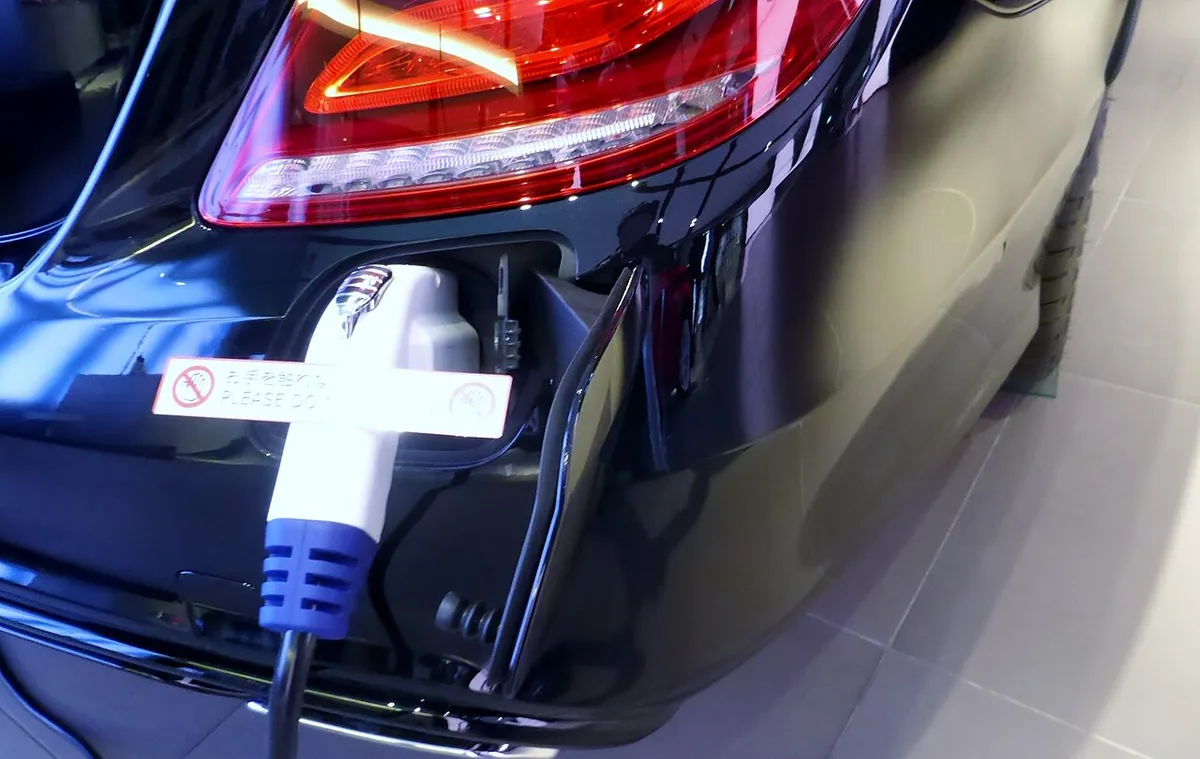
Image source: Wikimedia Commons / Tokumeigakarinoaoshima
Picture the typical case. A RAV4 Prime or Escape PHEV owner charges in the garage every night and drives 18 miles each way to work. The engine might wake up on a cold morning or a highway on-ramp, then go quiet for weeks.
By month 14, the odometer reads 11,000 miles. The oil has maybe 900 engine miles on it. It looks brand new on the stick.
It isn't. Oil absorbs moisture from every temperature swing in a sealed crankcase. Additives oxidize.
The film on cylinder walls drains away and leaves bare metal exposed to humid air.
Cylinder wall corrosion is the quiet risk
In a regularly driven engine, the oil film stays put and the walls stay protected. In a long-parked engine, that film thins and runs off. In a damp climate, flash rust can pit the bore surface.
You won't feel it at 20,000 miles. You may feel it at 90,000, as oil consumption or a rough cold idle. This is why the annual change matters more on a PHEV than on anything else on the road.
Exercise the engine on purpose
Many plug-in hybrids have a built-in engine maintenance mode, sometimes called engine oil maintenance mode. The car runs the engine for a set period to circulate oil and burn off contamination. Check your infotainment menu or the manual.
If your car doesn't have one, do it manually. Once every three or four weeks, switch to hybrid or sport mode and take a 20 to 30 minute highway drive. Get the engine to full temperature and hold it there.
That single habit does more for a PHEV engine than any additive on the shelf.
The fuel side of the same problem
Stale gasoline is the other half of the trap. Fuel sitting in a tank for six months loses volatility and can gum up injectors. Some PHEVs pressurize the tank to limit vapor loss, which helps but doesn't solve it.
Run the tank down and refill with fresh fuel every few months. If you're storing the car for a season, follow the manual's storage guidance rather than guessing.
Service departments see this constantly
Aggregate shop reports describe PHEVs arriving at 25,000 to 35,000 miles with the factory fill still in the sump. The owner assumed electric miles didn't count toward service. They do, at least on the calendar.
Set a reminder on your phone for 12 months from the last change. Don't rely on the dash, because the monitor may still show plenty of life.
Doing It Yourself: Hybrid-Specific Steps, Maintenance Mode, and Torque Specs
A hybrid oil change is a normal oil change with two extra concerns. The engine may start without warning, and there's high-voltage hardware nearby. Handle those two things and the rest is routine.
You'll need:
| Tool or material | Notes |
|---|---|
| Floor ramps or a jack and stands | Rated for the car's weight, which is high on a hybrid |
| Socket set and torque wrench | Drain plug and filter housing both need a real torque value |
| Oil drain pan and funnel | A low-profile pan helps under aero panels |
| New crush washer | Usually sold with the filter, sometimes not |
| Filter wrench or cartridge cup | Match the housing style on your engine |
| Nitrile gloves and eye protection | Hot oil and gravity |
| 4 to 6 quarts of the specified oil | Confirm the API and ILSAC marks |
| Funnel and shop towels | Obvious, and always forgotten |
Step 1: Get the engine warm, safely
Oil drains better warm, and contamination comes out with it. Run the engine for 10 to 15 minutes, then shut it off.
If you can't get it to start in Park, most hybrids have a service or inspection mode that forces the engine on. The pedal and button sequence varies by model, so check your manual rather than guessing.
Step 2: Remove the key from the car
Take the fob at least 10 feet away, or leave it in the house. A hybrid can start the engine on its own to charge the battery or warm the cabin. That's a real hazard when your arm is under the oil pan.
Step 3: Lift and secure the car
Use ramps on level ground or jack stands at the manufacturer's lift points. Hybrids are heavy, often 300 to 500 pounds more than the gas version of the same car. Confirm the rating before you trust any ramp.
Step 4: Drop the underbody panels
Many hybrids use plastic aero shields under the engine bay. They're held by 10mm bolts or quarter-turn clips. Keep them in a pile and remember the order.
Step 5: Drain the oil
Position the pan, then loosen the drain plug by hand after the initial break. Let it drain for a full five minutes. Hot oil comes out fast at first and then slows to a trickle.
Step 6: Change the filter
Spin-on filters come off with a wrench. Cartridge elements sit inside a housing cap, and you'll need to swap the O-ring and confirm the old element came out with the cap. It's easy to leave a stuck filter element behind.
Step 7: Reinstall to spec
New crush washer, drain plug back in, filter housing snugged by hand first. Then torque both. Typical values sit around 25 to 30 lb-ft for a drain plug and roughly 18 to 25 lb-ft for a filter housing cap, but your manual is the authority.
Don't reach for a power tool here. We've seen what happens when someone gets impatient with a drain plug, and the same caution that applies to zipping fasteners on with power tools applies double to an aluminum oil pan.
Step 8: Refill and verify
Pour in about a quart less than the listed capacity. Run the engine for a minute, shut it off, wait five minutes, then check the dipstick and top up.
Look under the car for drips before you lower it. A weeping drain plug is a crush washer that got reused.
Step 9: Reset the monitor and log it
Reset the oil life monitor through the dash menu. Write the date, mileage, oil spec, and filter part number on a note or in your phone. Keep the receipt for the oil and filter.
That record is your warranty evidence, and it's worth more than you'd think when a claim comes up.
What It Costs: DIY vs. Independent Shop vs. Dealer
Hybrids need fewer oil changes, and that's the good news. The per-service price is often higher than people expect, because thin full synthetic costs more and some shops price hybrids as a specialty item.
In our research, the spread across a single 0W-16 or 0W-20 full synthetic change looks like this.
| Option | Typical cost, hybrid full synthetic | What you get | Watch out for |
|---|---|---|---|
| DIY | $35 to $70 | Oil, filter, your time (45 to 75 minutes) | Correct spec, correct torque, safe lifting |
| Independent shop | $80 to $120 | Oil, filter, disposal, quick inspection | Confirm the jug spec before they pour |
| Dealer | $110 to $180 | Factory filter, documented record, multipoint check | Add-on packages and air filter upsells |
Those numbers are US pricing as of 2026. UK drivers can roughly halve the dollar figure and read it as pounds, though dealer rates vary more there.
Why 0W-16 costs more
0W-16 is a niche grade compared to 0W-20. Fewer blenders make it, and it's sold in smaller volumes. Expect $9 to $12 a quart against $7 to $9 for 0W-20.
A five-quart fill can add $10 to $15 to the job before you've touched a filter. That's the price of following the spec, and it's worth paying.
The cost per mile math
Say you drive 12,000 miles a year on the normal schedule. That's one change at 10,000 miles and a second at 12 months, so call it one to two services annually.
Over 100,000 miles at a 10,000-mile interval, DIY runs about $450 to $600 in oil and filters. Dealer pricing for the same work lands closer to $1,200 to $1,600.
Compare that to a conventional car on a 7,500-mile schedule with the same driving. You'd be buying three more services over that span, and paying shop labor rates for them.
What the dealer price actually includes
Part of that premium buys convenience. Part of it buys a documented service record that lives in the manufacturer's system, which matters at warranty time.
Part of it is padding. Engine air filters, cabin filters, fuel system cleaners, and "hybrid battery services" get stacked onto oil changes constantly. Decline anything your manual doesn't list.
Watch for the 3,000-mile upsell
A quick-lube chain or an old-school advisor may still push a 3,000-mile interval out of habit. On a hybrid with a 10,000-mile published schedule, that's roughly triple the service frequency you need.
Ask them to show you the interval in the manual. That usually ends the conversation politely.
Bundle the adjacent work
Some costs are unavoidable but easy to combine with an oil change. Tire rotation, brake inspection, and a coolant level check all happen with the car already in the air.
Hybrid brake pads often last 70,000 to 100,000 miles because regenerative braking does much of the stopping. That's a genuine saving, and it's one reason hybrid total maintenance cost per mile stays low.
Cheap parts and the false economy
A $6 filter and a $40 jug of generic oil look like a bargain. Then you're doing the job twice because the filter housing weeps, or paying for a diagnostic because the oil pressure warning flickers.
The same logic that applies to bigger suspension parts applies here, where paying more for a better-made component usually pays you back over the life of the car. Filters and oil are no different.
Mistakes That Cost You Money, Engines, or Warranty Coverage
Most hybrid oil change failures aren't dramatic. They're small assumptions that compound over 60,000 miles. Here are the ones we see described most often in owner forums and service bulletins.
| Mistake | What it does | The fix |
|---|---|---|
| Treating a PHEV as "electric only" | Oil sits for years, oxidizes, corrodes bores | Annual change regardless of miles |
| Stretching the interval because the engine "barely runs" | Fuel dilution and moisture concentrate | Use months, not miles, as the driver |
| Resetting the oil life monitor without changing oil | Erases the only service record the car keeps | Reset only after a real service |
| Topping up with a thicker grade | Slower cold-start flow, more drag | Use the cap grade, every time |
| Reusing the crush washer | Slow drip, oil loss, mess | New washer every drain |
| Overfilling past the dipstick mark | Aerated oil, seals stressed, foaming | Fill short, run, then top up |
| Power-tooling the drain plug | Stripped aluminum pan threads | Hand snug, then torque wrench |
| Leaving the old cartridge element in the housing | Zero filtration, instant wear | Confirm the old element came out |
| Skipping documentation | Warranty disputes you can't win | Receipt, date, mileage, part numbers |
| Ignoring a milky dipstick | Emulsion from chronic short trips | Diagnose the driving pattern, drive longer |
| Using an engine flush additive | Loosens sludge into oil galleries | Skip it unless a shop recommends it |
The mistake with the biggest price tag
Running a hybrid engine to failure from neglect isn't cheap. A replacement engine for a hybrid, plus labor and the cooling system work that usually comes with it, is commonly quoted in the $4,000 to $8,000 range.
That's a decade of oil changes. The math isn't close.
Mistaking "low load" for "low risk"
Hybrid engines run gently. That's real, and it does reduce bearing wear. It does not stop oil from degrading.
The failure mode here is slow and quiet. Sludge builds in the ring grooves, the PCV system clogs, and oil consumption creeps up. By the time there's a symptom, the damage is done.
Confusing the three fluids
Engine oil, inverter coolant, and transmission fluid are three separate systems with three separate intervals. Owners mix them up constantly, partly because the inverter coolant reservoir sits right there in the engine bay with a similar-looking cap.
Get the wrong fluid in the wrong reservoir and you're looking at a very expensive repair. Read the cap, not the color.
Buying the wrong filter by cross-reference
Generic parts charts sometimes list the gas version of your car instead of the hybrid. The filter may look close and still not seal.
Use the part number from your manual or a manufacturer parts lookup. Confirm it against the VIN if the counter can do that.
Forgetting the calendar entirely
This is the single most common PHEV mistake, and it isn't really about laziness. There's no dashboard prompt when the oil hits 12 months if the monitor still reads 70 percent.
Set a phone reminder. Write the date on the inside of the garage door. Do whatever makes the calendar visible.
Warranty, Documentation, and Your Legal Rights on DIY Service
Doing your own oil change does not void your warranty in the United States. Federal law is clear on that, and it's been clear since 1975.
The Magnuson-Moss Warranty Act, enforced by the Federal Trade Commission, stops manufacturers from conditioning a warranty on using their branded parts or their dealer network. They can require that the work meets their specifications. They can't require that they do it.
What the law actually allows
The manufacturer can deny a specific claim if they can show your work caused the failure. A stripped drain plug from a power tool is on you. A failed water pump at 40,000 miles is not, just because you changed your own oil.
That distinction matters. It's the difference between a warranty being voided and a single claim being refused.
The documentation that wins disputes
Keep a simple log with four things per service:
- Date and odometer reading
- Oil brand, viscosity, and the API and ILSAC marks on the label
- Filter part number
- Receipt, stored digitally so it doesn't fade
Photograph the odometer and the receipt together on the day of the change. It takes ten seconds and settles arguments years later.
Hybrid-specific coverage worth knowing
The high-voltage battery carries its own long warranty, separate from the powertrain. Federal rules require 8 years or 100,000 miles on hybrid battery components, and several manufacturers exceed that.
Toyota, for instance, extended its hybrid battery warranty to 10 years or 150,000 miles on most recent models. None of that coverage depends on where you get your oil changed.
Emissions warranty is separate again
The catalytic converter, engine control module, and onboard diagnostics system fall under federal emissions warranty, typically 8 years or 80,000 miles. Those parts are sensitive to oil burning and misfires.
Keep the oil changes honest and this coverage rarely comes into play. Let the engine burn oil from neglect and you can hand a manufacturer a reason to look closely.
Leases and extended service contracts
A lease is a contract, not a warranty. Lease terms often require scheduled maintenance at specified intervals, and some require records at turn-in.
Third-party service contracts sometimes do require certified shops. Read that paperwork before you decide to DIY.
High-Voltage Safety Around the Engine Bay
The engine bay of a hybrid holds two very different systems. One is a normal gasoline engine at 12 volts. The other is a traction system running 200 to 650 volts DC.
That second system will hurt you badly if you give it a reason to. It won't if you leave it alone.
Image source: Wikimedia Commons / Automotor Journal
The orange cables are not yours to touch
Every high-voltage cable in a hybrid is wrapped in bright orange. That color is a deliberate warning, and it means exactly what it looks like.
Don't cut, probe, unclip, or reroute orange cabling. Don't remove inverter covers. Don't open the battery pack.
None of that is part of an oil change, and all of it can kill you.
The engine can start while you're under it
This is the hazard people underestimate. A hybrid will fire the engine on its own to charge the battery, warm the cabin, or satisfy an emissions monitor.
Take the key fob into the house. Ten feet away isn't always enough, because some systems use motion at the driver's door as a wake signal. Better yet, follow the manual's procedure for disabling the system.
Lift points and weight
A hybrid battery adds 200 to 400 pounds in most models. A RAV4 Hybrid carries a curb weight well over 3,700 pounds, and a PHEV version more still.
Check the rating on your ramps and jack stands. Locate the manufacturer's lift points, which are often different from the gas model's. Pinching a battery cooling line or an orange cable with a jack pad is a very bad day.
Keep metal jewelry in the house
A ring or watch strap across a 12-volt terminal is unpleasant. Across high-voltage hardware it's a different category of event. Remove both before you start.
Used oil isn't just messy
One gallon of used oil can foul an enormous volume of groundwater, a figure state environmental agencies repeat constantly. Most auto parts stores and municipal recycling centers take it free.
Filters are handled separately in many jurisdictions because of the trapped oil inside. Drain them for 24 hours and bag them.
If the car has been in a collision, stop
A damaged hybrid should not be worked on in a driveway. High-voltage isolation can fail after an impact, and the risk doesn't announce itself. Have it inspected by a qualified shop first.
Real Driving Scenarios: Which Branch Are You In?
Enough theory. Here's how the decision plays out for six common hybrid owners. Find the one that sounds like your week.
| Scenario | Engine-on share | Recommended interval | Why |
|---|---|---|---|
| 18-mile highway commute, mild climate | 60 to 70% | 10,000 miles or 12 months | Engine reaches temperature, contamination burns off |
| Rideshare driver, city, 30,000 miles a year | 40 to 60% | 5,000 miles or 6 months | Idle hours and stop-start cycles pile up fast |
| Minnesota commuter, 4-mile trips | 30 to 50% | 5,000 miles or 6 months | Never warms up in winter, moisture builds |
| PHEV charged nightly, 11,000 electric miles | Under 15% | 12 months, hard stop | Oil ages without heat cycling |
| Arizona highway driver, dusty roads | 70% | 7,500 miles or 12 months | Heat plus airborne grit |
| Ram 1500 eTorque owner towing a boat | 95% | Severe schedule from the manual | Real towing load, mild hybrid powertrain |
If you're the Minnesota short-trip driver
You're in the hardest position of the group. The engine never gets hot enough to boil off water, and winter makes it worse. Check under the oil cap monthly for emulsion.
Run the shorter interval without negotiation. Take one longer highway drive a week if you can, 25 minutes or more, and let the engine stay at temperature.
If you're the Phoenix rideshare driver
Heat is your enemy, not cold. Underhood temperatures on a 110°F day plus constant stop-start cycling push oxidation hard.
Use full synthetic, never a blend. Check the level every other fuel stop, because heat raises consumption slightly and low oil accelerates everything.
If you're the PHEV owner who almost never burns gas
Your interval is set by the calendar, not the odometer. Twelve months is the ceiling, and there's no benefit to stretching it.
Exercise the engine once a month with a 20 to 30 minute highway run in hybrid mode. That's the single habit that protects a rarely used engine.
If you bought a used hybrid with no records
Assume nothing. Change the oil and filter on day one, whatever the monitor shows, and reset the monitor yourself.
Then start your own log. A used hybrid with a clean documented history from that point forward is worth more at resale, and buyers do ask.
If you drive a mild hybrid
You're essentially driving a normal car with a fancy starter. Follow the standard schedule, watch the severe service list for towing and dust, and don't overthink the hybrid label.
The one adjustment is restart frequency in heavy traffic. If you idle a lot, move to the shorter interval and stop worrying about it.
Troubleshooting: Reading the Warning Signs Before They Get Expensive
Most hybrid oil problems announce themselves quietly. A smell here, a rattle there, a dipstick reading that doesn't add up. Learn to read those clues early and you avoid the expensive version of this conversation.
Here's how the common symptoms map to causes.
| Symptom | Likely cause | First move |
|---|---|---|
| Strong fuel smell on the dipstick | Fuel dilution from short, cold cycles | Lengthen drives, shorten the interval, confirm with a lab test |
| Milky residue under the oil cap | Condensation the engine never burned off | Check the thermostat, then the driving pattern |
| Level drops between services | PCV, rings, or valve guides | Measure consumption properly before panicking |
| Two-second rattle on cold start | Weak anti-drainback valve or chain tensioner bleed-down | Verify filter part number and viscosity |
| Oil life monitor plunges fast | Genuine severe duty, or an engine running cold | Compare coolant temperature after a long drive |
If the dipstick smells like gasoline, you have fuel dilution
A faint fuel note is normal in any engine. A dipstick that reeks, or oil that drips noticeably thinner than the fresh stuff, means dilution has gone past mild.
Short trips and cold weather are the usual suspects. The fix is boring and effective. Drive longer, change the oil sooner, and confirm with a used oil analysis before you assume the worst.
If dilution stays high after that, a leaking injector or a stuck-open thermostat deserves a look. A thermostat that never closes keeps coolant cold, and the engine follows.
If there's mayonnaise under the cap, check the thermostat first
A thin film of pale sludge in winter is common and mostly harmless. A thick layer, or a dipstick that reads milky, means water is accumulating faster than the engine can boil it off.
Start with the cooling system, not the oil. A stuck-open thermostat on a hybrid is easy to miss because the cabin still heats and the gauge still looks normal.
Once the engine reaches proper temperature again, most of these cases clear up within a few hundred miles. If they don't, the driving pattern is the problem, and the interval needs to come down.
If the level drops between changes, measure it the same way twice
Park on level ground, shut the engine off, wait five minutes, and check the same spot every time. Do it every 1,000 miles for a few months and write the numbers down.
Most manufacturers treat a quart in 1,000 to 1,200 miles as excessive consumption. Under that, you monitor. Over that, you investigate the PCV system, the rings, and the valve guides in that order.
One quirk worth knowing. Some hybrids make the level check awkward because the engine won't idle in Park. Use the manual's inspection mode so the engine runs while you check.
If you hear a rattle for two seconds on a cold start, don't ignore it
That brief grind is oil pressure arriving late. On a hybrid it shows up sooner than on a conventional car, simply because the engine starts far more often.
A cheap filter with a weak anti-drainback valve is the most common cause, and the easiest thing to rule out. Fit the correct part number and the noise often disappears at the next change.
If it continues on the right filter and the right viscosity, suspect the timing chain tensioner or a variable valve timing phaser. Both are cheaper to fix early than after a chain jumps.
If you want proof instead of guesswork, pay for a used oil analysis
A laboratory report costs roughly $30 to $50 and comes back in one to two weeks. It tells you what the oil actually experienced, which no dashboard readout can.
Look at four numbers. Iron and aluminum in parts per million show wear. Fuel dilution percentage shows contamination.
Viscosity at 100°C shows whether the oil thinned or thickened. Sodium and potassium flag coolant intrusion.
Pull a baseline sample around 20,000 miles, then every second or third change after that. A trend line of three reports is worth more than any single result.
If the monitor drops fast and your driving looks normal, look at temperature
Cold operation is the input that punishes oil life hardest. An engine that never warms up gets counted as severe duty by the algorithm, and it's right to do so.
Take the car for a 20 minute highway drive and watch the coolant temperature. If it settles well below normal operating range, the thermostat is the culprit, not your commute.
That's a repair worth doing anyway. A cold-running engine burns more fuel, wears faster, and quietly shortens every oil change that follows.
The Long Game: What Hybrid Engines Look Like at 100,000 and 150,000 Miles
Hybrid powertrains have a solid reputation for longevity, and much of it comes down to boring maintenance. The engines that last are usually the ones that got clean oil on schedule.
High-mileage examples aren't rare. Taxi and rideshare fleets running Prius and Camry Hybrid models have reported 300,000 miles and beyond on original engines. Those cars share one habit: service records with no gaps.
That doesn't mean nothing wears out. Here's what tends to show up as the miles climb.
| Mileage band | What typically needs attention | Oil-related or not |
|---|---|---|
| 60,000 to 90,000 | PCV valve, cabin and engine air filters, brake fluid | Partly, since a clogged PCV drives oil consumption |
| 90,000 to 120,000 | Spark plugs (iridium), first coolant change on many schedules | No, but plugs foul faster when oil burns |
| 120,000 to 150,000 | Valve cover gasket seepage, timing chain tensioner wear, suspension bushings | Yes, wear accelerates with neglected oil |
| 150,000 and up | Oil consumption creep, water pump, hybrid battery health checks | Yes, ring and guide wear show up here |
The PCV system is the quiet troublemaker
Positive crankcase ventilation valves clog with sludge over time. On a short-trip hybrid, that happens sooner because the oil carries more moisture and fuel.
A stuck PCV valve raises crankcase pressure. Seals start weeping, oil gets pushed past rings, and consumption climbs. It's a cheap part with an outsized effect on engine health.
Have it checked around 60,000 miles if your driving is mostly urban. On a highway-driven car, it can wait considerably longer.
Timing chain wear is the one to watch
Most hybrid engines use a timing chain rather than a belt, and chains are supposed to last the life of the engine. In practice, they last as long as the oil does.
Fuel-diluted, moisture-loaded oil accelerates chain and tensioner wear. The early warning is that cold-start rattle, which is why it's worth chasing rather than tolerating.
A chain and tensioner job runs well into four figures at shop rates. The oil changes that prevent it cost a fraction of that.
Oil consumption creep is normal, up to a point
Almost every engine past 120,000 miles uses a little oil. Rings wear, valve guide seals harden, and the PCV system moves more vapor than it used to.
The mistake is treating consumption as normal without checking the level. Owners who never look at a dipstick discover the problem when the low oil pressure light comes on, which is usually too late.
Check monthly once you're past 100,000 miles. A quart every 3,000 miles is manageable. A quart every 800 miles needs diagnosis.
Battery health and engine health are separate scorecards
A hybrid battery can be healthy while the engine is tired, and the reverse is also true. Don't let a good battery report talk you out of investigating oil consumption.
Many dealers and independents run a battery state-of-health check in under an hour. Worth doing before you buy a used hybrid, and worth repeating every couple of years on a car you plan to keep.
What actually protects resale value
Buyers of used hybrids ask two questions. How's the battery, and is there a service history? The second one is on you.
A folder of dated receipts with oil specs and part numbers does more for the sale price than any additive you could pour in. It also settles warranty conversations in about thirty seconds.
Frequently Asked Questions
Do hybrids really need oil changes?
Yes, they do. The gasoline engine in a hybrid burns fuel, produces soot, and contaminates its oil like any other engine. The electric motor needs no oil at all, but that doesn't help the engine sitting beside it.
Skipping changes shortens the life of the most expensive component in the car.
How often should a hybrid get an oil change?
Most full hybrids follow a 10,000 mile or 12 month schedule on normal duty. Severe service drops that to roughly 5,000 miles or 6 months. Plug-in hybrids usually land on the 12 month limit regardless of mileage.
Your owner's manual is the final authority for your specific model.
Can I stretch a hybrid to 10,000 miles between changes?
Only if your driving qualifies as normal service. Long highway commutes in mild weather usually do. Repeated trips under 10 miles, cold winters, dust, towing, or heavy idling all push you into severe service, where 5,000 miles is the honest number.
Does a plug-in hybrid need oil changes if I barely use gas?
Yes, and arguably more attention than a conventional car. Oil oxidizes and absorbs moisture even when the engine sits idle. The annual change matters most here.
Exercise the engine monthly with a 20 to 30 minute highway run to circulate oil and burn off contamination.
Is 0W-20 a safe substitute when 0W-16 isn't on the shelf?
No. Use the grade printed on your oil filler cap. Hybrid engines are calibrated around thin oil for fast cold-start flow and low friction.
A thicker grade slows that flow and adds drag. Order the correct viscosity online rather than settling for a substitute.
Do hybrids require full synthetic oil?
Nearly every hybrid manual specifies full synthetic, and the reasons are practical. Hybrid engines see more cold starts, more thermal cycling, and more fuel dilution per mile. Synthetic base stocks handle that abuse better.
The price difference at the counter is small.
Does changing my own oil void the hybrid warranty?
Not in the United States. The Magnuson-Moss Warranty Act stops manufacturers from requiring dealer service. Keep dated receipts, note the oil specification and filter part number, and you're covered.
A claim can only be denied if your work is shown to have caused the failure.
What happens if I never change the oil in a hybrid?
Sludge builds in the ring grooves and oil galleries, the PCV system clogs, and consumption climbs. The engine may still run at 80,000 miles, just badly and thirstily. By the time there's a noise or a warning light, the wear is already done.
