
You're standing in a stranger's driveway with cash in your pocket, and the only thing between you and a very expensive mistake is a piece of paper you've barely looked at. So let's answer the obvious question first: what is a car title? It's the state-issued certificate that names who legally owns a vehicle.
Everything else about buying, selling, or inheriting a car flows from that one document.
A title carries a 17-character VIN that must match the dashboard plate and the door jamb sticker exactly. Federal odometer rules in 49 CFR Part 580 also require the seller to disclose mileage on the title for vehicles under 20 model years old. Miss either one and the state won't issue a title in your name.
So let's start with what the document actually is.
What Is a Car Title
A car title is the legal document that proves who owns a vehicle. Your state's motor vehicle agency issues it. It carries the owner's name, the VIN, and any lienholder.
It is not the same as registration. Registration only allows you to drive the car on public roads.
What a Car Title Actually Is (And What It Isn't)
A title is a record of legal ownership, kept by your state. That's the whole job. It says nothing about whether the engine runs, whether the frame is straight, or whether the car is safe at highway speed.
The agency behind it changes with the map. Most states run a Department of Motor Vehicles. Ohio and Indiana use a Bureau of Motor Vehicles.
Illinois and Michigan hand titling to the Secretary of State. Arizona and New Mexico call theirs the Motor Vehicle Division. A few states process titles through county clerk offices instead.
The wording on the paper varies too. A handful of states print "Certificate of Ownership" across the top rather than "Certificate of Title". The document itself is a security item, usually with a watermark, fine-line printing, and ink that shifts color under light.
Californians still call it a pink slip, a habit left over from the color of older forms.
Title vs. registration vs. bill of sale: three documents people mix up constantly
This is the single most common point of confusion we run into. Four documents get lumped together, and only one of them decides who owns the car.
| Document | Who issues it | What it proves |
|---|---|---|
| Certificate of title | State titling agency | Who legally owns the vehicle |
| Registration card | Same agency, separate record | Who may drive it on public roads |
| Bill of sale | Seller, sometimes notarized | The terms of this specific sale |
| Manufacturer's Certificate of Origin | The manufacturer | Ownership before the first retail title |
The registration is the one that catches people out. You can hold a valid registration and still not own the car. That happens all the time with leases, where the lessee's name sits on the registration and the leasing company's name sits on the title.
A bill of sale is a receipt, not proof of ownership. It records the date, the price, the mileage, and both parties. Most states want one alongside a completed title, and some require it before they'll process a transfer.
The Manufacturer's Certificate of Origin, or MCO, is the document a factory issues when a new car ships. It's the ownership paper before any state has titled the vehicle. The dealer surrenders it at the first retail sale and the state issues a title in the buyer's name.
The legal owner, the registered owner, and why the difference matters when money changes hands
The person named on the title is the legal owner. The person named on the registration is the registered owner. Usually that's the same human being.
When it isn't, you need to understand why before you hand over money.
Three situations account for most of the gap:
- A lease. The leasing company holds title. You hold registration and the right to use the car. You cannot sell it, and you can't get the title without paying off the residual or buying it out.
- A loan with a lien. The lender's interest is noted on the title or recorded electronically. You're the owner on paper, but the lender has a claim that has to be cleared before the title can transfer cleanly.
- Co-ownership. Two names on the title joined by "AND" means both signatures are required to sell. Joined by "OR" means either person can sign alone. That one word decides whether a sale is legal.
Here's the practical version. If the seller's name isn't on the title, they can't legally transfer the car to you. Full stop.
A bill of sale from a non-owner is a piece of paper with a story attached.
What a title is not
Worth saying plainly, because buyers assume otherwise:
- It is not a condition report, a warranty, or an inspection.
- It is not proof the car has never been wrecked. Plenty of repaired cars carry clean titles.
- It is not a service history or a mileage guarantee.
- It is not insurance, and it won't protect you if the car turns out to be stolen.
A clean title means one thing only. As far as the state knows, no brand has been applied and no lien is outstanding. That's a useful fact, and it's a narrow one.
The Anatomy of a Title Document
Title formats differ from state to state, but the fields are remarkably consistent. Once you've read one carefully, you can read any of them.
Image source: Wikimedia Commons / David Hiser
Every field on the certificate, decoded
| Field | What it tells you | Why it matters |
|---|---|---|
| Owner name and address | Who legally holds the car | Must match the seller's ID exactly |
| VIN | 17-character vehicle identifier | Must match the car in front of you |
| Title number | The state's record number | Needed for any correction or duplicate |
| Make, model, year, body style | Vehicle description | Catches VIN swapping and mismatched paperwork |
| Odometer reading | Mileage at the last transfer | Federal disclosure box, not a suggestion |
| Lienholder block | Any lender with a claim | A name here means the car isn't free and clear |
| Brand notation | Salvage, rebuilt, flood, and so on | Changes value, insurance, and financing |
| Purchase date and price | When and for how much | Used for tax and for spotting flips |
| Assignment section | The transfer itself | Where deals succeed or quietly fall apart |
| Notary block | Required in some states | Missing seal voids the assignment in those states |
The odometer box deserves its own note. The National Highway Traffic Safety Administration publishes the disclosure format and the exemptions under federal odometer rules. Vehicles older than 20 model years are generally exempt.
As of 2026, that means most 2006-and-older cars don't require a mileage disclosure, though several states ask anyway.
The assignment section: where most deals quietly go wrong
The back of the title is the part that actually moves ownership. It has a seller section, a buyer section, an odometer statement, a sale date, a sale price, and often a notary block.
In our research, the most frequent reason a title transfer gets rejected is a signature in the wrong box. Sellers sign the buyer line. Buyers sign before the seller.
Someone fills in a price and leaves the date blank.
A few rules that prevent almost every problem:
- The seller signs exactly as their name appears on the front, no nicknames, no initials.
- The buyer's name goes on before the seller lets go of the paper. A title with a blank buyer name is an open title, and open titles fuel fraud.
- Every field gets filled. Empty boxes invite later edits.
- Cross-outs need an affidavit of correction in most states, not whiteout and hope.
- If your state requires notarization, the notary must witness the seller signing, not just stamp a form.
Dealers use a separate reassignment section when they buy at auction or trade. Each hop should be documented. A title with a gap in that chain is a title with a question mark on it.
VIN, title number, and the checks that catch a mismatch
The VIN is the spine of the whole document. Seventeen characters, no letters I, O, or Q, and it appears in more places than most people check.
- On the dashboard, visible through the windshield.
- On the driver's door jamb sticker, along with the build date and paint code.
- On the title itself.
- On the registration.
- Sometimes on the engine bay stamp or the frame rail.
All of them should read identically, character for character. VIN plates are riveted at the factory with specific rosette rivets. If the plate looks glued, screwed, or freshly painted around the edges, walk away and call the state.
The VIN also settles which parts fit your car, down to trim-specific wiper sizes and brake components. That's one reason a title with a garbled VIN is more than a paperwork headache.
Clean, Salvage, Rebuilt, Flood, Junk, Lemon: What Title Brands Really Mean
A brand is a permanent note on the title saying the vehicle has a history. Brands travel with the car. They don't wash out because the seller cleaned it up nicely.
Image source: Wikimedia Commons / Wikimedia Commons contributor (CC BY-SA)
How a brand gets applied in the first place
It usually starts with an insurance company. When repairs exceed a set percentage of the car's actual cash value, the insurer declares a total loss. Those thresholds are set by state law and vary widely, from around 70 percent in some states to effectively 100 percent in others.
The insurer reports the total loss to the state. The state then brands the title and, in most cases, requires the owner to surrender it for a salvage certificate. From there the car either gets parted out or rebuilt and re-titled with a rebuilt brand.
| Brand | What triggered it | What it means for you |
|---|---|---|
| Clean | No brand recorded | Normal ownership, standard financing and insurance |
| Salvage | Declared a total loss by an insurer | Not road-legal until rebuilt and inspected |
| Rebuilt / Reconstructed | Salvage car repaired and re-inspected | Legal to drive, hard to finance, lower resale |
| Flood | Water damage reported by an insurer | Electrical gremlins, corrosion, mold risk |
| Junk / Parts only | Damaged beyond economic repair | Cannot be retitled, parts value only |
| Lemon / Manufacturer buyback | Repurchased under a state lemon law | Defect history, brand disclosure required |
| Hail | Storm damage total loss | Often cosmetic, still a branded value hit |
| Odometer discrepancy | Rollback or exceeds mechanical limits | Mileage unknown, resale value crushed |
Two more appear often enough to know. Prior taxi, police, or rental use gets branded in some states. Theft recovery shows up when a car was stolen and later recovered, sometimes with damage.
Title washing is worth flagging here. A branded car gets retitled in a state that doesn't carry the brand forward, and it pops out the other side looking clean. It's the reason a car with a suspiciously fresh title from three states away deserves a second look.
Why a branded title changes your resale, insurance payout, and loan options
A branded title is a discount, and the market knows it. Rebuilt and salvage-branded vehicles commonly sell for 20 to 40 percent below comparable clean-title cars. The exact gap depends on the vehicle, the buyer pool, and how well the rebuild was documented.
Insurance gets complicated fast. Many carriers will write liability coverage on a rebuilt title but balk at full comprehensive. If they do insure it, the payout is based on actual cash value, which already reflects the brand.
Financing is the harder wall. Plenty of banks and credit unions simply won't lend against a branded title. The ones that will often want a larger down payment and a higher rate.
That shrinks your buyer pool the day you decide to sell.
Repair reality matters too. A rebuilt car often needs suspension work sooner than a clean one, which is why it pays to know whether uprated suspension parts are worth the extra spend before you commit. Cosmetic gaps add up as well, and you can check parts-counter pricing on the small stuff before you sign anything.
Adding a bed cover or new floor mats doesn't restore a dollar of value on a branded title, so skip the dressing up and put the money into the mechanicals.
One honest note. A well-rebuilt salvage car with good documentation can be a smart buy at the right price. It's the undisclosed one that ruins people.
Paper Titles vs. Electronic Lien and Title (ELT)
Most people picture a title as a sheet of paper in a drawer. For a growing share of car owners, no such sheet exists. The record lives in a state database instead.
What "the lender holds the title" actually means
It means two different things depending on where you live. In title-holding states, the lender physically keeps the paper certificate until the loan is paid off. In electronic lien and title states, the state suppresses the paper and records the lien digitally from the start.
Either way, the practical outcome is the same. You own the car, the lender has a claim, and you can't transfer a clean title until that claim is released. The American Association of Motor Vehicle Administrators publishes the ELT standards most states build their systems on, and the goal is straightforward: fewer lost paper titles, faster lien releases, and less forgery.
How a lien gets released, and how long it really takes
The clock starts when your final payment clears, not when you send it. Lenders usually need a few business days to post the payoff, then they issue a release. Some send it electronically the same week.
Others batch releases monthly.
A realistic timeline:
- Payoff posting: 3 to 10 business days.
- Lien release issued by lender: 1 to 4 weeks in most cases, longer if the loan was sold or transferred.
- State updates the record: 2 to 4 weeks after the release lands.
- Paper title mailed to you: 2 to 6 weeks in states that mail automatically, longer if you have to apply for it.
Six to eight weeks total is common. Twelve isn't unheard of. If you're selling, order the payoff quote early and get the per-diem interest figure, because that's the number that decides the exact release date.
| Feature | Paper title | Electronic title (ELT) |
|---|---|---|
| Who holds the document | Owner, or lender until payoff | The state, digitally |
| Lien release speed | Mailed, then re-mailed | Often electronic and faster |
| Loss and forgery risk | Real, titles get lost in mail | Much lower |
| What a seller hands you | The physical certificate | A state-printed title on request |
| Where you see it | Title-holding states | Most states, with variations |
If you're buying from a private seller who claims the lien is paid, don't take their word for it. Ask for the release letter, then verify the lien status with the state titling agency directly. An unreleased lien follows the car, not the seller.
How to Read a Title Before You Hand Over Cash
Ten minutes with the document and a phone beats a month of regret. Here's the sequence we'd run.
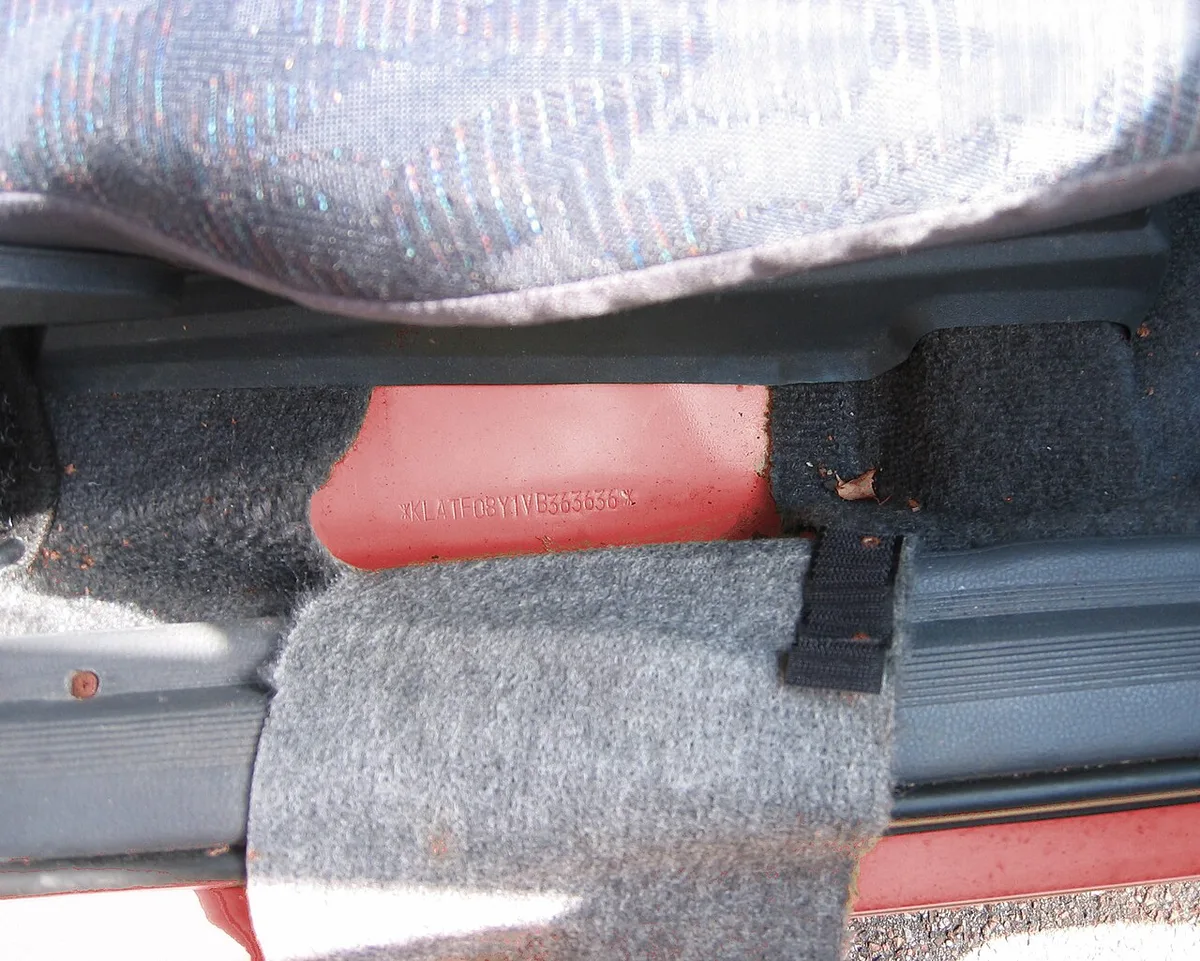
Image source: Wikimedia Commons / Hans Haase (CC BY-SA)
The 10-minute verification checklist
- Match the name. The title name must match the seller's driver's license, spelling and all. A married name change needs supporting paperwork.
- Check the VIN in three places. Title, dashboard, door jamb. All three must be identical.
- Look for a lienholder. Any name in that block means the car isn't free and clear yet.
- Read every line for a brand. Salvage, rebuilt, flood, junk, lemon, prior taxi, odometer discrepancy. Brands live in small print.
- Compare the odometer. If the title says 88,000 and the dash reads 62,000, that conversation ends there.
- Inspect the paper itself. Erasures, mismatched ink, a title number that doesn't line up, or printing that looks photocopied.
- Confirm the state of issue. An out-of-state title is normal, but it means extra steps and a VIN inspection when you retitle.
- Demand the original. A photo, a copy, or a promise to mail it later is not a title.
- Fill in the buyer name yourself, in front of the seller. Never leave it blank.
- Get a bill of sale. Date, price, mileage, VIN, both signatures, and a copy for each of you.
If any item fails, you don't negotiate harder. You stop.
Running a VIN history check and knowing what it can't tell you
Run the VIN before you run the checklist's final step. The NMVTIS system, which you can query through the official national title information portal, pulls title, salvage, and junk data reported by states and insurers. It's the closest thing to a national title record.
What it catches: branded titles, total-loss reports, junk and salvage events, some theft records, and title activity across state lines.
What it misses, and this is the part people overestimate:
- Damage that was never reported to an insurer.
- A car repaired privately and sold with a clean title.
- Current mechanical condition. A history report won't tell you the transmission is slipping.
- Records from periods when reporting was spotty or the car was in a state that didn't participate.
So pair the report with an inspection. Bring a basic scan tool and pull the stored codes before money changes hands. Then get underneath the car or pay someone who will.
Red flags: open titles, title jumping, and curbstoning
An open title is a title the seller signed but never transferred into their own name. The buyer name is blank or filled with someone else's. It's technically incomplete and legally messy.
Title jumping is the practice behind it. A flipper buys cheap, skips the tax and the transfer, and sells to you using the previous owner's signature. You end up with a chain of ownership that has a hole in it, and the state may refuse to title the car in your name.
Curbstoning is the same person posing as a private seller while running an unlicensed dealership out of a parking lot. Most states require a dealer license for exactly this reason.
Red flags worth walking away from:
- The seller isn't the person named on the title.
- The title is from another state and the names don't line up.
- "The lien release is in the mail."
- Cash only, meet at a parking lot, no address.
- The price is well under market for the year and mileage.
- The VIN on the dash looks tampered with.
- The seller pushes you to skip the bill of sale.
- A duplicate title was issued suspiciously recently.
None of these are automatically fraud. Together, or even two of them, you should slow down and call the state titling agency before you pay anything.
Title Washing: How Branded Cars Come Back Clean
A washed title is a wrecked car wearing a clean jacket. Someone took a salvage or flood vehicle, moved it through a state that didn't carry the brand forward, and re-titled it as clean. The car still has the history.
The paperwork just stopped mentioning it.
This is the single most expensive form of title fraud for ordinary buyers. A branded car can be a fine purchase at the right price. A washed one is a trap, because you're paying clean-title money for a car the market values 20 to 40 percent lower.
The state-to-state loophole, explained
Brands are state records, not national ones. State A brands a car salvage. The car gets sold or moved to State B.
If State B doesn't carry that brand onto its new title, the vehicle emerges looking clean.
Not every state does this, and the rules shift. Brand definitions differ too. One state's "rebuilt" is another's "prior salvage." Some states brand for hail, others ignore it.
A few apply a "prior taxi" or "prior police" notation, and plenty don't care how the car was used commercially.
Three routes account for most washing cases:
- Re-titling through a lenient state. The car lands in a state that doesn't reciprocate out-of-state brands, gets a fresh title, then comes back.
- Using someone else's address. A relative in a permissive state becomes the "owner" for one transfer cycle.
- The slow wash. Salvage to rebuilt to clean, with a couple of transfers and a repaint along the way.
Federal law was supposed to close this. NMVTIS, created under 49 U.S.C. § 30502, requires insurers and junk and salvage yards to report total-loss events into a national system. As of 2026 most states feed it and most title agencies query it.
It's a real improvement.
It isn't airtight. Private repairs never reach an insurer, so they never reach the system. Reporting from smaller yards has gaps.
And a report shows events, not the current brand on the title in front of you.
How to spot a washed title before it becomes your problem
Start with the title history, not the paint. Pull every state the car has lived in and look for a jump in title activity.
| Signal | What it usually means |
|---|---|
| Three or more states in two years | Flipping, or a deliberate wash cycle |
| A recent duplicate title | Original may have carried a brand or a lien |
| Out-of-state title issued months after a total loss | Classic wash timing |
| Seller's name differs from the title name | Title jumping, not necessarily washing, but still stop |
| Price well under clean-title market | The seller knows something the listing doesn't say |
Then look at the car itself. Fresh paint on a ten-year-old vehicle with mismatched panel gaps deserves questions. So does a spotless interior in a car with corroded seat rails or fogged headlights, which is what flood damage tends to leave behind.
Water lines hide in odd places. Check the spare tire well, the fuse box, the underside of the carpet, and the seatbelt straps pulled all the way out. Silt and a musty smell are hard to fake away.
Ask for the paper trail. A rebuilder who did the work properly will have salvage auction receipts, repair invoices, and inspection records. A washed title arrives with a story and nothing else.
Even a basic code reader will pull stored faults the seller never mentioned, which is often the first hard evidence you get.
Transferring a Title Step by Step
The transfer is a sequence. Every state follows roughly the same order, and getting the order wrong sends you back to the counter with a rejected application.
| Step | Who handles it | What it involves |
|---|---|---|
| 1 | Both | Confirm the title is clean and in the seller's name |
| 2 | Seller | Sign the assignment section exactly as printed on the front |
| 3 | Seller | Complete the odometer disclosure and sale date |
| 4 | Buyer | Print your full legal name before the seller leaves |
| 5 | Both | Notarize if your state requires it |
| 6 | Both | Write up a bill of sale with VIN, price, date, mileage |
| 7 | Seller | File the release of liability and keep a copy of everything |
| 8 | Buyer | Submit the title, pay tax and fees, get the new title |
Seller responsibilities: sign, disclose, file, keep a copy
Your job ends when the state records the transfer, not when the buyer drives off. Until then, tickets, tolls, and tow bills can still find you.
- Sign in the seller box only. Buyer-line signatures are the most common rejection we see.
- Fill in the odometer reading. It's a federal requirement for vehicles under 20 model years old.
- Print the buyer's name, or watch them do it. A blank buyer name creates an open title.
- File the notice of transfer or release of liability with your state, usually within 5 to 10 days.
- Keep a dated copy of the signed title, the bill of sale, and the buyer's ID.
- Handle the plates per your state's rule. Some states want them back, others let you keep or transfer them.
Leave your insurance active until the release is filed. A one-week gap is cheap. A liability claim on a car you technically still owned is not.
A little prep before the buyer shows up makes the whole thing smoother. Wash the car, pull the maintenance folder, and confirm the correct fluid level and tire pressures so the test drive doesn't turn into a negotiation about neglect.
Buyer responsibilities: taxes, fees, deadlines, and the titling appointment
The deadline is the part people miss. Miss it and the state adds penalties on top of the tax.
| Situation | Typical filing window |
|---|---|
| Private sale, same state | 10 to 30 days from the sale date |
| Dealer sale | Dealer files for you, paperwork handed over same day |
| Out-of-state purchase | Often 30 days, plus a VIN inspection |
| Moving into a new state | 30 to 90 days after establishing residency |
| Inherited or gifted vehicle | Varies, often tied to the transfer date |
Some states run longer windows at 45 or 60 days. A few are brutally short. Check your own state's number before you celebrate the purchase.
Bring more than you think you need to the appointment:
- The signed original title
- A bill of sale with both signatures
- Photo ID and proof of address
- Proof of insurance, already active on that VIN
- Payment for sales or use tax, title fee, and registration
- A VIN inspection or emissions certificate if your state requires one
Buying across state lines brings its own wrinkle. If the selling dealer collects your home state's tax, confirm they actually remit it. Some states give credit for tax paid elsewhere.
Others don't, and you pay twice.
Where notarization fits, and the states that require it
A minority of states require a notary on private-party title transfers, at least in some cases. Pennsylvania, Ohio, Kentucky, Louisiana, Maryland, North Carolina, West Virginia, and Wyoming appear on that list. Confirm with your own agency, because the requirement can hinge on the transaction type.
When a notary is required, the details matter more than people expect:
- The notary must watch the seller sign. A pre-signed title stamped later is defective.
- The commission must be current and the seal legible.
- Names on the notary block should match the ID presented.
- Out-of-state notarization is sometimes accepted and sometimes rejected. Ask first.
Power of attorney follows the same logic. If the titled owner can't be present, a notarized POA lets someone sign on their behalf. A handwritten note doesn't.
Lost, Damaged, or Missing Titles
A missing title stops a sale dead. The good news is that it's usually fixable. The bad news is that the fix takes weeks, not hours, and the process changes depending on whether a lien exists.
Getting a duplicate title in your name
Only the owner of record can request a duplicate, and it has to be the current one. Fees typically run $5 to $50.
The steps look like this:
- Check whether your state allows online applications. Many do, if there's no lien.
- Gather photo ID and proof of ownership, such as the registration or the last title number.
- If a lien exists, expect the lender to be involved. Some states send the duplicate straight to the lienholder.
- Submit the application and fee, then wait. Turnaround ranges from same-day at a branch office to several weeks by mail.
- If the original turns up later, destroy it. The duplicate supersedes it, and presenting an old one looks like fraud.
Two things to watch. First, a title reported lost and then "found" by a seller is a known scam pattern. Second, a duplicate issued in the last few months is worth a hard look, since it's a common way to strip a lien notation off a document.
Bonded titles when there's no paperwork trail at all
A bonded title is a workaround for a car you clearly own but can't prove on paper. The state issues a title backed by a surety bond instead of a clean chain of ownership.
- Get a VIN inspection. An officer or licensed inspector confirms the VIN and that the car isn't reported stolen.
- Establish value. The state or a guidebook sets the number, since the bond is based on it.
- Buy the bond. Coverage is usually 1 to 1.5 times vehicle value. Premiums commonly land between $100 and $400.
- Apply with the state. Bring the bond, the inspection, ID, and any supporting paperwork.
- Wait out the bond period. Many states hold the branded bond status for around three years before issuing a clean title.
Not every state offers bonded titles, and the bond amount formula differs. If a prior owner or lender surfaces during the bond period, the bond pays them. That's the entire point.
Some situations need a different tool. A mechanic's lien handles unpaid repair bills. A court quiet title action settles genuinely contested ownership.
Both cost more than a bond and take longer.
Inherited vehicles, estates, and co-owners who won't sign
Inherited cars are emotionally hard and procedurally fussy. Start with the death certificate and the will.
- With probate: the executor or administrator signs the title on behalf of the estate. Bring letters testamentary or administration.
- Without probate: many states allow a small estate affidavit below a set dollar threshold. Above it, probate is usually required.
- Transfer-on-death titles: some states let an owner name a beneficiary in advance. That skips probate entirely.
- Joint ownership with survivorship: if the title reads "JTEN" or similar, the surviving owner often just needs a death certificate and a new title application.
Co-owners who won't cooperate are a different problem. The "AND" vs. "OR" distinction decides everything.
With "OR," one owner can sign alone. With "AND," both signatures are required, full stop. If one party is missing or refusing, you need a notarized POA or a court order.
When the paperwork history is thin, the mechanical inspection matters more than usual. You can't lean on service records to tell you whether the front end has been rebuilt, so have someone check for worn tie rod ends and tired bushings before you spend money chasing a bond.
Moving States, Gifting Cars, and Other Awkward Title Situations
Most title headaches come from life changes rather than bad intentions. A move, a death, a divorce, a kid turning sixteen. Each one creates a transfer that the standard checklist doesn't quite cover.
Re-titling after a move and the deadlines that catch people out
New residents usually have 30 to 90 days to title and register, counted from the day residency begins. A few states are stricter. Getting a driver's license or registering to vote can start the clock.
What you'll typically need:
- The out-of-state title in your name
- A VIN inspection, done at a state office or by a licensed inspector
- Proof of insurance written for your new state
- ID, proof of address, and payment for tax and fees
- Emissions or safety inspection if your new county requires one
If a lien is active, the electronic title system usually handles the swap between states. If it's a paper title held by a lender, expect a few extra weeks of back and forth.
Leases complicate a move. The lessor owns the car and must cooperate with the retitle. Some charge an administration fee for it.
Military families get some relief here, since many states let non-residents keep a home-state registration while stationed elsewhere.
State inspections fail on small things more often than big ones. A burnt-out bulb or a cracked lens can send you home and back into the queue, so it helps to know what replacement bulbs run before you book the appointment.
Family transfers, gifts, and trust or transfer-on-death titling
Selling a car to your own kid for a dollar is still a title transfer. The paperwork doesn't care that money didn't change hands.
A gift affidavit tells the state the transfer was a gift, which can reduce or waive use tax. Not every state offers that break, and several cap how many family transfers you can claim in a year. Claiming a gift while cash quietly changes hands is tax fraud, and it's the kind of thing that surfaces during an audit years later.
Two structuring choices matter more than people realize:
- Adding a family member to the title creates co-ownership immediately. If it's an "AND" title, both of you must sign to sell it later.
- Transfer-on-death titling keeps the car in your name while you're alive and passes it directly to a named beneficiary. It's cleaner than adding someone now.
Titling into a living trust works too, but the trust name has to appear exactly as written in the trust documents. A missing word causes a rejection. So does signing personally for a trust-owned car.
Leases, imports, and exports
Lease buyouts. Ask for a payoff quote, including per-diem interest, so you know the exact number on the exact day. The lessor sends the title or lien release to the state, you pay sales tax on the buyout price, and the state issues a title in your name. Some lessors also charge a purchase option fee.
Imports. A vehicle coming in from another country needs a Customs and Border Protection entry, an EPA declaration (Form 3520-1), and a DOT declaration (HS-7). Vehicles younger than 25 years generally must meet federal safety and emissions standards or be brought into compliance by a registered importer. Once customs clears it, the state titles it like any other car, usually with a VIN inspection.
Exports. You'll typically surrender the title to your state and receive an export document, then file through the Automated Export System if the value crosses the reporting threshold. The destination country has its own rules, and some won't accept a branded or rebuilt title at all.
Gray-market Canadian vehicles deserve a mention. They're importable more easily than most, but they still need a compliance letter from the manufacturer confirming the recall status and equipment. No letter, no title in many states.
What Title Work Costs
Title fees are small. Taxes are not. Most of the sticker shock at the counter comes from sales or use tax, not from the paperwork itself.
Fees, taxes, and bond amounts by situation
| Item | Typical range | Notes |
|---|---|---|
| Title transfer fee | $10 to $100 | Often scaled by vehicle weight or class |
| Duplicate or replacement title | $5 to $50 | Higher for expedited or mailed service |
| Lien recording or release | $10 to $30 | Sometimes paid by the lender |
| Notary fee | $5 to $15 per signature | Capped by state law in many places |
| VIN inspection | $0 to $50 | Free at some agency offices |
| Sales or use tax | Roughly 4% to 9% | State rate plus local add-ons in many areas |
| Registration and plates | $30 to $200+ | Depends on weight, age, and locale |
| Dealer documentation fee | $85 to $500+ | Capped in some states, uncapped in others |
Bonded titles sit in their own bracket. The bond itself covers 1 to 1.5 times vehicle value, but you only pay a premium, often $100 to $400 on a mid-priced car. Add the VIN inspection, application fee, and a possible title fee later, and a bonded title on a $6,000 vehicle usually lands somewhere between $250 and $700 all in.
One budgeting note: a state that charges $15 for a title transfer can still hand you a $900 tax bill on a $15,000 car. Run the tax number before you agree on a price. It's part of the real cost of the car.
The hidden cost of a branded title at resale time
The brand follows the car forever, and the market prices it in every time the car changes hands.
| Cost dimension | Clean title | Branded title |
|---|---|---|
| Resale value | Market baseline | Commonly 20% to 40% lower |
| Buyer pool | Broad, including out-of-state buyers | Narrow, mostly cash buyers |
| Financing | Standard bank and credit union lending | Limited lenders, higher rates, bigger down payment |
| Insurance | Full coverage usually available | Liability common, comprehensive harder to place |
| Trade-in | Franchise dealers will bid | Many dealers pass or lowball hard |
| Payout after a loss | Actual cash value on a clean car | Actual cash value already discounted for the brand |
That last row is the one that stings. You pay a lower price up front, then collect a lower payout if the car is totaled. The discount isn't a gift.
It's the market charging you for risk you're now holding.
Extras don't buy any of it back. A bed cover or a set of all-weather mats might sharpen the listing photos, but no accessory restores value on a branded title. Put the money into mechanical records instead.
Documentation is the only thing that moves a rebuilt car from "suspicious" to "worth a look."
Mistakes That Cost People Thousands
Most title disasters aren't exotic. They're small slips of the pen, made in a hurry, in someone's driveway, with a stack of cash in play. Here's what goes wrong most often and what each one actually costs.
| Mistake | What it costs you | The fix |
|---|---|---|
| Seller signs the buyer line | Rejected transfer, notarized correction, another trip | Point at the box before the pen moves |
| Buyer name left blank | An open title, which is fraud bait | Print your full legal name on the spot |
| Cash paid before the lien clears | You inherit a debt you never agreed to | Written lien release first, money second |
| No bill of sale | Hard to prove price or date later | Two signed copies, one each |
| Release of liability never filed | Tickets, tolls, and tow bills still find you | File within days and keep the receipt |
| Title stored in the glovebox | Duplicate fees plus a long wait | Fireproof folder at home, scan as backup |
| Accepting a photocopy | No transfer at all | Original document or no deal |
| Trusting the words clean title | Thousands in unreported damage | VIN history plus a physical inspection |
| Odometer box filled in wrong | Federal disclosure problem and a resale hit | Copy the exact dash reading, no rounding |
| Buying from someone not on the title | Chain of ownership gap the state may refuse | Name on title must match their ID |
Blank buyer names and wrong signature boxes
These two account for more rejected applications than everything else combined. A title with the buyer's name filled in later, or in different handwriting, looks tampered with even when it isn't.
Watch the signing happen. If you're the buyer, print your name before the seller puts the pen down. If you're the seller, sign only in the seller box and never hand over a title with the buyer section empty.
A correction isn't the end of the world, but it costs time. Most states want an affidavit of correction or a reissued title, and some want the seller present again to sign it.
Paying before the lien is actually released
A verbal "the lien's already paid off" is worth nothing. The lien follows the vehicle, not the person who owed the money.
If a lender's name appears on the title, get the release letter in hand. In electronic title states, ask the seller to request a printed title showing no lienholder, or verify the status with the titling agency yourself.
If the seller pushes back on that, you've learned something useful. Walk away.
The underside inspection people skip
You can't judge a car from the driver's seat. Rust, frame damage, and fresh undercoating over a patch all live where the seller hopes you won't look.
If you can't get the car on a lift, get it up on a proper set of wooden wheel ramps and bring a flashlight. Check the frame rails, the pinch welds, and the floor pans for wrinkles or fresh seam sealer.
While you're under there, look at the tires for uneven wear. Cupping on the inner edge usually means suspension work is coming, and that's money off the asking price.
Odometer mistakes and the federal paperwork behind them
The odometer disclosure isn't a courtesy box. Under 49 CFR Part 580, a seller who knowingly misstates mileage can face federal penalties, and the buyer inherits the resale problem.
Write the exact number from the dash. Don't round, don't estimate, and don't copy a number from an old oil change sticker. If the vehicle is exempt because of age, mark the exemption as your state requires rather than leaving it blank.
A mismatch between the title reading and the dash reading is a stop sign. Sometimes it's a clerical slip. Sometimes someone turned back the clock.
Either way, you don't sign until it's explained and documented.
Buying from someone who isn't the titled owner
This is title jumping, and it's everywhere in the cheap end of the market. The person selling bought the car last week, never transferred it, and is handing you the previous owner's signature.
Your name can't go on a title assigned to someone else. The state will reject it, or worse, you'll spend months chasing the original owner for a signature.
The test is simple. Does the name printed on the front of the title match the driver's license in front of you? If not, you're not buying a car.
You're buying a story.
When to Walk Away and Call the State
Some situations need a phone call before they need a signature. Knowing which is which saves people weeks of back and forth.
Situations that need the DMV, an attorney, or a surety bond
Use this as a quick if/then guide.
- If there's no title and no lien, but the car is clearly yours, ask about a bonded title. Some states call it a surety title.
- If a co-owner won't sign, you need a notarized power of attorney or a court order. There's no workaround.
- If the titled owner has died, the estate handles it. Small estate affidavits work below a state threshold, probate above it.
- If two people claim the same car, stop paying anyone and get a quiet title action moving. That's a court job, not a DMV job.
- If the VIN plate looks altered, call the state titling agency and, in most cases, the police. Tampered VINs usually mean a stolen or cloned vehicle.
- If a dealer sold you a car and never delivered the title, your state's dealer licensing board is the lever. Most have a complaint process with real teeth.
How to verify anything a seller tells you through official channels
Don't argue with a seller. Verify. Every claim they make has an official source that outranks them.
- Lien status: call the state titling agency or check the electronic title record.
- Brand history: query NMVTIS through an approved provider. It aggregates state and insurer reporting.
- Stolen status: ask your local police non-emergency line to run the VIN, or check with the state agency.
- Dealer license: your state's dealer licensing database will confirm whether the "private seller" actually holds a license.
- Open recalls: the NHTSA recall lookup by VIN is free and takes seconds.
None of that costs much. None of it takes long. And all of it beats a lawyer's bill later.
The paperwork to keep, no matter what
Keep copies of everything for as long as you own the car, and then some. A folder with the signed title copy, the bill of sale, the lien release, and the release of liability confirmation answers almost every question that comes up years later.
If the car was stolen and recovered at some point, expect ignition and key hardware to have been swapped, which is exactly why keyless entry systems on a rebuilt car deserve a function test before purchase. A remote that doesn't work is a small annoyance. A car that won't start is not.
Frequently Asked Questions
Is a car title the same as a registration?
No. A car title proves who legally owns the vehicle. Registration only grants permission to drive it on public roads.
You can hold a valid registration without owning the car, which happens routinely with leases where the leasing company holds the title.
What does a clean title actually mean?
A clean title means no brand has been recorded and no lien is outstanding, as far as the state knows. It does not guarantee the car was never wrecked, never repaired privately, or never flooded. Repairs paid out of pocket usually leave no record at all.
Can I sell a car if the title isn't in my name?
No. You can only transfer a vehicle you legally own. Selling with someone else's signature on the assignment is title jumping, and it leaves the buyer with a chain of ownership the state may refuse.
Most states treat unlicensed flipping as a separate violation on top of that.
How long does it take to get the title after paying off a car loan?
Plan on six to eight weeks from your final payment. The lender needs a few business days to post the payoff, then one to four weeks to issue the release. The state then updates its record and mails the paper title.
Twelve weeks happens, especially if the loan was sold.
What happens if I lose my car title?
Apply for a duplicate through your state titling agency. Fees typically run $5 to $50, and only the owner of record can request it. If a lien exists, the lender is usually involved and some states mail the duplicate straight to them.
Destroy the original if it turns up later.
Does a car title need to be notarized?
Only in some states, and sometimes only for certain transaction types. Pennsylvania, Ohio, Kentucky, Louisiana, Maryland, North Carolina, West Virginia, and Wyoming commonly require it on private transfers. The notary must watch the seller sign.
A title signed earlier and stamped later is defective.
The Bottom Line: Verify First, Pay Second
A car title is a simple document with a lot riding on it. It decides who owns the vehicle, what the state thinks of its history, and whether you can register, insure, and eventually sell it without a fight.
The order of operations never changes. Verify the name, the VIN, the lien, and the brand. Then inspect the car.
Then pay. Anyone who wants to flip that sequence is telling you something.
Small checks prevent large losses. Take a photo of the title, run the VIN, and match the numbers on the dash and the door jamb. Ten minutes of that beats a year of phone calls to a state agency.
And keep the paperwork. Title copies, bill of sale, lien release, transfer confirmation. The car will be gone one day, but those pages are what prove the deal was clean, and matching the small details on the car itself, down to the right blade length on the windshield, is the same habit in miniature.
Look closely before you trust the label.
