
If you wonder how does a lithium car battery work, you’re not alone. Modern EVs rely on these packs for power, range, and instant torque. Knowing the basics helps you avoid costly mistakes and downtime later.
Per UL 9540, a typical pack operates at 400 V and stores 75 kWh. Energy density ranges 150, 250 Wh/kg depending on cathode chemistry. Fast charging can add 200 km in 15 minutes under CCS, leading us to explore the battery’s inner workings.
We’ll break it down step by step.
Problem & Why It Matters
Drivers often face unexpected range loss or sudden power drops. A dead battery can strand you far from charging stations. Just as you check the correct fluid level before a long trip, you should monitor SOC and temperature.
Ignoring these signs can lead to costly replacements.
- Thermal runaway risk if cells overheat or over‑charge.
- Cell imbalance reduces overall pack life and efficiency.
- BMS failure can cause loss of control or safety faults.
- Cold weather drops capacity by up to 30 % at, 10 °C.
Understanding these issues helps you plan charging schedules and maintenance. It also guides you to choose the right vehicle for your climate. By staying aware, you protect your investment and keep your EV reliable.
How Does a Lithium Car Battery Work
Lithium cells store energy via chemical reactions. The battery management system balances cells. Heat is removed by liquid cooling.
Fast charging follows CC‑CV protocol.
| Component | Function | Typical Spec |
|---|---|---|
| Cell | Stores energy, provides power | 3.7 V nominal |
| Module | Groups cells, adds structural support | 12‑cell configuration |
| BMS | Monitors voltage, temperature, SOC | 400 V pack control |
| Thermal System | Removes heat, maintains temperature | Liquid coolant, 40 °C max |
The cathode chemistry, often NMC or LFP, determines energy density and safety. Anode is usually graphite, allowing lithium ions to move back and forth. Electrolyte provides ionic conductivity while separators prevent short circuits.
The BMS uses Kalman filtering to estimate SOC and triggers protective shutdown if needed. SAE J1772 standard defines communication protocols for charging and safety.
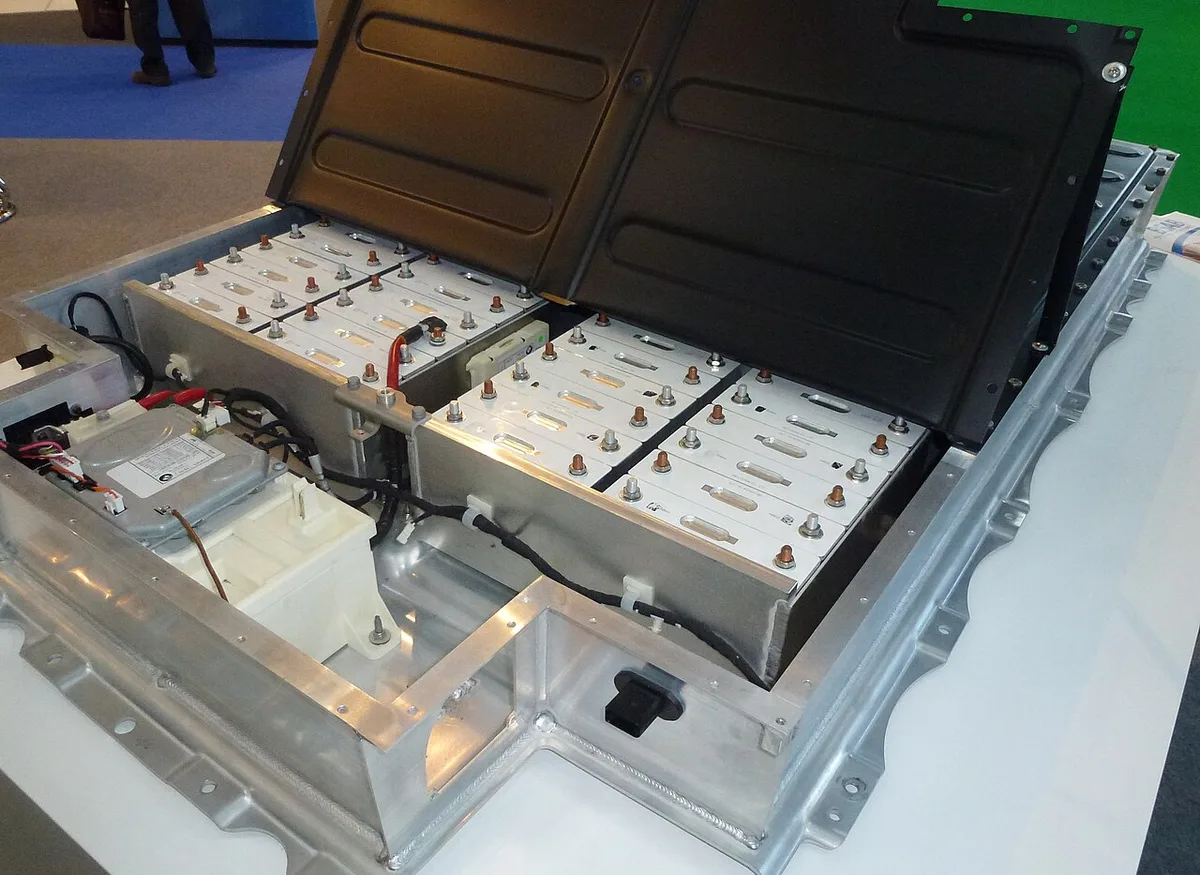
Image source: Wikimedia Commons / RudolfSimon (CC BY-SA)
The pack’s modular design lets manufacturers scale capacity for different models. Each module can be replaced individually, extending vehicle life. Regular BMS updates improve efficiency and add new safety features.
Understanding this architecture helps you troubleshoot issues and choose the right EV for your needs. 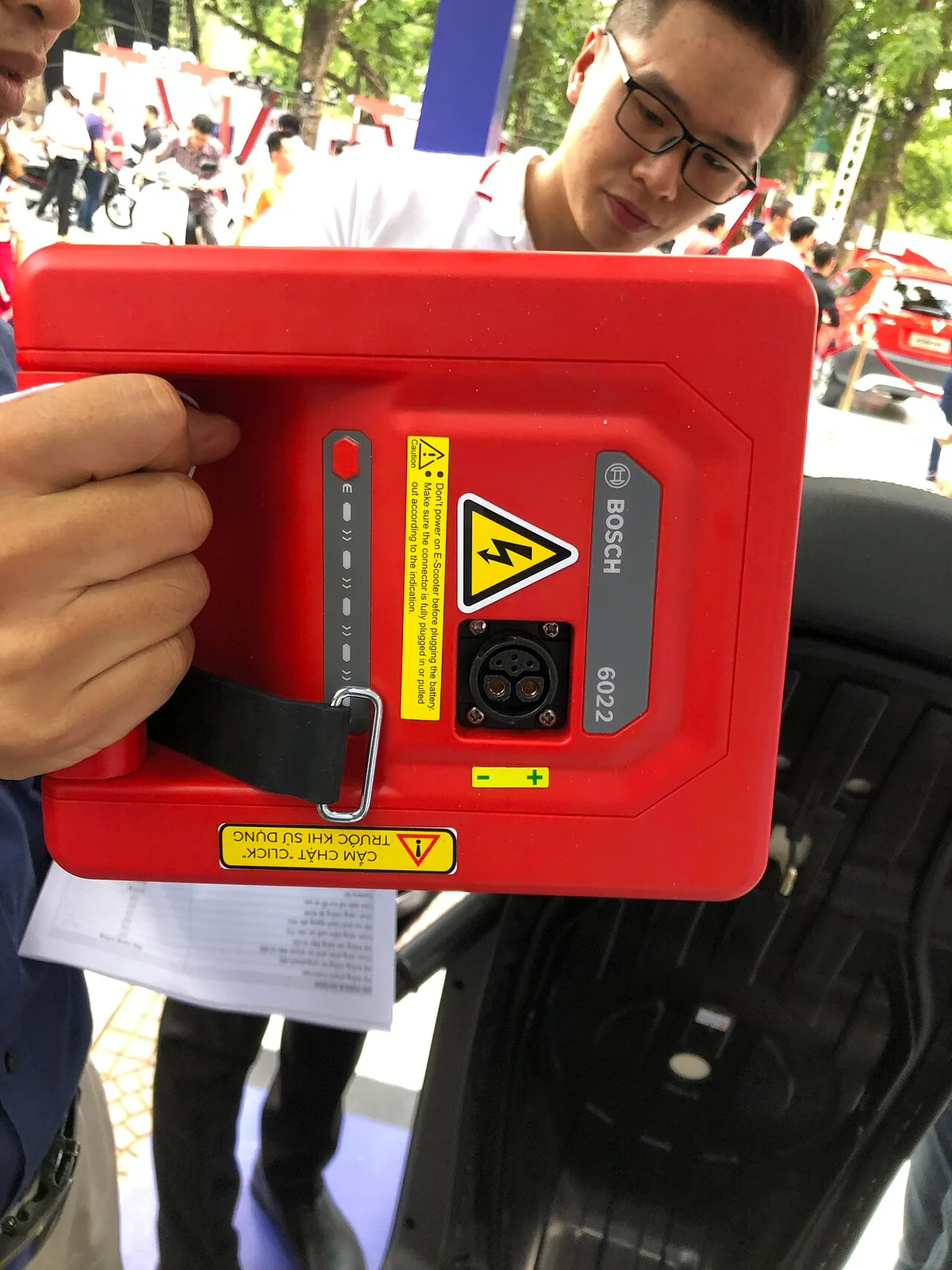
Image source: Wikimedia Commons / Newone (CC BY-SA)
Pros, Cons & Real-World Impact
Pros:
- High energy density gives longer range per kilogram.
- Lightweight construction improves vehicle efficiency.
- Fast charging adds 200 km in 15 minutes under CCS.
- Low self‑discharge keeps the car ready after weeks of storage.
Cons:
- Upfront cost remains high, adding $5,000‑$10,000 to vehicle price.
- Capacity can drop 10‑15 % after 1,000 cycles.
- Cold climates reduce range by up to 30 % without pre‑conditioning.
- Recycling logistics are still developing, creating environmental concerns.
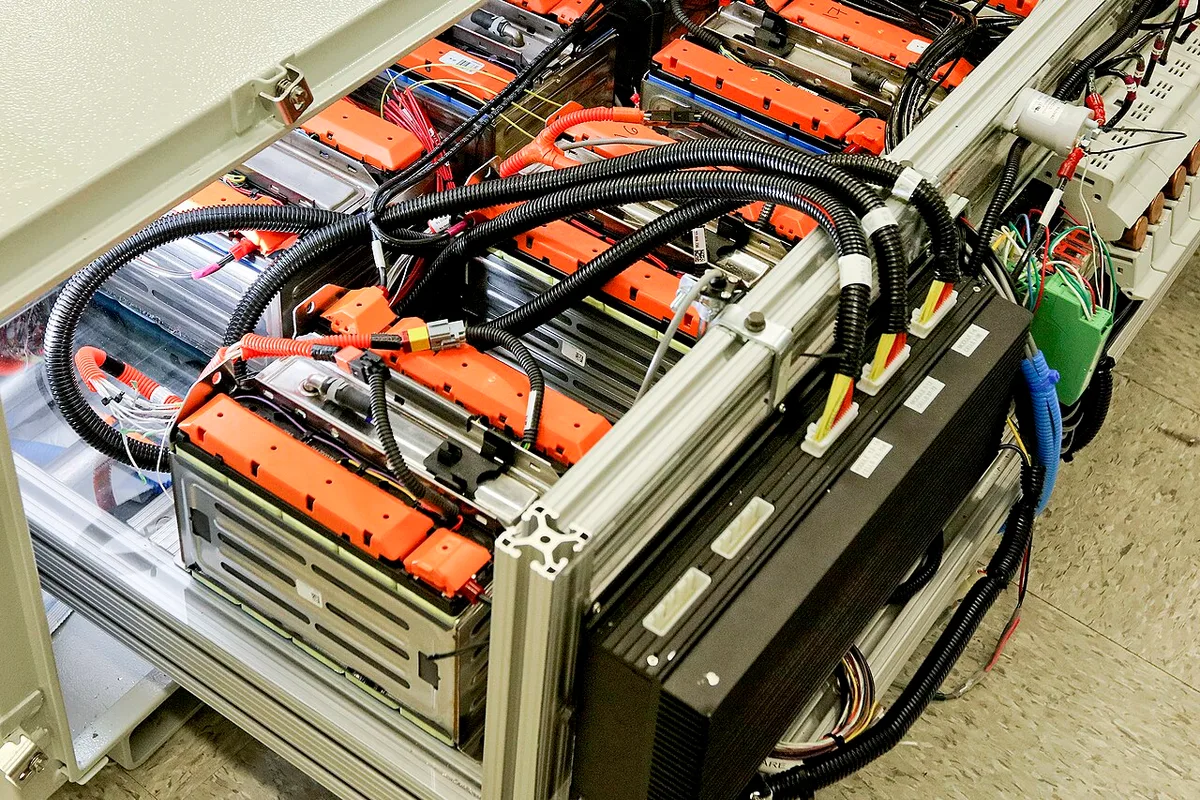
Image source: Wikimedia Commons / Oak Ridge National Laboratory (CC BY)
Real‑world data shows most drivers achieve 80 % of rated range in winter after pre‑conditioning. Proper charging habits, avoiding 100 % daily, can extend pack life to 2,000 cycles. For added cargo protection, consider a tonneau cover to reduce aerodynamic drag and improve efficiency.
Safety, Legal & What to Watch Out For
Safety warnings:
- Never expose the pack to open flames; thermal runaway can occur.
- Install only certified chargers meeting IEC 62196 standards.
- Keep the vehicle in a well‑ventilated area during fast charging.
- Follow manufacturer guidelines for towing and heavy loads.
Legal compliance:
- UL 9540 certification is required for energy storage systems in the U.S.
- ISO 26262 mandates functional safety for automotive electronics.
- UN 38.3 testing ensures safe transport of lithium cells.
- Local regulations may restrict home charging in multi‑unit dwellings.
When working near the battery, use insulated tools and wear protective gloves. If you notice swelling, unusual smells, or sudden power loss, stop driving and contact a certified technician. Proper torque tools, such as those used for lug nuts, help maintain structural integrity during service.
For detailed guidance on safe practices, refer to the DOE Vehicle Technologies Office.
FAQs & Final Verdict
How does temperature affect lithium battery performance?
Cold temperatures reduce chemical reaction rates, lowering capacity by up to 30 % at, 10 °C. Pre‑conditioning the battery while plugged in restores most lost range. Hot temperatures accelerate aging and can trigger protective shutdowns.
Always park in shade when possible and avoid rapid charging in extreme heat.
What is the typical lifespan of an EV battery pack?
Manufacturer warranties often cover 8 years or 100,000 mi, with capacity retention above 80 % at that point. Real‑world data shows many packs retain 70‑85 % after 10 years of use. Driving habits, charging habits, and climate all influence longevity.
Regular BMS updates can improve endurance over time.
Can I replace a single module instead of the whole pack?
Yes, many EVs allow module replacement, which is cheaper and reduces downtime. The BMS must be reprogrammed to recognize the new module’s characteristics. Always use OEM‑approved modules to maintain safety and warranty coverage.
Attempting DIY module swaps can void warranties and create safety hazards.
How should I store an EV during long periods of inactivity?
Keep the battery at about 50 % SOC to minimize stress. Store the vehicle in a cool, dry place away from direct sunlight. If possible, plug it into a trickle charger to maintain SOC.
Check the battery every few weeks to ensure it hasn’t dropped below 20 % SOC.
What are the signs of a failing lithium car battery?
Watch for sudden range drops, longer charging times, and unusual heat from the pack. Error messages on the dashboard often point to BMS issues. Swollen cells or a pungent smell indicate serious problems and require immediate service.
Ignoring these signs can lead to costly repairs or safety incidents.
Overall, lithium car batteries deliver impressive range and performance when properly managed. Understanding their chemistry, limits, and maintenance needs helps you get the most out of your EV. By following safety guidelines and staying informed, you protect your investment and enjoy reliable electric driving.
For hand placement guidance while driving, see our guide on hand placement guidance.
