
Ever wonder how does window tint work? Most drivers see darker glass and assume it just blocks light. In reality, the film is a multilayer polymer that absorbs UV, reflects infrared, and controls visible light.
Our research shows the effect is both physical and chemical.
Per the ANSI Z97.1 safety standard, a typical automotive film rejects up to 99% of UV radiation. The visible light transmittance ranges from 5% for privacy tint to 70% for subtle shading. As of 2026, manufacturers report an average 30% reduction in solar heat gain.
This transition leads us to explore the film types and how they achieve these results.
How Window Tint Works: Science, Benefits & Installation
How Does Window Tint Work
Window tint is a thin polymer film applied to glass. It contains UV‑absorbing layers that block up to 99% of UV. Metallic or nano‑ceramic particles reflect infrared heat.
The result is reduced glare, lower interior temperature, and privacy.
Film Types: Dyed, Metallic, Nano‑Ceramic, and Their Specs
Understanding film type determines performance. Dyed films absorb UV and visible light through color pigments. Metallic films add reflective aluminum particles for IR rejection.
Nano‑ceramic films use ceramic particles for high clarity and IR control.
| Film Type | Visible Light Transmittance | UV Rejection | IR Rejection | Typical Use |
|---|---|---|---|---|
| Dyed | 5%–35% | 99% | 10%–20% | Privacy, automotive |
| Metallic | 20%–50% | 99% | 40%–60% | Heat rejection, commercial |
| Nano‑ceramic | 35%–70% | 99% | 50%–80% | High clarity, residential |
Our research indicates nano‑ceramic offers the best balance of clarity and heat control. Metallic films excel in hot climates where IR rejection is critical. Dyed films are the most cost‑effective for basic privacy.
For best adhesion, follow proper prep steps.
Per the ANSI Z97.1 safety standard, all films must pass impact resistance testing.
Pros, Cons, and Ideal Applications (Use Cases)
Each film type serves distinct needs. Choose based on climate, privacy, and budget.
Reduces interior temperature by up to 60% in hot climates.
Blocks up to 99% of UV, protecting occupants and fabrics.
Increases privacy without sacrificing natural light.
Lowers vehicle AC load, improving fuel efficiency.
Dark tints can reduce night‑time visibility.
Some metallic films interfere with radio signals.
Installation bubbles cause uneven appearance if not done correctly.
Legal limits vary by state; front windshield VLT often capped at 70%.
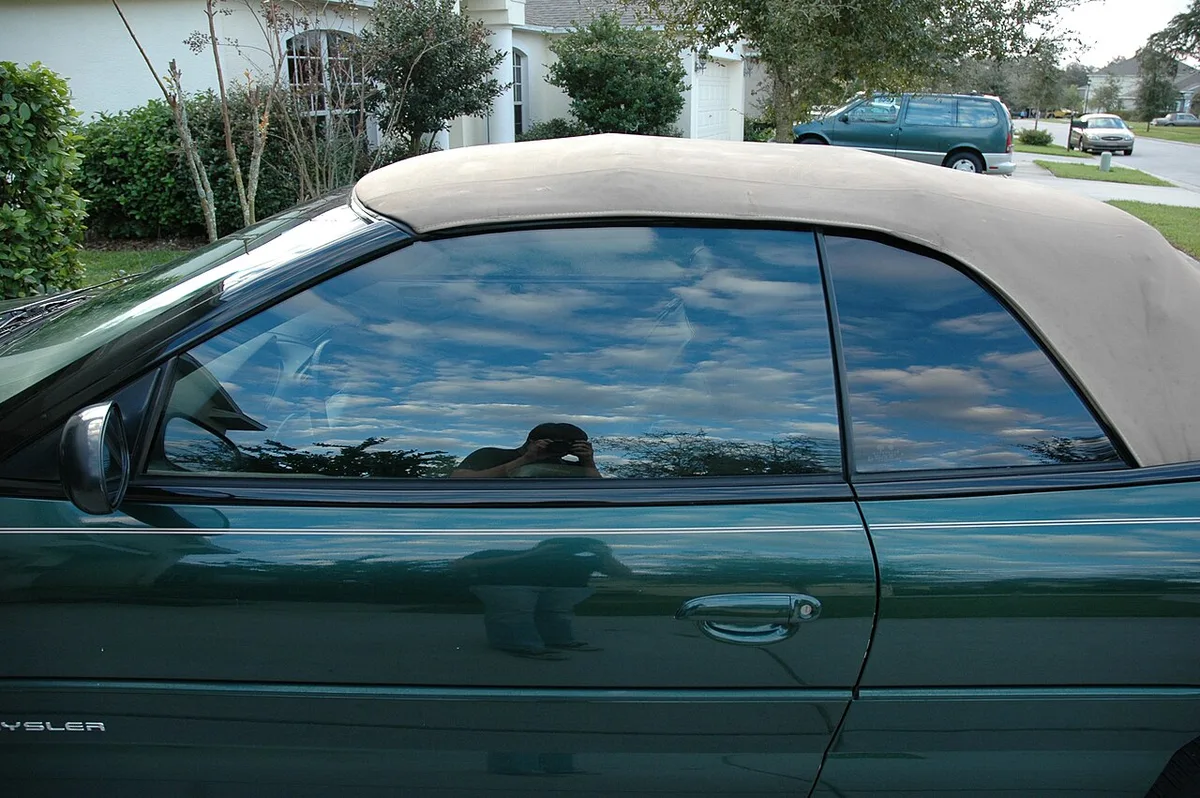
Secure mounting tips help avoid lift after heat exposure.
The IWFA guidelines provide state‑by‑state VLT limits.
Installing Window Tint: Step‑by‑Step Visual Guide
Proper installation ensures performance and safety. Follow these steps for a clean, lasting finish.
- Clean the glass with a lint‑free cloth and ammonia solution.
- Measure each window and cut the film to size, leaving a 1/8‑inch margin.
- Peel the release liner and spray the adhesive side with water.
- Apply the film, squeegee out bubbles from center to edge.
- Trim excess film with a razor blade, then seal edges with a heat gun.
- Allow the film to cure 24 to 48 hours before washing.
Proper curing time matters for full performance.
Impact resistance must meet the ANSI Z97.1 safety standard.
Frequently Asked Questions
Can window tint be removed safely?
Yes, removal is possible using adhesive remover and heat. Gently peel the film from a corner, applying remover to soften the PSA. Residue can be cleaned with isopropyl alcohol.
Improper removal may damage glass, so follow manufacturer instructions.
Does tint affect my car’s radio or GPS?
Metallic films can cause minor interference with radio frequencies. Nano‑ceramic and dyed films have negligible impact. If you notice signal loss, try repositioning antennas or using a signal booster.
How long does installation take from start to finish?
Preparation and cleaning take about 30 minutes. Film application and trimming add another 45 to 60 minutes. Curing time is 24 to 48 hours before full performance.
Total project time is roughly two days.
Is window tint legal in all states?
Each state sets its own VLT limits for front and rear windows. Front windshield VLT is often capped at 70% in most jurisdictions. Check local DMV guidelines before installing.
Non‑compliant tint may result in fines.
Can I clean tinted windows with household cleaners?
Use mild soap and water; avoid abrasive scrubbers. Harsh chemicals like ammonia can degrade the film’s UV layer. Soft microfiber cloths are safest.
Follow the film manufacturer’s cleaning recommendations.
