
If you’ve ever wondered how does ceramic coating work, you’re not alone. Many drivers see the glossy finish on show cars and assume it’s magic, but the science is straightforward. The coating forms a thin, durable polymer layer that bonds to the paint’s surface.
Per ASTM D4587 testing, a properly cured coating retains a water contact angle above 110 degrees for up to five years. Here’s a quick look at the science behind it.
How Does Ceramic Coating Work
Ceramic coating is a silica‑based nano polymer that bonds to paint. The polymer forms a hard, hydrophobic clear layer. UV curing at 60 °C creates a 9H hardness surface.
Water beads up, reducing staining and wear. This permanent protection lasts three to five years when applied correctly.
Problem / Pain Point
Why paint protection fails and common user frustrations
Paint often loses its shine because contaminants embed in the clear coat. If the surface isn’t perfectly clean, the coating can trap dirt and cause haze. Moisture under the film leads to blistering after curing.
Over‑application creates excess haze that’s hard to remove. Users also report premature yellowing when the coating lacks UV stabilizers.
Image source: Wikimedia Commons / Wikicristof (CC BY-SA)
Common mistakes include skipping the decontamination step and curing in humidity above 70 %. If the ambient temperature drops below 10 °C, the polymer won’t harden properly. Many DIYers also use the wrong applicator pad, leaving streaks.
Knowing these pitfalls helps you avoid costly re‑work. For a deeper dive on proper prep, see how to clean car paint correctly.
Image source: Wikimedia Commons / Colchester Museums, Caroline McDonald, 2006-01-05 12:36:50 (CC BY-SA)
Benefits, Drawbacks & Best For
Key advantages and limitations
The coating delivers a glossy, water‑repellent finish that needs only a rinse to clean. It resists chemical stains from fuels, road grime, and bird droppings. Hardness tested to 9H means minor scratches are less likely to mar the surface.
However, the coating is not scratch‑proof; sharp impacts can still damage the paint. It also adds a thin layer that can affect paint depth on very old cars.
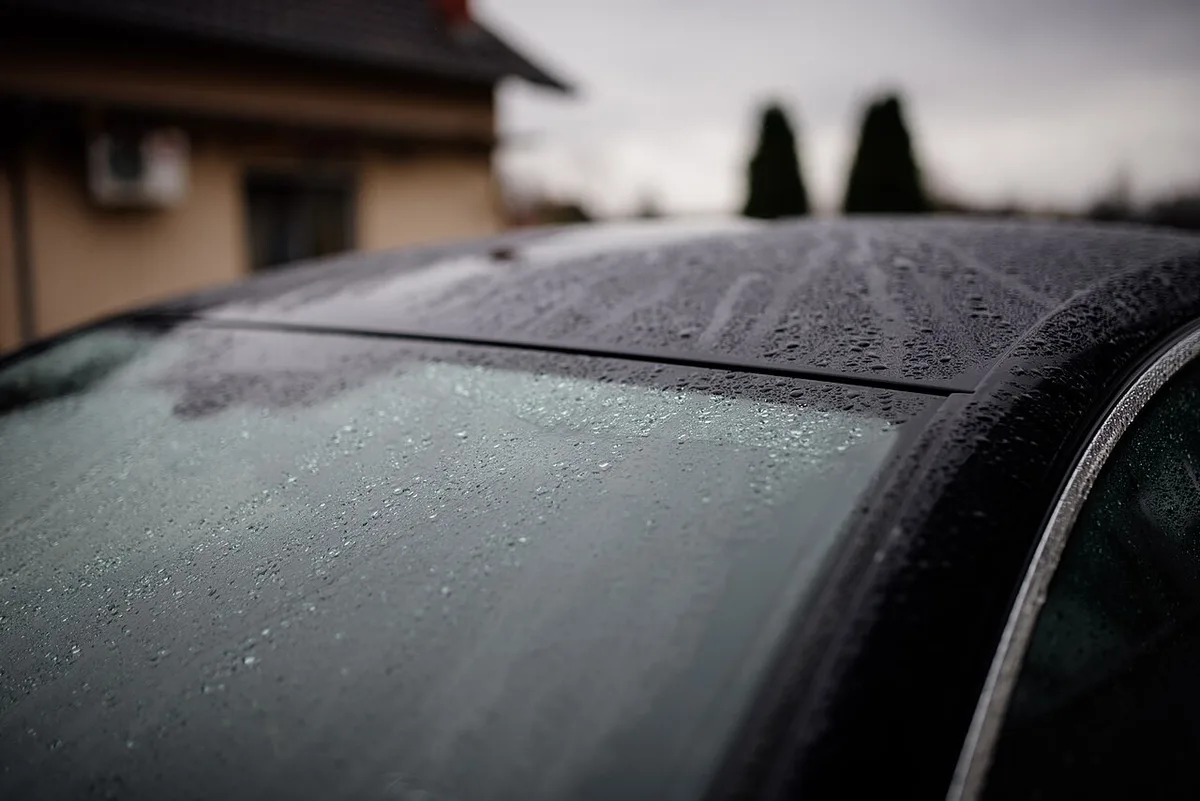
Image source: Wikimedia Commons / Shixart1985 (CC BY)
If you drive in high‑UV climates, choose a formula with added UV inhibitors. For marine hulls, a salt‑resistant variant is preferable. The cost ranges from $200 to $1,500 per vehicle, so budget matters.
Professional installation guarantees proper curing and warranty coverage. For a similar protective option, compare ceramic coating to paint protection film.
Step‑by‑Step Application
Preparation, coating, curing, and maintenance workflow
Start by washing the car with a pH‑neutral shampoo and rinse thoroughly. Follow with an isopropyl alcohol wipe to remove oils. Apply a clay bar treatment to lift embedded particles, then wipe with a microfiber towel.
Spray the ceramic coating evenly using an air‑assist gun, working in small sections. Allow the coating to flash for 1, 2 minutes, then buff with a soft pad to a high shine.
Image source: Wikimedia Commons / Optimi3e (CC BY-SA)
Place the vehicle in a well‑ventilated area and cure at 60, 80 °C for 30 minutes, or let it cure ambiently for 12, 24 hours. After curing, avoid washing for 48 hours and use only mild, non‑abrasive cleaners thereafter. Regular maintenance keeps the hydrophobic effect strong.
For detailed torque specs on removal bolts, see how to use an impact wrench on lug nuts.
Frequently Asked Questions
How long does the coating last before it needs reapplication?
Manufacturer warranties typically cover three to five years of protection. Longevity depends on curing quality, environmental exposure, and maintenance. If you notice loss of water beading or surface haze, a top‑up may be needed.
Proper prep and curing are the biggest factors in lifespan.
What are the main differences between ceramic coating and traditional wax?
Ceramic coating forms a permanent polymer bond, while wax sits on top of the paint. The polymer provides higher hardness and longer water‑repellency. Wax must be reapplied every few months and offers less UV protection.
Choose coating for durability; wax works for quick shine boosts.
Is it safe to apply ceramic coating in a home garage?
Yes, if you follow safety guidelines and work in a dust‑free space. Wear nitrile gloves, safety glasses, and a respirator to avoid inhaling fumes. Keep the area ventilated and maintain the recommended temperature range.
For a checklist of safety steps, refer to OSHA’s chemical handling guidance.
Can ceramic coating be removed if I change my mind?
Removal is possible but requires careful polishing and solvent application. It can thin the underlying paint if not done by a professional. Most users keep the coating because removal costs outweigh the benefit of a fresh coat.
If you need removal, seek a certified detail shop.
