
You might be asking how does adaptive suspension work when you drive over a rough patch. In simple terms, it’s a system that changes the stiffness of your car’s dampers in real time to keep the ride smooth and the handling sharp. That means fewer jolts on city streets and better grip when you corner hard.
Below we break down the components, the control logic, and where you’ll actually feel the difference.
Most modern adaptive setups can adjust damping force from 0 to 5,000 N in under 50 ms, according to manufacturer specifications. The system uses sensors, an electronic control unit, and either magnetorheological fluid or air springs to achieve that speed. By the end of this guide you’ll know exactly what each part does and why it matters for everyday driving.
Core Explanation / How Adaptive Suspension Works (Visual Overview)
Think of adaptive suspension as a car that can stiffen its springs when you corner and soften them when you cruise over bumps. The system does this by constantly reading the road and adjusting the dampers in milliseconds.
- Wheel speed sensors detect how fast each tire is turning.
- Longitudinal and lateral accelerometers measure body movement.
- A gyroscope tracks yaw for cornering stability.
- The electronic control unit (ECU) processes all data and decides the optimal damping force.
- Actuators either change the viscosity of magnetorheological fluid or adjust air pressure in the springs.
| Aspect | Passive Suspension | Adaptive Suspension |
|---|---|---|
| Response time | Fixed, no adjustment | 0–50 ms |
| Ride comfort | Consistent but can be harsh | Adjusts to road |
| Handling | Limited by fixed settings | Improves cornering |
Because the ECU can command the dampers in real time, you get the best of both worlds: comfort when you want it and grip when you need it.
Features & Components / What's Inside the System

Image source: Wikimedia Commons / Enrique Íñiguez Rodríguez (Qoan) Credit information This work was created by Enrique Íñiguez (Qoan). You are free to use it for any purpose as long as you credit me properly (e.g. © Enrique Íñiguez (CC-BY-SA); other variants are acceptable, let me know if in doubt). .mw-parser-output .div-col{margin-top:.3em;column-width:30em}.mw-parser-output .div-col-small{font-size:90%}.mw-parser-output .div-col-rules{column-rule:thin solid var(–border-color-base)}.mw-parser-output .div-col dl.mw-parser-output .div-col ol.mw-parser-output .div-col ul{margin-top:0}.mw-parser-output .div-col li.mw-parser-output .div-col dd{page-break-inside:avoid;break-inside:avoid-column} Reuse: If you use this image outside of Wikimedia projects, I would be happy to hear from you. If you use this image in a printed publication, I would love to get a copy for my archives. Contact me: If you're unsure about how you can use this picture. If you have any questions about attribution or other topics related to my files. (CC BY-SA)
The hardware behind adaptive suspension is a blend of sensors, controllers, and actuators that work together like a small robot. Each component has a specific role and measurable capability.
- Magnetorheological damper: fluid changes viscosity instantly when an electric field is applied; typical force range 0, 5,000 N.
- Air‑spring module: uses compressed air to vary ride height; can lift up to 80 mm for off‑road mode.
- Position sensor: measures damper stroke with ±1 mm accuracy.
- Control algorithm: uses PID and model‑predictive logic to anticipate road changes.
| Component | Key Spec | Function |
|---|---|---|
| Magnetorheological damper | 0–5,000 N force | Rapid stiffness change |
| Air‑spring | 0–80 mm lift | Ride height adjustment |
| Position sensor | ±1 mm precision | Feedback for ECU |
| ECU | 50 ms processing | Decision hub |
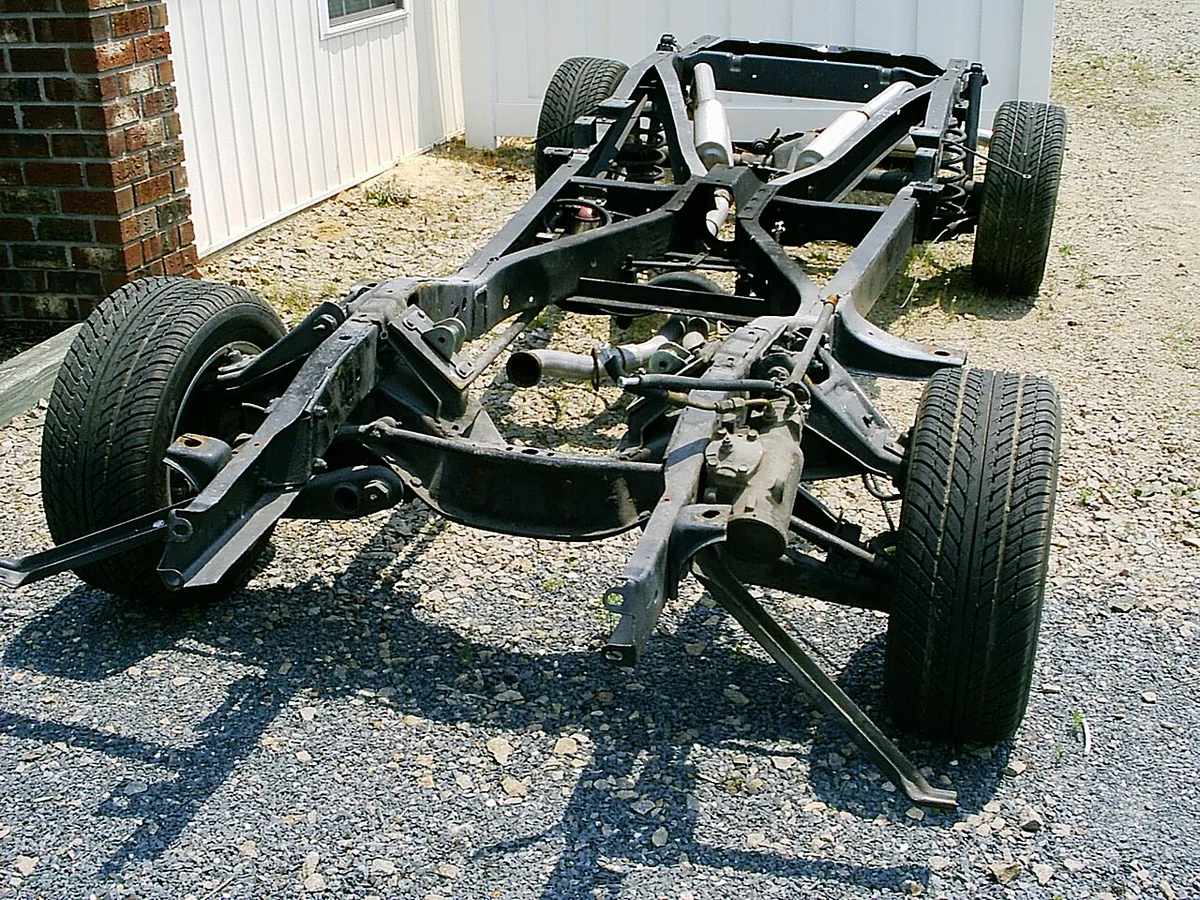
Image source: Wikimedia Commons / CZmarlin, Christopher Ziemnowicz, a photo credit would be appreciated if this image is used anywhere other than Wikipedia. Please leave a note at Wikipedia here. Thank you! (CC BY-SA)
Step-by-Step Process / How the System Adjusts in Real Time
When you hit a bump, the whole cycle unfolds in a few milliseconds. The sequence is simple and repeatable.
- Wheel speed and acceleration sensors send data to the ECU.
- The ECU runs its control algorithm and calculates the required damping force.
- It sends a signal to the actuator, which modifies the damper’s stiffness.
- The damper responds, smoothing the impact, while the position sensor confirms the movement.
- The loop repeats continuously, allowing the car to adapt to the next input.
Use Cases / Best For / Who It's Right For
Adaptive suspension shines in situations where the road changes quickly or where drivers want both comfort and performance. Different vehicles benefit in distinct ways.
- Sports cars that need razor‑sharp handling on a track but plush rides on city streets.
- Luxury sedans that keep passengers comfortable on highways while staying agile in traffic.
- Off‑road trucks that can firm up for rock crawling and soften for highway cruising.
- Autonomous test vehicles that must maintain stability without driver input.
FAQs
How does the ECU decide when to stiffen the dampers?
It reads sensor data, compares it to predefined maps for each driving mode, and applies the algorithm to set the damper force. The decision happens in milliseconds, so you never notice a delay.
What’s the difference between magnetorheological and air‑spring systems?
Magnetorheological dampers change fluid viscosity electrically, giving fast, precise adjustments. Air‑spring systems vary air pressure to change ride height and stiffness, which is useful for load changes and off‑road clearance.
Can adaptive suspension be turned off?
Most vehicles let you switch between comfort, sport, and auto modes. In sport mode the system stays active but favors a firmer setting; in comfort mode it prioritizes softness. A full off switch is rare but exists on some models.
Does adaptive suspension affect fuel economy?
By keeping the car level and reducing unnecessary suspension movement, it can improve aerodynamics and reduce drag, leading to a few percent fuel savings on highways. The effect is modest compared with engine efficiency.
