
Ever wondered how does a tire pressure monitoring system work? Most drivers rely on it to avoid blowouts and save fuel. Our research shows the system uses sensors, wireless signals, and a dashboard display to keep pressure in check.
Per FMVSS 138, every new vehicle under 10,000 lb must have TPMS as of 2026. The system alerts you when pressure drops 20 % below the recommended level, typically 30 psi for passenger cars. Understanding the basics helps you spot false warnings and keep your tires safe.
Let’s start with a quick, factual answer to the exact question you asked.
How Does a Tire Pressure Monitoring System Work
Direct TPMS uses valve‑stem sensors to measure pressure. Sensors transmit data wirelessly to the vehicle’s ECU. The ECU compares readings to the preset threshold.
If low, a warning lamp lights on the dash. Indirect systems infer pressure from wheel speed changes.
Why Accuracy Matters & Core TPMS Facts
Accurate tire pressure keeps you safe and saves fuel. When pressure is low, handling worsens and blowouts rise. Our research shows proper pressure can improve fuel economy by up to 3 % per NHTSA TPMS guidelines.
That’s why drivers check the system before long trips.
Direct sensors use a CR2032 battery lasting five to ten years. They send data at 315 MHz in the U.S. or 433 MHz in Europe. The measured range covers 0 to 45 psi, covering all passenger car needs.
If the battery dies, the system may stop reporting pressure.
| Parameter | Value |
|---|---|
| Battery type | CR2032 |
| Frequency (US) | 315 MHz |
| Frequency (EU) | 433 MHz |
| Pressure range | 0–45 psi |
| Alert threshold | 20 % below spec |
False alerts often appear after a sudden temperature change. Calibration can drift after tire rotation or replacement. Interference from other wireless devices may cause occasional missed signals.
Keeping the system calibrated prevents unnecessary worry and maintains tire life.
How TPMS Works & What’s Inside
Direct and indirect systems differ in sensor count and measurement method. Direct TPMS uses one sensor per wheel, while indirect relies on ABS wheel speed sensors. Each direct sensor contains a pressure transducer, temperature sensor, and a unique ID.
The ECU processes the data and stores each sensor’s baseline.
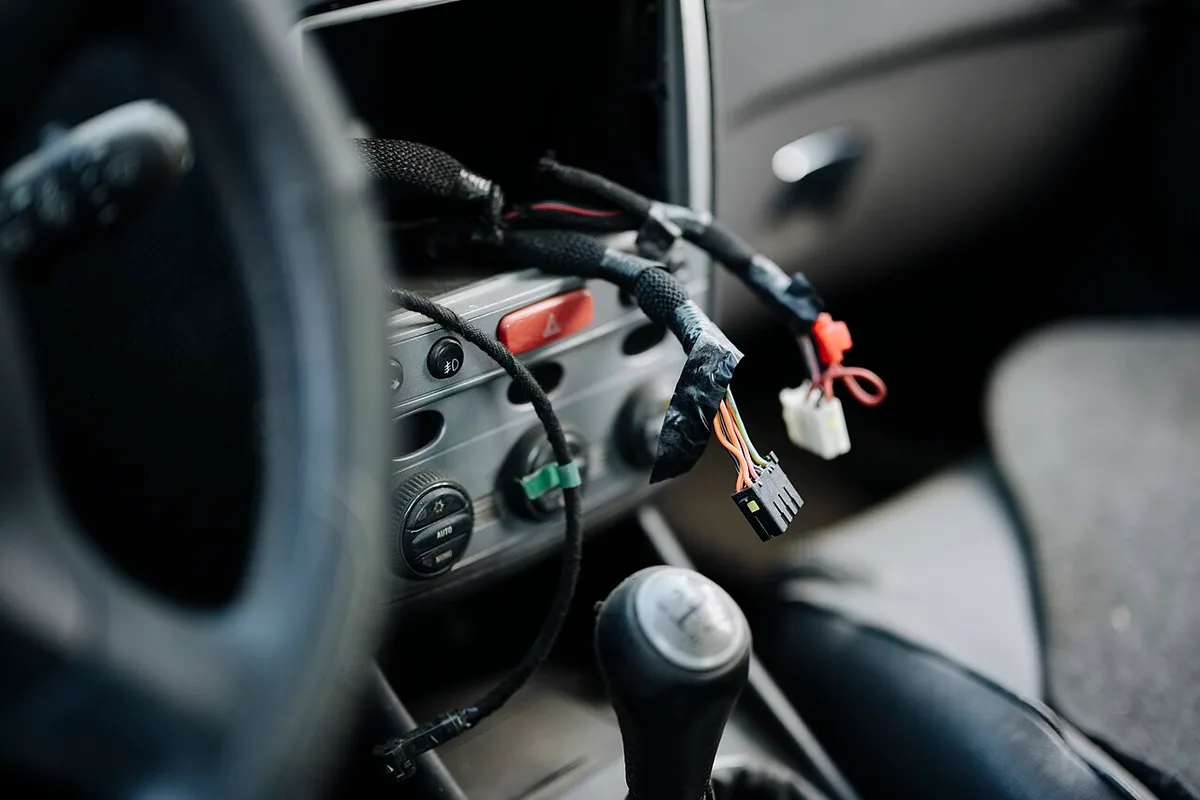
Image source: Wikimedia Commons / Shixart1985 (CC BY)
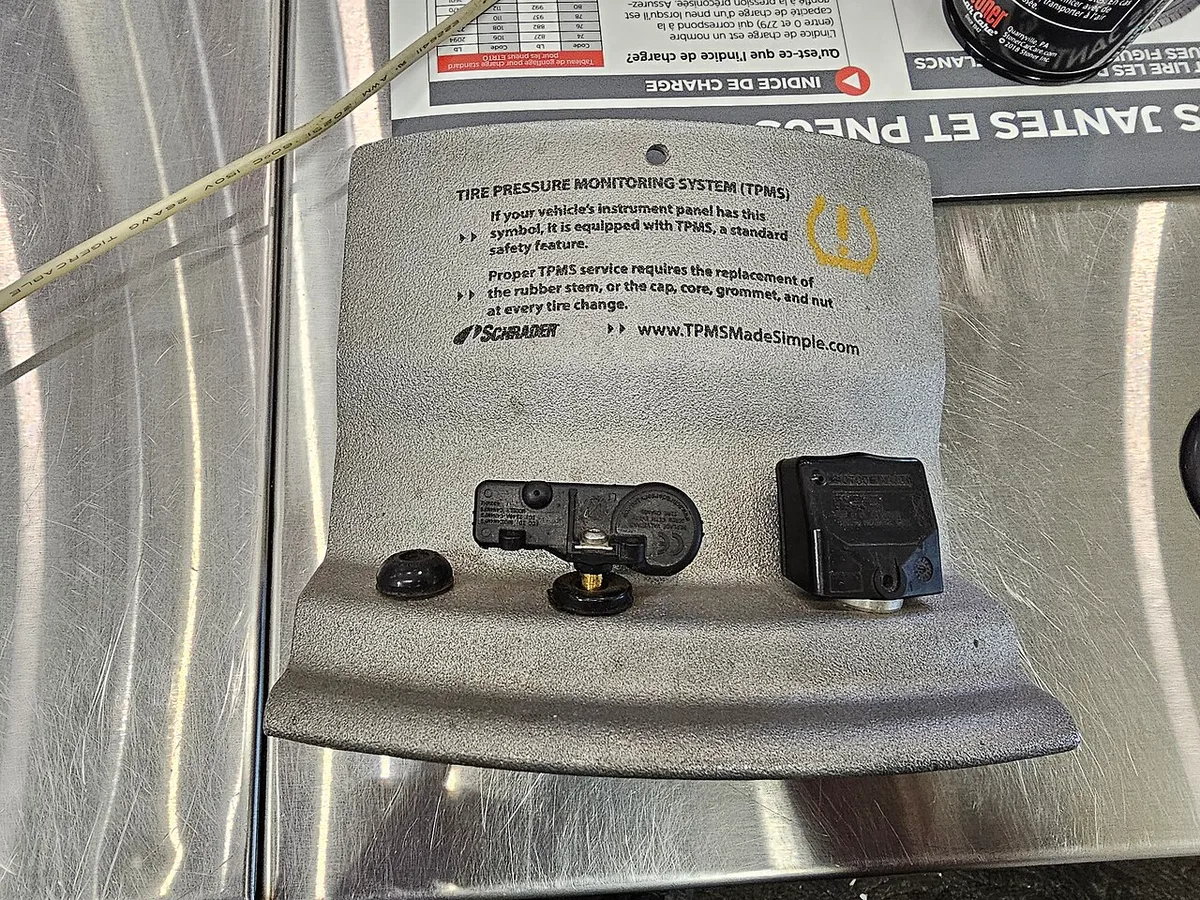
Image source: Wikimedia Commons / Sinafe (CC BY-SA)
The sensor’s battery powers a transmitter that sends a short radio burst every few seconds. The ECU receives the burst, decodes the pressure value, and compares it to the calibrated target. If the pressure falls below the threshold, the driver’s information center displays a warning and may sound a chime.
The system also logs fault codes for service technicians to read with an OBD‑II scanner.
For a deeper look at the standard, see the FMVSS 138 documentation.
Benefits, Risks & Legal Requirements
TPMS provides real‑time alerts that help avoid dangerous blowouts. Maintaining correct pressure can extend tire life by 10, 15 % and improve fuel efficiency. The system also helps fleets meet DOT reporting requirements and reduces unexpected downtime.
Risks include sensor failure, false alerts from temperature spikes, and calibration errors after tire service. Ignoring warnings can lead to uneven wear, reduced handling, and higher repair costs.
Legal compliance is mandatory for all new vehicles under FMVSS 138. Manufacturers must install TPMS on cars, light trucks, and buses up to 10,000 lb GVWR. Non‑compliance can result in recalls and fines.
When you service your vehicle, ask the shop to verify sensor IDs and reset the system. Keeping the system in good condition protects you and keeps you legal.
Setup, Mistakes & FAQs
How do I install an aftermarket TPMS kit?
Mount each sensor on the valve stem and torque to 5 Nm. Pair the sensors with the display unit using the manufacturer’s instructions. After installation, calibrate the system by driving at highway speed for 10 minutes.
Why does my TPMS light flash after a tire rotation?
The system lost the sensor ID link during rotation. Re‑learn the sensors using the vehicle’s TPMS reset procedure or a diagnostic scan tool.
Can I use a manual gauge instead of TPMS?
A gauge gives a single reading; TPMS monitors all tires continuously. For safety, use both tools and check pressures monthly.
What should I do if a sensor battery dies?
Replace the sensor with the correct OEM part or a compatible aftermarket unit. After replacement, perform a reset to restore proper monitoring.
Is TPMS required on all vehicles?
All new vehicles under 10,000 lb GVWR must have TPMS per FMVSS 138. Used vehicles may lack it, but adding a kit improves safety.
Proper setup prevents false warnings and keeps your tires safe. If you’re unsure, a quick visit to a service center can verify everything.
Final Verdict
Research shows TPMS reduces blowout risk when maintained and improves fuel economy by up to 3 % per NHTSA data. If you notice false alerts or a dead sensor, replace it and reset the system promptly. For any doubt, have a qualified technician verify the installation.
