
When you lift the hood of a Subaru or Porsche, you see a flat engine layout. This design is called a boxer engine because the pistons punch like a boxer’s gloves. Understanding its operation helps you maintain performance and diagnose problems early.
Our research shows the layout reduces rotational inertia and improves handling balance. Per SAE J1349, power ratings reach 300 hp in modern flat‑six units as of 2026. You’ll also learn why maintenance can be trickier than on inline engines.
How Does a Boxer Engine Work
The boxer engine uses horizontally opposed cylinders for a low center of gravity. Pistons move up and down in opposite banks, canceling vibration. A flat crankshaft converts this linear motion into smooth rotational power.
See the exploded view below for a visual breakdown of the flat layout. The diagram highlights opposite pistons and the low‑profile crankshaft. Notice how the engine sits lower than a conventional inline design.
The term “boxer” comes from the pistons punching in opposite directions. Imagine two boxers throwing jabs at the same time. This motion creates balanced forces and reduces overall engine height.
In a 2022 Subaru WRX, the boxer engine produces 268 hp and 258 lb‑ft of torque. The flat layout keeps the vehicle’s center of gravity low, enhancing cornering stability. Refer to the Subaru technical manual for detailed service intervals.
Core Components & Their Roles
The boxer engine’s core components work together to turn combustion energy into motion. A flat crankshaft links two opposite cylinder banks, each housing a piston. Understanding each part helps you diagnose issues and perform maintenance correctly.
Below is a concise table that maps each component to its primary function. Refer to it when you inspect or replace parts during a service. The list follows SAE J1349 guidelines for terminology and specifications.
| Component | Primary Function |
|---|---|
| Flat crankshaft | Converts linear to rotary motion |
| Cylinder banks | House pistons opposite each other |
| Pistons & connecting rods | Transfer combustion force |
| Timing system | Control valve operation |
| Cooling passages | Remove heat from engine |
Image 1 shows an exploded view of a Subaru boxer engine, highlighting the flat layout. Image 2 details the piston and connecting rod arrangement for a flat‑four.
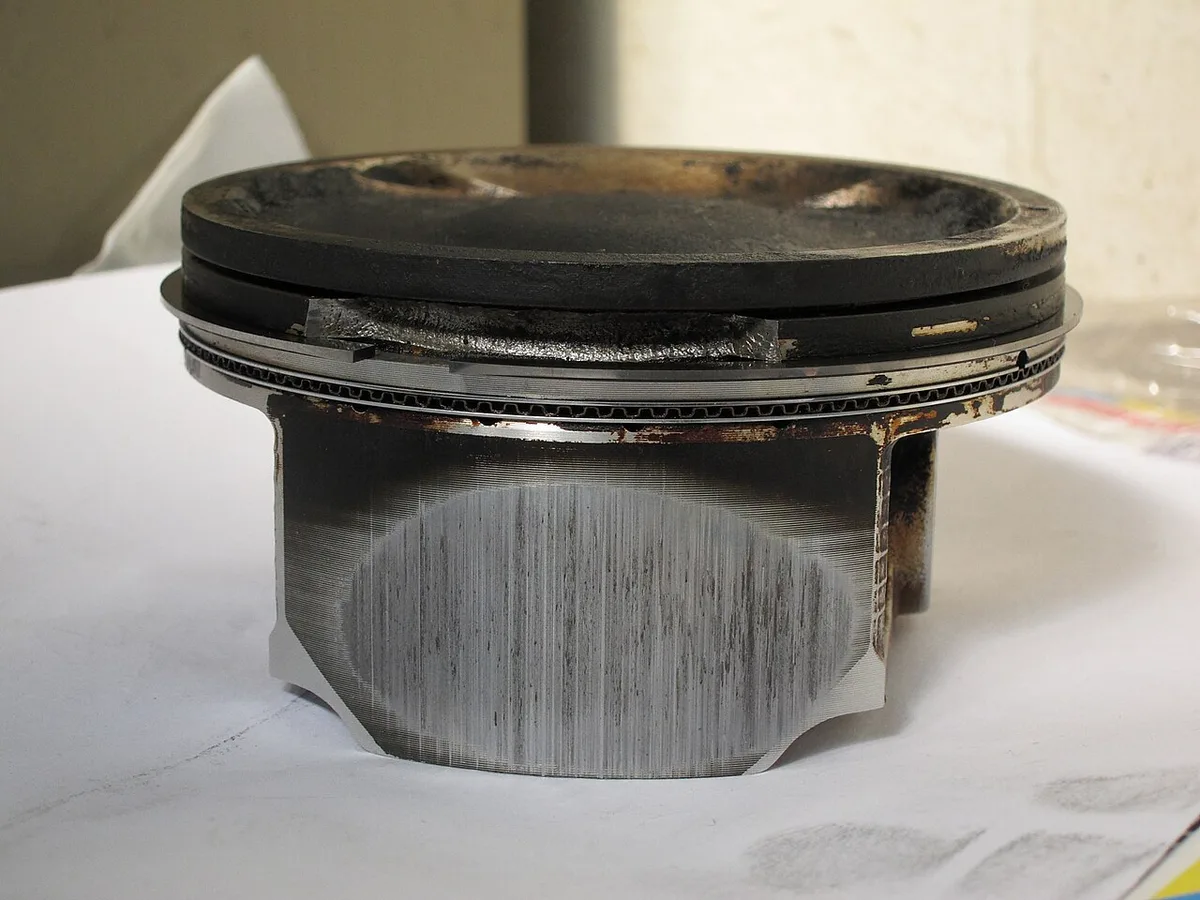
Image source: Wikimedia Commons / Phil Sangwell from United Kingdom (CC BY)
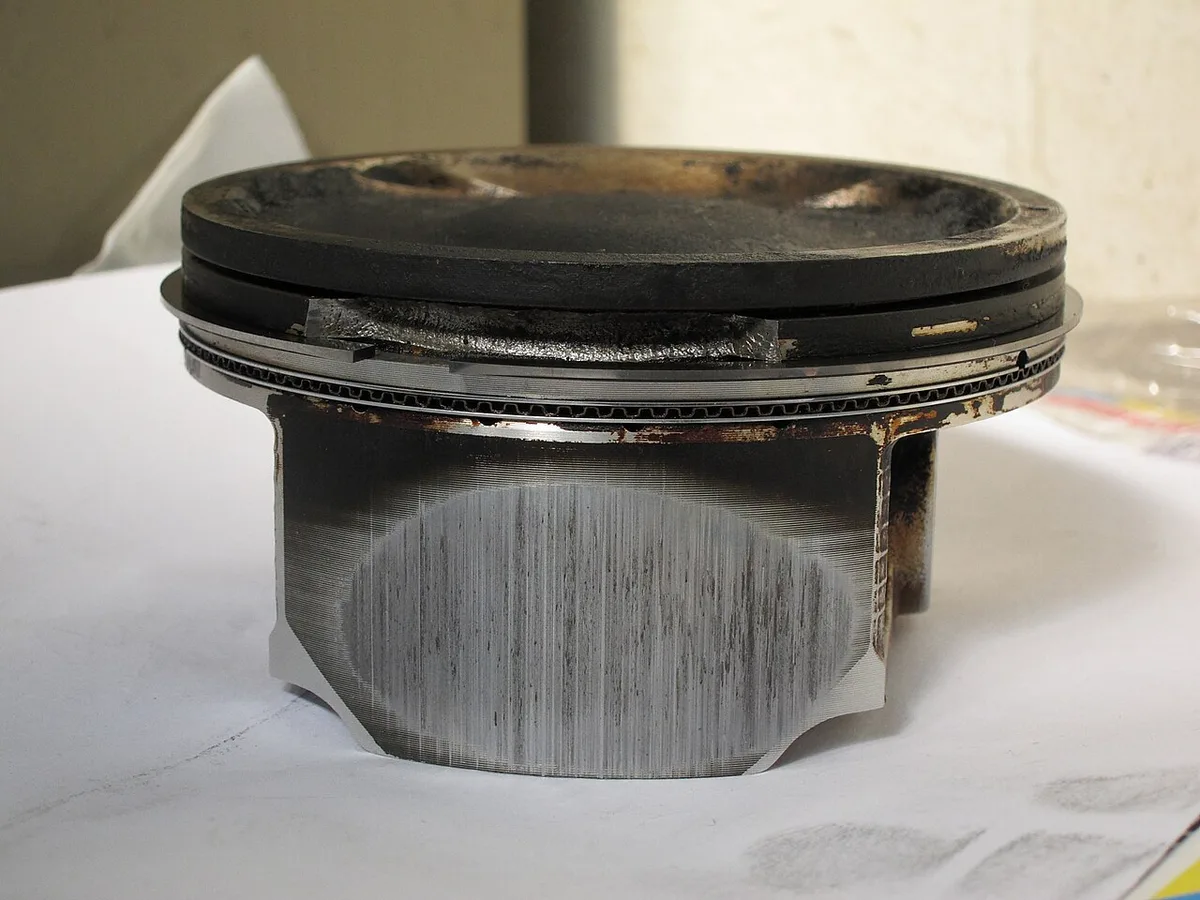
Image source: Wikimedia Commons / Phil Sangwell from United Kingdom (CC BY)
Manufacturer recommendations advise inspecting the rear main seal every 60,000 mi or 5 years. Follow the torque specifications guide to avoid over‑tightening bolts during reassembly. Keeping the engine clean reduces heat buildup and prolongs component life.
Benefits, Drawbacks & Ideal Use Cases
The boxer layout delivers clear performance advantages for many driving scenarios. Its low center of gravity improves handling and reduces rollover risk. However, rear cylinder access can make maintenance more labor‑intensive.
The table below summarizes the main benefits and drawbacks side by side. Review it to decide whether the layout fits your vehicle’s intended use. Consider also the specific engine variant, such as flat‑four or flat‑six.
| Benefit | Drawback |
|---|---|
| Low center of gravity improves handling | Rear cylinder access requires special tools |
| Compact dimensions fit tight engine bays | Higher labor cost for rear seal replacement |
| Reduced vibration for smoother power delivery | Heat buildup can challenge turbocharged builds |
| Balanced forces lower crankshaft stress | Limited aftermarket support for some models |
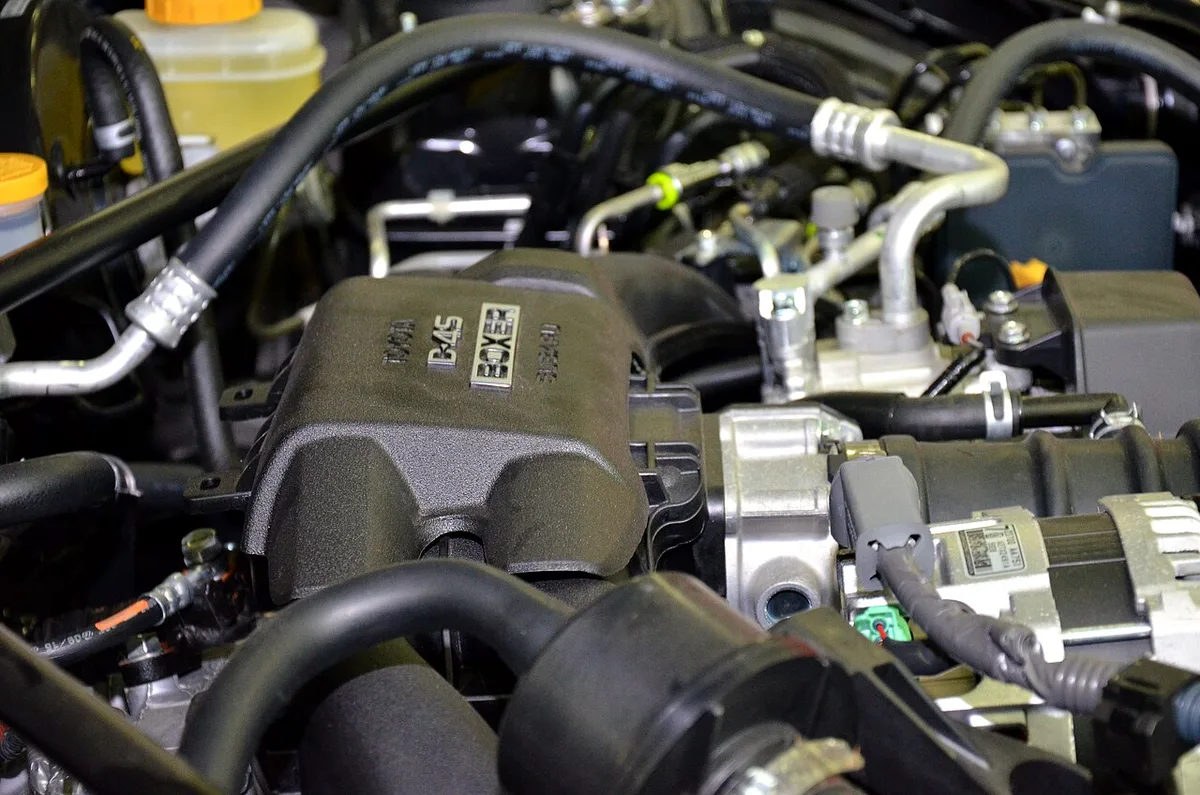
Image source: Wikimedia Commons / crudmucosa (CC BY)
Performance cars like the Subaru WRX and Porsche 911 rely on boxer engines for agility. Daily drivers benefit from the smooth ride and efficient packaging. If you frequently modify your engine, compare options with an inline‑four using our transmission fluid guide.
The following table shows power and torque outputs for three popular boxer engines as of 2026. These figures are taken from manufacturer specifications and SAE J1349 testing standards. Compare the numbers to decide which displacement best fits your performance goals.
| Engine | Power (hp) | Torque (lb‑ft) |
|---|---|---|
| 2.0 L Subaru flat‑four | 182 | 177 |
|
- 2.5 L Subaru flat‑four: 268 hp, 258 lb‑ft
- 3.0 L Porsche flat‑six: 300 hp, 350 lb‑ft
These figures round out the performance picture for common boxer engines as of 2026. Data aligns with SAE J1349 testing standards.
Now that you see the numbers, let’s walk through a basic service routine.
Step-by-Step Process: Inspecting and Servicing a Boxer Engine
Remove the engine cover
Disconnect the battery and lift the engine. Follow the torque sequence from the header gasket recommendations guide. Keep bolts organized by cylinder side.Check the rear main seal
Inspect for oil leakage. If you spot seepage, replace the seal using the transmission fluid filter guide for proper removal steps. Apply a thin bead of sealant as specified.Verify piston movement
Rotate the crankshaft by hand. Ensure each piston moves smoothly. If you hear a knock, inspect connecting rods for wear.
Refer to the oil on spark plugs explanation for diagnosing oil contamination.
Torque cylinder head bolts
Use a calibrated wrench. Follow the impact wrench usage guide for correct settings. Tighten in the prescribed pattern to avoid warping.Reinstall and test
Reassemble components in reverse order. Start the engine and listen for abnormal sounds. Confirm oil pressure and temperature are within spec.
| Step | Action |
|---|---|
| 1 | Remove cover, disconnect battery |
| 2 | Inspect rear main seal, replace if needed |
| 3 | Rotate crankshaft, check piston motion |
| 4 | Torque head bolts per manufacturer spec |
| 5 | Reinstall, start engine, verify operation |
During the process, keep the hand placement guide handy to avoid strain on tight bolts. If you encounter a stubborn bolt, a short burst of heat from a heat gun can help, but never apply excessive force.
FAQs & Final Verdict
How does a boxer engine compare to an inline‑four?
A boxer engine’s cylinders sit opposite each other, giving a lower center of gravity than an inline‑four. This layout reduces vibration and improves handling, especially in performance cars. Inline‑four engines are typically cheaper to service and have easier rear access.
Choose boxer for balanced dynamics; choose inline‑four for cost and simplicity.
Can I service a boxer engine myself?
Yes, if you have basic tools and follow the step-by-step process. The main challenge is accessing the rear main seal, which requires removing the engine from the vehicle. Many DIYers successfully replace seals using the transmission fluid filter guide.
If you lack a lift or torque wrench, consider professional service.
When should I choose a boxer engine?
Select a boxer engine when you prioritize low center of gravity, smooth power delivery, and compact packaging. It excels in sports cars, rally vehicles, and any application where handling matters. For daily commuters or budget builds, an inline‑four may be more practical.
Match the engine choice to your performance goals and maintenance comfort level.
