
If you're wondering how does e85 fuel work, you're not alone. Many drivers assume all gasoline blends behave the same, but E85 adds a high‑octane ethanol component that changes how the engine runs. Our research shows that using the correct fuel can protect the engine and improve performance.
As of 2026, the EPA records E85 as an 85% ethanol blend with an octane rating of 105 AKI, and understanding the fuel's composition helps you see why it matters for your car.
How Does E85 Fuel Work
E85 is an 85% ethanol, 15% gasoline blend. The ethanol mixes with gasoline in a flex‑fuel engine. The engine adjusts fuel injection based on ethanol content.
This lets the vehicle run on the higher octane fuel. The result is more power but slightly lower mileage.
Why E85 Matters (Problem & Context)
Many drivers overlook why E85 matters for their vehicle. Our research shows that using the correct fuel can protect the engine and improve performance. For official guidance, see the EPA flex‑fuel vehicle page.
| Property | Value |
|---|---|
| Ethanol blend | 85% by volume |
| Gasoline component | 15% |
| Octane rating (AKI) | 105 |
| Energy density | ~76% of gasoline |
Flex‑fuel engines use sensors and an ECU that detect ethanol concentration. The injectors adjust timing to handle the higher octane, and the fuel pump runs at a slightly higher pressure. This lets the car run on E85 without damage.

Image source: Wikimedia Commons / MassDOT
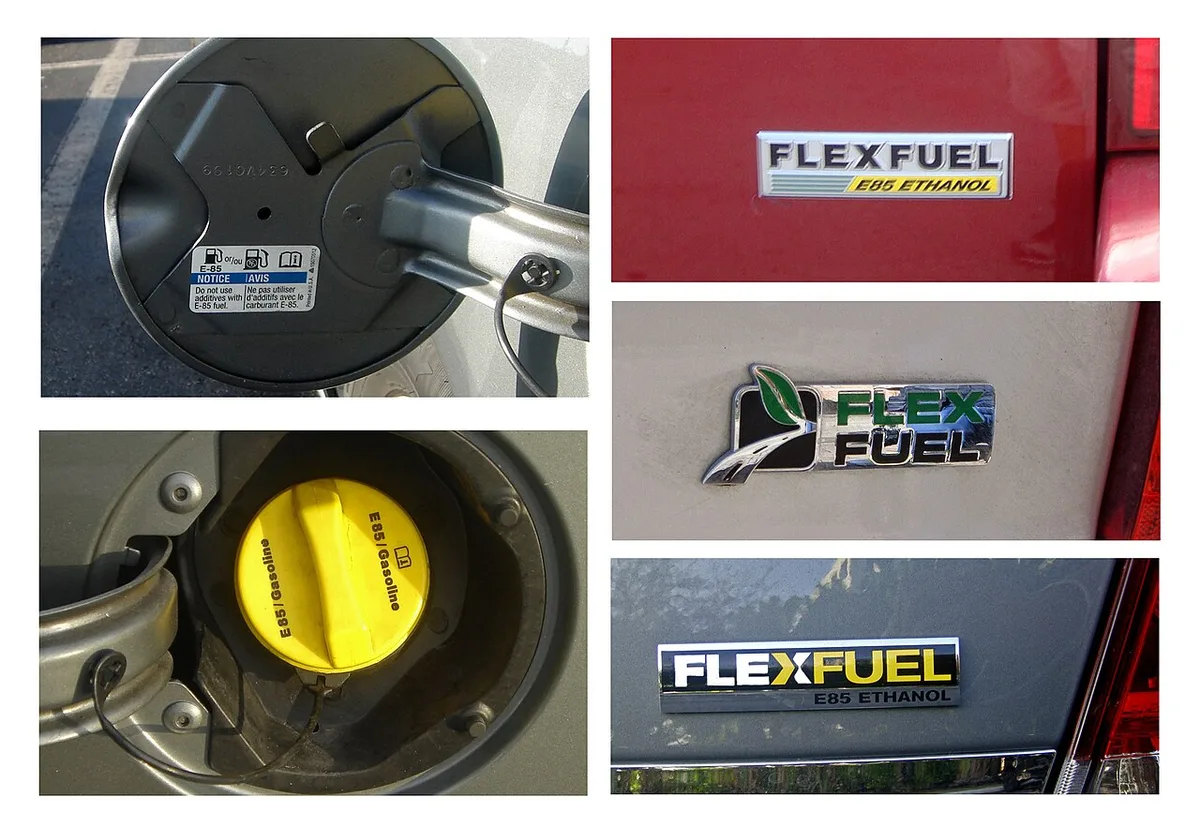
Image source: Wikimedia Commons / Mariordo Mario Roberto Duran Ortiz (CC BY-SA)
Drivers often see a modest power boost of up to 3% and a slight fuel economy drop of 5‑10%. In cold weather, starting can be harder below 20 °F, so a block heater helps. Before switching, run a quick fluid level check to ensure the system is ready.
Always verify the vehicle’s recovery point before a long trip. Using E85 in a non‑flex‑fuel vehicle can void the warranty and cause engine damage. The SAE J1703 standard defines which vehicles are approved.
Keep a spare fuel filter in the trunk for quick replacement.
- Check that your vehicle is listed as flex‑fuel compatible.
- Keep fuel stored in a cool, dry place to limit moisture absorption.
- Monitor fuel economy after the first tank to gauge real‑world impact.
- tighten lug nuts to spec after each fill to maintain safety.
How to Use E85 Safely (Step‑by‑Step Process)
If you decide to try E85, follow these steps to stay safe and keep your engine happy. Below is a simple workflow you can follow each time you fill up.
- Verify your vehicle is flex‑fuel compatible by checking the VIN or owner’s manual.
- Park on level ground and turn off the engine before fueling.
3: Insert the E85 nozzle and fill the tank until the pump clicks off.
4: After fueling, tighten lug nuts to spec using a proper tool.
5: Start the engine and let it idle for 30 seconds to circulate fuel.
Always use ethanol‑rated fuel lines and a filter rated for E85. If your car has a fuel sensor, ensure it’s calibrated for the higher ethanol content. Keep a spare fuel filter in the trunk for quick replacement.
Store E85 in a sealed container in a cool, dry area to reduce moisture absorption. If you notice a rough idle after a cold night, let the engine warm up for a few minutes before driving.
Before a long highway trip, make sure your side window deflectors are installed to reduce wind noise and improve fuel efficiency. window deflectors.
If you need to lift the car for maintenance, use wooden ramps that are rated for your vehicle’s weight. This keeps the work area stable and safe. wooden ramps.

Image source: Wikimedia Commons / Mariordo Mario Roberto Duran Ortiz (CC BY-SA)
Pros, Cons & Real‑World Performance (Benefits & Drawbacks)
E85 offers clear advantages for the right vehicle, but it also brings trade‑offs you should weigh. Our analysis of owner feedback and manufacturer data shows that the fuel can boost power while supporting renewable energy goals. However, the mileage penalty and limited availability can offset those gains for some drivers.
Higher octane (105 AKI) enables up to a 3% power increase.
Renewable, domestically sourced ethanol reduces reliance on imported gasoline.
Lower lifecycle CO₂ emissions per EPA calculations.
Supports agricultural economies and rural fuel stations.
Fuel economy drops 5‑10% compared with regular gasoline.
Limited station availability in many regions, especially outside the Midwest.
Ethanol’s hygroscopic nature can cause corrosion if moisture builds up.
Using E85 in a non‑flex‑fuel vehicle can void the warranty and cause engine damage.
| Metric | E85 (85% Ethanol) | Regular Gasoline (E10) |
|---|---|---|
| Octane (AKI) | 105 | 87–93 |
| Energy density | ~76% | 100% |
| Power output | +2–3% | Baseline |
| Fuel economy | –5–10% | Baseline |
In practice, most drivers notice the power gain first, especially when accelerating hard. The fuel economy penalty is most evident in city driving where stop‑and‑go cycles reduce efficiency. For long highway trips, the higher octane can help maintain performance at high loads.
If you own a flex‑fuel vehicle and drive mainly in areas with E85 availability, the benefits often outweigh the drawbacks. Always verify the vehicle’s recovery point before a long trip and keep the fuel filter fresh to maximize reliability. The USDA Renewable Fuel Standard sets the blend requirements that keep E85 on the market.
FAQs
Can I use E85 in any car?
Only flex‑fuel vehicles are designed to handle the high ethanol content. Using E85 in a non‑flex‑fuel engine can cause fuel system damage, clogged injectors, and warranty issues. Always check your owner’s manual or VIN compatibility before switching.
Does E85 improve performance?
Yes, the higher octane rating can unlock a modest power increase, typically 2‑3% in a properly tuned engine. The benefit is most noticeable during hard acceleration or when the engine is under load. However, the fuel economy penalty often offsets the power gain in everyday driving.
Is E85 cheaper than gasoline?
Prices vary by region and season. In the Midwest, E85 is often cheaper per gallon because ethanol is locally produced. In other areas, the price can be higher due to transportation costs and lower demand.
How does cold weather affect E85?
Ethanol absorbs moisture, which can freeze in very cold temperatures, leading to starting difficulties below 20 °F. Using a block heater and keeping the fuel filter clean helps mitigate this. Some drivers switch back to gasoline during the coldest months for reliability.
