
Understanding how does a v8 engine work starts with the four‑stroke cycle that powers every gasoline V8. The cycle moves air and fuel through intake, compression, power, and exhaust strokes. This simple rhythm creates the raw torque that defines the V8 character.
SAE J1349 rates a typical 5.0‑liter V8 at 460 hp and 420 lb‑ft of torque as of 2026. Knowing the basic process helps you diagnose issues and appreciate the engineering behind the power. Below we break down the cycle, the key parts, and what you should watch for.
How Does a V8 Engine Work
The V8 runs a four‑stroke cycle per cylinder bank. Air enters through the intake valve. Compression raises temperature and pressure.
Spark ignites the mixture for power. Exhaust exits through the open valve.
Key Components & Features That Matter
The V8’s performance comes from a handful of critical parts that work together. Each component has a specific role in the four‑stroke cycle.
Key parts include the block, crankshaft, connecting rods, pistons, camshaft, intake and exhaust manifolds, and valve train.
- Block, houses the crankshaft and pistons and provides structural strength.
- Crankshaft, converts linear piston motion into rotary power.
- Connecting rods, transfer force from pistons to the crankshaft.
- Pistons, compress and expand the air‑fuel mixture each cycle.
- Camshaft, opens and closes intake and exhaust valves.
- Intake manifold, delivers air and fuel to the cylinders.
- Exhaust manifold, directs spent gases away from the engine.
The block and crankshaft form the foundation; the block must be rigid enough to handle high cylinder pressures, which is why many modern V8s use lightweight aluminum with iron liners. The valve train timing, controlled by the camshaft, dictates when air enters and exits, directly affecting power and efficiency.
The table below summarizes the primary functions of each major component.
| Component | Primary Function |
|---|---|
| Block | Houses crankshaft, pistons |
| Crankshaft | Converts linear to rotary motion |
| Connecting rods | Transfer piston force |
| Pistons | Compress and expand gases |
| Camshaft | Opens and closes valves |
| Intake manifold | Delivers air/fuel |
| Exhaust manifold | Directs exhaust gases |
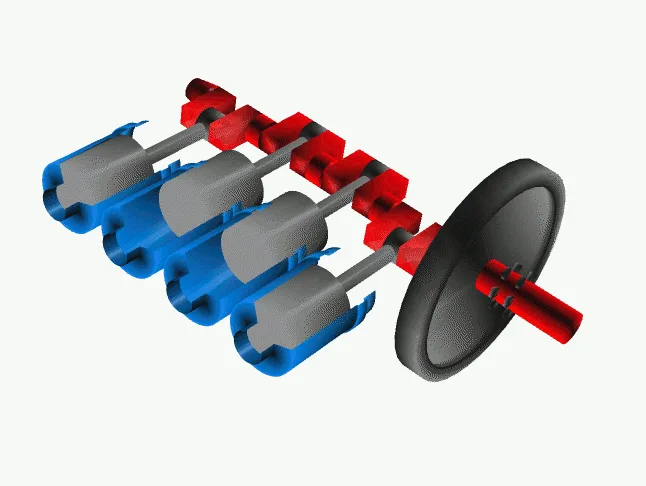
Understanding these relationships helps you diagnose issues. For example, a worn camshaft will cause loss of low‑end torque, while a cracked block can lead to coolant loss and overheating. For precise torque values when tightening lug nuts, see the guide on proper torque sequence.
The SAE V8 technical paper provides deeper design insights.
Benefits & Drawbacks / Pros and Cons
Drivers choose V8 engines for specific advantages, but the design also brings trade‑offs. Understanding both sides helps you decide if a V8 fits your needs.
- Strong low‑end torque for towing and acceleration.
- Smooth power delivery across the rpm band.
- Distinctive deep exhaust note many enthusiasts love.
- Proven durability with extensive aftermarket support.
In daily driving, the strong torque means smoother acceleration from a stop, which is especially useful in heavy trucks and performance cars. The distinctive exhaust note also adds to the driving experience, making the V8 a favorite among enthusiasts.
- Lower fuel economy compared with smaller engines.
- Higher emissions output, subject to stricter regulations.
- Heavier block can affect vehicle handling.
- More complex valve train can increase maintenance costs.
If you plan a new exhaust, ensure clearance by checking the guide on installing deflectors. You can mitigate many drawbacks by choosing the right V8 for your use case. For fuel‑economy focus, a smaller displacement V8 or a hybrid setup can reduce consumption while retaining V8 character.
If you notice oil on spark plugs, it can signal valve seal wear, a common V8 issue. EPA emissions standards require modern V8s to meet Tier 3 limits as of 2026.
Common Mistakes & Safety Tips
Even experienced mechanics can overlook simple steps that lead to costly damage. Knowing the most frequent errors keeps your V8 running reliably.
- Neglecting to torque bolts to manufacturer spec, causing head gasket failure.
- Running low on oil, which leads to piston and bearing wear.
- Ignoring coolant level, risking overheating on long climbs.
- Using low‑octane fuel in high‑compression engines, causing detonation.

Follow these steps to stay safe:
- Verify the engine is cool before opening any fluid reservoirs.
- Use a torque wrench and refer to the service manual for exact values.
- Check oil level with the dipstick each week and top up as needed.
- Inspect coolant level and radiator hoses before each long trip.
If you notice coolant bubbling or a temperature warning light after a mistake, stop the engine and let it cool before inspecting the radiator and hoses. Early detection prevents head gasket failure, which can cost thousands to repair. When you need to add transmission fluid, the procedure for a 2014 Ford Focus illustrates the importance of correct fluid type.
For detailed torque specifications, consult the OEM service manual or the SAE J1349 standard. Keeping a service log helps you track when the timing chain was last inspected and when the next replacement is due.
FAQs
How long does a V8 engine typically last with proper care?
With regular oil changes, timing chain service, and coolant maintenance, a V8 can exceed 250,000 miles. Manufacturer data shows many models reach 300,000 miles when serviced per schedule. Driving conditions and load affect longevity, so adhere to service intervals.
Replace spark plugs every 30,000 miles to keep combustion efficient.
What are the most common causes of V8 power loss?
Valve train wear is the most frequent cause of power loss in older V8s. Worn lifters or stretched timing chains reduce valve timing precision. Replace the timing chain at the manufacturer‑specified interval, typically 150,000 to 200,000 miles, to prevent catastrophic failure per SAE J1349.
How does a V8 compare to a V6 in fuel economy?
A V8 typically delivers 12 to 15 mpg city and 18 to 22 mpg highway in modern trucks. Smaller displacement V8s, like the 4.6 L in some sedans, can achieve slightly better numbers. Driving style, load, and tire pressure all influence actual fuel use.
Can I swap a V8 into a non‑V8 vehicle?
Swapping a V8 into a non‑V8 chassis is possible but requires custom mounts, wiring, and possibly a different transmission. Ensure the drivetrain can handle the increased torque and that the cooling system is upgraded. Professional installation is recommended to avoid safety hazards.
What are the signs that a V8 needs a rebuild?
Loss of compression, excessive oil consumption, and persistent knocking are clear indicators. A compression test showing low readings across cylinders often precedes a rebuild. Addressing these signs early can prevent internal damage and extend engine life.
What should I do after a major V8 repair?
After any major work, verify the recovery point location is clear to avoid undercarriage damage. Check for leaks, listen for abnormal noises, and perform a short test drive to confirm proper operation. Keeping a detailed repair log helps track future maintenance needs.
In summary, the V8’s four‑stroke cycle, robust components, and characteristic torque make it a versatile powerplant for performance and heavy‑duty use. Regular maintenance and attention to warning signs keep it reliable for years.
