
How does tire tread work? It seems straightforward, but it's what keeps your car from sliding on the road. The tread creates channels to push water and snow aside so the rubber can grip the pavement.
Without proper tread, driving becomes risky in wet or snowy conditions.
The contact patch is the only part of the tire that actually touches the road. Manufacturer specifications indicate new passenger tires have about 10/32 inch of tread depth. This depth is critical for safety.
Checking your tread regularly helps prevent accidents.
How Does Tire Tread Work
Tire tread is the rubber layer on the tire.
It contacts the road at the footprint.
Grooves channel water away from the patch.
Sipes open for snow traction.
Blocks provide biting edges for grip.
The pattern design determines how well it performs in different conditions.
The Contact Patch Is the Only Part of the Tread That Matters
The contact patch is the flat area where the tire meets the road under load. When you drive, the weight of the vehicle flattens the tire into this shape. Only this patch actually touches the pavement, and all grip, braking, and steering happen right here.
Understanding this is key because everything else in the tread works to improve what happens in the patch.
The size of the contact patch depends on tire pressure and load. A lower pressure makes the patch larger, which can increase grip but also rolling resistance. Per NHTSA guidelines, proper inflation helps maintain the correct contact patch for safety.
Manufacturers design the tread pattern around this patch to optimize performance.
In wet conditions, a larger patch can help push water away if grooves are deep. In snow, the patch must bite into the surface effectively. That's why tread design focuses so much on the contact patch area.
Checking your tire pressure is one way to ensure the patch is working as intended. You can safely inspect it by using car ramps from wood to avoid jacking up the vehicle each time.
How Grooves, Sipes, and Blocks Do Three Different Jobs
Grooves handle water evacuation in wet weather. They act as main drains for the contact patch. If the grooves can't clear the water, hydroplaning sets in.
Sipes are for snow and slush. They open up like fingers to grab the snow and close to prevent packing with mud.
Blocks provide the biting surface for grip. The edges of the blocks cut into the road or snow for traction. Different block shapes and sizes tune the tire for specific uses.
In dry conditions, blocks offer direct rubber to pavement contact. In snow, the sipes multiply the edges that can bite.
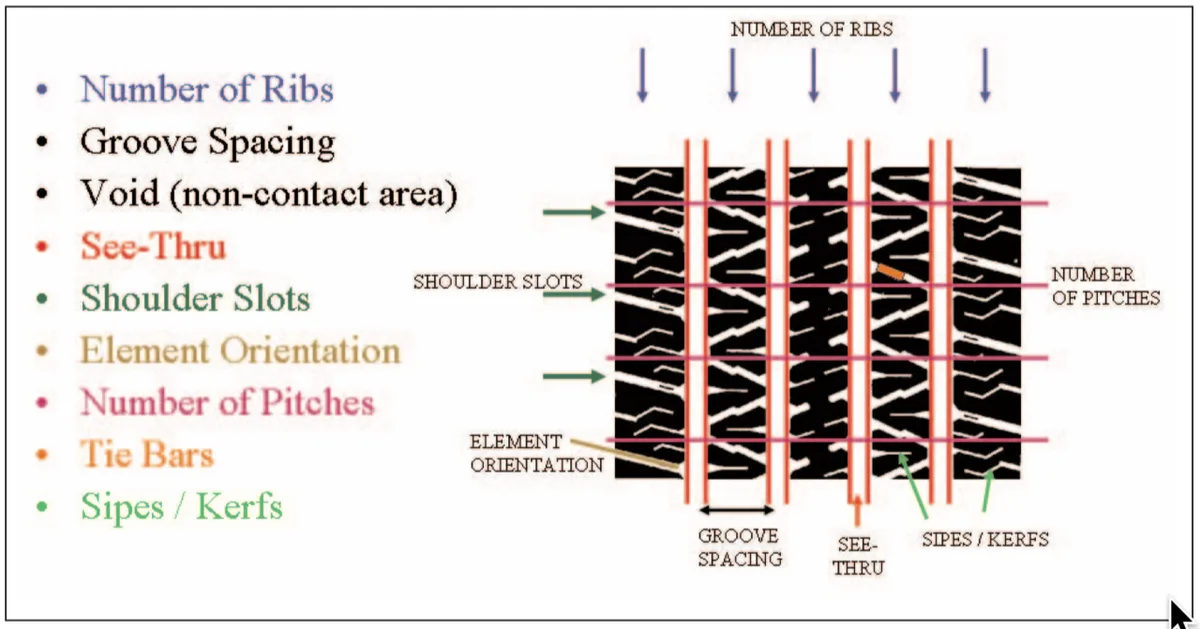
Image source: Wikimedia Commons / Employee of the U.S. Department of Transportation
The pattern is designed so these three elements work together. Grooves and sipes feed into the blocks for optimal performance. If one part fails, the other can't compensate.
This is why the design is so precise. In our research, tires with well balanced grooves, sipes, and blocks show better wet and snow performance. As of 2026, many tires still use similar designs for passenger cars.
After checking the tread, make sure to check lug nuts on your wheels to keep the wheel properly seated.
Symmetric, Asymmetric, and Directional Patterns You Can See
Symmetric patterns have the same design on both sides of the tire. They provide even wear and are good for all season driving. Asymmetric patterns have different designs in the center and outer sections.
The inner part is optimized for wet braking while the outer handles cornering grip.
Directional patterns rotate in one direction only. The grooves flow forward for better water evacuation at highway speeds. You can tell them by the arrow on the sidewall.
These patterns excel in wet conditions but may not be ideal for snow.
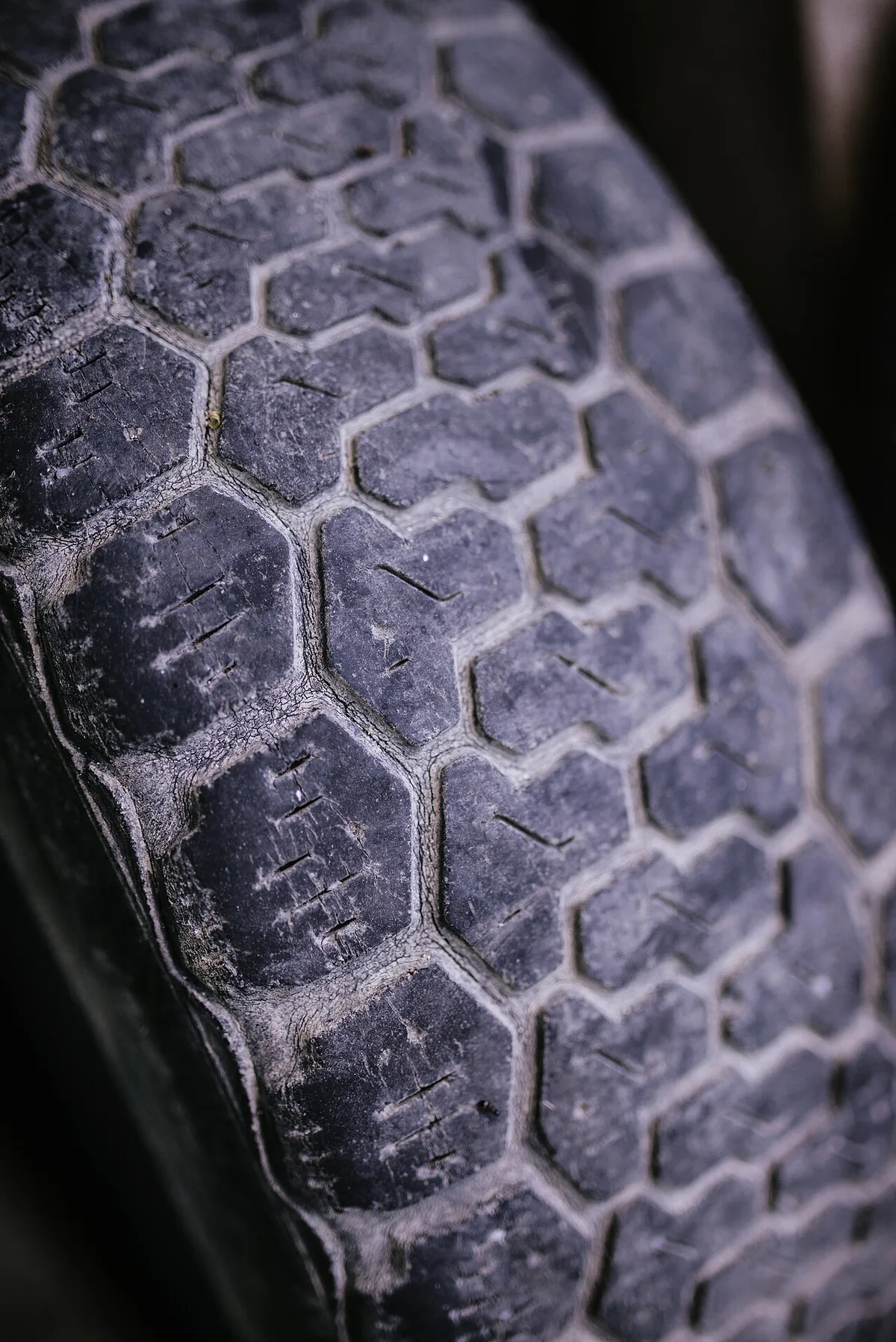
Image source: Wikimedia Commons / Shixart1985 (CC BY)
Choosing the right pattern depends on your driving. For mixed use, symmetric is simple and reliable. Asymmetric gives better handling in certain situations.
Directional is for those who follow the rotation direction strictly. The visual difference is clear once you look at the tire. The pitch sequence in patterns affects noise too.
Varying block sizes reduces road roar. Symmetric patterns are common in budget tires. Asymmetric ones are in performance models.
When rotating tires, remember to use an impact wrench on lug nuts for even wear.
Wear Bars, Shallow Grooves, and Tread That Has Stopped Working
Wear bars are molded into the tread at 2/32 inch depth. When they become flush with the tread surface, it's time to replace the tire. Shallow grooves mean the channels can't clear water effectively.
At that point, the tire risks hydroplaning even on light rain.
Once the tread stops working, grip is gone. The rubber can't bond properly to the road. Many drivers ignore the 2/32 inch limit and wait until it's too late.
This is especially dangerous in winter or on wet highways.
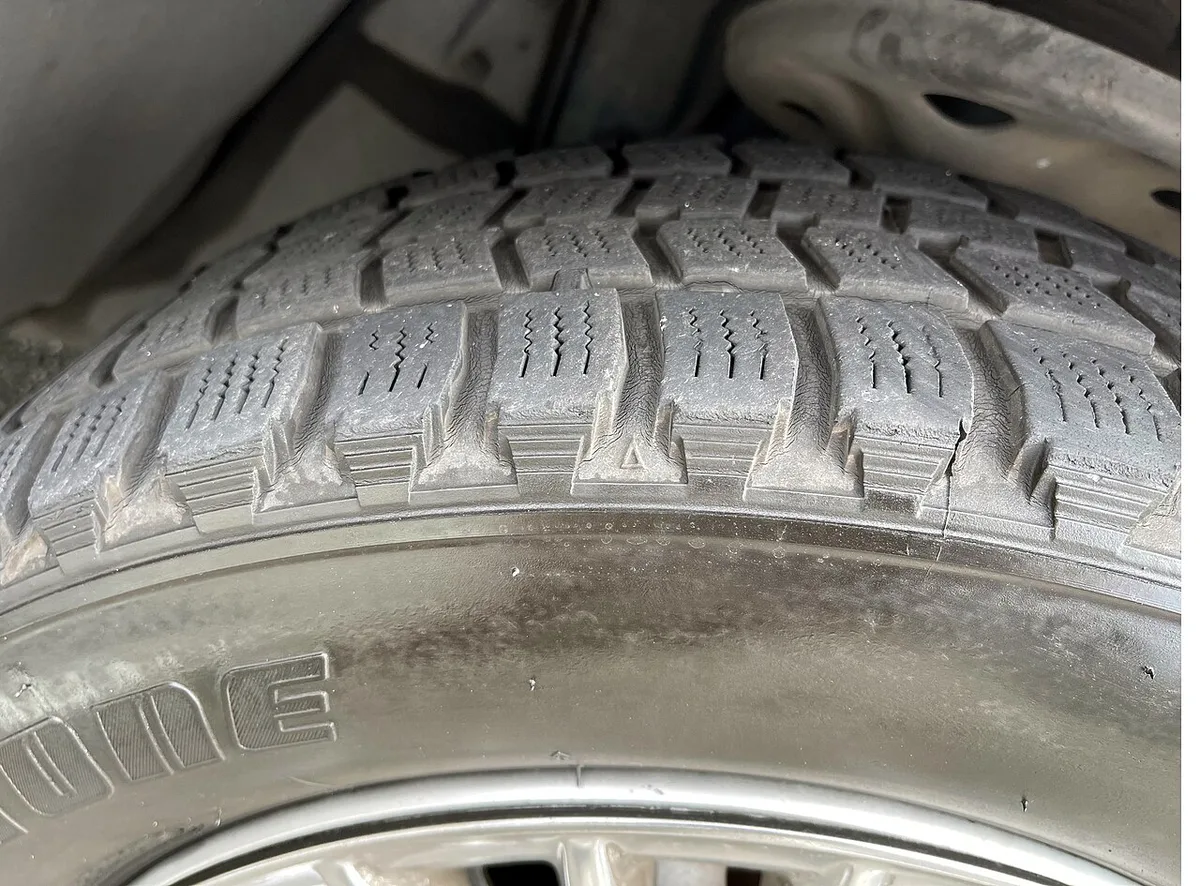
Image source: Wikimedia Commons / VVVN (CC BY)
Per manufacturer data, tread below 4/32 inch loses much of its wet grip. Shallow grooves and worn bars signal that the tread has stopped performing its jobs. Checking this visually is simple with a tread gauge.
Don't wait until the wear bars are gone. ISO tests confirm that tread depth directly impacts wet braking distance. Always replace tires at the wear bar mark to stay safe.
FAQs
How does the contact patch affect tire performance?
The contact patch is the area where the tire touches the road. It's where all traction happens. A properly formed patch maximizes grip in any condition.
Understanding it helps explain why tread design is critical.
What do grooves do in tire tread?
Grooves are channels that evacuate water from the contact patch. They prevent hydroplaning on wet roads. Deeper grooves are better for high speed wet driving.
But too deep can affect dry handling.
Why are sipes important for snow traction?
Sipes open and close to grip snow and slush. They multiply the biting edges in winter conditions. Without sipes, the tire packs with snow and loses traction.
This is why winter tires have more sipes.
How do different patterns perform?
Symmetric patterns offer even wear. Asymmetric patterns optimize for handling. Directional patterns excel in wet highways.
Each has its best use case depending on climate and driving style.
What do wear bars mean for safety?
Wear bars indicate the legal minimum tread depth. They are flush at 2/32 inch. When they show, replace the tire immediately.
This prevents sudden loss of grip.
How can I check my tire tread?
Use a tread depth gauge for accuracy. Look at multiple grooves around the tire. Compare to the wear bars for quick checks.
Regular checks keep you safe on the road.
