
You've got a dead battery and a charger in the garage, and you need a real number, not a shrug. In our research, how long a car battery takes to charge lands anywhere from about 30 minutes to more than 24 hours. The spread isn't random.
It comes down to capacity, depth of discharge, charger output, and the chemistry sealed inside the case.
Start with the numbers you can actually measure. A 60Ah battery sitting at 50% state of charge needs roughly 30 amp-hours put back into it. Manufacturer specs and the SAE J537 test standard both treat charge rate as the clock and chemistry as the ceiling.
Work that out first, and you'll know your finish line before the clamps go on.
How Long Does a Car Battery Take to Charge
Most car batteries take 4 to 24 hours to charge fully. With a 10-amp charger, a half-drained 60Ah battery needs 6 to 8 hours. A 2-amp maintainer stretches that same job past a full day.
Short drives add charge slowly and rarely reach full. Plan around your charger's output, not the clock.
Why There's No Single Answer to "How Long Does a Car Battery Take to Charge"
Ask three people and you'll get three answers, all technically correct. Someone with a 2-amp maintainer on a 100Ah truck battery is looking at two days. Another with a 20-amp smart charger on a 45Ah compact is done before lunch.
Neither is wrong.
The variable most people miss is what "charged" actually means. Getting a battery to crank the engine takes far less time than getting it back to a true 100%. Most chargers hit 80% fast, then crawl through the last stretch.
Here's the if/then logic we use:
- If the battery is lightly drained and the car still starts, a 30 to 60 minute top-up or a long drive covers it.
- If the engine cranks slowly or not at all, break out a real charger and plan on 4 to 12 hours.
- If the battery sat dead for weeks, expect 12 to 24 hours plus a load test afterward.
- If it's frozen, swollen, or past five years old, charge time is the wrong question.
Then there's the drain side. A stuck trunk light, added accessory lighting, or a module that won't sleep can undo a full charge overnight. And a slow crank isn't always the battery, so rule out other no-start culprits before you blame the cells.
The Charge-Time Formula: Amp-Hour Deficit ÷ (Charger Amps × Efficiency)
The math is simple once you know your deficit. Take the amp-hours you need to replace, divide by the charger's amps, then adjust for efficiency. Lead-acid gives back roughly 80% of what you feed it, so 0.8 is your multiplier.
Work an example. A 60Ah battery at 50% state of charge is missing 30Ah. A 10-amp charger delivers about 8 effective amps, so bulk charging runs near 3.75 hours.
Tacking on the absorption phase puts the real number at 5 to 6 hours. Always round up.
Reading Your Starting Point From Resting Voltage
Measure before you plug anything in. Let the car sit a couple of hours first, or surface charge will lie to you.
| Resting voltage | Rough state of charge |
|---|---|
| 12.6V | 100% |
| 12.4V | 75% |
| 12.2V | 50% |
| 12.0V | 25% |
| 11.8V or below | Flat |
A basic multimeter handles this in seconds. Plenty of owners already own a capable scan tool that reads live voltage through the data stream, which saves digging out test leads.
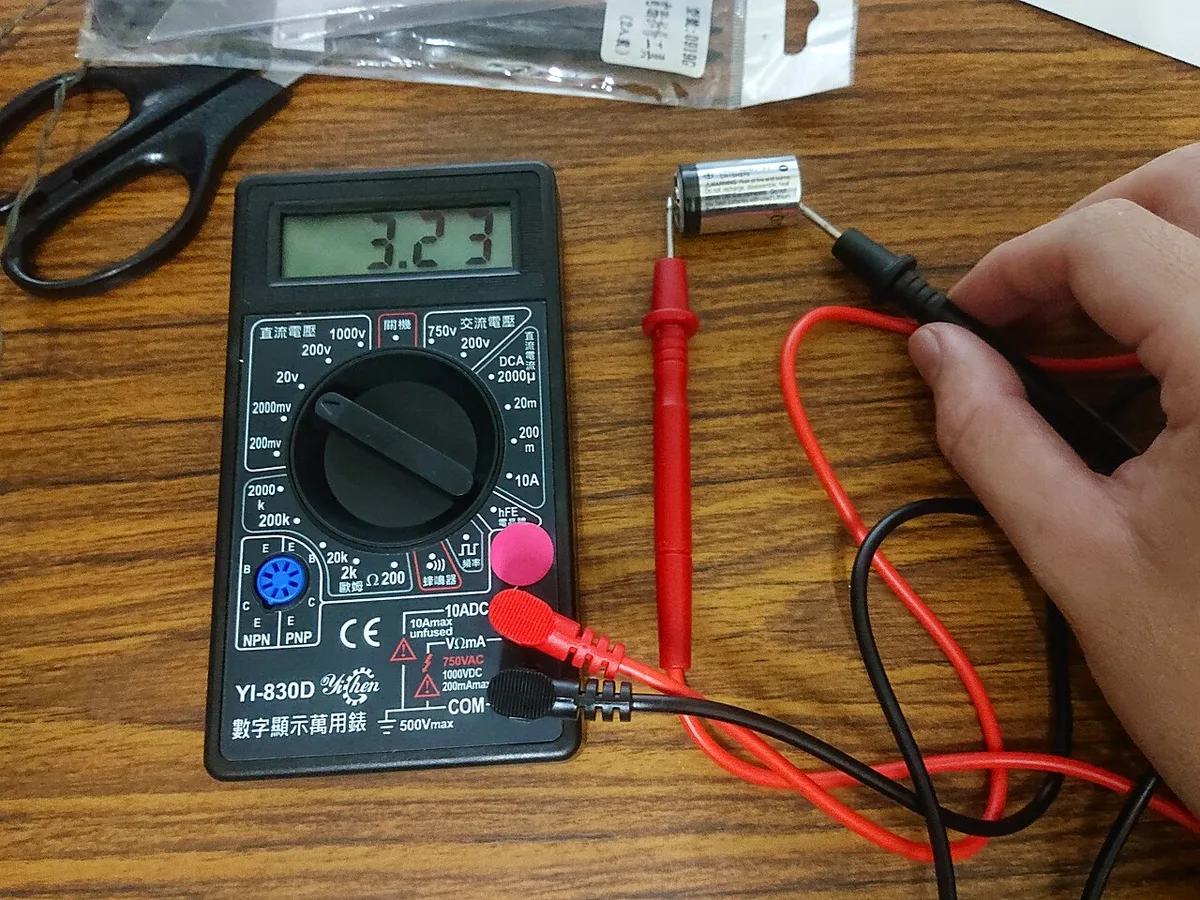
Image source: Wikimedia Commons / Jiazheng0609 (CC BY-SA)
Why the Last 20% Takes the Longest
Bulk charging is the fast part. Once the battery reaches about 80%, the charger switches to absorption voltage and current tapers off. That tail can easily double your total time, and it's the step a cheap trickle unit drags out for half a day.
Match the Chemistry First: Flooded, EFB, AGM, Gel, and LiFePO4
Chemistry sets the rules before amperage ever matters. A flooded lead-acid battery is the old workhorse. AGM (absorbed glass mat) holds the electrolyte in fiberglass matting and tolerates a higher charge rate.
Gel is the fussiest member of the lead family. LiFePO4 is a different animal, with a battery management system watching every cell.
Voltage Setpoints That Actually Differ
- Flooded and EFB: absorption 14.4 to 14.8V, float around 13.2 to 13.4V.
- AGM: 14.6 to 14.8V absorption, often 13.6V float.
- Gel: cap absorption near 14.1V or you cook it.
- LiFePO4: 14.2 to 14.6V absorption, then the BMS cuts off.
Battery Council International sets the group-size and labeling conventions most US batteries follow, but the charging voltage comes from the manufacturer. Read the label stuck to the case.
What Happens When You Pick the Wrong Profile
Per the manufacturer documentation we reviewed, the damage is quiet and permanent. An AGM profile on a gel battery drives electrolyte loss and case swelling over months. A flooded profile on AGM pushes valve-regulated cells past their vent point.
Lithium on a lead profile can trip the BMS into a refusal state that looks exactly like a dead battery.
Charge Times by Charger Amperage: 2A, 10A, 20A, and 50A Compared
Amperage is the throttle. The old rule of thumb still holds: charge at roughly 10% of the battery's amp-hour rating. That's C/10, and it sits in the sweet spot between speed and heat.
| Charger output | Time from 50% on a 60Ah battery | Best for |
|---|---|---|
| 1 to 2A | 24 to 30+ hours | Storage and top-ups |
| 4 to 6A | 10 to 12 hours | Overnight, one vehicle |
| 10A | 6 to 8 hours | The everyday default |
| 20A | 3 to 4 hours | Big batteries, weekend jobs |
| 40 to 50A | 1.5 to 2 hours | Shop equipment |
Faster isn't free. A 50-amp hit makes heat, needs thicker cables, and costs several times what a 10-amp smart charger does. As of 2026, a solid 10-amp multi-stage unit runs $60 to $120, while pro-grade 40-amp boxes start around $300.
A charger carrying UL 1236 certification has been tested for the profile it claims.
For most driveways, 10 amps finishes the job in a single evening. Big diesel dual-battery setups and deep-cycle banks are the exception, and that's where 20 amps earns its keep.
In the Car vs. on the Bench: What Your Alternator Can and Can't Do
Bench charging gives you controlled voltage and a clear finish line. The alternator is a different story. It's built to maintain a charged battery, not resurrect a flat one.
Idle Output vs. Highway RPM
A typical alternator is rated 70 to 220 amps, but that figure is at speed. At idle you may see only a third of it, and the car's own electronics eat most of that. Real surplus for battery charging at idle can fall under 20 amps.
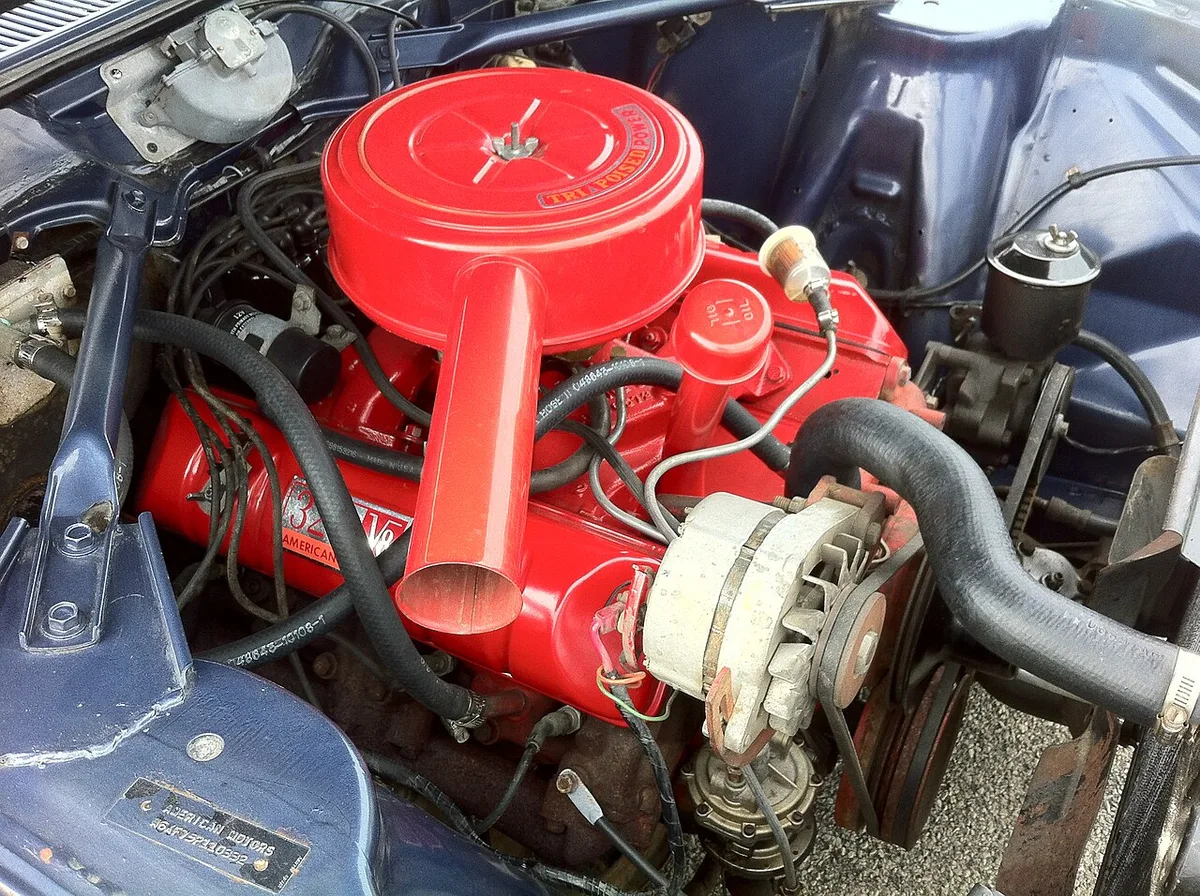
Image source: Wikimedia Commons / CZmarlin, Christopher Ziemnowicz, releases all rights but a photo credit would be appreciated if this image is used anywhere other than Wikipedia. Please leave a note at Wikipedia here. Thank you!
So if you jump a dead battery and let the engine idle for 20 minutes, you've barely moved the needle. Highway driving at 2,000 RPM or more is far better. Even then, budget an hour of steady driving to recover a seriously drained battery.
A short-trip habit never gets there, and chronic undercharge slowly sulfates the plates.
When a Maintainer Beats a Charger
If the car sits for weeks, a 1 to 2-amp maintainer is the right tool. It holds float voltage without boiling anything dry. A charger is a one-time event, while a maintainer is a standing habit.
This is also where convenience features that never sleep cost you, since keyless entry and alarm modules keep drawing a few milliamps around the clock.
A bulb left burning overnight is the other classic. That one's an easy fix, and a cheap replacement bulb costs less than the fuel you'd burn trying to recharge.
Charging restores energy. It can't rescue a battery that's physically worn out. If a battery takes a full charge and still won't crank, stop buying charger time and start diagnosing.
A dead cell shows up fast. The battery might read 12.4V after a long charge, then collapse the second you hit the starter. A hydrometer makes it obvious: five cells near 1.265 and one sitting at 1.150 means the battery is scrap.
Sulfation is the slow version of the same ending. Chronic undercharging lets lead sulfate harden on the plates, and usable capacity shrinks with it. Mild cases sometimes recover on a desulfation cycle.
Heavy sulfation never comes back.
A frozen battery is the dangerous one. Charging ice-blocked electrolyte can crack the case and dump acid on your driveway. Let it thaw indoors, then test it before the charger goes anywhere near it.
The Load Test You Should Run Before You Plug In
Resting voltage only tells you about surface charge. A conductance tester or carbon pile load tester puts a few hundred amps of demand on the battery and watches how far it sags. Our working benchmark is simple: below roughly 9.6V under load at 70°F means the battery has failed.
A battery that passes a load test but still won't start points somewhere else, from a tired starter to oil-fouled plugs. A reader that shows live voltage can confirm charging output while the engine runs, which saves a lot of guesswork later.
Chasing a Key-Off Drain
If a healthy battery keeps dying, something is eating it. A clamp meter on the negative cable should read about 20 to 50 milliamps once the modules fall asleep. Anything higher is a fault.
Pull fuses one at a time until the number drops. Usual suspects include modules that stay awake when parked, an aftermarket lighting install, and a trunk lamp that never shuts off.
Safe Charging Setup: Cable Order, Ventilation, and the Mistakes That Kill Batteries
Two things cause almost every charging injury: hydrogen and heat. Lead-acid batteries vent hydrogen while charging, and a spark near the vent caps is all it takes. Charge in a ventilated space, never a sealed closet, and keep flames and cigarettes well clear.
Cable order matters. Positive clamp on first, negative clamp to the chassis ground last. On removal, reverse it and take the negative off first.
That keeps sparks away from the battery top, where gas collects.
OSHA's battery handling guidance covers the protective gear side. Eye protection, gloves, and a box of baking soda within reach for spills.
Mistakes that quietly ruin batteries:
- Charging a frozen battery, which can rupture the case
- Running a gel profile on an AGM battery
- Leaving a trickle charger with no float stage connected for days
- Clamping to painted metal, a fuel line, or the carburetor
- Charging on a wooden bench right next to a solvent rag
Watch the charger itself. If the case gets too hot to hold your hand on, the amps are too high for that battery. If a flooded cell is low on electrolyte, top it with distilled water before charging, never after.
One last branch. If the engine cranks hard and still won't catch, you're chasing fuel or spark, not amps. Forcing a no-start engine to fire with aerosol helpers is a different job with its own rules.
When the battery really is dead, it goes to a recycler. Federal rules keep lead-acid batteries out of household trash, and most retailers take the core when you buy a replacement.
Frequently Asked Questions
Can I charge a car battery while it's still connected in the car?
Yes, and it's the normal way to do it. Leave the cables attached, connect the positive clamp first and the negative to a chassis ground, and keep the ignition off. Only pull the battery out if you're charging at high amps or working on the electrical system.
How long does it take to charge a completely dead battery?
A flat 60Ah battery on a 10-amp charger needs roughly 8 to 12 hours. A 2-amp maintainer stretches that same job past 24 hours. Deep discharges take longer than the math suggests, because a low battery accepts current more slowly.
Will driving around charge a dead battery?
Not really. An alternator at idle puts out a fraction of its rated amps, and the car's electronics use most of that. A jump start plus 20 minutes of city driving barely moves the needle.
Plan on an hour at highway speed, or use a charger instead.
How do I know when the battery is fully charged?
Check the charger's readout first. A smart unit drops into float voltage, usually 13.2 to 13.6V, and current falls near zero. Then let the battery rest a couple of hours and measure again.
A settled 12.6V at 70°F means it's full.
Why won't my battery hold a charge after charging?
Usually it's a failed cell, heavy sulfation, or a drain you haven't found yet. A battery that reads fine at rest but sags under load has already failed a load test. If it holds voltage and dies overnight, chase parasitic draw before buying a new one.
