
'How much does a hybrid battery replacement cost' is the question that decides whether an older hybrid stays in your driveway or heads to auction. The honest range runs from $0 to more than $8,000 installed. Where you land comes down to three things: warranty status, the vehicle itself, and the route you choose.
Start with the rule most owners never read. Under EPA emissions warranty requirements, a hybrid battery pack is covered for 8 years or 100,000 miles, and California rules push that to 10 years or 150,000 miles in adopting states. That one detail wipes out the bill entirely for plenty of cars that get quoted $4,000.
Here's the short version first, then the details that actually move your number.
How Much Does a Hybrid Battery Replacement Cost
For most drivers, a hybrid battery replacement costs $1,500 to $4,500 installed. Dealer quotes for a new OEM pack run $2,500 to $8,000. Remanufactured packs land around $1,500 to $3,500.
Module-level repairs can cost $300 to $1,200. Many packs still carry warranty coverage, so the real bill is often $0.
Why the Price Range You've Heard Is Probably Wrong
Spend ten minutes reading about hybrid battery pricing and you'll see figures from $600 to $10,000. None of those numbers are wrong. They're just answering different questions.
A quote is really five quotes stacked on top of each other. Change any one of them and the total moves by thousands.
- Warranty status. A covered pack costs nothing. The same pack out of coverage is a four-figure repair.
- The vehicle. A 1.3 kWh Prius pack and an 18 kWh plug-in pack share a name and nothing else. Capacity drives price.
- The route. New OEM, remanufactured, module-level, and salvage are four different products with four different risk profiles.
- Who turns the wrench. Dealer labor at $180 an hour looks nothing like an independent hybrid shop at $120.
- What's actually broken. A weak module, a seized cooling fan, and a corroded high-voltage cable can all light up the same warning.
Most published averages blend all of that into a single figure. That's why a national "average" is close to useless for your car. Our research keeps turning up the same pattern: the highest quotes usually come from the least diagnostic work.
The word hybrid doesn't help either. It gets attached to everything from drivetrains to wiper blade designs, so search results mix unrelated parts in with battery pricing. You end up comparing a $40 set of blades to a $4,000 pack.
Here's the part that surprises people. A $4,000 quote and a $250 repair can describe the exact same dashboard light. The difference is whether anyone tested the pack or just read the code and priced a replacement.
That's the whole game with this repair. Diagnose first, price second. Which brings us to the step that saves the most money, and the one almost nobody does before calling a shop.
Check the Warranty First: The $0 Repair Hiding in Your Glovebox
Before you price a single pack, find out whether somebody else is already paying for it. In the eyes of federal law, a hybrid battery is an emissions component, not an ordinary wear item like brake pads.
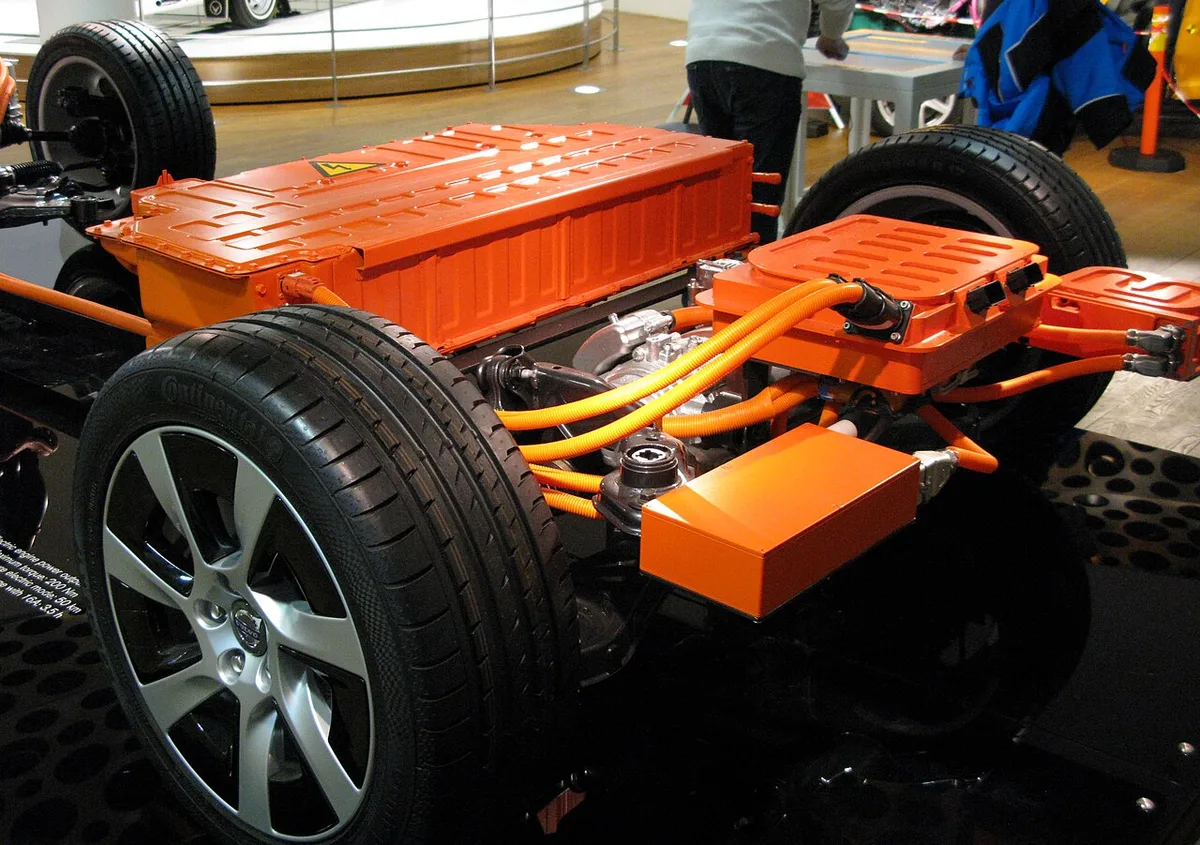
Image source: Wikimedia Commons / Herranderssvensson (CC BY-SA)
That classification is the reason a 9-year-old Prius with 96,000 miles can get a free pack while a 9-year-old Camry with 104,000 miles pays full price. The coverage follows the car, not the owner. It transfers when you buy used.
The federal 8-year/100,000-mile emissions rule
The U.S. Environmental Protection Agency requires manufacturers to warrant the battery pack in a hybrid electric vehicle for 8 years or 100,000 miles, whichever comes first. You can read the underlying framework at epa.gov.
This is a defect warranty, not a capacity guarantee.
In plain terms, a pack that fails internally inside that window gets replaced on the manufacturer's dime. A pack that has simply faded to 72% of original capacity at year nine is a different conversation. That's wear, and wear isn't a defect.
Two things catch owners out here. First, the clock starts on the in-service date, which is when the car was first sold, not the model year. Second, the dealer won't always volunteer the check.
Ask directly, in writing, and give them the VIN.
CARB states, 10/150,000 coverage, and manufacturer extensions
California sets a longer bar, and other states that adopted its standards follow it. The California Air Resources Board requires 10 years or 150,000 miles of coverage on hybrid battery packs, and you can verify the current rule set at ww2.arb.ca.gov.
Roughly eighteen states plus the District of Columbia have signed on to those standards. The list includes California, New York, Massachusetts, Washington, Oregon, Colorado, Maine, Maryland, New Jersey, Pennsylvania, Rhode Island, Vermont, Connecticut, Delaware, and Virginia, among others.
Manufacturers also go beyond the minimum on their own. Toyota extended hybrid battery coverage to 10 years or 150,000 miles on 2020-and-newer hybrids in every state. Certain Hyundai and Kia hybrids have advertised lifetime battery coverage for the original owner.
Honda and Ford meet the CARB window in adopting states.
| Where the car lives | Battery coverage | Who sets it |
|---|---|---|
| Federal minimum, all states | 8 years / 100,000 miles | U.S. EPA |
| CARB and Section 177 states | 10 years / 150,000 miles | CARB |
| 2020+ Toyota hybrids, nationwide | 10 years / 150,000 miles | Toyota |
| Select Hyundai and Kia hybrids, original owner | Lifetime, model dependent | Manufacturer |
As of 2026, this is still the single biggest cost lever in the whole topic. A 2017 hybrid registered in New York may still be covered. The identical car registered in Ohio probably isn't.
What voids a claim, and what doesn't
Some things genuinely kill coverage. Others are myths that cost people money.
- A branded title does. Salvage and rebuilt titles usually end emissions coverage.
- Odometer tampering does. So does a disconnected or altered cluster.
- Collision damage to the pack does. Insurance pays for that, not the emissions warranty.
- A failed aftermarket modification can. If a mod caused the failure, expect a fight.
- Routine service at an independent shop does not. Federal law protects your right to service elsewhere.
- Aftermarket or remanufactured parts do not automatically void anything. The manufacturer has to show the part caused the failure.
That last point matters more than most owners realize, and it's why a good independent hybrid specialist is a real option rather than a warranty risk.
What's Actually Inside a Hybrid Pack (and What Usually Fails)
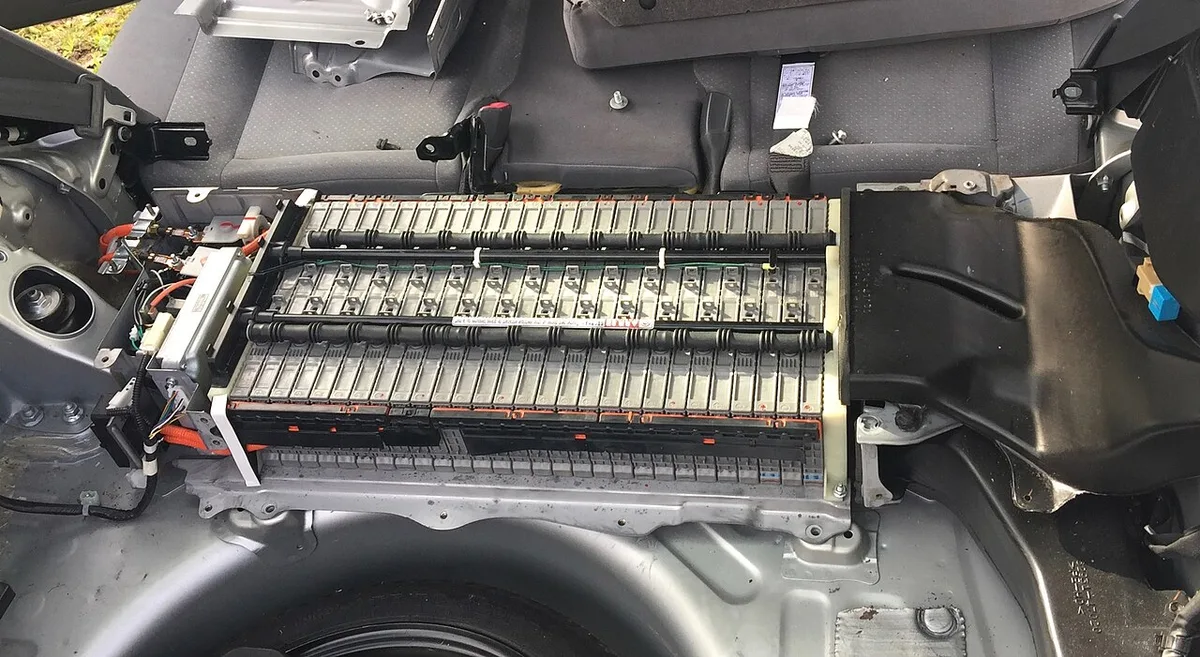
Image source: Wikimedia Commons / User:Ww2censor (CC BY-SA)
A hybrid battery pack is not one big battery. It's a housing full of smaller modules wired in series, plus a battery management system, temperature sensors, a service disconnect, and usually a cooling fan. Understanding that layout explains why the repair bill varies so much.
Voltage runs roughly 200 to 650 volts DC depending on the model. Capacity is modest in a conventional hybrid, often 1 to 2 kWh, and much larger in a plug-in. A pack typically holds 10 to 40 modules, and each module holds several cells.
The module is the key unit. It's the part that fails, and it's the part that can sometimes be swapped on its own.
NiMH vs. lithium-ion: why chemistry changes the bill
Older hybrids used nickel-metal hydride. Newer ones and most plug-ins use lithium-ion. The chemistry changes weight, capacity, rebuild economics, and how gracefully the pack ages.
| Chemistry | Typical applications | Replacement economics |
|---|---|---|
| Nickel-metal hydride (NiMH) | Prius through Gen 3, early Camry Hybrid, Civic Hybrid, Escape Hybrid | Cheaper reman and module options, deep aftermarket supply |
| Lithium-ion | Newer hybrids, most plug-in hybrids | Higher pack cost, fewer rebuilders, better capacity retention |
NiMH packs are the good news story in this category. Because so many were built, remanufactured packs and single modules are widely available and reasonably priced. Lithium packs are improving but still cost more to replace, especially in plug-ins where capacity is 10 times larger.
Modules, cells, the BMS, and the cooling fan
Here's what actually goes wrong, ranked by how often it shows up in real repair data.
- One or two weak modules. The classic failure. The pack's weakest module drags the whole thing down, and the car loses electric assist and fuel economy.
- A clogged or dead cooling fan. Heat is the enemy. A $20 filter or a $200 fan motor can take out a $4,000 pack if ignored.
- Corroded or loose high-voltage connections. Resistance climbs, voltage sags, codes set.
- A failing battery ECU or BMS. Less common, but it mimics a dead pack convincingly.
- A weak 12-volt battery. This one fools people constantly. A tired auxiliary battery throws hybrid system codes that look like pack failure.
You can't tell these apart by feel. You need live data: block voltages under load, internal resistance, and temperature readings per module. That takes a capable scan tool that reads hybrid-specific codes, not just generic powertrain faults.
The code P0A80 is the one you'll see most often. It means "replace hybrid battery pack," and it's the most over-interpreted code in the business. It flags a performance problem, not a specific failed part.
The Four Replacement Routes: New OEM, Remanufactured, Module-Level, and Salvage
Once you know the pack is genuinely bad, you have four ways to fix it. They are not variations on a theme. They're different products with different lifespans and different warranty terms.
| Route | Typical installed cost | Warranty | Risk level |
|---|---|---|---|
| New OEM pack from a dealer | $2,500 to $8,000+ | 1 to 3 years, sometimes longer | Lowest |
| Professionally remanufactured pack | $1,500 to $3,500 | 1 to 3 years, sometimes prorated | Low to moderate |
| Module-level replacement | $300 to $1,200 | Varies, often short | Moderate |
| Salvage or used pack | $500 to $1,800 | Usually none, or 30 to 90 days | High |
New OEM pack. Factory parts, factory software, factory support. This is the right call when the car is newer, when you plan to keep it another five years, or when warranty coverage is paying. It's the wrong call on a 12-year-old car worth $5,000.
Professionally remanufactured pack. A rebuilder strips the pack, tests every module, replaces the weak ones, and balances the rest. Done properly, this is the value sweet spot at roughly half the OEM price. Done badly, it's a cleaned-up used pack with a sticker.
Ask exactly what was replaced and how many modules were new.
Module-level replacement. When testing shows one or two bad modules, replacing just those can restore most of the performance for a fraction of the cost. The catch is that the remaining modules are the same age as the failed ones. Expect this to buy time, not decades.
Salvage or used pack. Cheapest and riskiest. You're buying a pack from a wrecked car with unknown history, unknown mileage, and unknown climate exposure. A pack that lived in Phoenix for eight years is not the bargain it looks like.
Here's the honest framing. The route should match the car's remaining life, not your budget alone. Spending $7,000 on a pack for a car worth $6,000 is a decision you'll regret at resale.
Installed Cost Breakdown: Parts, Labor, Core Charges, and the Fees Nobody Quotes
The advertised price is rarely the invoice price. Hybrid battery jobs carry a handful of line items that don't show up in the headline number, and they add up fast.
| Line item | Typical range | Notes |
|---|---|---|
| Battery pack or modules | $400 to $6,000 | Biggest variable by far |
| Labor | $240 to $880 | Usually 2 to 4 hours at $120 to $220 per hour |
| Core charge | $500 to $1,500 | Refundable when the old pack goes back |
| Diagnostic fee | $100 to $200 | Often credited toward the repair |
| Programming and relearn | $100 to $250 | Some models need it, some don't |
| Disposal or hazmat fee | $25 to $75 | Legitimate, not a junk fee |
| Sales tax | Varies by state | Usually charged on parts, sometimes labor |
That core charge trips people up more than anything else. A quote that looks $700 cheaper than the competition may just be quoting the pack without the deposit. You get it back when the old pack ships, but you have to front it.
Labor is the other one. Book time for a pack swap is short, usually a couple of hours on a lift. What you're really paying for is the high-voltage shutdown procedure, the handling, and the post-install verification.
Cheap labor on this job is a warning sign, not a bargain.
Small parts pricing works the same way it does anywhere else on a car. The line items look trivial until you add them up, which is exactly what happens with small hardware line items on any suspension job. Hybrid work is no different, just with bigger numbers on the main part.
Get three quotes and compare them line by line, not by bottom line. Ask each shop four questions:
- Is the core charge included in this number?
- Is the pack new, remanufactured, or used, and what exactly was replaced?
- What does the warranty cover, and who honors it if I'm 300 miles from home?
- Is the diagnostic fee credited if I go ahead with the repair?
One more reality check. Parts pricing at the counter varies wildly between dealers, chains, and online sellers, and the spread on everyday parts counter prices is a good reminder to shop the pack itself, not just the labor. Some owners buy the pack directly and pay a shop for installation only.
That approach works, with one condition. The shop has to agree to it up front, and the warranty on the part comes from the seller, not the installer. If the pack fails in eight months, you're the one making the phone call.
The same logic that decides whether premium aftermarket parts are worth it on a daily driver applies here. Pay for quality where the part is hard to reach and expensive to redo. A hybrid pack sits at the top of that list.
What It Costs by Vehicle: Prius, Camry, Civic, Fusion, Escape, Highlander, and PHEVs
The model matters more than the brand. Two Toyotas can sit $3,000 apart on the same invoice because pack capacity and aftermarket supply are completely different worlds.
A Prius is the cheapest hybrid to re-battery, full stop. Toyota built millions of them, the NiMH packs are well understood, and rebuilders compete hard on price. A Highlander Hybrid or a plug-in with a large lithium pack is a different financial universe entirely.
Here's the installed range our research keeps landing on, dealer labor included. Treat these as bands, not quotes. Regional labor rates move them by 20% in either direction.
| Vehicle | Pack type | New OEM installed | Reman installed | Module repair |
|---|---|---|---|---|
| Prius, Gen 2 and Gen 3 (2004 to 2015) | NiMH, about 1.3 kWh | $3,000 to $4,500 | $1,500 to $2,200 | $400 to $800 |
| Prius, Gen 4 (2016 and newer) | NiMH or lithium-ion | $3,500 to $5,500 | $1,800 to $2,800 | $500 to $900 |
| Camry Hybrid | NiMH, later lithium-ion | $3,500 to $5,500 | $1,800 to $2,800 | $450 to $900 |
| Honda Civic Hybrid | NiMH | $2,500 to $4,000 | $1,200 to $2,000 | $400 to $800 |
| Ford Fusion Hybrid | Lithium-ion, about 1.4 kWh | $3,500 to $6,000 | $2,000 to $3,200 | $600 to $1,100 |
| Ford Escape Hybrid | NiMH, later lithium-ion | $3,000 to $5,000 | $1,600 to $2,600 | $500 to $900 |
| Toyota Highlander Hybrid | NiMH, later lithium-ion | $4,000 to $7,000 | $2,200 to $3,500 | $600 to $1,200 |
| Lexus CT 200h | NiMH | $3,000 to $5,000 | $1,600 to $2,500 | $450 to $900 |
| Plug-in hybrids (Prius Prime, Volt, Escape PHEV) | Lithium-ion, 8 to 18 kWh | $6,000 to $12,000+ | $4,000 to $8,000 | Rarely offered |
Three things drive every number in that table. Capacity sets the parts cost. Production volume sets the aftermarket competition.
Labor time sets the rest, and a Highlander pack takes longer to extract than a Prius pack.
Why plug-in packs cost multiples of a conventional hybrid pack
Capacity is the whole story. A conventional Prius pack holds about 1.3 kWh. A Prius Prime holds 8.8 kWh.
A first-generation Chevy Volt held 16 kWh, and later versions went past 18.
At a remanufactured cost of roughly $200 to $400 per kWh, that math gets brutal fast. Eighteen kilowatt-hours of cells is real money before anyone touches a wrench.
There's a supply problem too. Far fewer plug-ins were built, so rebuilders have less volume to work with and fewer cores to harvest. Many shops won't touch a PHEV pack at all, which pushes you straight to the dealer.
Software adds another layer. Some lithium packs need manufacturer-specific programming after installation, and independent shops may not have the subscription. That's a dealer-only job by default, not by choice.
The models where the math gets ugly
Discontinued plug-ins are the worst case. A Chevy Volt, a Ford C-Max Energi, or an early Sonata Hybrid plug-in can leave you hunting for a pack that barely exists in the used market.
Low-volume imports are the second worst. If the model sold in small numbers and the pack is lithium, expect dealer pricing and long lead times. Some OEM packs have run four to eight weeks out.
The pattern is consistent. Popular NiMH hybrids are cheap to fix. Rare lithium hybrids are expensive to fix.
Everything else sits in the middle.
The models where it's a genuine bargain
A Gen 2 or Gen 3 Prius is the value champion of this entire category. Remanufactured packs with real warranties are widely available, and module-level repair is a normal service rather than a specialty.
The Civic Hybrid and Escape Hybrid follow close behind. Both sold in volume, both use NiMH, and both have an established rebuild pipeline.
If you're shopping a used hybrid and want the lowest possible downside risk, this is the shortlist. A $1,500 reman pack on a $6,000 car is a very different decision from an $8,000 pack on a $9,000 car.
Diagnose Before You Spend: Separating a $200 Fix From a $4,000 One
The pack is the last thing to condemn, not the first. Any competent hybrid diagnostic works from the outside in: cheap and external first, expensive and internal last.
That order matters because the failure modes overlap so heavily. A dead 12V battery, a seized cooling fan, and two weak modules can all trigger the same dashboard message.
The codes and live data that tell the real story
Codes point you at a system. They don't tell you which part inside it failed. Here's what the common ones actually mean.
| Code | What it usually flags | What it doesn't tell you |
|---|---|---|
| P0A80 | Pack performance below threshold | Which module, or why |
| P0A7F | Pack deterioration detected | Real capacity fade versus a sensor fault |
| P0AFA | Pack voltage low | Wiring, sensor, or genuinely weak cells |
| P3000 | Battery control system fault | Which subsystem inside it |
| P0A0D | High-voltage system interlock | Often a connection or service plug issue |
Live data is where the diagnosis actually happens. Block voltages under load are the money measurement. A healthy pack holds its blocks within a few tenths of a volt of each other, even under hard acceleration.
A weak block sags noticeably lower and drags the pack average down with it.
Internal resistance tells the same story in a different unit. Measured in milliohms, it climbs as cells age, and one high-resistance module is enough to set a pack code on a car that still drives fine.
Temperature readings per module catch the other failure mode. A pack with one hot sensor or one blocked cooling path will keep throwing codes until the airflow problem is fixed, no matter how many packs you install.
A capacity test gives you state of health as a percentage. Most shops treat anything below 70% to 80% as end of life, though the car will usually keep limping well below that.
The cheap culprits that get misdiagnosed as a dead pack
These are the ones that turn a $4,000 quote into a $250 invoice. In our research, they show up constantly in owner accounts of "saved" hybrids.
- The 12V auxiliary battery. A tired 12V battery throws hybrid system codes that look exactly like pack failure. Test it under load before anything else. Cost to fix: $150 to $250.
- The battery cooling fan. A fan that's seized or weak lets the pack cook. Cost: $150 to $350.
- The cooling duct filter. Twenty dollars of foam and mesh. Neglect it for 100,000 miles and you'll pay for a pack instead.
- Corroded or loose high-voltage connections. Resistance climbs, voltage sags, codes set. Cost: $80 to $400 depending on the cable.
- A failing battery temperature sensor. Cheap part, convincing symptoms.
- The inverter coolant pump. On some Toyota hybrids a failed pump causes overheating that mimics pack trouble. Cost: $200 to $400.
- A loose or partially seated service disconnect plug. Free to check, embarrassing to miss.
- A car that sat for months. A hybrid parked for a long stretch can log low-voltage codes that clear after a proper drive cycle.
Run the diagnostic in this order and you'll avoid most of the traps:
- Scan every module, not just powertrain. Body and chassis codes matter here.
- Load test the 12V battery and check the grounds.
- Pull block voltage data under load, not at idle.
- Command the cooling fan on and confirm it runs. Inspect the filter.
- Inspect high-voltage cables and connectors for corrosion or heat damage.
- Only then run a capacity test and read state of health.
If the pack comes back healthy after all six steps, you just saved thousands. If it doesn't, you now have data to compare quotes against, which is worth real money on its own.
Dealer vs. Independent Hybrid Specialist vs. Mobile Service vs. DIY
Once the pack is confirmed bad, the next decision is who does the work. That choice moves the price by thousands and changes who you call when something goes wrong.
| Option | Typical installed cost | Warranty | Best for |
|---|---|---|---|
| Dealer service department | $2,500 to $8,000+ | 1 to 3 years, plus any emissions coverage | Warranty claims, newer cars, PHEV packs |
| Independent hybrid specialist | $1,500 to $3,500 | 1 to 3 years, shop-backed | Out-of-warranty cars you plan to keep |
| Mobile hybrid battery service | $1,200 to $2,500 | 1 to 3 years, varies widely | Cars that won't start or drive |
| DIY with a salvage or reman pack | $400 to $1,200 in parts | None | Almost nobody, honestly |
Dealer. Factory parts, factory software, factory accountability. This is the right call when warranty coverage is paying, when the car is new enough that resale value depends on a dealer service record, or when the pack needs manufacturer programming.
Independent hybrid specialist. This is the value play for out-of-warranty cars. Labor rates run lower, and many specialists do module-level work that dealers won't. Ask whether they hold ASE L3 certification, the Light Duty Hybrid and Electric Vehicle Specialist credential.
Ask what percentage of their work is hybrid battery service.
Mobile hybrid battery service. They come to your driveway, which is genuinely useful when the car is undrivable. The trade-off is that most mobile services do module swaps and rebalancing rather than full pack replacement. Confirm whether the modules are new, remanufactured, or tested used, and get it in writing.
DIY. The parts are available. The procedure is documented. The voltage is still lethal.
If you're experienced with high-voltage systems and you have the tools, a salvage-pack swap is possible. For everyone else, the money saved doesn't come close to covering the risk.
Four questions to ask every shop before you book:
- Is the core charge included in this number, and how much is it?
- Is the pack new, remanufactured, or used, and how many modules were replaced?
- What exactly does the warranty cover, and who honors it if I'm out of state?
- Is the diagnostic fee credited toward the repair?
Red flags are easy to spot once you know them. A quote with no diagnosis attached. A "refurbished" pack with no explanation of what was refurbished.
A warranty that's verbal. A shop that won't put the core charge in writing.
Repair the Pack, Replace the Car, or Sell It? Running the Honest Math
This is where most owners make an emotional decision and call it a financial one. Let's put actual numbers on it.
Payback math for high-mileage drivers
The fuel savings from a fresh pack are real, and they're smaller than most people expect. Here's the arithmetic at $3.50 a gallon, assuming a degraded pack costs you about 11 MPG.
| Annual miles | MPG degraded | MPG restored | Fuel saved per year | Years to repay $2,000 | Years to repay $3,500 |
|---|---|---|---|---|---|
| 15,000 | 34 | 45 | About $378 | 5.3 | 9.3 |
| 25,000 | 34 | 45 | About $629 | 3.2 | 5.6 |
| 40,000 | 34 | 45 | About $1,007 | 2.0 | 3.5 |
Read that table honestly. For an average driver, fuel savings alone do not pay back a pack replacement in a reasonable window. Anyone telling you it pays for itself in a year is selling something.
So what does justify it? The alternative. A $3,000 repair against a $550 monthly payment is nine months of car ownership versus five years of it.
That's the real comparison, and it's why high-mileage drivers usually come out ahead.
Ride-share and delivery drivers are the clearest case. At 40,000 miles a year, a remanufactured pack pays itself back in about two years on fuel alone, and the car keeps earning the whole time. For a 6,000-mile-a-year retiree, the math points the other way.
There's a third factor people forget. A degraded pack doesn't just cost fuel. It costs you the electric assist, the regenerative braking feel, and eventually the ability to pass an emissions inspection in some states.
When the repair exceeds the car's value
Here's the rule of thumb our research keeps validating: if the repair costs more than half the car's actual cash value, stop and think hard.
Actual cash value is what your car sells for today, not what you paid and not what a price guide says for a pristine example. A 2012 Prius with 180,000 miles and a bad pack might be worth $4,000 running and $1,800 as-is.
That gives you three real options. Spend $2,500 on a reman pack and keep a $4,000 car on the road. Sell it as-is to someone who wants a project and take the hit.
Or trade it, knowing the dealer will discount your trade by roughly the cost of the repair plus margin.
Insurers use a similar threshold. When repair cost approaches a set percentage of ACV, a car gets totaled. That math applies to collision claims, not mechanical failures, but the logic is the same one you should be running.
A fresh pack does move resale value. Private-party listings with documented battery replacement typically command $1,000 to $3,000 more than comparable cars with unknown pack history. Keep the invoice.
Three situations, three different answers
- If the pack is still under emissions warranty, go to the dealer and pay nothing. Don't overthink it.
- If the car is worth $8,000 or more and you'll keep it three-plus years, a remanufactured pack is the sensible middle path.
- If the car is worth under $5,000 and the pack is failing, module-level repair buys time, and selling as-is is often the cleaner exit.
- If it's an out-of-warranty plug-in with a big lithium pack, run the numbers before you commit. A $9,000 pack on a $10,000 car rarely makes sense.
- If the car is otherwise sound and paid off, repairing usually beats a new payment, even when the fuel math is thin.
The High-Voltage Safety Rules That Aren't Optional
Everything above is about money. This part is about not getting hurt. A hybrid pack runs 200 to 650 volts DC, and DC arcs don't extinguish themselves the way AC arcs do.
That single fact is why the shutdown procedure exists and why skipping it isn't a shortcut. It's the difference between a repair and an injury.
Shutdown sequence, PPE, and insulated tools
Manufacturer procedures vary in detail, but the sequence is consistent across brands. Follow the service information for your specific model, then follow these steps in order.
- Park on a level surface and set the parking brake.
- Power the car off and move the key fob at least a few feet away. Keyless systems can stay live in ways that surprise people, which is worth understanding before you trust a button press.
- Wait the manufacturer-specified interval before touching anything.
- Remove the service disconnect plug from its socket and keep it on your person.
- Wait again, typically 5 to 10 minutes, for the capacitors to discharge.
- Verify zero voltage at the inverter terminals with a CAT III rated meter before proceeding.
Personal protective equipment isn't optional here, and the specs matter more than the label.
| Item | Specification | Why it matters |
|---|---|---|
| Insulating gloves | Class 0, rated 1,000V AC and 1,500V DC, air-tested before each use | Stops current finding a path through you |
| Insulated tools | IEC 60900 rated to 1,000V | Prevents a wrench from bridging terminals |
| Multimeter | CAT III, 1,000V rated, with matching leads | A cheap meter can arc internally |
| Eye protection | ANSI Z87.1 rated | Electrolyte splash and arc flash |
| Clothing and jewelry | No rings, watches, or metal necklaces | A short path across a terminal |
Lockout and tagout practice applies here just as it does to industrial electrical work, and OSHA's control of hazardous energy standard under 29 CFR 1910.147 is the reference most shops build their procedure around. NFPA 70E covers the arc flash side.
Why "I've done 12V work before" isn't enough
Twelve volts can't push meaningful current through dry skin. Three hundred volts absolutely can. That's not a difference of degree, it's a different hazard class.
Arc flash is the part people underestimate. A 12V system can't sustain an arc. A 300V DC system can, and the resulting plasma runs hotter than the melting point of steel.
A dropped wrench across terminals is a genuinely dangerous event.
The chemistry is its own hazard. NiMH packs use potassium hydroxide electrolyte, which is caustic and causes serious eye damage. Lithium-ion electrolyte reacts with moisture to produce hydrogen fluoride, which is worse.
A swollen or damaged lithium pack can also enter thermal runaway with no external ignition source.
Weight rounds out the risk list. Hybrid packs commonly weigh 80 to 200 pounds, and some plug-in packs run heavier. That's a two-person lift with a proper table, not something you bench-press out of a hatch.
If something does go wrong, the response is simple and counterintuitive. Don't grab the person. Kill power at the disconnect first, then call for help and tell them there's a high-voltage battery involved.
For a lithium pack fire, get clear and let it burn in isolation. Water in volume is the practical answer for cooling the surroundings, and small extinguishers won't stop a cell cascade.
One last point on transport. A damaged or swollen lithium pack is regulated hazmat, and shipping one without proper classification and packaging is a federal problem, not just a bad idea. Let a recycler or a licensed handler take it.
Warranty, Consumer Rights, and the Paperwork That Protects You
The warranty on the new pack is worth as much as the pack itself. A cheap pack with a thin warranty is a bargain only until month fourteen.
What a reman warranty should actually say
Most remanufactured warranties run 1 to 3 years. The length matters less than the terms inside it.
- Parts and labor, or parts only. A parts-only warranty means you pay installation a second time. Push for labor coverage.
- Full replacement or prorated. Prorated coverage pays a shrinking fraction as the years pass. Full replacement is what you want.
- Nationwide or shop-only. Coverage honored only at the installing shop is close to worthless if you move or road-trip.
- Transferable or not. Transferable coverage adds resale value and shortens your sales pitch.
- Mileage caps. Some policies cap at 12,000 or 15,000 miles a year. A ride-share driver blows through that by spring.
- The failure definition. Is a claim triggered by a hard code, or by capacity dropping below a stated percentage? Get the number in writing.
- Core shipping. Who pays freight if the replacement fails and the old pack has to travel back?
Get those terms printed on the invoice, not spoken on the phone. Then photograph the pack label showing part number and date code, and file it with the receipt. If a dispute ever happens, that photo is your evidence.
Magnuson-Moss and your right to use an independent shop
The Magnuson-Moss Warranty Act, enforced by the Federal Trade Commission, stops a manufacturer from voiding your warranty simply because an independent shop did the work or an aftermarket part went in. You can read the FTC's guidance at ftc.gov.
The manufacturer has to prove the part or the service caused the failure. That's a real burden, and it's why most "dealer serviced only" warnings are bluster rather than law.
Two things still genuinely end coverage. A branded title does. So does damage traced to a failed modification, like a wiring hack that cooked the inverter.
Keep a maintenance log with dates and mileage. Save every receipt, including the ones for tires and oil changes. Warranty disputes are usually won on paperwork, not argument.
If a claim gets denied and you believe the denial is wrong, you have options short of a lawyer. Ask for the denial in writing with the specific exclusion cited. Then escalate to the manufacturer's regional office, and mention your state's implied warranty protections under the Uniform Commercial Code.
Small claims court handles these disputes more often than people realize.
What Actually Kills a Hybrid Battery: Heat, Mileage, and the $20 Filter
Mileage isn't the main killer. Heat is. A 300,000-mile taxi in a mild climate routinely outlives a 90,000-mile garage queen in Phoenix.
Capacity fade runs roughly 1 to 2% a year in moderate conditions. Sustained heat can double that rate, and the loss compounds year over year. Peer-reviewed aging studies in journals such as the Journal of Power Sources keep pointing at the same variable: average cell temperature.
| Killer | How it does damage | Cost to prevent |
|---|---|---|
| Chronic heat exposure | Accelerates calendar aging and raises internal resistance | Free to cheap (shade, garage, window tint) |
| Clogged cooling filter | Starves the pack of airflow, traps heat | $15 to $40 |
| Blocked cooling vents | Same as above, caused by cargo or a subwoofer box | Free |
| Failed cooling fan | Silent until the pack cooks | $150 to $350 |
| Long storage at low charge | Deep discharge damages cells permanently | A monthly drive cycle |
| Coolant leaks on liquid-cooled packs | Overheating plus corrosion | Inspection at service intervals |
| Coastal salt and humidity | Connector and busbar corrosion | $80 to $400 when caught early |
That filter line is the one to underline. On most Toyota and Lexus hybrids, the pack breathes through a foam and mesh filter behind the rear seat. Manufacturer service intervals typically call for inspection around 20,000 to 30,000 miles, and dusty climates justify replacing it sooner.
Owners who ignore it for 120,000 miles are effectively running the pack with a blocked nose. The fan works harder, the air gets hotter, and the modules age faster. Forty dollars versus four thousand.
That's the whole trade.
Vents matter too. Pet beds, beach chairs, and aftermarket speaker boxes all end up piled against the intake grille in the back. Keep that gap clear.
Storage habits quietly wreck packs as well. A hybrid parked for six months with a low state of charge can wake up with permanently damaged modules. If the car is going to sit, drive it monthly or leave it at a mid-range charge.
Plug-in owners have an extra lever. Leaving a lithium pack at 100% in summer heat accelerates fade. Most manufacturers document a charging routine for a reason, and following it costs nothing.
Five Owners, Five Different Bills: Real Cost Scenarios
Same repair, five wildly different invoices. These scenarios reflect patterns that show up repeatedly in owner reports and shop quotes across the U.S.
The covered 2016 Prius in a CARB state
Ninety-two thousand miles, one owner, New York registration, and a flashing hybrid warning. The dealer confirmed emissions coverage at 10 years and 150,000 miles. Pack replaced under warranty.
Total cost: $0, plus a loaner for two days.
The out-of-warranty 2013 Camry Hybrid
One hundred forty thousand miles in Ohio, well past the federal 8/100,000 window. Dealer quoted $4,900 for a new OEM pack. The owner found an independent hybrid specialist who installed a remanufactured pack with a 3-year parts and labor warranty.
Final bill: $2,410, including the core deposit that came back three weeks later.
The 2011 Civic Hybrid that needed a module
One hundred sixty-five thousand miles, poor acceleration, and a P0A80 code. Live data showed one module sagging under load while the rest held tight. The shop replaced two modules and a seized cooling fan.
Final bill: $780. The car gained back about 9 MPG.
The 2018 Prius Prime with a lithium pack
Eighty-eight thousand miles and a capacity complaint. The pack was still inside the 10-year, 150,000-mile window, so diagnosis cost nothing. The dealer ran a capacity test, confirmed degradation beyond the threshold, and ordered a replacement.
Total cost: $0, with a four-week wait for the pack.
The 2012 Highlander Hybrid that went the salvage route
Two hundred ten thousand miles, out of coverage, and a $7,200 dealer quote. The owner bought a used pack from a wreck for $1,100 and paid a shop $600 to install it. It failed in seven months.
A second pack plus a second installation brought the running total to $3,600, which is still less than the dealer, but only barely.
The pattern across all five: the cheapest outcome came from checking coverage first, and the second cheapest came from proper diagnosis before parts.
Mistakes That Turn a $1,500 Repair Into a $5,000 One
Most of these are avoidable with an hour of homework. All of them show up regularly in owner complaints.
- Skipping the warranty check. Calling a shop before reading the emissions warranty booklet is the single most expensive shortcut in this category.
- Treating P0A80 as a diagnosis. That code says the pack underperformed. It doesn't say the pack needs replacing. Live data does.
- Never testing the 12V battery. A weak auxiliary battery mimics pack failure convincingly and costs $200 to fix.
- Ignoring the cooling fan and filter. Install a fresh pack into a car with a dead fan and you'll be back in a year.
- Mixing new modules into an old string. A series string is limited by its weakest and stressed by its strongest. Unbalanced modules fight each other.
- Buying a salvage pack sight unseen. No mileage, no climate history, no capacity test. That's a lottery ticket, not a part.
- Accepting "refurbished" with no paperwork. Ask how many modules were replaced and what capacity test was run. Vague answers are the answer.
- Forgetting the core charge. A quote that looks $900 cheaper may simply exclude the refundable deposit.
- Letting the car sit with a dead pack. Weeks of storage at low voltage can turn a repairable pack into scrap.
- Skipping the post-install relearn. Some models need programming and a drive cycle before the system behaves.
- Choosing the cheapest labor. This job involves a 200 to 650 volt shutdown. Bargain rates on high-voltage work are a warning, not a win.
- Cracking the pack open without training. The safety section above isn't decoration. Arc flash and caustic electrolyte are real outcomes.
- Replacing the pack when the fault is wiring. A corroded high-voltage cable sets the same codes and costs a fraction to fix.
- Throwing parts at symptoms. It's the same trap that makes people replace ignition components when oil on the plugs points somewhere else entirely. Diagnose the cause, not the code.
- Never doing the resale math. A $5,000 pack on a $4,500 car is a decision worth sleeping on.
- Skipping the lift prep. High-voltage packs are heavy, and getting the car up safely matters before anything unbolts.
One more, and it's the quiet one. Owners compare pack prices the way they compare big-ticket performance upgrades, by headline number alone. With batteries, the warranty terms and the installation quality decide whether the cheap option stays cheap.
Hybrid Battery Replacement Cost: FAQs
Is it worth replacing a hybrid battery on an older car?
Usually yes, if the car is otherwise sound and the repair costs less than half its actual cash value. A $2,000 reman pack against a $500 monthly car payment pays for itself in four months of not buying a replacement vehicle.
How long does a hybrid battery replacement take?
Most pack swaps take 2 to 4 hours of shop time. Add a day if programming and a relearn are required. Dealer lead times on ordered packs are the real variable, and some OEM packs have run four to eight weeks as of 2026.
Can a hybrid battery be repaired instead of replaced?
Yes, when testing shows one or two weak modules rather than whole-pack failure. Module replacement and rebalancing typically run $300 to $1,200. The catch is that the remaining modules are the same age, so it buys years rather than decades.
Does hybrid battery replacement cost vary by state?
It varies a lot, for two reasons. Labor rates swing 40 to 60% between metro dealers and rural independents. More importantly, CARB-adopting states require 10-year/150,000-mile battery coverage, so many repairs there cost nothing at all.
How long does a new hybrid battery last?
Expect 8 to 15 years and 100,000 to 150,000 miles from a quality pack, with wide variation. Moderate climates and clean cooling airflow push toward the top of that range. Sustained heat pushes toward the bottom.
Will a new hybrid battery improve fuel economy?
Often by 5 to 15 MPG, depending on how degraded the old pack was. You'll also notice stronger electric assist, working regenerative braking, and the return of EV mode at low speeds. The gain is real, but it rarely pays back the repair on fuel alone.
