
The honest answer to how much does a tune up cost is somewhere between $99 and $1,200, and the spread has almost nothing to do with your car being difficult. Five shops can quote the same vehicle in the same zip code and land a thousand dollars apart. That isn't a scam.
It's what happens when a catch-all phrase meets an industry that never agreed on what the phrase includes.
In our research, dealer menus and independent shop invoices showed the same pattern. The $99 version usually covered an oil change and a visual check. The $700 version covered iridium plugs, coils, and a throttle cleaning.
Federal emissions rules help explain why the bigger quote exists at all, since catalytic converters and engine control modules carry an 8-year/80,000-mile warranty. Start with the numbers, then work backward to what your car actually needs.
How Much Does a Tune up Cost
A tune up usually costs $150 to $500 at a shop. Older cars with plug wires and a distributor sit at the low end. Modern cars with coil-on-plug ignition often run $300 to $800.
Dealers charge 20% to 40% more than independent shops. Doing the plugs yourself costs $15 to $100 in parts.
Why "Tune-Up" Quotes Swing From $99 to Over $1,000
Three variables move the price: scope, ignition hardware, and labor rate. Change one and the quote shifts by a hundred dollars. Change all three and you're staring at a four-figure gap.
Here's what those quote tiers actually contain, based on dealer menus and independent shop invoices we reviewed as of 2026.
| Quote you see | Typical range | What's usually in it |
|---|---|---|
| Tune-up special | $89 to $129 | Oil change, filter check, fluids topped off |
| Basic plug service | $150 to $350 | Four plugs, labor, sometimes an air filter |
| Full ignition service | $300 to $650 | Plugs, wires, cap and rotor, filters, PCV valve |
| Dealer milestone service | $500 to $1,200 | Plugs plus fluids, filters, multipoint inspection |
| Hard-access plug job | $400 to $1,000+ | Rear-bank plugs, intake removal on a transverse V6 |
Look at the bottom row. A $99 special and a $400 plug job can both be advertised as a tune-up. Only one of them touches your spark plugs.
Scope is the biggest lever. A quick-lube chain selling a "tune-up special" is usually selling an oil change with a filter check. That's not fraud, but it isn't ignition work either.
Ask for the itemized list before you agree to anything.
Labor is the second lever. Shops bill from published labor guides that assign a time value to each job. Four plugs on an inline-four might book at 0.6 hours.
The same four plugs on a transverse V6 with a buried rear bank can book at three hours or more. Same parts, five times the labor.
Parts markup is the third. Most shops mark up parts 20% to 40% over their own cost. A $12 iridium plug can land on your invoice at $18.
That's normal business, and it's why a parts-only price from a website never matches a shop quote.
Then there's the wildcard nobody talks about: quotes built on guesses. A shop that hasn't pulled codes is pricing a repair it hasn't diagnosed. If the misfire turns out to be a failing coil, the plug job you just approved didn't fix anything.
One more thing worth knowing. Recalls and technical service bulletins can change what a shop is willing to charge you. Check your VIN against NHTSA's recall database before you authorize anything, especially on a car with a known ignition-related campaign.
What a "Tune-Up" Actually Means in 2025 vs. What It Meant in 1995
In 1995, a tune-up was a real, defined job. It meant new points and condenser, a fresh distributor cap and rotor, new plug wires, and new plugs. Then the tech set dwell and base timing with a light and adjusted the carburetor's idle mixture screw.
Intervals were short, often 12,000 to 30,000 miles.
Almost none of that exists on a modern engine.
Here's what's gone:
- Contact points and condensers, replaced by electronic ignition decades ago
- Distributors on most engines built after the mid-2000s
- Plug wires on coil-on-plug (COP) designs, where each cylinder gets its own coil
- Adjustable ignition timing, now handled by the engine control module
- Carburetors, replaced by port or direct fuel injection
- Idle mixture screws you could turn with a screwdriver
Here's what's left:
- Spark plugs, still a wear item, just at much longer intervals
- Air and cabin filters
- Fuel filters on some vehicles, though many are now in-tank and rated for the life of the car
- PCV valves, throttle body cleaning, and injector service as optional maintenance
- Diagnostic work when something actually fails
That shift matters for your wallet. When someone quotes you a tune-up in 2026, they're using a 1990s word for a 2020s service menu. The word carries emotional weight, since it sounds like essential maintenance, but the actual contents vary wildly.
Manufacturer maintenance schedules reflect this. Pull up your owner's manual and search the maintenance table for the word "tune-up." On most vehicles built in the last 15 years, it isn't there. What you'll find instead is "replace spark plugs" at a specific mileage, usually 60,000 to 100,000 miles on iridium or platinum plugs.
That's the whole ballgame. Your maintenance schedule is the only document that defines what your car needs, and it's free.
Honda's Maintenance Minder, GM's Oil Life System, and similar monitors go a step further. They calculate service intervals from how you actually drive, then display a code for the specific service due. A code for an oil change and tire rotation is not a code for spark plugs.
If a shop hands you a printed "tune-up package," ask one question: which line item comes from my maintenance schedule? The answer tells you whether you're buying maintenance or a menu item.
What's Included: Plugs, Wires, Coils, Cap and Rotor, Filters, and Fluids
A tune-up quote is really a stack of separate jobs with separate prices. Here's what each piece costs and how long it lasts.
| Component | Typical parts cost | Shop price installed | Service life |
|---|---|---|---|
| Copper spark plugs | $2 to $5 each | $80 to $200 (set of 4) | 30,000 to 45,000 miles |
| Platinum plugs | $6 to $12 each | $120 to $280 | 60,000 miles |
| Iridium plugs | $8 to $20 each | $150 to $400 | 80,000 to 100,000+ miles |
| Plug wires (set) | $30 to $100 | $80 to $250 installed | 60,000 to 100,000 miles |
| Ignition coils | $50 to $250 each | $150 to $400 each installed | Varies, often 100,000+ |
| Distributor cap and rotor | $30 to $80 | $100 to $250 installed | 60,000 miles |
| Engine air filter | $15 to $50 | $40 to $110 installed | 15,000 to 30,000 miles |
| Fuel filter | $15 to $100 | $80 to $250 installed | 30,000 to 60,000 miles |
| PCV valve | $10 to $30 | $50 to $150 installed | 50,000 to 100,000 miles |
| Throttle body cleaning | $10 to $20 in cleaner | $80 to $200 | As needed |
Those numbers explain a lot of quote confusion. A four-cylinder with copper plugs and no wires is a genuinely cheap job. A V8 with 16 iridium plugs, eight coils, and a rear bank buried under the cowl is not.
Spark Plugs: The Only Universal Line Item
Plugs are the one part every tune-up shares. They erode over time, the gap widens, and the spark gets weaker. Symptoms show up gradually: rougher idle, longer cranking, a small fuel economy drop you'd never notice.
Material choice drives both price and interval. Copper conducts best but wears fastest. Iridium lasts longest and costs the most.
Most modern engines specify iridium or a platinum-iridium blend, so don't let anyone talk you into copper as an upgrade. It isn't.
One thing to watch for when you pull old plugs: oil on the threads or electrode. That points to a valve cover gasket leak or worn piston rings, not a worn plug. Our breakdown of oil-fouled plug threads covers what each pattern means.
Wires, Coils, and Distributor Parts
Plug wires only exist on older distributor-based engines. If your car has coil-on-plug ignition, there are no wires to replace, which is why a shop quoting wires on a 2018 model is worth questioning.
Coils are the modern wear item, and they fail one at a time. A single dead coil causes a misfire on one cylinder. Replacing all eight "while we're in there" is a real cost decision, and it's worth asking whether the shop found evidence or is just being cautious.
Distributor caps and rotors are vintage hardware now. On a 1990s vehicle they're cheap and sensible. On anything newer, they don't exist.
Filters and Fluids That Get Bundled In
This is where packages quietly inflate. An air filter, a fuel filter, a throttle cleaning, and a bottle of injector cleaner can add $200 to $400 to a quote. Some of it is legitimate maintenance.
Some of it is margin.
Air filters are the easiest to check yourself. Hold it up to a light. If you can see through it, it's fine.
A shop that shows you a dirty filter without showing you the part number and the schedule interval is selling, not maintaining.
For anything electronic, like an OBD-II scan or a live data check, having a decent scan tool at home turns a $120 diagnostic fee into a five-minute driveway check.
The Four Cost Forks That Decide Your Price
Four variables decide whether you pay $180 or $900. Work through them in order and the number stops being a mystery.
Fork 1: Vehicle Era, Distributor and Plug Wires vs. Coil-on-Plug
If your car was built before roughly 2005, expect wires and possibly a cap and rotor in the quote. That's a $100 to $350 add-on over plugs alone.
If it was built after that, you likely have coil-on-plug ignition. Each cylinder carries its own coil sitting directly on the plug, with no wires anywhere. Plugs get replaced.
Coils get replaced only when they fail.
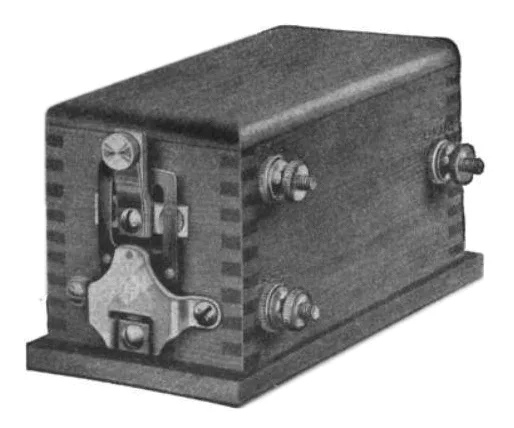
Image source: Wikimedia Commons / Unknown authorUnknown author
Here's the if/then version:
- If you have a distributor and plug wires, budget for the full ignition set.
- If you have coil-on-plug, price plugs only and treat coils as a repair, not maintenance.
- If you're not sure which you have, count the wires. No plug wires means coil-on-plug.
One caveat. A few modern engines still use a distributor-less wasted-spark setup with wires, and a handful of older engines were early COP. Year alone won't always settle it.
Pop the hood or check a parts lookup by VIN.
Fork 2: Engine Layout and Plug Accessibility
This fork decides labor hours, and labor is usually the bigger half of the bill.
| Engine layout | Typical plug labor | Why |
|---|---|---|
| Inline-4, transverse | 0.5 to 1.0 hours | Plugs face forward, easy reach |
| Inline-4, longitudinal | 0.6 to 1.2 hours | Usually open access on top |
| V6, transverse (front bank only) | 1.0 to 2.0 hours | Rear bank often needs intake parts removed |
| V6, transverse (both banks) | 2.5 to 4.0 hours | Cowl and intake clearance issues |
| V8, longitudinal | 1.5 to 3.0 hours | Rear cylinders sit under the cowl |
| Boxer engine | 2.0 to 4.0 hours | Plugs sit low on the sides |
Some engines are notorious. Certain Ford 5.4 three-valve trucks are known for plugs that seize and snap during removal, and a broken plug turns a $300 job into a $700 extraction. Aluminum cylinder heads raise the stakes on any high-mileage engine, so a shop that quotes extra time for seized plugs is being honest, not greedy.
The same principle applies to breaking stubborn fasteners anywhere on a neglected vehicle.
Ask the shop for the labor time before you approve the work. If they can't tell you the book time and the hourly rate, get another quote.
Fork 3: Dealer, Independent, or Mobile Shop Labor Rates
The same job at three shop types, same city, same week:
| Shop type | Hourly rate | Notes |
|---|---|---|
| Dealership service department | $140 to $220+ | Highest rates, OEM parts, loaner cars |
| Independent repair shop | $90 to $150 | Often uses OEM or quality aftermarket parts |
| Chain or quick-lube | $70 to $120 | Limited scope, upsell-heavy menus |
| Mobile mechanic | $80 to $150 | Convenience premium, you supply the driveway |
| DIY | $0 labor | You supply time, tools, and patience |
Dealer rates run 20% to 40% above independents in most markets. You're paying for factory-trained techs, OEM parts, and a service writer who documents everything. For a warranty repair or a known problem pattern, that's worth it.
For four plugs on a 10-year-old sedan, it usually isn't.
There's a legal point here that surprises people. Under the Magnuson-Moss Warranty Act, having routine maintenance done at an independent shop doesn't void your new-car warranty, as long as the work is done to spec. Keep your receipts and you're covered.
Fork 4: Your Region and Local Labor Market
Labor rates are local, and the spread is wider than most drivers expect.
| Market | Independent hourly rate | What it means for a 4-plug job |
|---|---|---|
| Major metro, coastal | $130 to $180 | $220 to $400 |
| Mid-size city, Midwest | $95 to $140 | $160 to $300 |
| Small town or rural | $75 to $120 | $130 to $250 |
| High-cost metro (NYC, SF, Boston) | $160 to $220+ | $280 to $500 |
Two identical Civics, one in rural Ohio and one in San Francisco, can differ by $150 for the same four plugs. Nothing about the car changed. The rent did.
Climate plays a smaller role, but it's real. Cold-winter states see more hard-start complaints, which drives tune-up demand in November and December. That's also when shops are busiest, so scheduling flexibility can save you money on a mobile mechanic or an independent with open bays.
If your engine is cranking slowly or refusing to catch on a cold morning, the fix may not be ignition at all. Our look at starter fluid shortcuts explains why that trick masks a fuel or compression problem instead of solving it.
And if a shop blames your injectors, get the diagnosis in writing before you approve a set. Pricing for upgraded injectors on a diesel is a completely different conversation from a gasoline port-injection cleaning, and mixing the two is a common upsell tactic.
Real Numbers: Per-Item Costs, Hourly Rates, and Example Vehicles
Broad ranges only get you so far. At some point you need the actual line items: what a plug costs, what an hour of labor runs, and what the whole job looks like on a specific car. Here's the itemized version.
Parts Pricing: Copper, Platinum, and Iridium Plugs
Plugs are the cheapest part on the invoice and the one people overthink most. Material sets both the price and the replacement interval.
| Plug material | Price each | Set of four | Realistic life |
|---|---|---|---|
| Copper core | $2 to $5 | $8 to $20 | 30,000 to 45,000 miles |
| Single platinum | $6 to $12 | $24 to $48 | 60,000 miles |
| Double platinum | $9 to $16 | $36 to $64 | 60,000 to 100,000 miles |
| Iridium | $8 to $20 | $32 to $80 | 80,000 to 100,000+ miles |
| Iridium fine-wire (OEM spec) | $14 to $28 | $56 to $112 | 100,000+ miles |
Brand matters less than spec. NGK, Denso, Bosch, ACDelco, and Motorcraft all build plugs to the same heat range standards, and most of them build the factory plug for somebody's engine. Buying the exact part number from your owner's manual is the safest move, whichever box it comes in.
Watch for counterfeit plugs on marketplace listings. A $3 "iridium" plug is usually a copper plug with a shiny tip. Our research turned up plenty of buyer complaints about plugs that misfired within 10,000 miles.
Everything else on the invoice:
| Part | Typical price | Notes |
|---|---|---|
| Plug wire set | $30 to $100 | Distributor engines only |
| Ignition coil | $50 to $250 each | COP engines, sold individually |
| Distributor cap and rotor | $30 to $80 | Pre-2005 hardware |
| Engine air filter | $15 to $50 | Cabin filter adds $15 to $40 |
| Fuel filter | $15 to $100 | In-tank units cost far more to fit |
| PCV valve | $10 to $30 | Often a $15 part with $80 labor |
OEM versus aftermarket is a smaller gap than most drivers assume. A dealer-branded plug and the same plug in an aftermarket box often come off the same line. Where the money actually goes is markup, not brand.
Shops commonly add 20% to 40% over their own parts cost, and that applies to everything from a $12 plug to wheel fastener pricing on the same invoice.
Shop Labor Rates by Region and Shop Type
Labor is where the real money sits, and it's driven by two numbers: the hourly rate and the book time for your specific engine.
Book time comes from published labor guides. It's the hours the industry agrees a job should take, not the hours your tech actually spends. A fast tech beats book time and the shop keeps the difference.
A seized plug eats the difference.
| Market type | Independent hourly rate | Dealer hourly rate |
|---|---|---|
| Rural or small town | $75 to $120 | $120 to $160 |
| Mid-size city, Midwest or South | $95 to $140 | $135 to $185 |
| Major metro, coastal | $130 to $180 | $170 to $230 |
| High-cost metro (NYC, SF, Boston) | $160 to $220 | $200 to $280+ |
Two extra charges show up on nearly every invoice. Shop supplies fees run 3% to 8% of labor, and hazardous waste disposal adds a few dollars. Neither is a scam, but both belong in your comparison.
A diagnostic fee of $75 to $150 is separate from the repair. Many shops waive it if you approve the work. Ask that question before you drop the car off, not after.
Example Jobs: Honda Civic, Toyota Corolla, Ford F-150
Three real-world profiles, priced with parts and labor separated.
| Vehicle | Job scope | Parts | Labor | Total |
|---|---|---|---|---|
| 2012 Civic 1.8L, 110k miles | Four iridium plugs, COP ignition | $70 to $100 | $90 to $140 | $160 to $240 |
| 2004 Corolla 1.8L, 150k miles | Four platinum plugs plus wires | $60 to $110 | $130 to $200 | $190 to $310 |
| 2007 F-150 5.4L, 140k miles | Eight plugs, seizure risk on 3-valve heads | $90 to $160 | $250 to $600 | $340 to $760 |
| 2019 Camry 2.5L, 100k miles | Four iridium plugs, rear bank tight | $90 to $130 | $180 to $320 | $270 to $450 |
That F-150 row is the one that generates angry forum posts. The 5.4 three-valve engine has a well-documented habit of snapping plugs in the head during removal. A shop that quotes high on that job has seen it happen before.
Now the bundle question. A 100,000-mile service often stacks plugs, an air filter, coolant, and a transmission service into one bill. That's legitimate work, and it's the right moment to handle fluid service intervals alongside the ignition parts.
Just make sure you're pricing the schedule, not the menu.
Branch 1: Do You Even Need a Tune-Up?
Probably not, if your car was built after 2010 and it's running clean. That's the honest answer most shops won't lead with.
Your Owner's Manual Maintenance Schedule Is the Final Word
Open the maintenance section of your owner's manual and find the spark plug line. It will list a mileage, usually between 60,000 and 105,000 depending on the plug type the factory installed.
Most manuals also print two schedules: normal and severe. Severe covers short trips, heavy towing, dusty climates, and lots of idling. If most of your driving is five-minute school runs in winter, you're on the severe schedule whether you like it or not.
Manufacturer specs confirm the rest. If the table doesn't list an item at your mileage, you don't owe anyone money for it. That single page outranks any printed service menu.
Why Most Modern Cars Don't List "Tune-Up" at All
Search the maintenance table for the word "tune-up" on a 2015-or-newer vehicle and you'll usually come up empty. The job was split into separate, measurable services: plugs at a set mileage, filters at another, fluids at another.
The word survived as marketing, not as maintenance. That's why two shops can both advertise a tune-up and mean completely different things. One means an oil change.
The other means ignition work.
Here's the if/then logic that actually settles it:
- If your car is under the plug interval and runs smoothly, you don't need ignition work. Skip it.
- If you're at or past the plug interval, price plugs only. That's the real job.
- If you have a misfire code or a rough idle, you need diagnosis first. Parts come after.
- If a shop can't tell you which line item comes from your maintenance schedule, walk.
Symptoms do justify a look, though. Rough idle, hard cold starts, a noticeable drop in fuel economy, and a flashing check engine light all point at ignition or fuel delivery. A flashing light means stop driving, not schedule an appointment for next week.
One more scenario worth naming. If you just bought a used car with no service records, doing the plugs and filters is reasonable insurance. You're not fixing a problem.
You're establishing a baseline.
Branch 2: Is It Really a Tune-Up? Ruling Out Coils, Injectors, and Vacuum Leaks
A misfire has at least five common causes, and only one of them is a worn plug. Guessing gets expensive fast.
Read the OBD-II Codes Before Buying Anything
Pull codes before you approve a single part. Every car built since 1996 stores diagnostic trouble codes, and those codes point at a cylinder and a system.
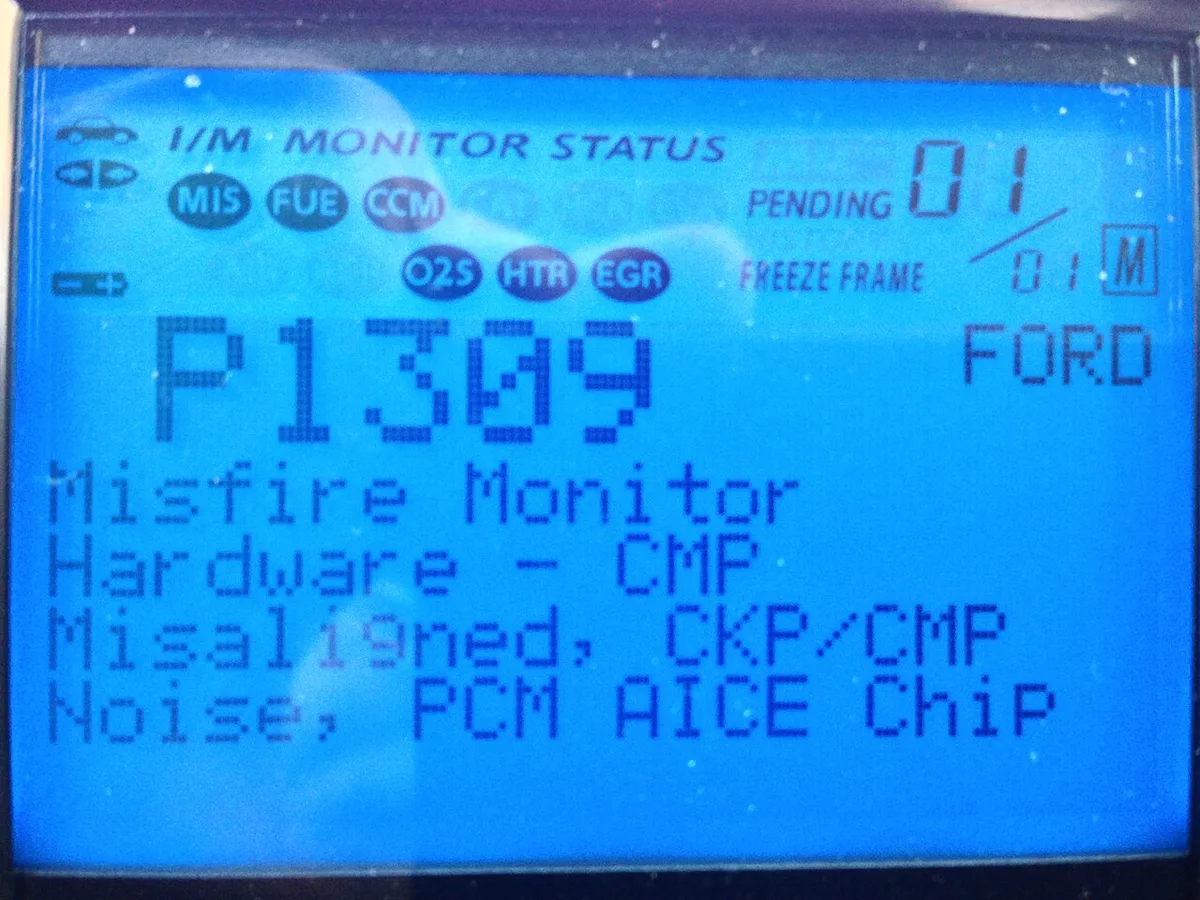
Image source: Wikimedia Commons / User:trnsz (CC BY-SA)
Here's what the common ones mean:
- P0300 means random or multiple misfires. Look for a shared cause like a vacuum leak or fuel pressure problem.
- P0301 through P0308 pin the misfire to a specific cylinder. That narrows it to one plug, one coil, or one injector.
- P0171 means the engine is running lean on bank one. A cracked intake hose or a dirty mass airflow sensor is a likely suspect.
- P0420 points at catalytic converter efficiency, often the downstream result of a long-ignored misfire.
Freeze frame data matters as much as the code itself. It captures engine load, coolant temperature, and speed at the moment the fault set. A misfire that only appears at 55 mph under light load tells a very different story than one at idle.
A $25 code reader gives you the code. A scan tool with live data gives you the story. If you're weighing the two, our guide to picking a scan tool covers what actually matters.
The Coil Swap Test
This is the cheapest diagnostic in the book, and it takes fifteen minutes.
- Pull the code and note which cylinder is misfiring.
- With the engine off, unplug and remove that cylinder's coil.
- Swap it with the coil from a neighboring cylinder.
- Clear the codes and drive the car through a full warm-up cycle.
- Re-read the codes.
If the misfire follows the coil to the new cylinder, the coil is bad. If it stays put, the problem is the plug, the injector, or compression on that cylinder.
Two safety notes. Coil secondary voltage can deliver a painful shock, so never handle a coil while the engine is cranking. And on many engines the coil sits under a plastic engine cover held by clips that break in cold weather, so warm the plastic slightly before prying.
When a $150 Fix Beats a $400 Package
This is where the decision tree pays for itself.
| What you're facing | Cheapest correct fix | Typical cost |
|---|---|---|
| Single dead coil, one cylinder misfiring | Replace one coil and its plug | $150 to $260 |
| Cracked vacuum hose causing lean codes | Replace the hose | $20 to $120 |
| Dirty throttle body causing rough idle | Clean the throttle body | $80 to $200 |
| Worn plugs at the scheduled interval | Full plug set | $160 to $400 |
| Clogged injector on one cylinder | Injector replacement or cleaning | $120 to $300 |
A shop that quotes a full ignition package for a single-cylinder misfire is either guessing or selling. Ask which code they pulled and what test confirmed the diagnosis. A real diagnosis has a test behind it, not just a symptom.
Branch 3: Dealer, Independent Shop, Mobile Mechanic, or DIY
All four routes can do a plug job correctly. The right one depends on your car's age, your warranty status, and how much of your Saturday you're willing to trade.
Dealership service department. Best for warranty work, recalls, and technical service bulletins. Factory-trained techs, OEM parts, and a paper trail that matters if a repair comes back. You'll pay 20% to 40% more than an independent for the same four plugs.
Independent repair shop. Best for everything out of warranty. Look for ASE certification, which means the tech passed the National Institute for Automotive Service Excellence tests for that system. In California, check the Bureau of Automotive Repair license before booking.
Mobile mechanic. Best for straightforward jobs on accessible engines, and for anyone who can't lose the car for a day. Rates land between chain shops and independents. Ask upfront whether they carry insurance and how they handle a snapped plug.
DIY. Best for inline-four engines with open plug access and a patient owner. You'll need a torque wrench, a spark plug socket, dielectric grease, and about an hour. Getting the car safely in the air matters too, and building your own set of ramps is cheaper than buying a lift you'll use twice.
Which One Fits Your Situation?
- If the car is under factory warranty and the issue is a known defect, go to the dealer. Recalls are free there regardless of where you normally service.
- If the car is out of warranty and running normally, an independent shop wins on price nearly every time.
- If the job is four plugs on a transverse four-cylinder and you own a torque wrench, DIY saves $150 to $250.
- If the engine is a transverse V6 with a buried rear bank, pay someone. The intake often has to come off, and that's where DIY mistakes get costly.
Keep every receipt either way. Under the Magnuson-Moss Warranty Act, documented maintenance at an independent shop keeps your factory warranty intact.
How to Get an Honest, Itemized Quote You Can Actually Compare
A quote you can't compare line by line is a quote you can't evaluate. Here's how to force the issue.
- Ask for the estimate in writing, with parts and labor separated.
- Request the part numbers and the labor book time for each line.
- Ask which items come from your manufacturer's maintenance schedule.
- Confirm whether the diagnostic fee is waived if you approve the repair.
- Get the out-the-door total, including shop supplies and tax.
A useful quote looks like this:
| Line item | Detail | Price |
|---|---|---|
| Plugs (4) | NGK ILZKR7B11, OEM spec | $84 |
| Labor | 0.8 hours at $120/hr | $96 |
| Shop supplies | 5% of labor | $5 |
| Tax | Local rate | $12 |
| Total | $197 |
A useless quote looks like this: "Tune-up, $349 plus tax." No parts, no hours, no part numbers. You have no way to know whether you're buying iridium plugs or copper, or whether the labor is 45 minutes or three hours.
Ask one more question before you sign: can I have the old parts back? A shop with nothing to hide will say yes without blinking. That answer alone filters out a surprising number of bad actors.
Finally, know your rights. Most states require a written estimate and your authorization before work begins, and many cap how far a shop can exceed the estimate without calling you. If a bill shows up higher than the number you approved, you're allowed to question every added line before you pay.
The DIY Route: Doing Your Own Plugs for Under $100
Four iridium plugs cost $32 to $80. The tools cost more than the parts the first time around, but they pay for themselves on the second job and keep paying after that.
| Tool | Typical price | What to look for |
|---|---|---|
| 3/8-inch torque wrench | $40 to $90 | Click or split-beam, 10 to 80 lb-ft range |
| Spark plug socket | $8 to $15 | 6-point, magnetic or rubber insert |
| Extension bar | $6 to $12 | 6-inch, wobble end helps on rear banks |
| Gap gauge | $3 to $8 | Coin style or wire style |
| Dielectric grease | $6 to $10 | Small tube lasts years |
| Compressed air or blower | $10 to $25 | Clears debris from plug wells |
| Telescoping magnet | $8 to $15 | Retrieves a dropped plug |
Total outlay sits around $80 to $175. Do the job twice and you're ahead of a shop quote, assuming nothing breaks.
Step by Step: Plugs in About an Hour
Work on a cold engine. Aluminum heads and hot plugs don't mix well, and a warm plug threads out with more risk of galling.
- Disconnect the negative battery terminal.
- Remove the engine cover if your car has one. Plastic clips break in the cold, so warm the cover slightly first.
- Unplug the ignition coil or plug wire from cylinder one. On coil-on-plug engines there's usually a single 10mm bolt holding each coil.
- Blow out the plug well with compressed air before you remove anything. Grit that falls into the cylinder is a very bad day.
- Break the plug loose a quarter turn, then spin it out by hand.
- Check the new plug's gap against the spec on the underhood sticker or in your manual. Iridium fine-wire plugs come pre-gapped, and bending the tip can crack the insulator.
- Thread the new plug in by hand until it seats. If it fights you, back it out and start again. Cross-threading an aluminum head is a head-removal repair.
- Torque to spec with a wrench. Most 14mm plugs in aluminum heads land between 15 and 20 lb-ft, but your manual wins every argument.
- Apply a thin smear of dielectric grease inside the coil boot, not on the metal terminal.
- Reconnect the coil, repeat for the remaining cylinders, then start the engine and listen.
The Anti-Seize Argument, Settled
Old advice says coat every plug thread in anti-seize. Modern plugs usually come with a trivalent metal coating that already handles corrosion, and adding anti-seize changes the torque reading.
Ford and several other manufacturers explicitly warn against it on their newer engines. Follow the plug maker's instructions on the box and skip the tube unless your manual says otherwise.
What Goes Wrong, and What It Costs
- A snapped plug. Common on Ford 5.4 three-valve engines and any neglected aluminum head. Extraction runs $150 to $400 on top of the plug job.
- A cracked coil connector. Plastic gets brittle after a decade of heat cycles. A replacement pigtail is $15 and a soldering iron.
- A dropped socket. The telescoping magnet earns its price here.
- Wrong plug heat range. The parts counter will ask for your engine code for a reason. A hot plug in a turbo engine can cause pre-ignition.
- Old plugs in the trash. They're steel and recyclable. Most auto parts stores take them at the counter.
If your car has a transverse V6 with the rear bank tucked under the cowl, this is the moment to hand it over. Intake removal turns an hour job into a four-hour job, and one lost bolt can ruin your weekend.
Tune-Up Traps: $99 Specials, Blanket Quotes, and Guess-and-Replace Repairs
Most of the money wasted on tune-ups isn't stolen. It's spent on work that never needed doing, sold by people who never diagnosed anything.
| Trap | What it looks like | What to do |
|---|---|---|
| The $99 special | Oil change plus a "courtesy inspection" | Ask what ignition parts it covers. Usually none |
| The blanket quote | One price, no line items | Request parts, labor hours, and part numbers |
| Guess-and-replace | Coils swapped without a code check | Demand the DTC and the test that confirmed it |
| The cleared code | Light off, problem still there | Ask for the freeze frame data, not just the code |
| While we're in there | Eight coils on a one-coil misfire | Approve only what the diagnosis supports |
| The injector flush | $150 service with no measured result | Skip unless a flow test or lean code justifies it |
| The dirty filter photo | Universal stock photo, your car never touched | Ask to see the part that came out of your engine |
Why the $99 Special Isn't Technically a Lie
A chain shop advertising a tune-up special is usually selling an oil change, a filter check, and a fluid top-off. That's a legitimate service at a legitimate price. It just has nothing to do with spark plugs.
The trouble starts when the same word appears on a dealer menu at $549. Two very different jobs, one shared label. That's the whole reason this topic is so confusing.
Guess-and-Replace Is the Expensive One
Replacing parts until the light stays off is the most costly habit in the trade. A shop that swaps four coils and a set of plugs chasing a P0302 has billed you $600 and may not have fixed a $20 vacuum leak.
The tell is simple. Ask what test confirmed the diagnosis. A compression test, a coil swap, a smoke test, or a fuel pressure reading all count.
"It's usually the coils on these" does not.
Clearing codes deserves its own warning. Erasing a code without repairing the cause resets the readiness monitors, and a car with incomplete monitors fails an emissions test even with no active fault. That's a self-inflicted failure.
When a Second Opinion Pays for Itself
If a quote passes $500, get one more. A second diagnostic fee of $75 to $150 is cheap insurance against a $900 guess.
Ask the second shop the same question and compare the answers. Two independent techs arriving at the same fault after the same test is a strong signal. Two wildly different diagnoses means one of them skipped a step.
Warranty, Emissions Testing, and Your Right to Say No
Three rules protect your wallet here, and most drivers never use any of them.
Rule one: the warranty follows the work, not the shop. Under the Magnuson-Moss Warranty Act, routine maintenance at an independent shop keeps your factory coverage intact. Keep dated receipts and note the mileage. That paperwork is your proof if a dealer ever questions it.
Rule two: emissions testing has its own timeline. If your state runs a smog or inspection program, a check engine light is an automatic fail. So is a car whose readiness monitors were reset too recently to complete. Drive 50 to 100 miles of mixed city and highway use before testing if the battery was disconnected or codes were cleared.
Federal emissions warranty covers the catalytic converter and engine control module for 8 years or 80,000 miles. A misfire left alone long enough to cook a converter can turn a $250 plug job into a $1,500 repair, and the warranty clock has usually run out by then.
Rule three: you can say no. Most states require a written estimate and your authorization before work starts. Many cap how far a shop can exceed that estimate without calling you. Ask for the old parts back, and ask for the estimate in writing before you hand over the keys.
Checking a Shop Before You Book
- ASE certification tells you the tech passed a national test for that system.
- In California, verify the Bureau of Automotive Repair license at bar.ca.gov.
- AAA approved shops meet a published standard and often offer dispute mediation.
- A shop that answers diagnostic questions without defensiveness is usually a shop worth using.
None of these guarantees a good outcome. Together they filter out the worst of the field.
What to Do If the Bill Comes In Higher
Say so before you pay. Ask for an itemized explanation of every line that wasn't on the approved estimate.
Most shops will adjust a genuinely unauthorized charge rather than risk a complaint with the state regulator. If they won't, pay by credit card, keep the estimate, and file a complaint with your state's consumer protection office or auto repair regulator.
Tune-Up Cost FAQs
How much does a tune-up cost at a dealer vs. a local shop?
A dealer typically charges $350 to $800 for the same plug job an independent shop does for $160 to $450. Dealer labor rates run $140 to $280 an hour in most markets, against $75 to $180 at independents. You're paying for OEM parts, factory-trained techs, and documentation, not better spark plugs.
How often does a modern car actually need a tune-up?
Follow the spark plug interval in your owner's manual, usually 60,000 to 105,000 miles on iridium or platinum plugs. Beyond that, a modern engine needs filters and fluids on schedule, not a tune-up package. If the car runs smoothly and no codes are stored, there's nothing to tune.
Is a tune-up the same thing as an oil change?
No, though shops often blur the two. An oil change replaces engine oil and a filter. A real tune-up involves ignition components: spark plugs, and on older cars, wires, a cap, and a rotor.
A $99 "tune-up special" is almost always an oil change with a new name.
Will a tune-up turn off my check-engine light?
Only if the failed part was the cause. A worn plug or dead coil that set a misfire code will clear once replaced and the codes are erased. A vacuum leak, failing injector, or low compression won't be fixed by new plugs, and the light will return within a few drive cycles.
Can skipping a dealer tune-up void my warranty?
No. The Magnuson-Moss Warranty Act prevents a manufacturer from voiding coverage because you used an independent shop or did the work yourself. Keep receipts showing the correct parts and intervals.
A dealer can only deny a claim if they prove the non-OEM part or bad work caused the failure.
How much do I save doing plugs myself?
Roughly $150 to $350 on a four-cylinder. Parts run $32 to $80 and the job takes about an hour. Subtract $80 to $175 for tools if you own none, and you break even on the first job.
Hard-access V6 and V8 engines erase most of that saving.
Your Decision Guide: Which Path Fits Your Car and Budget
Work through these in order. The first one that matches your situation is your answer.
If the car is under 60,000 miles and running fine. You don't need ignition work. Do the oil and filter changes on schedule and keep the receipts. Anything else is optional.
If you're at or past the plug interval with no symptoms. Price plugs only. Expect $160 to $400 at an independent shop, more at a dealer. Skip the package unless it's cheaper than the individual line items.
If you have a misfire code. Diagnose first. Pull the code, check the freeze frame, run a coil swap. A single coil and plug is $150 to $260.
Don't approve a full ignition set until a test points there.
If you have a flashing check engine light. Stop driving and get it towed or diagnosed immediately. A flashing light means raw fuel is hitting the catalytic converter, and that repair starts around $1,000.
If the car is a transverse V6 or a 5.4 three-valve Ford. Pay a shop. Seized plugs and buried rear banks are where DIY goes wrong and where a $300 quote becomes a $700 invoice.
If it's an inline-four with open access and you enjoy this stuff. Do it yourself. Buy OEM-spec plugs, torque them to spec, and keep the receipt for your records.
If the quote exceeds $500 and you don't understand a single line on it. Get a second opinion. Two diagnostics from two shops is $150 to $300 and it's the cheapest part of the whole decision.
The number on the invoice was never the real question. The real question is what's actually worn out on your engine right now. Answer that with a code reader, an owner's manual, and one itemized quote, and the price stops being a mystery.
