
You can do everything right and still get burned on a used car. The trick to learning how to read a Carfax report is accepting that it's a starting point, not a verdict. Most shoppers skim the summary badges, spot a few green checkmarks, and hand over the cash.
Then the transmission lets go, or the frame turns out to be straightened steel.
Here's the number that reframes the whole document: the report only shows what somebody chose to report. Title brands travel through the National Motor Vehicle Title Information System under 28 CFR Part 25, but a $4,000 cash repair at an independent body shop leaves no trace at all. As of 2026, a single report costs roughly $45, which is cheap next to a rebuilt title you failed to notice.
So let's read the thing the way a careful buyer does, line by line.
How to Read a Carfax Report
To read a Carfax report, work top to bottom and verify every claim. Start with the VIN and the report run date. Then check title brands, accident entries, and the mileage timeline.
Cross-check the findings against NMVTIS and a pre-purchase inspection.
Why One Misread Line on a Carfax Report Can Cost You Thousands
A vehicle history report squeezes a car's whole life onto a few screens. The most expensive lines on those screens are usually the shortest. "Salvage" is one word.
"Airbag deployed" is two.
In our research across auction listings, dealer disclosures, and state title files, the pattern holds up. Buyers who get burned rarely skip the report. They read it and misread it, then eat the difference two years later.
That's the real trap. The report hands you raw vocabulary and expects you to translate it. Nothing on the page warns you that a "minor" accident with an airbag flag often means a four-figure repair and a permanent hit to value.
| The line you see | What it usually signals | Cost when you miss it |
|---|---|---|
| Salvage title brand | An insurer declared the car a total loss | 40% to 60% off resale, sometimes unsellable |
| Airbag deployed | Impact hard enough to fire the restraint system | $1,500 to $3,000 per seat, plus dash and column parts |
| Odometer discrepancy | Readings don't line up across records | Unknown wear on every consumable part |
| Manufacturer buyback | Repurchased under state lemon law | Financing refusals and a permanent brand |
Those ranges come from repair estimates and auction results, so treat them as ballparks. Your market will differ. The direction never does.
The Word Minor Is a Classification, Not an Invoice
Severity ratings come from whoever filed the claim. An adjuster writes "minor" when the repair is small relative to the car's value. That's it.
It says nothing about what the repair actually cost or how well it was done.
A $4,500 hit on a $45,000 truck gets logged as minor. The same $4,500 on a $9,000 hatchback gets logged as severe. Same damage, different label.
So don't read severity as a dollar figure. Read it as a hint, then go look at the panel gaps yourself.
The Cost Compounds After You Buy
Overpaying at signing is only the first loss. A branded title follows the car forever, and it follows you at resale. Lenders often refuse to finance salvage or rebuilt vehicles.
Insurers may only offer liability coverage on them.
Then there's the safety side. A car straightened on a frame rack and sold without disclosure may drive straight on a smooth road and chew through front tires on a highway on-ramp. You won't learn that from a report.
Four Questions to Ask When a Line Looks Off
- Did this event happen before or after the current owner bought the car?
- Does the mileage on the entry make sense against the surrounding readings?
- Is there a matching service record, or did the repair happen off the books?
- Would a shop with a lift and a paint gauge agree with this description?
If the seller can't answer the first three, that's your answer.
What a Carfax Report Actually Is, and What It Isn't
A Carfax Vehicle History Report (VHR) is a compiled file keyed to a 17-character Vehicle Identification Number (VIN). It pulls together events that somebody, somewhere, decided to record. That's the whole mechanism.
The primary source of truth for a title is your state's DMV, not the report. Carfax is an aggregator sitting downstream of that. Useful, fast, and genuinely helpful, but one step removed from the original document.

Image source: Wikimedia Commons / Peter Ilsted
The Data Sources Behind the Report: DMVs, Insurers, Police, Auctions, Service Shops
Each source contributes a different slice, and each slice has its own gaps.
| Source | What it contributes | How complete it is |
|---|---|---|
| State DMV and title agencies | Title brands, transfers, odometer readings | Strong, and federally backed by NMVTIS |
| Insurance carriers | Claims, total losses, damage payouts | Good for insured claims, blind to cash repairs |
| Police and fire reports | Collision and incident records | Patchy, varies by jurisdiction |
| Salvage auctions | Total-loss vehicles cycling back to market | Very good where they operate |
| Dealers and service shops | Maintenance and repair entries | Voluntary, so heavily skewed to franchises |
| Inspection and emissions stations | Periodic mileage readings | Good in states that test annually |
| Import and export records | Cross-border movement | Solid for documented shipments |
Look at that fifth row. Voluntary reporting is the single biggest hole in any vehicle history report. A dealer with a networked service system reports automatically.
The independent shop on the corner usually doesn't.
What the 100,000+ Sources Figure Does and Doesn't Cover
Carfax advertises more than 100,000 data sources, and the number is accurate as far as it goes. It counts individual shops, agencies, and carriers as separate sources. It is not a coverage percentage.
Here's the distinction that matters. A source count tells you how many taps are in the pipe. It doesn't tell you how much water flows through them.
The federal backstop is stronger on titles than on damage. You can pull a low-cost or free title check through the Department of Justice's NMVTIS consumer portal and confirm brands independently. That's a title check, not a damage check.
What the Report Genuinely Cannot See
- Cash repairs. Bodywork paid out of pocket never enters a claims database.
- Uninsured drivers. No claim, no record.
- Rust and rot. Salt-belt corrosion is invisible to every reporting system.
- Repair quality. A report tells you a panel was replaced. It can't tell you whether the welds were sealed.
- Stored fault codes. Whatever the engine computer knows stays in the car until you plug in a decent scan tool.
- Current condition. Compression, fluid condition, and suspension wear don't live in a database. Neither does the story behind wet, oil-fouled plugs.
- Maintenance done at home. Enthusiasts who change their own oil leave no digital footprint.
A report is one input among several. Treat it as a filter for the cars you won't bother driving to see, and you'll use it correctly.
Start With the VIN: Find It, Match It, Then Pull the Report
Everything hinges on getting the right 17 characters. One wrong digit and you're reading the history of a different car, possibly a much cleaner one.
Pull the report before you drive an hour to look at the vehicle. Not after you've already fallen for the paint.
Where the VIN Hides: Windshield Plate, Door Jamb, Title, Registration
You've got six places to check, and a serious buyer checks at least three.
- Lower corner of the windshield, viewed from outside, on the driver's side
- Driver's door jamb certification label, the sticker with the month and year of manufacture
- Underhood stamping on the firewall or strut tower, on many models
- Vehicle title, printed or typed by the state
- Registration and insurance card
- Door jamb of the rear cargo area on some trucks and SUVs
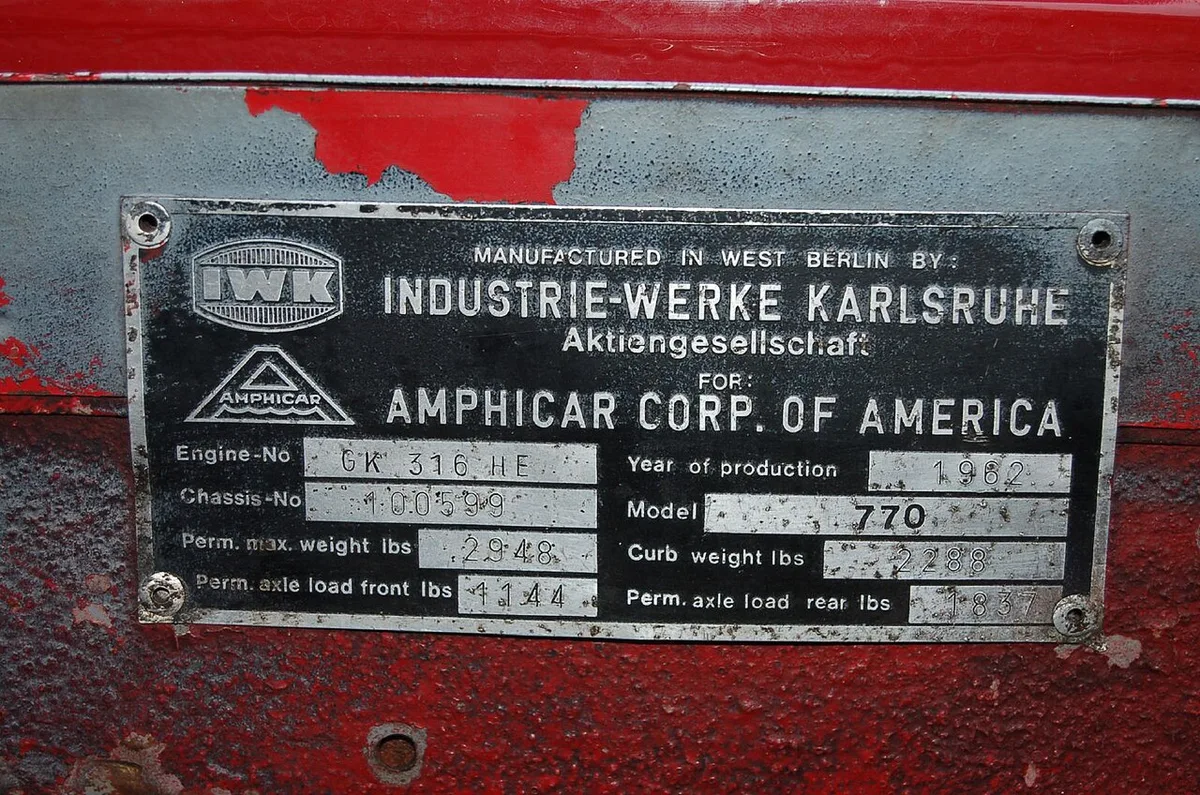
Image source: Wikimedia Commons / Joe Ross from Lansing, Michigan (CC BY-SA)
What the 17 Digits Actually Tell You
The VIN isn't random. It's a structured code, standardized for 1981 and later model years.
| Positions | What it encodes |
|---|---|
| 1 to 3 | World Manufacturer Identifier: country and builder |
| 4 to 8 | Vehicle attributes: model, body style, engine, restraint system |
| 9 | Check digit, a math validation of the whole string |
| 10 | Model year |
| 11 | Assembly plant code |
| 12 to 17 | Sequential production serial number |
That position 9 check digit is quietly useful. Run the VIN through the NHTSA VIN decoder and it will validate the string and confirm the build details. A VIN that fails validation is a VIN you don't trust.
The trim and engine codes also settle practical questions later. They're how you avoid guessing at the correct blade length when the old ones wear out, and how you order the right parts the first time.
Why a VIN Mismatch Means Walk Away
If the windshield VIN and the door jamb label disagree, stop. Don't negotiate. Don't ask for an explanation and wait.
There are only a few reasons for a mismatch, and none of them are good.
- Replaced dashboard or door after a collision, with the wrong label installed
- VIN cloning, where a stolen car wears the identity of a wrecked twin
- A re-VIN or state-assigned number, which needs paperwork you should see in writing
- Straightforward fraud, where a salvage car is dressed up as a clean one
A missing or peeled certification label is its own red flag. Federal rules require it, and legitimate removal is rare. If the seller gets defensive about a VIN check, that reaction is data too.
How to Read the Report Summary Without Falling for the Badges
The summary page is designed to be reassuring. That's its job. Your job is to read past the reassurance and find the specifics underneath.
Spend thirty seconds on the badges. Spend twenty minutes on the sections they point to.
What No Accidents Reported and CARFAX 1-Owner Actually Claim
These two get conflated constantly, including in dealer listings that use them as one big green light.
| Badge or phrase | What it actually means | What it does not mean |
|---|---|---|
| No accidents reported | No accident was submitted to a reporting source | No accident happened |
| CARFAX 1-Owner | One owner on record, based on title and registration data | One careful driver, or one owner in reality |
| No frame damage reported | Nobody filed a frame damage record | The frame is straight |
| Service records available | Some shop reported maintenance | Full maintenance history |
| Great value based on History-Based Value | Carfax's own pricing model output | A fair price for this specific car |
Read "no accidents reported" literally. It's a statement about reporting behavior, not about sheet metal. A car wrecked in a parking lot and fixed with cash is a clean report and a repaired car.
How the 1-Owner Badge Can Mislead
One owner over eight years at 12,000 miles a year reads beautifully. One owner over three years at 40,000 miles a year is a different story. So is one owner that happened to be a rental fleet with a single corporate title.
Check the owner type column. Personal, lease, rental, fleet, and commercial all get counted the same way in the badge. They don't behave the same way on the road.
The Run Date and the Records Checked Count
The run date is the timestamp on the data. It matters more than most buyers realize.
Records can land in the database weeks after an event. A report pulled during your shopping phase might predate the accident that happened the week before you signed. Re-run the report on purchase day, and compare the two.
The records checked count is a rough activity measure. It tells you how many entries the system touched when generating your file. A high count on a 15-year-old car is normal.
A very low count on a 6-year-old car with 90,000 miles deserves a question.
Neither number is a quality score. Don't let a big count create false comfort.
How to Read Title History and Decode Every Title Brand
This is the section that decides the deal. Everything else is context. Title history is the part that follows the car forever.
Scroll to it before you read anything else.
The Brand Glossary: Salvage, Rebuilt, Junk, Flood, Lemon, Hail, and Bonded
| Brand | What it means | What it does to the car's future |
|---|---|---|
| Clean | No brand recorded by any state | Normal resale and financing |
| Salvage | Insurer declared a total loss | Can't be registered until rebuilt and inspected |
| Rebuilt / prior salvage | Repaired and re-titled after inspection | Drivable, but worth far less and hard to finance |
| Junk | Not meant to return to the road | Parts value only |
| Flood | Water damage recorded | Electrical gremlins for years, corrosion in connectors |
| Lemon / manufacturer buyback | Repurchased under lemon law | Permanent disclosure duty, weak resale |
| Hail | Storm damage total loss | Often cosmetic, but still a branded history |
| Bonded | Title issued without clear proof of ownership | Hard to finance, hard to sell |
| Certificate of destruction | Legally scrapped | Cannot be titled again, ever |
Two of these get confused constantly. A lemon buyback and a manufacturer buyback are the same event described two ways. A salvage title and a rebuilt title are two stages of the same car.
Why the Same Wreck Gets Different Brands in Different States
Title branding is state law, not federal law. Each state writes its own definitions, thresholds, and disclosure rules. The federal system stitches those state records together, it doesn't standardize them.
That gap is where title washing lives. A car totaled in one state gets repaired, inspected, and re-titled as rebuilt somewhere with looser rules. Then it moves again and the paperwork trail thins out.
Move it a third time and a buyer in a dry, distant market sees a title that looks ordinary.
Two things protect you here. First, check the title history state by state, not just the current status line. Second, verify the brand through NMVTIS, which is built specifically to catch brands across state lines.
Reading the Accident Damage Behind the Brand
A rebuilt title tells you the car was declared a total loss. It doesn't tell you what got replaced. Look for the collision entries and match them to the repair.
Front-end hits usually mean core support, radiator, condenser, and lamp assemblies. That last one is worth pricing out, because parts-counter lamp prices tell you how deep the repair likely went. Side impacts often take out a mirror housing, and popping the glass back on is the cheap version of a repair you can spot from ten feet away.
Steering and suspension parts get replaced after hard hits too. Whether premium steering parts were used or the cheapest available set went on tells you how the rest of the job was probably handled.
Liens: Checking Whether Someone Still Owns the Car
A lien entry means a lender has a financial claim on the vehicle. It's common and not automatically a problem. What matters is whether there's a matching lien release.
No release means the lender still holds the title. You cannot get a clean title transfer until that's resolved, no matter what the seller promises.
- Ask for the lien release letter, on lender letterhead, before money changes hands.
- Confirm the payoff amount directly with the lender, not through the seller.
- Never accept "the bank will mail it" as a closing plan.
- Walk away if the seller wants cash before the lien clears.
That last point isn't paranoia. It's the most common way buyers lose a car and their money in the same afternoon.
How to Read Accident and Damage Records Without Trusting "Minor"
Accident entries are the most over-read and under-verified part of the report. Each one is a claim record, not a repair invoice. It tells you something happened on a date at a mileage.
It doesn't tell you how bad it was or how well it got fixed.
Read every entry as a question, not an answer. Then go look at the car with that question in hand.
| Field on the entry | What it tells you | What to check next |
|---|---|---|
| Date | When the event was recorded | Whether it falls inside the current owner's tenure |
| Mileage at event | Where the car was in its life | Whether it fits the surrounding odometer readings |
| Severity | Someone's classification of the damage | Nothing on its own, so inspect the area physically |
| Damage location | Front, rear, left, right, or unspecified | Panel gaps, paint match, and fastener marks in that zone |
| Airbag deployed | Impact hard enough to fire the restraints | Dash pad, clock spring, seatbelt pretensioners |
| Police report number | An independent record exists | Ask the seller for it, then request the report |
| Insurance payer | A carrier handled the claim | Look for a matching total-loss or salvage entry later |
The last two rows are gold. A police report number gives you a second, independent account of the same event. An insurance payer tells you the repair went through a claims process, which usually means an adjuster wrote an estimate.
Severity Ratings Explained: Minor, Moderate, and Severe
Minor, moderate, and severe describe damage relative to the vehicle's value at the time. That's the whole definition. Nothing about structural integrity, nothing about repair quality, nothing about cost in absolute dollars.
Picture two claims for the same $3,800 repair. On a $48,000 pickup, that's minor. On a $7,500 commuter car, it's severe.
Identical damage, opposite labels.
So when you see "minor," don't relax. Ask what got replaced. Bumpers, fenders, and lamp assemblies are bolt-on parts and rarely a long-term problem.
Anything that touches the radiator core support, apron, or strut tower is structural.
A useful sanity check is parts pricing. You can estimate the depth of a front-end hit by pricing the visible bits, down to something as small as replacement bulb pricing. Four-figure parts totals on a cheap car usually mean the claim was bigger than the label suggests.
Stacked entries matter too. Three "minor" hits on the same corner over four years is a pattern, not bad luck. That corner has been hit repeatedly, and the metal there has been worked more than once.
The Airbag Deployment Flag
This two-word line changes the math more than any severity rating. An airbag deployment means the impact was hard enough to trigger the restraint control module. That's a threshold event, not a fender bender.
The parts list alone is sobering. A driver airbag, a passenger airbag, a clock spring, both seatbelt pretensioners, a dash pad, and a module reset or replacement. Depending on the vehicle, that's $1,500 to $3,000 per seating position before paint or bodywork.
Then there's the repair quality question. A shop that replaces airbags properly also replaces the pretensioners and resets the module. A shop cutting corners installs a used airbag and leaves the rest.
The report can't tell those two outcomes apart.
One more thing worth knowing. A car with a deployed airbag and a clean title is possible. If the owner paid cash and never filed a claim, the deployment never reaches a database.
That's exactly why you look at the dash pad seams and the steering wheel cover yourself.
Matching Each Accident to the Ownership Timeline
An accident that happened two owners and 60,000 miles ago matters differently from one that happened eight months ago. Line the entry up against the owner history before you judge it.
If the damage predates the current owner, ask what they know about it. If it happened during their tenure, ask who repaired it and whether they kept the invoice. A seller with a receipt and photos is a seller who dealt with it openly.
If the accident happened in the last few months and the car is now for sale, slow down. That's the classic pattern for a repaired car being flipped quickly, before anyone asks questions.
The location field tells you where to look. Front damage means checking hood alignment, headlight gaps, and whether the bumper cover sits flush at both corners. Rear damage means trunk floor and rear body panel.
Side damage means door alignment and paint blend lines across the adjacent panels.
Small repairs leave fingerprints. Replacing just the mirror glass instead of the whole housing, for instance, is a cheap fix you can often spot by eye once you know how the glass seats. Multiply that instinct across every panel and you start reading the car, not just the paper.
How to Read the Odometer Timeline and Catch a Rollback
Mileage is the single best proxy for wear you can't see. It drives timing belt intervals, suspension life, transmission condition, and resale value. A rollback isn't cosmetic fraud, it's theft of thousands in expected remaining life.
The good news is that odometer readings appear in more places than most buyers realize. Every one of them is a data point you can plot.
What a Healthy Mileage Pattern Looks Like
A healthy timeline climbs steadily and never goes backward. Readings show up at title transfers, annual inspections, emissions tests, dealer service visits, and auction announcements.
Federal Highway Administration data puts US driving in the neighborhood of 13,500 miles per driver per year. So a car gaining 10,000 to 16,000 miles annually reads as normal. A car gaining 3,000 a year for six years, then jumping 30,000 in one year, deserves a question.
Here's what a plausible timeline looks like on paper:
| Year | Reading | Source |
|---|---|---|
| 2019 | 12,400 | Dealer service visit |
| 2021 | 38,900 | State inspection |
| 2022 | 52,300 | Title transfer |
| 2024 | 78,600 | Emissions test |
| 2026 | 91,200 | Dealer listing |
Five points, a smooth slope, no reversals. That's what you want to see. Sparse points aren't automatically bad, but they leave more room for something to hide.
The Rollback Signs: Drops, Gaps, and Not Actual Mileage
Four patterns should stop you cold.
- A drop. Any reading lower than an earlier one is a hard flag. Sometimes it's a clerical error. Sometimes it isn't.
- A long gap. Three or more years with zero readings on a car that was clearly being driven is a hole in the record.
- An implausible jump. 12,000 miles one year and 45,000 the next suggests either heavy commercial use or a false earlier reading.
- A mileage brand. "Not actual mileage," "exceeds mechanical limits," or "odometer discrepancy" on the title is a permanent legal label.
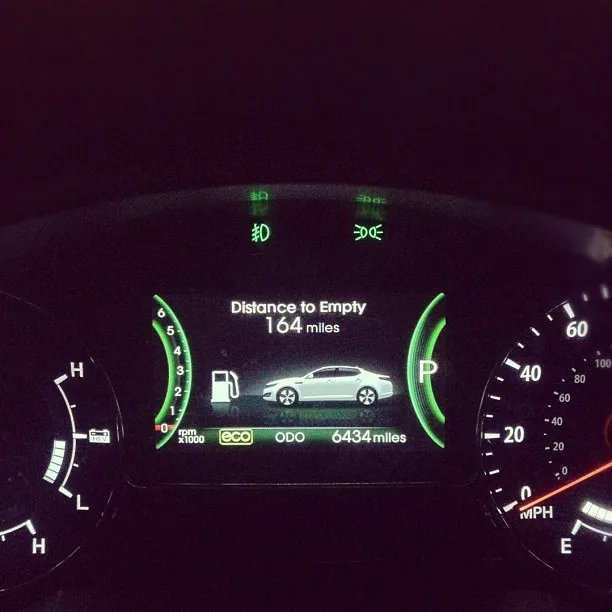
Image source: Wikimedia Commons / Tony Webster (CC BY-SA)
The federal rule behind those labels is the odometer disclosure requirement in 49 CFR Part 580. Since January 2021, vehicles 20 model years old or older are exempt from disclosure. That's a change from the old 10-year threshold, and it means the newest exempt vehicles are roughly 2006 models as of 2026.
Older mechanical odometers physically roll over at 99,999. Digital clusters are harder to trust, because mileage lives in memory and can be rewritten with a programmer. A cluster swap from a lower-mile donor car is another route, and it leaves the body and the electronics disagreeing.
That's where a scan tool earns its keep. Many modules store their own mileage, so the engine computer, transmission controller, and ABS module can be cross-checked against the cluster. If you're choosing a scan tool for this, look for one that reads multiple modules, not just engine codes.
Wear tells the same story in low tech. A 60,000-mile car with a shiny-smooth steering wheel, a worn driver's seat bolster, and a pedal rubber worn through the ridges isn't a 60,000-mile car. Neither is one with sandblasted windshield pitting or a sagging driver's door hinge.
How to Read Owner History and Service Records
Owner history is a story about how the car was treated. Service records are the receipts. Together they tell you more about the next 50,000 miles than any single accident entry.
Read the owner section before the service section. The owner type frames everything that follows.
Owner Type Matters: Personal, Lease, Rental, and Fleet
The badge counts owners. It doesn't weigh them. A single-owner rental car and a single-owner garage-kept weekend car both earn the same badge.
| Owner type | What it usually means | What to watch for |
|---|---|---|
| Personal | Private use, often longer tenure | Best case, but check maintenance records |
| Lease | Maintained on schedule, returned at term end | Usually solid, though less cosmetic care |
| Rental | High turnover of drivers, high annual miles | Wear items beat up, interior wear |
| Fleet | Commercial service, often highway miles | Good maintenance, sometimes hard idling hours |
| Commercial | Taxi, delivery, or work vehicle | Highest wear per mile, often modified |
Tenure matters as much as type. One owner for eight years at 12,000 miles a year reads beautifully. Four owners in four years tells you the car keeps getting passed along, and there's usually a reason.
Watch the geography too. A car that moved from a coastal flood state to a dry inland market within a year of a major storm deserves a closer look at the title history.
What Missing Service Records Do, and Don't, Mean
Missing records are not proof of neglect. That's the most common misread in this whole section. Plenty of careful owners change their own oil and keep nothing but a stack of receipts in the glovebox.
Reporting is voluntary for independent shops. Franchise dealers on networked systems report automatically. So a car serviced exclusively at a small local garage can look like a car with no history at all.
What you're really looking for is a pattern. Look for repeat visits at plausible intervals. Look for the big services, not just oil changes.
Transmission fluid, coolant, brake fluid, spark plugs, and timing belts are the ones that cost real money when they've been skipped.
If the report shows 40,000 miles of dealer oil changes and then goes silent for 50,000 miles, ask what happened. Maybe the owner moved to a shop that doesn't report. Maybe they stopped bothering.
The answer changes the price.
Receipts close the gap. Ask the seller for any maintenance paperwork, then check dates and mileages against the report. A scheduled transmission service that shows up on a receipt but not in the database is a good sign, not a bad one.
It means the owner cared enough to keep the paper.
Red Flags That Mean Walk Away: Title Washing, VIN Cloning, and Flood Cars
Some problems are negotiable. These three aren't. Each one is a case where the car's legal identity or structural reality doesn't match what you're being sold.
Walk away and don't look back.
| Signal | What it points to | Your move |
|---|---|---|
| Brand history in one state, clean title in another | Possible title washing | Pull NMVTIS and check every prior state |
| Price far below market for the miles | Hidden brand, flood, or cloned VIN | Ask why, in writing, before you visit |
| VIN plate rivets look disturbed | Plate swap or cloning | Compare all VIN locations, then leave |
| Title in a different name than the seller | Title jumping | No transfer until the title matches |
| Fresh carpet and new trunk liner on an older car | Flood remediation | Check seat rails and spare well for silt |
| Seller refuses to share the VIN | Anything | No VIN, no deal |
How Title Washing Turns a Salvage Car "Clean"
Title washing exploits the fact that title branding is state law, not federal law. Each state defines its own brands, its own total-loss threshold, and its own rebuilt inspection process. The federal system links those records, it doesn't harmonize them.
The play runs in three moves. A car is totaled in a strict state and branded salvage. It gets repaired cheaply and re-titled as rebuilt in a state with lighter rules.
Then it moves again, and in the third state the paperwork trail gets thin enough that a buyer sees an ordinary title.
That's why you read title history by state, not just the current status line. And that's why you verify through NMVTIS, which was built specifically to catch brands across state lines. If the report shows a title event in Georgia, then Florida, then Texas within eighteen months, ask why the car kept moving.
The economics explain the motive. A salvaged vehicle is worth 40% to 60% less than a clean one. Recovering that gap is worth real effort to a dishonest seller.
Flood Cars and the Hurricane-State Pipeline
Flood cars follow storms. After every major hurricane, water-damaged vehicles move out of Florida, Texas, Louisiana, and the Carolinas and reappear in dry inland markets a few months later. Sometimes they're sold honestly at a discount.
Often they're not.
Water damage is uniquely nasty because it's slow. Connectors corrode from the inside. Modules fail a year later.
Grounds go intermittent and produce electrical faults nobody can trace.
Look for the physical tells, because the report usually won't have them. A musty smell that air freshener can't cover. Silt or grit in the spare tire well and behind the kick panels.
Rust on seat rails and bracket bolts in a car that otherwise looks clean. Fogging inside the headlamp housings. A waterline stain under the dash.
New interior parts on an old car are a flag too. Fresh carpet in a ten-year-old vehicle with worn pedals means somebody replaced the soft goods and left the wear.
VIN cloning deserves its own mention here. It's the practice of putting a clean VIN from a wrecked car onto a stolen one. Detection comes down to physical details.
Factory VIN plates are riveted with specific rosette rivets, and replacements rarely match. Certification labels on door jambs, hoods, and fenders should all be present and consistent.
Run the VIN through NICB VINCheck before you commit. It's free, it's run by the insurance industry's crime bureau, and it flags theft and total-loss records that other sources miss.
Keyless systems add a modern wrinkle. Relay attacks let thieves amplify a fob signal from inside a house and drive off in under a minute, which is one reason how keyless entry gets attacked keeps coming up in theft investigations. A car with a clean history and a recent theft recovery is not a clean car.
What a Clean Carfax Can't See: Unreported Damage, Reporting Gaps, and Stale Data
A clean report means nothing bad was submitted. That's the entire claim. It's a statement about the database, not about the car.
Three things create that gap: unreported damage, uneven reporting by source and state, and time lag.
| What happened | Likely in the report? | Why |
|---|---|---|
| Insured collision claim | Yes | Carrier reports it |
| Cash repair at a body shop | No | No claim filed, shop doesn't report |
| Repair below the deductible | Usually no | Owner paid out of pocket |
| Uninsured at-fault driver | No | No carrier involved |
| Damage in a weak-reporting state | Hit or miss | State data sharing varies |
| Dealer-serviced maintenance | Yes | Networked service systems report |
| DIY oil changes and brakes | No | Nothing to report |
| Rust and underbody corrosion | Never | Not a reportable event |
| Frame damage from an unreported hit | No | Only found on a lift |
Reporting quality varies by category, and the variation is predictable. Title data is the strongest because federal rules underpin it. Insurance claims are solid for insured events.
Police and fire records are patchy and depend entirely on local practice. Service records are voluntary, which skews them heavily toward franchise dealers.
State-level gaps matter just as much. Some states share damage and inspection data freely. Others share titles and little else.
A car that lived its whole life in one state may have a rich file. The same car after three moves may have a thin one.
Then there's the lag. Records can post days or weeks after an event. A report pulled three weeks ago may not reflect a claim filed last Tuesday.
Re-run it on the day you sign, and compare the two versions side by side.
Data errors happen too. A repair can get attached to the wrong VIN. Duplicate entries appear.
An accident can be logged against a car that was a hundred miles away. The dispute process exists, but it's slow, and it won't help you mid-negotiation.
The practical answer is that the report is a filter, not a verdict. Use it to eliminate cars fast. Then verify the survivors with things the database can't touch: a pre-purchase inspection on a lift, a paint thickness gauge, an OBD-II scan, and a look at the underbody in daylight.
Cross-Check Every Report: NMVTIS, NICB VINCheck, and NHTSA Recalls
A paid report is one aggregator's view. The federal government runs the primary databases for titles, theft, and safety defects, and two of those three checks cost you nothing. None of them replaces a paid report.
Each one covers a blind spot the paid report can leave open.
The full cross-check takes about ten minutes per car. Run it before you drive anywhere, and run it on every finalist, not just the one you like most.
Which Source Catches What
| Source | What it catches | Cost | Where it's blind |
|---|---|---|---|
| NMVTIS | Title brands across states, junk, salvage, insurer total losses | A few dollars | Minor accidents, service history, owner counts |
| NICB VINCheck | Theft records, insurer total losses | Free | Brands, accidents, mileage |
| NHTSA lookup | Open safety recalls, owner complaints, defect investigations | Free | Titles, theft, accidents |
| Carfax or AutoCheck | The aggregated picture plus service and owner data | Roughly $45 | Anything nobody reported |
NMVTIS deserves the most respect of the four. It's the database state DMVs actually feed, so it carries the title brands that aggregators repackage. You reach it through the approved providers listed on the DOJ's vehiclehistory.gov portal, and those providers typically charge a few dollars per report.
Title brands are NMVTIS's whole reason for existing. The reporting rule behind it, 28 CFR Part 25, requires insurers, junkyards, and salvage auctions to submit records. That's why title washing trips it up when a paid report reads clean.
NICB VINCheck takes seconds and answers one question: has this VIN been reported stolen or declared a total loss by a participating insurer? An active theft record isn't a negotiation point. It's a reason to call the police and leave.
A recovered theft car is a different animal, one that gets documented, inspected, and priced accordingly.
The NHTSA check is the one most buyers skip, and it's the only one that's purely about safety. Run the VIN through the NHTSA recall lookup and check two things: open recalls and the complaint history. Recall repairs are free at any franchised dealer, no matter where you bought the car.
That's federal law.
The Takata airbag inflator recall is the standing example of why this matters. It covered tens of millions of vehicles, and an unrepaired inflator can rupture in a crash and send shrapnel through the cabin. An open recall isn't a deal-breaker.
It's a free repair you schedule before the car comes home.
What to Do When the Sources Disagree
They disagree constantly, and there's a clean way to resolve it. Trust each source for what it's authoritative on.
- Titles: NMVTIS outranks any paid report. If it shows a brand Carfax missed, believe NMVTIS.
- Theft: NICB is the authority. A theft hit means stop everything.
- Recalls: NHTSA is the authority, full stop.
- Accidents and service: The paid report is often Accidents and service: The paid report is usually the only record you have, so treat it as best evidence rather than gospel.
That ranking matters in practice. When Carfax shows a clean title and NMVTIS shows a salvage brand from three years ago, you don't average the two. You believe the federal record and walk.
Running the Three Checks in Order
Order the checks by cost and by how fast they can end the conversation.
- NICB VINCheck first. Free, instant, and it flags theft and insurer total losses. A hit here ends the search.
- NHTSA recall lookup second. Free, and it tells you what the manufacturer still owes the car in safety repairs.
- NMVTIS third. A few dollars through an approved provider. This is your title-brand backstop.
- The paid report last. Pull it once a car survives the free checks, so you're spending $45 on a finalist instead of a junker.
That sequence saves money and, more importantly, saves attention. Most shoppers do it backwards. They buy the report, get attached, then look for reasons to ignore what the free sources would have told them in thirty seconds.
One note on NMVTIS access. It isn't a single consumer website with a credit card field. You go through the DOJ portal and pick an approved provider, and pricing varies by provider.
Budget a few dollars per VIN as of 2026, and don't be surprised if one provider bundles it into a larger report.
What a Theft Recovery Record Actually Means
A recovered theft vehicle isn't automatically ruined. It is automatically complicated.
Some theft recoveries involve nothing but a joyride and a broken window. Others come back stripped, with the interior, wheels, and catalytic converters gone, then rebuilt with whatever fits. The report won't tell you which version you're looking at.
Treat a recovery entry as a prompt to inspect harder. Check the ignition and steering column for replacement scars. Look for mismatched interior panels.
Ask for the recovery report and the repair invoice. If neither exists, price the car as a risk, not a bargain.
When Paper Isn't Enough: The Pre-Purchase Inspection and OBD-II Scan
A report tells you what was recorded. An inspection tells you what's actually there. Those two things disagree more often than buyers expect.
Our read of the evidence is blunt. If you can only afford one of the two, buy the inspection. A clean report plus a bent unibody is a worse outcome than a flagged report plus a straight car you bought at the right price.
What a Real PPI Includes: Lift Time, Paint Gauge, Frame Check
The phrase "pre-purchase inspection" covers everything from a fifteen-minute walkaround to a two-hour teardown. Know which one you're paying for before you book.
A thorough inspection includes:
- Lift time. Wheels off is ideal, or at minimum a look at the subframe, rocker panels, and floor pans from below.
- Paint thickness readings. Factory paint typically lands around 4 to 6 mils. A panel reading 10 or 12 mils has been refinished, which means bodywork happened.
- Panel gap and fastener check. Uneven gaps, tool marks on bolt heads, and missing clips tell you a panel came off.
- Frame and unibody measurement. A tram gauge or laser check confirms whether the structure is square.
- Fluid condition. Transmission, coolant, brake, and differential fluids reveal neglect that no database records.
- Brake and tire measurements. Pad depth in millimeters, rotor thickness against spec, and tire date codes.
- Battery and charging test. Modern cars punish weak batteries with a carnival of electrical faults.
- Road test. Highway speeds, hard braking, and a full lock-to-lock turn reveal alignment and driveline issues.
- Written report with photos. No photos, no proof.
Cost runs roughly $100 to $200 at an independent shop for most vehicles. Mobile inspectors charge $150 to $300 and come to the car, which is worth it when the seller is two hours away. Specialty and European models cost more because the inspection takes longer.
Book it at a shop you choose, not the one the seller recommends. Then hand the inspector the report you already pulled and let them chase the flagged entries. That combination is far more useful than either alone.
Wear items give you a second opinion on mileage. A car with fresh wiper blades that actually clear the glass and original-looking everything else has been cared for. A car with a worn driver's seat, a shiny pedal pad, and 40,000 miles on the odometer is telling you a different story.
Suspension work is where accident damage hides. If the inspection flags bent or worn tie rods on one side only, that's a collision signature, not normal wear. It's also a chance to ask whether premium front-end components went back on or the cheapest set available.
The OBD-II Scan: Stored Codes and the Mileage in the Modules
A basic code reader gives you engine codes. A proper scan tool gives you the story behind them.
Four things matter here, and the fourth is the one most buyers never check.
- Pending and permanent codes. Permanent codes live in non-volatile memory and can't be cleared by disconnecting the battery. They survive a seller's pre-sale wipe.
- Readiness monitors. If monitors show "not ready" on a car that was recently driven, someone cleared the codes. That's a tell.
- Freeze frame data. This captures the conditions when the fault set: speed, load, coolant temperature, and mileage at the event.
- Module-stored mileage. The engine control module, transmission controller, ABS module, and instrument cluster each keep their own count. Disagreement between them is the clearest rollback evidence you'll get.
The last one settles arguments. A cluster reading 71,000 with an ECM reporting 118,000 isn't a clerical error. It's a swapped cluster or a rewritten odometer.
If you're buying your own scan tool for this job, spend for one that reads multiple modules and live data. A $25 code reader won't get you there, and the difference in capability is the whole point. There's a decent walkthrough on picking one that reads more than engine codes if you want to shop the category properly.
Get permission before you plug anything in. Most private sellers say yes. The ones who don't have just answered your question.
When the Inspection Kills the Deal
Expect it to happen. Roughly one in three inspections we see described in buyer accounts turns up something the report never mentioned.
That's not a reason to skip inspections. It's the reason they work.
A failed inspection gives you two options, and both are fine. Walk away and lose a $150 fee, or renegotiate with a real number attached. Frame damage, a leaking rear main seal, or a transmission that flares on the 2-3 shift all have a price.
Use it.
What you shouldn't do is accept "my buddy looked at it." That's not an inspection. It's a vibe.
Carfax vs AutoCheck vs Free VIN Checks, and What a Report Costs
No single report owns the truth. Each product covers a different slice of the same car, and the slices overlap imperfectly.
Here's how the main options actually differ.
| Option | Strength | Weakness | Best for |
|---|---|---|---|
| Carfax | Service records, owner history, brand recognition at resale | Accident data depends on insurer reporting | Most private-party buyers |
| AutoCheck (Experian) | Auction announcements, AutoScore 1 to 95, strong wholesale data | Fewer service entries than Carfax | Auction and dealer-lane shoppers |
| NMVTIS providers | Federal title-brand data across states | Narrow scope, no accidents or service | Catching title washing |
| NICB VINCheck | Free theft and total-loss flags | Nothing else | A ten-second first filter |
| State DMV title search | The primary record itself | Slow, paperwork, current state only | Resolving a specific brand question |
| Dealer-supplied report | Free to you | You don't control the run date | A starting point only |
What the AutoScore Actually Measures
AutoCheck's AutoScore runs from 1 to 95, and higher is better. It's a comparative score built from the events in that vehicle's history, weighted against similar vehicles.
That's a useful tool and a dangerous shortcut. The score is a summary, not an explanation. Two cars with an 82 might have completely different problems.
Use the score to sort candidates. Then read the actual events, because that's where the money is.
AutoCheck tends to surface auction announcements that Carfax misses. Carfax tends to carry more service entries. If a car went through a salvage auction, AutoCheck is often the one that shows it.
If you're evaluating a trade-in or a dealer car, that's worth the extra look.
Running both on a single finalist is a reasonable splurge. Running both on ten candidates is a waste of money. Filter with the free checks, then double up on the one you're serious about.
What a Report Costs and When to Buy a Bundle
Pricing moves, so verify before you buy. The structure doesn't change much.
- Single report: roughly $45 for one VIN, valid for a limited window.
- Multi-report bundles: three to six reports, dropping the per-car price into the $20 to $30 range.
- Subscription products: monthly access for dealers and serious shoppers.
- NMVTIS provider reports: a few dollars per VIN.
- Free tools: NICB VINCheck and NHTSA lookups, no cost.
Buy a bundle the moment you're shopping three or more cars. It's the single easiest saving in this whole process.
One thing to check before you pay: some dealer listings include a free report link. That's fine to read, but you don't control the run date. Pull your own on the day you get serious, and compare the two.
Carfax Report FAQs: What Buyers Actually Ask
What does salvage mean on a Carfax report?
Salvage means an insurer declared the vehicle a total loss, usually when repairs exceeded roughly 70 to 80 percent of its actual cash value. The car can't be registered until it's rebuilt and passes a state inspection. Resale value drops 40 to 60 percent, and many lenders won't finance it at all.
Why does my Carfax show an accident that didn't happen?
Data errors happen. A repair can get attached to the wrong VIN, or a duplicate entry can appear. The car may also have been involved in an incident the current owner never knew about, such as damage at a dealership or during shipping.
Request the underlying record and use Carfax's correction process.
How far back does a Carfax report go?
Coverage depends on when a state or source started sharing data. Most title and accident records reach back to the 1990s, and some go further. Coverage improves sharply for vehicles from the mid-2000s onward.
Older cars, especially pre-1981 models, often have thin files because VIN standardization arrived in 1981.
Does Carfax show everything?
No. It shows what was reported. Cash repairs, uninsured accidents, DIY maintenance, rust damage, and repair quality never reach the database.
Reporting also varies by state and by source type. Title data is the most complete category because federal rules underpin it.
Is a clean Carfax enough to buy the car?
No. A clean report means nothing bad was submitted, not that nothing happened. Pair it with an NMVTIS title check, a NICB theft check, an NHTSA recall lookup, and a pre-purchase inspection on a lift.
The inspection is the only step that touches the car's actual condition.
Can I get a free Carfax report?
Carfax doesn't publish full reports for free, though dealers sometimes supply one with a listing. Free legitimate alternatives exist: NICB VINCheck for theft and total-loss records, NHTSA for recalls and complaints, and low-cost NMVTIS reports for title brands. Those cover the highest-stakes risks at little or no cost.
The Go/No-Go Checklist: Your Final Read Before You Hand Over the Money
You've read the report, cross-checked the federal sources, and paid for an inspection. Now put it all on one page and make the call.
Run this list in order. Stop at the first hard fail.
| Check | Pass looks like | Hard fail |
|---|---|---|
| VIN match | Windshield, door jamb, and title all agree | Any mismatch, or a disturbed VIN plate |
| Title brand | Clean in every state the car lived in | Salvage, junk, flood, or a brand NMVTIS caught and Carfax missed |
| Theft record | No active theft, no unexplained recovery | Active theft record |
| Accident pattern | One or two isolated events, properly repaired | Airbag deployment with no repair invoice, or repeated hits on one corner |
| Odometer | Smooth upward trend, modules agree with the cluster | Any drop, or a mileage brand on the title |
| Owner history | Tenure matches the miles, type fits the use | Four owners in four years, or a rental sold as a private car |
| Lien status | Release letter in hand | No release, or "the bank will mail it" |
| Recalls | None open, or booked for free repair | Open Takata or similar safety recall ignored |
| Inspection | Straight structure, even paint readings, no leaks | Frame damage, or a seller who blocked the inspection |
| Paperwork | Title in the seller's name, matching odometer statement | Title jumping, or a name that doesn't match the ID |
Two more habits close the loop. Re-run the report on the day you sign, because records can post in the gap between shopping and closing. And never hand over cash before the title is assigned and the lien is released in writing.
If everything passes, you've done more diligence than most buyers ever attempt. If one item fails, you've just saved yourself the kind of repair bill that shows up six months later with no warning. Either outcome is a win, and that's the right way to think about the whole exercise.
