
Brake fluid doesn't compress, but air does, and learning how to bleed motorcycle brakes is really about getting that air out. The job is simple: push fresh fluid through the system and force trapped bubbles out at the caliper. The detail is what trips people up.
One bubble left at the banjo bolt, or a caliper sitting the wrong way up, and the lever still feels soft.
In our research, the number that matters most rarely gets quoted. DOT 4 fluid absorbs moisture until its wet boiling point falls to around 311 °F (155 °C). Fresh fluid is the difference between a lever that bites and one that fades on a long descent.
Here's how the job actually works, and where it usually goes wrong.
How to Bleed Motorcycle Brakes
Bleeding motorcycle brakes means flushing old fluid and air out of the hydraulic circuit. Fill the reservoir with fresh fluid. Fit a clear hose over the caliper bleeder.
Squeeze the lever, hold it, crack the bleeder, then close it. Repeat until the fluid runs clean and bubble-free.
Why a Spongy Lever Is a Safety Problem, Not an Annoyance
Brake fluid doesn't compress. Air does. So when the lever feels soft, the pressure you're making is squashing bubbles instead of clamping the pads.
That's lost braking, not a cosmetic annoyance.
Aggregate rider reports describe the same pattern. The lever feels fine cold, then sinks closer to the bar once the calipers get hot. The gap between those two states is where crashes live.
Two years, not mileage
Glycol fluid is hygroscopic, meaning it pulls water out of the air through the reservoir and hoses. Moisture drags the boiling point down fast. Under the federal FMVSS 116 standard, DOT 4 starts near 446 °F dry and drops to roughly 311 °F once it has taken on about 3.7 percent water.
Water turns to vapor at 212 °F. Vapor behaves exactly like air.
That's why a bike that sat through winter often has the worst brakes. Low miles, stale fluid. Brake fluid also belongs on the same schedule as other fluid services, whether you ride daily or barely at all.
What you need before you start
| Item | What to get |
|---|---|
| Fluid | Sealed DOT 4, or whatever grade the reservoir cap lists |
| Hose | 3/16-inch clear vinyl, about 12 inches |
| Catch bottle | Clean jar, old fluid goes for recycling |
| Wrench | 8 mm or 10 mm flare nut, bleeder size varies by bike |
| Extras | Speed bleeder, syringe for reverse bleeding, rags |
What's Really Inside Your Brake System, and Where Air Hides
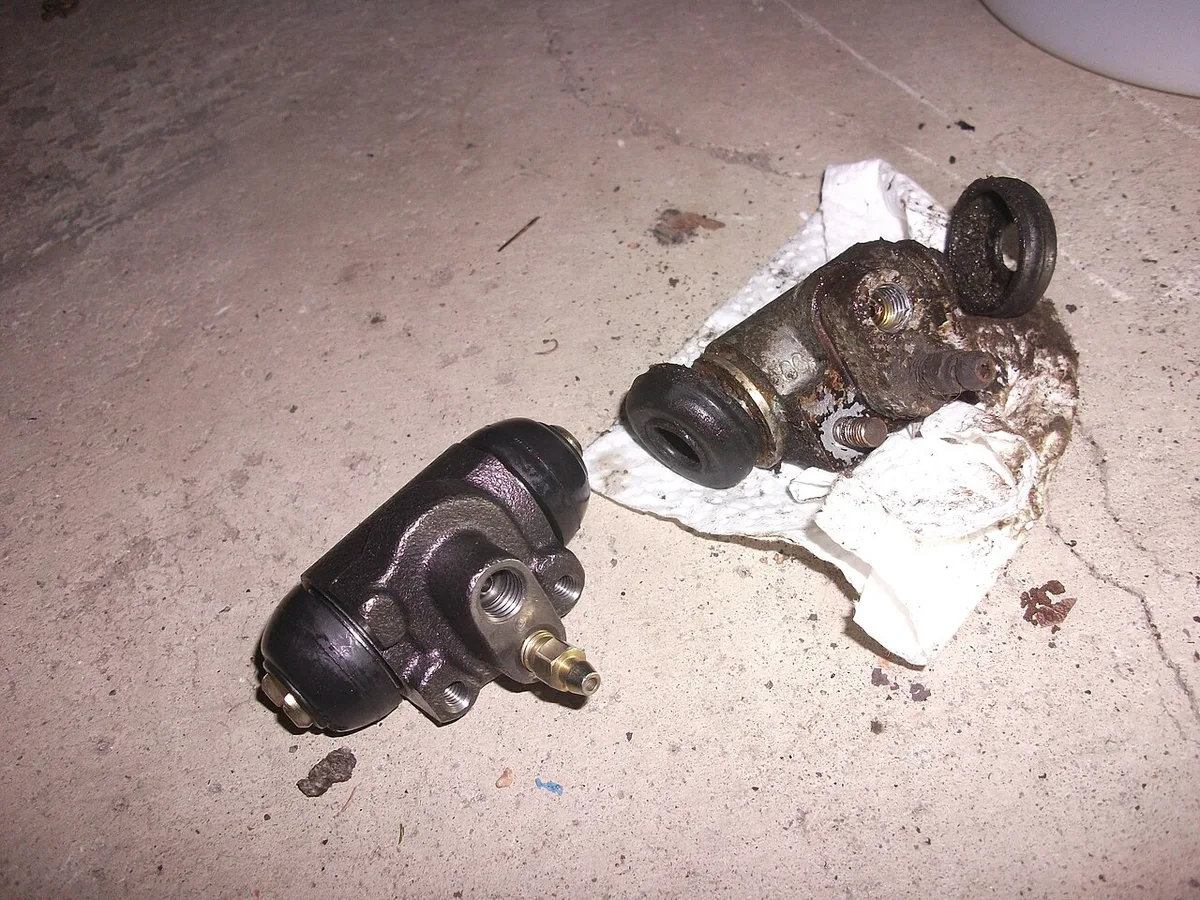
Image source: Wikimedia Commons / dave_7 from Lethbridge, Canada (CC BY-SA)
The circuit runs from the master cylinder, down the line, into the caliper. Air collects at high points, and the worst of them is the banjo bolt, the hollow fitting where the hose meets the cylinder or caliper. On plenty of setups that bolt sits above the bleeder.
Bleed only at the caliper and the bubble stays right there.
DOT 3 vs. DOT 4 vs. DOT 5.1 vs. DOT 5
| Fluid | Dry boiling point | Wet boiling point | Notes |
|---|---|---|---|
| DOT 3 | 401 °F | 284 °F | Older, low-demand systems |
| DOT 4 | 446 °F | 311 °F | The usual bike spec |
| DOT 5.1 | 500 °F | 356 °F | Glycol base, more heat headroom |
| DOT 5 | 500 °F | 356 °F | Silicone, never mix, not for ABS |
DOT 5 is the odd one out. It's silicone, it doesn't absorb water, and it refuses to mix with glycol fluid. Combine the two and you get sludge and swollen seals.
Read the reservoir cap before you buy anything.
ABS makes it harder
An ABS modulator is a block of valves and a pump. Air can park inside it and never reach the bleeder. If your bike has ABS and the lever stays soft after a normal bleed, the pump needs cycling with a scan tool.
That's a good reason to know what to look for in a diagnostic scanner before you buy one.
The Bleed, Step by Step
Park on level ground and cover painted surfaces, because brake fluid strips paint on contact. Clean the reservoir lid before you open it. Keep the reservoir at least half full the entire time.
- Pull the old fluid out of the reservoir with a syringe.
- Top up with fresh fluid from a sealed bottle.
- Push the clear hose onto the bleeder and drop the other end in your catch jar.
- Squeeze the lever and hold it. Crack the bleeder a quarter turn, watch for bubbles, then close it before releasing the lever.
- Replaced a line or a master cylinder? Bleed at the banjo bolt first.
- Repeat until clean fluid runs with no bubbles.
- On rear calipers, unbolt and rotate the caliper so the bleeder points up.
- Torque the bleeder to spec, usually 80 to 105 in-lb, then check for seepage.
- Pump the lever until it's firm and test at walking pace before you ride.
Working alone is fine. A speed bleeder or a vacuum kit replaces the helper. Used fluid is hazardous waste, so take it to a parts store or recycling center rather than the drain.
Mistakes That Turn a Bleed Into a Crash Risk
- Reusing old fluid. Opened bottles absorb water in weeks. Start fresh.
- Mixing fluid types. DOT 5 in a glycol system ruins seals.
- Overfilling the reservoir. Fluid pushes past the cap and onto your paint.
- Keep bleeding when air isn't the problem. A lever that stays spongy after a clean bleed usually means a worn master cylinder cup seal or sticky caliper pistons. More pumping won't fix either.
- Over-tightening the bleeder. Small screws strip easily, so skip the habit of cranking fasteners down with power tools. A replacement bleeder costs almost nothing, but a stripped caliper thread is a machinist's bill.
Stop and get help if the lever has no resistance at all, if fluid weeps from a seal, or if the ABS light stays on after a bleed cycle. Those are bench-level problems, not bleeding problems.
Frequently Asked Questions
How often should I bleed motorcycle brakes?
Every two years is the common manufacturer interval, regardless of mileage. Humid or coastal climates justify yearly. Track bikes and bikes that sit for long stretches benefit from annual fluid changes too.
Can I bleed brakes alone without a helper?
Yes. A speed bleeder has a check valve that stops air being drawn back in, so one person can do the whole job. A vacuum bleeder works the same way and pulls fluid through faster.
Do I need a scan tool for an ABS bike?
Not always. Many systems bleed normally at the caliper. But if air got into the modulator, or the lever stays soft afterward, you need the tool to cycle the pump.
Some models accept a manual sequence instead.
What happens if I mix DOT 5 with DOT 4?
You get sludge, swollen seals, and a brake system that needs a full rebuild. DOT 5 is silicone and won't mix with glycol fluid. Flush thoroughly and replace the seals if it happens.
