
Your gauge is climbing, steam is starting to curl out from under the hood, and you're stuck in traffic watching the needle. So why is my car overheating? Almost always because heat is not leaving the engine fast enough.
Coolant flow, airflow, or system pressure has broken somewhere, and which one failed changes everything about the fix.
Manufacturer specifications put normal operating temperature near 190 to 220°F. A 13 to 16 psi radiator cap is what keeps coolant from boiling at that heat, which is why a tired $12 cap can cause a genuine overheat. Past 230°F, aluminum heads start to warp.
Here's how to read the situation before you spend a dime.
Why Is My Car Overheating
A car overheats when the cooling system cannot remove engine heat fast enough. Common culprits include low coolant, a stuck thermostat, or a dead fan. A failing water pump or clogged radiator does it too.
A blown head gasket can also be responsible. Most cases come down to coolant flow or airflow.
Slow creep, sudden spike, or a gauge that climbs then drops
A slow climb over twenty minutes of idling points at airflow. The fan is not pulling air through the radiator. A spike within a mile means coolant stopped moving or dumped out fast.
A gauge that rises and then drops back on its own usually means an air pocket or a thermostat opening late.
The normal range and the danger zone
Per manufacturer specifications, normal operating temperature sits near 190 to 220°F. Past 230°F, oil thins and aluminum starts to move. The gauge is a lagging indicator, so by the time it reads hot the head has already seen worse.
A cheap code reader can pull the live coolant temperature before you start guessing.
The Three Questions That Narrow It Down Fast
Three answers do most of the diagnostic work. Ask them in order and you'll land on the right branch before you open the hood.
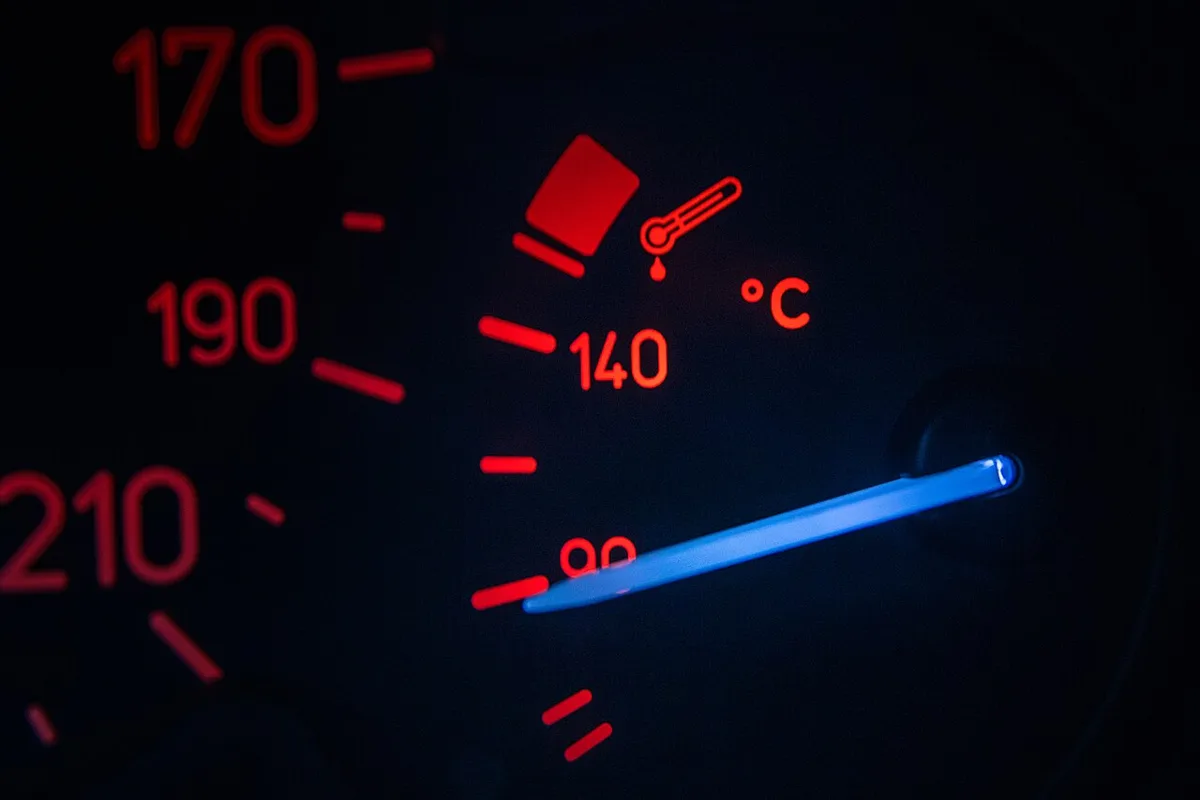
Image source: Wikimedia Commons / Ivan Radic (CC BY)
Question 1: When does it overheat?
Overheating at idle or in traffic points to the cooling fan circuit. If it stays cool at 60 mph, road airflow is doing the fan's job for it. Overheating at highway speed points the other way, at a thermostat, a clogged radiator, or a weak water pump.
Question 2: Is coolant vanishing, and is there a puddle?
A puddle under the front bumper means an external leak, usually a hose, radiator tank, or water pump weep hole. Low coolant with a dry driveway means it's going somewhere internal, like the head gasket or heater core.
Question 3: Did it start after a coolant service, a long sit, or out of nowhere?
After a service, suspect trapped air. After months parked, suspect corrosion and a dead fan. Out of nowhere, suspect a thermostat or hose that finally let go.
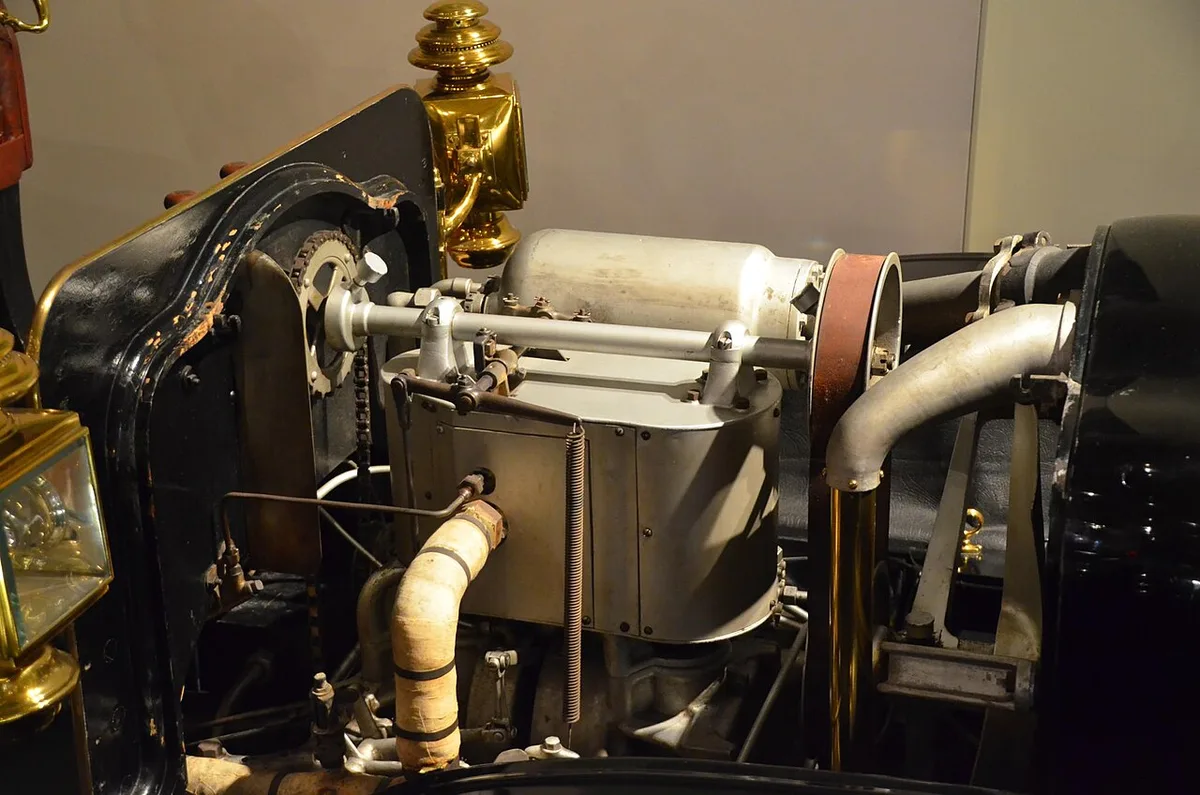
Image source: Wikimedia Commons / Joe Ross from Lansing, Michigan (CC BY-SA)
Branch-by-Branch: Fix It, Watch It, or Stop and Tow
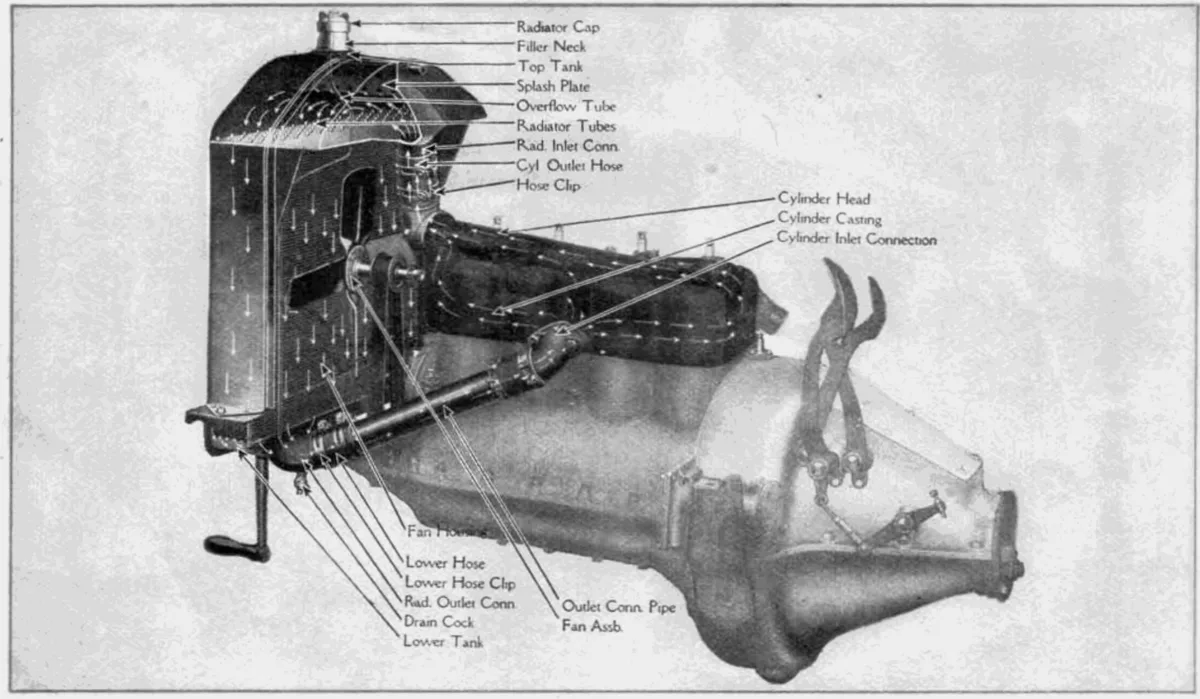
Image source: Wikimedia Commons / Ford Motor Company
Here's where the symptom turns into a decision.
| What you're seeing | Likely cause | Typical repair cost |
|---|---|---|
| Hot in traffic, fine on the highway | Fan, relay, fuse, or temp switch | $80 to $600 |
| Hot at highway speed, fine at idle | Thermostat, radiator, water pump | $150 to $1,000 |
| Coolant disappearing, no puddle | Heater core or head gasket | $600 to $2,500+ |
| Hot right after a coolant change | Trapped air needing bleeding | $0 to $150 |
If the gauge is in the red and steam is rising, shut it down and tow it. If it's creeping and you're two miles from home, run the heater on full and watch the needle. Know where your proper tow point is before the flatbed arrives.
Adding forced induction raises the heat load, so a tired radiator shows up there first. As of 2026, most shops charge a diagnostic fee that gets credited toward the repair.
Mistakes That Turn a $150 Thermostat Into a Blown Head Gasket
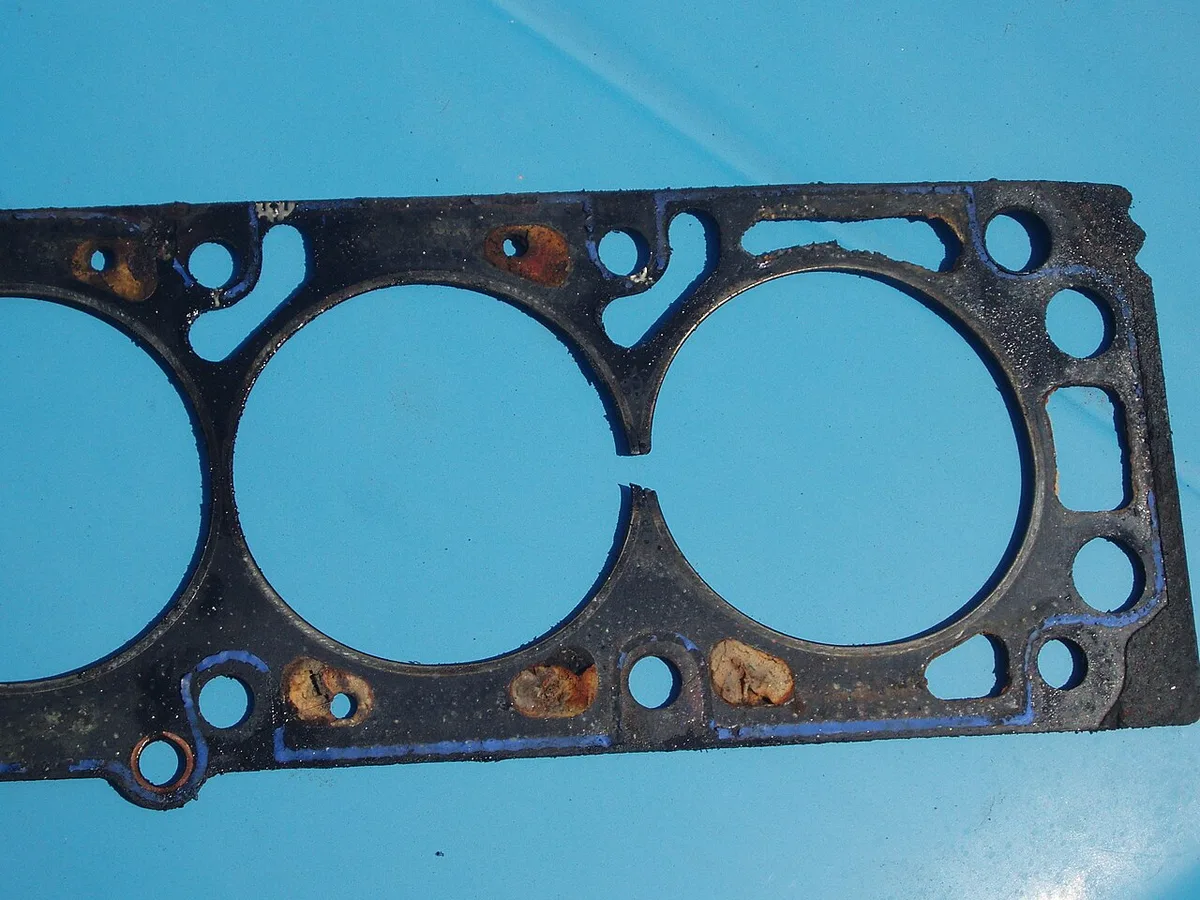
Image source: Wikimedia Commons / Lewis Collard (Collard) (CC BY-SA)
The expensive failures here are almost always driver decisions, not parts failures.
- Opening a hot radiator cap. Pressurized coolant can sit well above 212°F and erupt the moment you crack the seal. Give it 30 to 45 minutes.
- Topping off with water and driving on. Plain water boils early and dilutes the corrosion package.
- Mixing coolant chemistries. IAT, OAT, and HOAT formulas don't always play nice, and the sludge they form clogs cores.
- Skipping the two-minute cold checks. Reservoir level, belt condition, and debris-packed fins catch most problems early.
Getting the front end up on a set of sturdy ramps makes that cold inspection easier on your back. Milky residue under the oil cap or oil-fouled plugs mean fluid is crossing where it shouldn't. And when you drain the system, take the old coolant to a household hazardous waste site, per EPA disposal guidance.
Frequently Asked Questions
How long can I drive an overheating car?
Not far, and often not at all. Once the needle hits the red, you're measuring engine life in minutes rather than miles. Pulling over and calling a flatbed costs a fraction of a head gasket job.
If you must move, drive slowly with the heater blasting and stop the moment the gauge climbs again.
Can I just run the heater on full blast to get home?
It buys time, not a fix. The heater core acts as a second radiator, dumping engine heat into the cabin. It works best at low speed with the AC off.
If the gauge keeps rising with the heat on full, stop. You've run out of margin.
My car still overheats after replacing the thermostat, now what?
Check the bleed procedure first. Trapped air is the most common reason a fresh thermostat fixes nothing. If the system is properly burped, pressure test it and look for a clogged radiator or a water pump that isn't moving coolant.
Is a coolant sealant ever worth trying?
Rarely, and only as a stopgap on a car you're about to sell or scrap. Sealants can plug a heater core or radiator passage as easily as they plug the leak. They also make a proper diagnosis harder later.
