
Your temperature gauge sits low, the heater blows lukewarm, and someone just told you the thermostat is stuck open. So can you drive without a thermostat while you wait for parts? Usually yes, with limits.
The engine will run. It just won't run right.
Thermostats are rated to crack open at a set temperature, typically somewhere between 180°F and 205°F depending on the engine. Below that number, the valve stays shut so coolant warms up fast. Remove it and the cooling system loses that control point entirely.
That single change explains most of what follows.
Can You Drive Without a Thermostat
Yes, you can drive without a thermostat, but only for a short time. A stuck-open thermostat is usually safe for gentle driving. A removed thermostat is riskier on modern engines.
Never drive with a thermostat stuck closed. Engine damage can follow within minutes.
What the Thermostat Actually Does, and What Happens When It's Gone
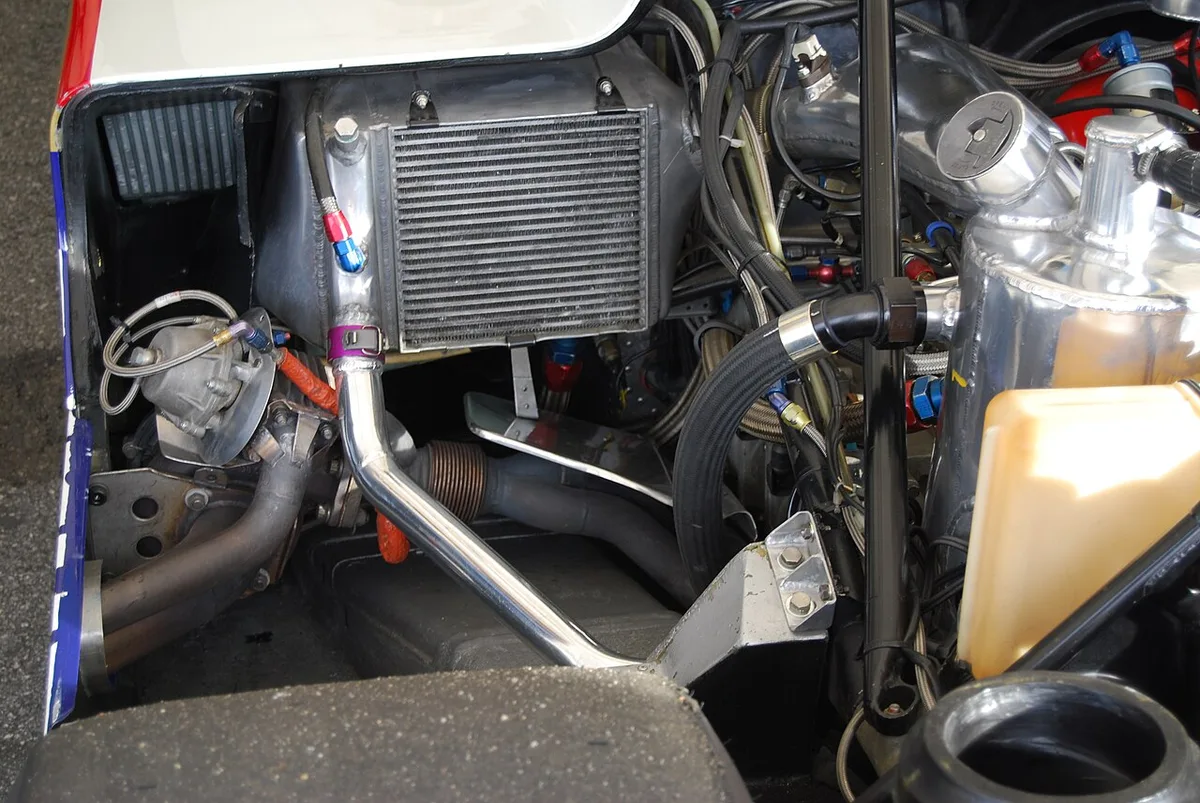
Image source: Wikimedia Commons / Bill Abbott (CC BY-SA)
A thermostat is a wax-pellet valve sitting between the engine and the radiator. While coolant is cold, the valve stays shut and coolant circulates through the block and heater core only. Once coolant reaches its rating, the wax melts and the valve opens.
That's when the radiator starts shedding heat.
The Problem Nobody Warns You About: Overcooling, Not Overheating
A missing or stuck-open thermostat deletes that gate. Coolant runs the full loop from the first turn of the key, so the engine fights to reach operating temperature. On a cool morning at highway speed, it may never get there.
Most drivers worry about overheating. Overcooling is the likelier result.
Cold-Running Damage: Open-Loop Fueling, P0128, and Oil Dilution
Below roughly 195°F, the powertrain control module holds open-loop fuel enrichment because it can't trust the oxygen sensors yet. Extra fuel washes past the piston rings and lands in the sump. That's how you end up with plugs fouled by oil and thin, fuel-diluted oil that wears bearings faster.
Chronic cold running also stores P0128, and the EPA's overview of vehicle emissions controls explains why catalyst efficiency drops when exhaust never gets hot.
When It Goes the Other Way: No Heat, No Defrost, No Winter Driving
Cabin heat comes from the heater core, and the heater core needs hot coolant to do anything. If the engine never warms up, your defroster never clears the glass. In sub-zero weather that's a visibility problem first and a comfort problem second.
Decision Branches: When It's Okay to Drive Without One
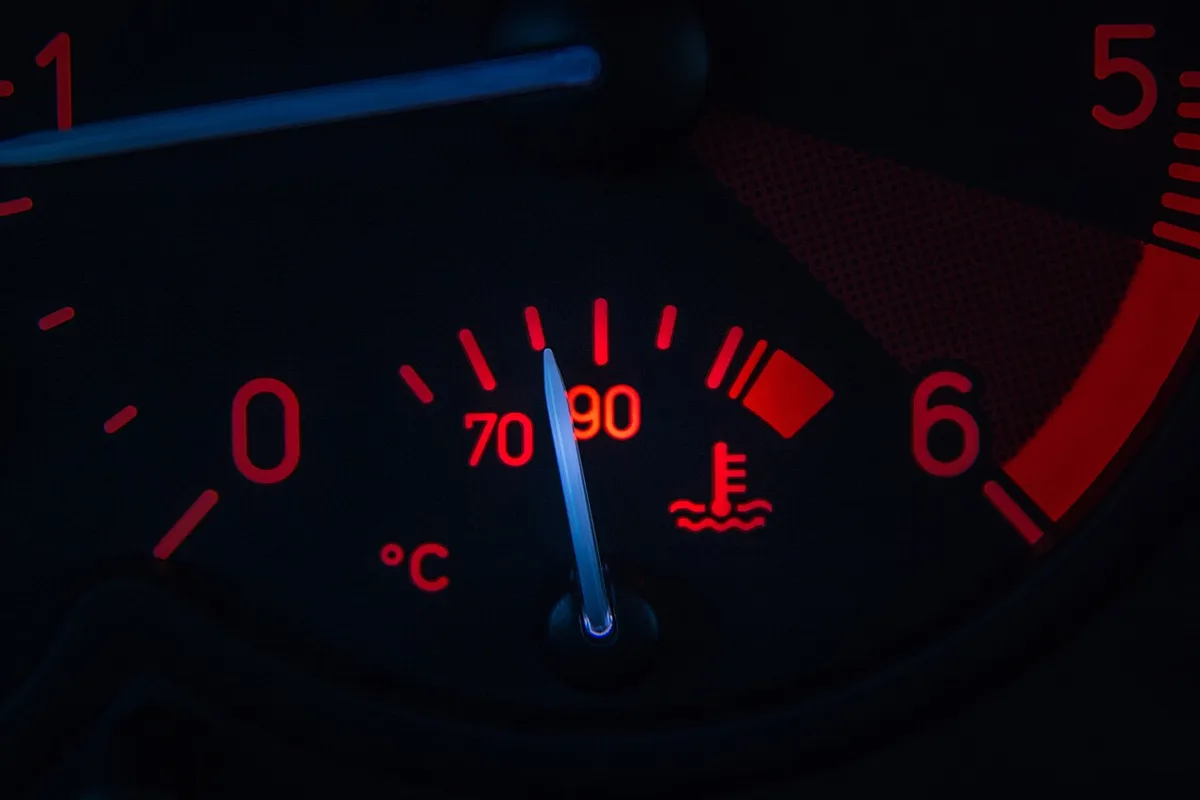
Image source: Wikimedia Commons / Ivan Radic (CC BY)
Match your situation to a branch before you move the car. The deciding factors are failure mode, trip length, and outside temperature.
| Situation | Drive it now? | Keep it short |
|---|---|---|
| Stuck open, mild weather | Yes, with care | Under 30 minutes, light load |
| Stuck open, below freezing | Only to a shop | No defrost means no safe visibility |
| Thermostat removed | Short hops only | Watch the gauge constantly |
| Stuck closed, gauge climbing | No | Shut it down and tow it |
If the Thermostat Is Stuck Open, It's Usually Drivable
Stuck open is the mild case. The valve never closes, so warm-up drags on and the gauge sits low. You can reach work or a shop as long as loads stay light.
A basic scan tool readout confirms whether coolant is climbing at all.
If the Thermostat Was Physically Removed
Now the answer depends on the cooling system. Bypass-style systems can overheat at idle even with no valve fitted, because coolant takes the easy path and skips the radiator. Blocking-style systems run cold instead.
Either way, removal is a diagnostic step, not a repair.
If It's Stuck Closed or the Engine Is Overheating, Park It
Stuck closed means zero circulation and the gauge climbs fast. Pull over, shut it off, and let it cool before you touch anything. Opening a hot radiator cap is a scald hazard.
Think about getting pulled out safely too, because a dead engine in live traffic endangers everyone behind you.
Cold Climate vs. Hot Climate
Winter shifts the priority from engine protection to your own safety. No heat means no defrost, and no defrost means you shouldn't be on the road. Slush makes it worse, so even blades that clear slush won't save a fogged windshield.
In desert heat the engine warms fine, but you've lost cooling reserve for traffic and long grades.
How to Drive It Temporarily (and What the Real Fix Costs)
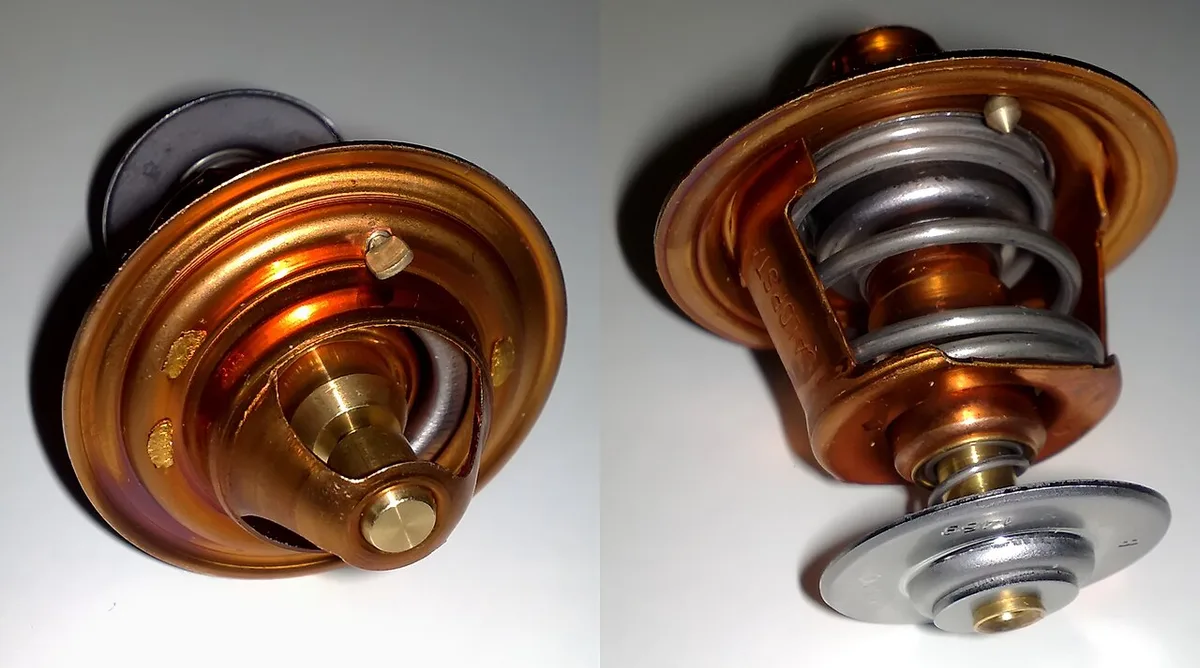
Image source: Wikimedia Commons / Hoikka1 (CC BY-SA)
Short-Trip Limp Protocol
- Keep trips under 20 minutes and stay off the highway.
- Go light on the throttle. No towing, no trailer, no loaded cargo.
- Watch the gauge, not the radio. Any climb toward red means stop.
- Run the heater on full hot as a heat dump if temps creep up.
- Top off coolant only when the engine is cold.
What Replacement Actually Costs
Thermostats are cheap parts. As of 2026, expect $10 to $60 for a standard wax-pellet unit, and more for an integrated housing or a map-controlled assembly. Labor runs about 0.5 to 2 hours on most transverse four-cylinders.
Skip the job and you'll pay at the pump instead, since the DOE tracks cold-weather fuel economy penalties for exactly this reason.
Why a Thermostat Delete Is Never the Permanent Answer
Some drivers pull the thermostat to cure an overheating complaint. That hides the real fault, whether it's a clogged radiator, a dying water pump, or a leaking head gasket. Fix the cause.
Fitting a $20 valve beats a $2,000 head gasket job every time. If you're doing the work yourself, raising the front end makes burping the system far easier.
Frequently Asked Questions
How far can you drive with a thermostat stuck open?
Farther than you'd expect, but not indefinitely. The engine keeps running because coolant still circulates. The damage is slow: fuel dilution, carbon buildup, and a tired catalytic converter over months.
Treat 20 to 30 minutes as the sane limit, and get the valve replaced within a week.
Will driving without a thermostat trigger the check engine light?
Often, yes. P0128 sets when coolant fails to reach the thermostat's regulating temperature within the window the computer expects. It can take a couple of drive cycles to store.
Once it's there, the code fails emissions testing in most inspection programs until you fix the valve and complete a full drive cycle.
Does removing a thermostat help an overheating engine?
Rarely, and it usually muddies the diagnosis. If the engine overheats because the thermostat is stuck closed, removing it restores flow. If the real problem is a clogged radiator, a weak fan, or a failing head gasket, the engine will still overheat with no valve fitted.
Can a car overheat without a thermostat?
Yes. Coolant can move too quickly through the radiator to shed heat, especially at idle on bypass-style systems. Air pockets after a sloppy refill cause hot spots too.
Some engines also rely on the valve to route flow correctly, so removal can starve the block.
Is it safe to drive in winter with a stuck-open thermostat?
Barely. You'll have weak cabin heat and a windshield that won't defrost, which is a genuine safety issue in freezing weather. The engine also runs rich, so fuel dilution and moisture buildup accelerate.
Fix it before the first cold snap rather than after.
