
Your pump is groaning, the wheel fights you in the parking lot, and the reservoir looks like a latte. That noise usually isn't a dying pump. It's air, and knowing how to bleed power steering system correctly is the difference between a quiet fix and $700 wasted on parts you never needed.
Service data puts most passenger-car systems at roughly 0.5 to 1 liter of fluid, and the cap spec matters more than the name on the bottle. Honda and Pentosin CHF 11S systems punish a generic ATF top-off. Get that wrong and you'll spend a weekend chasing a whine you created yourself.
So let's sort out which system you actually own before you touch the cap.
How to Bleed Power Steering System
Bleeding power steering means pushing trapped air out of the hydraulic circuit. Raise the front wheels off the ground. Add the specified fluid to the cold mark.
Turn the wheel lock to lock with the engine off. Then repeat with the engine idling and watch the level.
What That Whine Is Really Telling You: Air, Not a Dead Pump
The 60-second diagnosis: foam, color, and sound
Pull the cap with the engine off. Foamy or milky fluid means air is being whipped into the system, and the pump is squeezing bubbles instead of fluid. Clean amber fluid at the right level points to a leak you haven't found yet.
Sound narrows it further. A whine that climbs with RPM is usually aeration. A groan only at full lock is normal relief-valve noise, not a fault.
Bleed vs. flush: two different jobs, and why order matters
A flush swaps old fluid for new. A bleed removes air. Flush first, then bleed, or you'll push clean fluid through a system that still has a leak sucking air back in.
Inspect hoses and rack boots before either job. If the boots are wet, stop and fix the leak first. Worn steering linkage can also mimic weak assist, so give the front end a quick shake test while you're under there.
Plug-in diagnostic tools won't help with this one. Nothing in the hydraulic circuit reports air to the ECU.
Know Which System You're Working On Before You Open the Cap
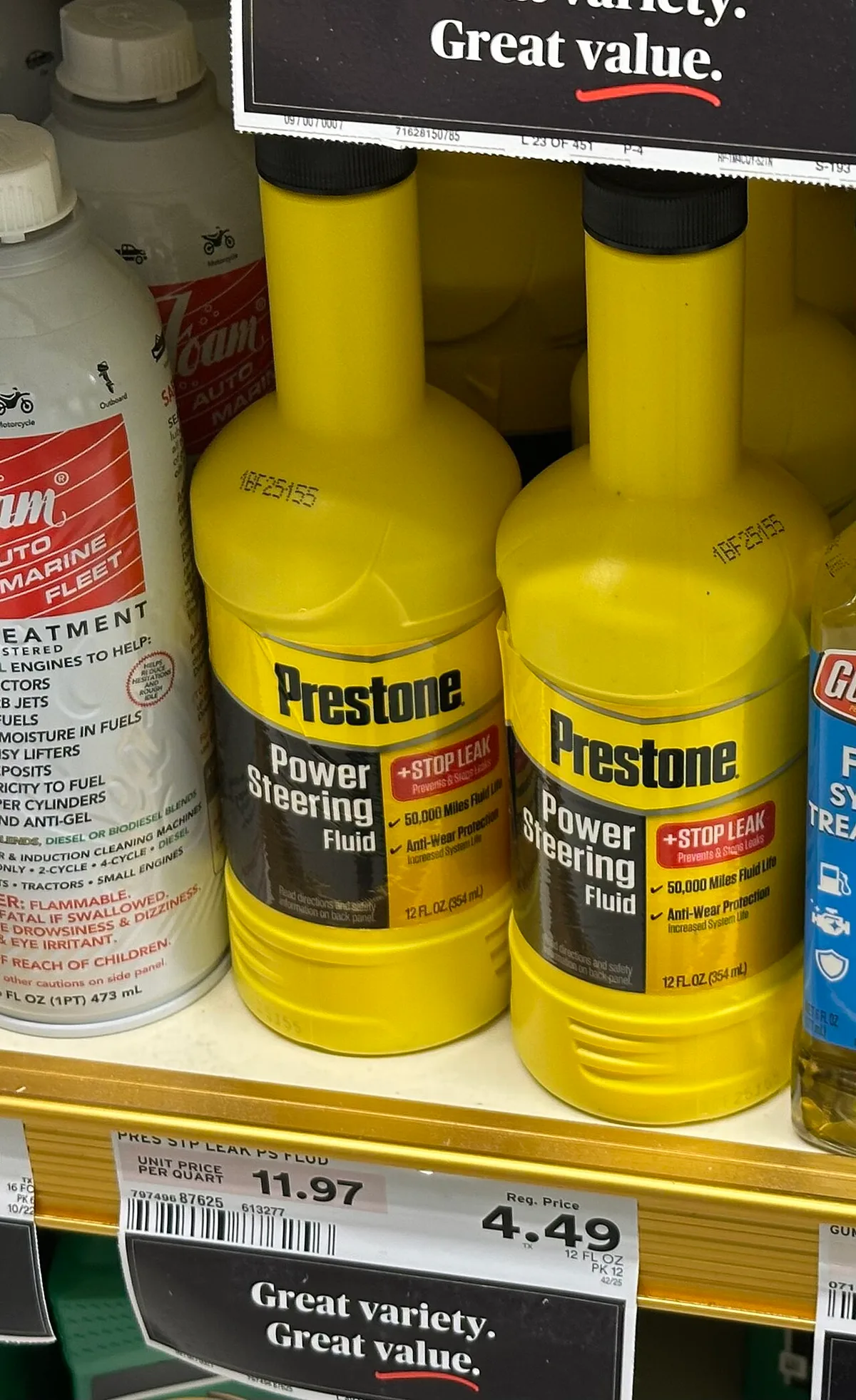
Image source: Wikimedia Commons / Jonathan Schilling (CC BY-SA)
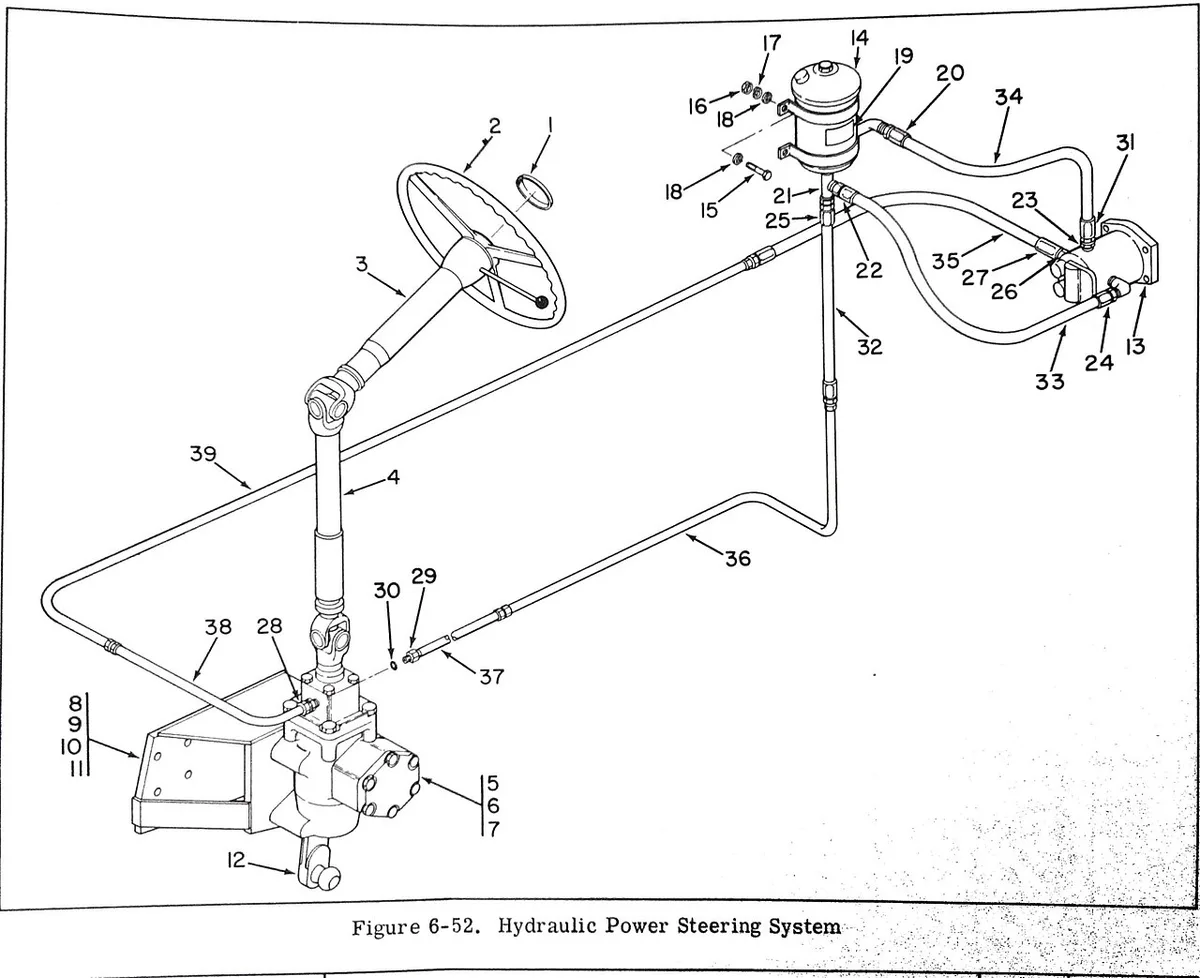
Image source: Wikimedia Commons / Tkmined (CC BY-SA)
If your reservoir's return fitting dumps fluid below the surface, the system self-bleeds and cycling alone usually clears it. If there's a bleed screw on the pump or gear box, crack it and follow the manual's order exactly.
Hydro-boost and EHPS: the branches that break the standard recipe
Hydro-boost boosters run off the power steering pump, common on GM trucks. Air trapped there gives you a spongy brake pedal, so finish the steering side before you judge the brakes. EHPS cars run the pump on key-on, engine off.
That makes bleeding quiet and lets you hear the bubbles clear.
Match the fluid spec before anything else
Read the cap or the owner's manual, not the bottle's back label. Generic ATF in a Honda or a Pentosin system is a slow, expensive mistake, and it's the same trap that ruins other fluid services.
As of 2026, plenty of new cars ship with electric assist and have nothing to bleed at all. Confirm you own a hydraulic system first.
The Bleed Sequence, Step by Step
- Park on level ground, chock the rears, and lift the front axle onto stands. Getting the front wheels up safely makes steering effortless and keeps you off the pump's load.
- Top the reservoir to the cold mark with the specified fluid. Never let it run dry mid-procedure.
- Engine off, key on if needed for EHPS, turn lock to lock 15 to 30 times. Pause a beat at each stop rather than slamming against it.
- Check the level, top up, and repeat until the fluid stops showing bubbles.
- Start the engine at idle. Cycle slowly again, holding each stop for a second at most.
- Lower the car, test drive at low speed in a lot, then recheck the level cold the next morning.
| Method | Use it when |
|---|---|
| Cycling only | Self-bleeding reservoir, no bleed screw |
| Bleed screw | Pump or gear box has one, per service manual |
| Vacuum at reservoir | Cycling fails twice, or hydro-boost |
| Bench bleed | New pump before install |
Where People Push Air Right Back In
The reservoir running dry is the classic self-defeat. Air goes in at the top, and you start over. Top up between every few cycles and keep a bottle open beside you.
Holding the wheel hard against the stop deadheads the pump. Pressure spikes, the fluid foams, and seals take the beating. A one-second touch is plenty.
Pinhole leaks on the suction hose never drip. They pull air in and leave no puddle, which is why a whine that survives three bleeds usually means a hose, not trapped air.
Keep fluid off hot exhaust, wear gloves, and take used fluid to a household hazardous waste site per EPA guidance. And skip the shortcut of buzzing off wheel nuts to save time. Jack stands on solid ground, every time.
Frequently Asked Questions
How long does bleeding power steering take?
Plan 20 to 45 minutes for a typical car, plus a test drive. Stubborn hydro-boost systems can take two sessions with a cool-down between them.
Can you bleed it without jacking the car up?
You can, but it's harder on the pump and the tires scrub. Raising the front axle lets the wheels turn freely, so air moves out instead of fighting tread grip.
It's still whining after three attempts. What now?
Stop bleeding and hunt for a suction-side air leak. Check the hose clamps, the reservoir O-ring, and the reservoir screen. A cracked suction hose pulls air without ever dripping.
Does electric power steering need bleeding?
No. Electric power steering has no fluid, pump, or reservoir. If an EPS car pulls or feels stiff, the cause is electrical or mechanical, not air in a hydraulic circuit.
