
Winter roads demand respect. Every year, over 168,000 crashes occur on snowy or icy pavement in the US alone (NHTSA, 2026). Mastering how to drive in snow isn’t just about skill, it’s about preparation, awareness, and adjusting every instinct you learned on dry roads.
We’ll break down the essentials so you stay safe when flakes start falling.
How to Drive in Snow
Drive slower than usual, accelerate and brake gently, and increase your following distance to 4, 6 seconds. Use your lowest gear for better traction on hills. If skidding, steer smoothly in the direction you want to go and avoid slamming brakes.
Always carry emergency supplies like blankets, a shovel, and sand or kitty litter for traction.
Problem & Why It Matters
Snow transforms roads into unpredictable hazards. Black ice hides under fresh powder, visibility drops to near zero in blizzards, and stopping distances triple. Without proper tires and techniques, you risk losing control, or worse.
This isn’t about fear; it’s about understanding how snow changes physics and planning accordingly.
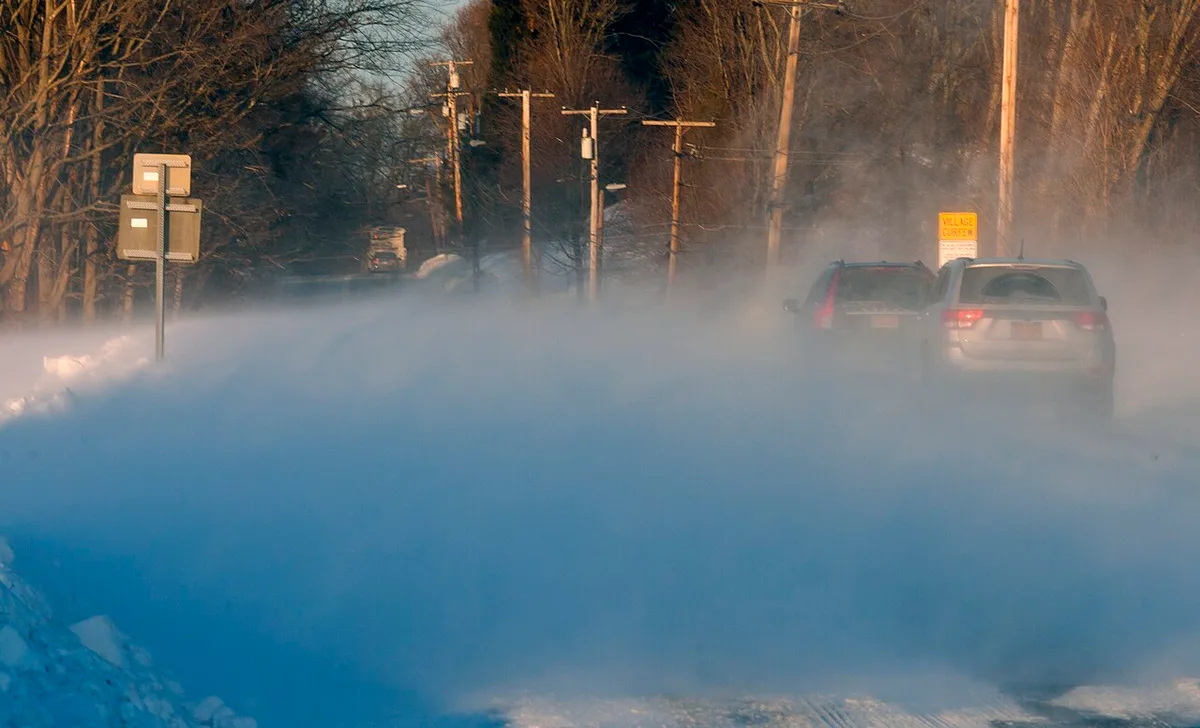
Image source: Wikimedia Commons / Daniel Case (CC BY-SA)
Core Practices & How It Works
Snow driving hinges on three pillars: traction, visibility, and control. Let’s dissect the tools and systems that keep you moving safely.
Choosing Snow Tires and Tire Chains
Snow tires aren’t optional in heavy snow regions. Their flexible rubber compounds stay pliable below 45°F, and deeper treads (minimum 6/32") bite into slush. Studded tires add metal pins for ice grip but wear faster on pavement.
Chains provide temporary max-traction for deep snow, install them on drive wheels before hitting the road.
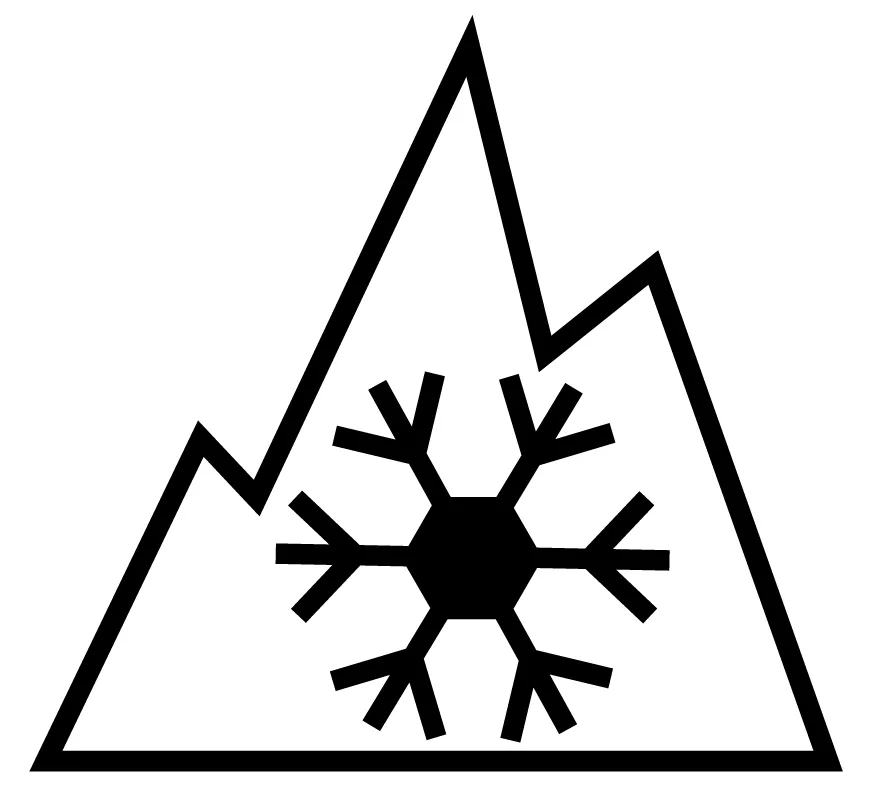
Snow tires feature aggressive tread and cold-weather rubber compounds
Understanding AWD, 4WD, Traction Control, ABS
All-wheel drive (AWD) and four-wheel drive (4WD) improve acceleration but don’t help braking. Traction control prevents wheelspin during starts. Anti-lock braking system (ABS) pumps brakes automatically during skids, keep your foot down and let it work.
These systems assist, but smooth inputs remain key.
Vehicle Prep and Pressure Checks
Cold air contracts tire pressure, drop by 1 PSI per 10°F drop. Check pressures monthly in winter and add air as needed. Test lights, wipers, and fluid levels weekly.
Carry a snow brush, ice scraper, and de-icer spray. Low washer fluid or burnt-out bulbs become critical failures in storms.
Step-by-Step Snow Driving Workflow
Snow driving is a deliberate process. Follow these steps to minimize risk.
Pre‑Trip Inspection and Setup
- Clear snow/ice from all windows, lights, and roof (prevents obstruction and flying debris).
- Check tire pressure, add air if below manufacturer’s "cold" spec.
- Install tire chains (if needed) on drive wheels.
- Pack emergency kit: blankets, flashlight, high-energy snacks, shovel, and traction aids.
Adjusting Tire Pressure and Installing Chains
- Tire pressure: Aim for max PSI listed on your tire sidewall (not door jamb) in cold temps.
- Chains: Drive onto them, tighten links, and drive 10 feet to retighten. Remove immediately on bare roads to prevent damage.
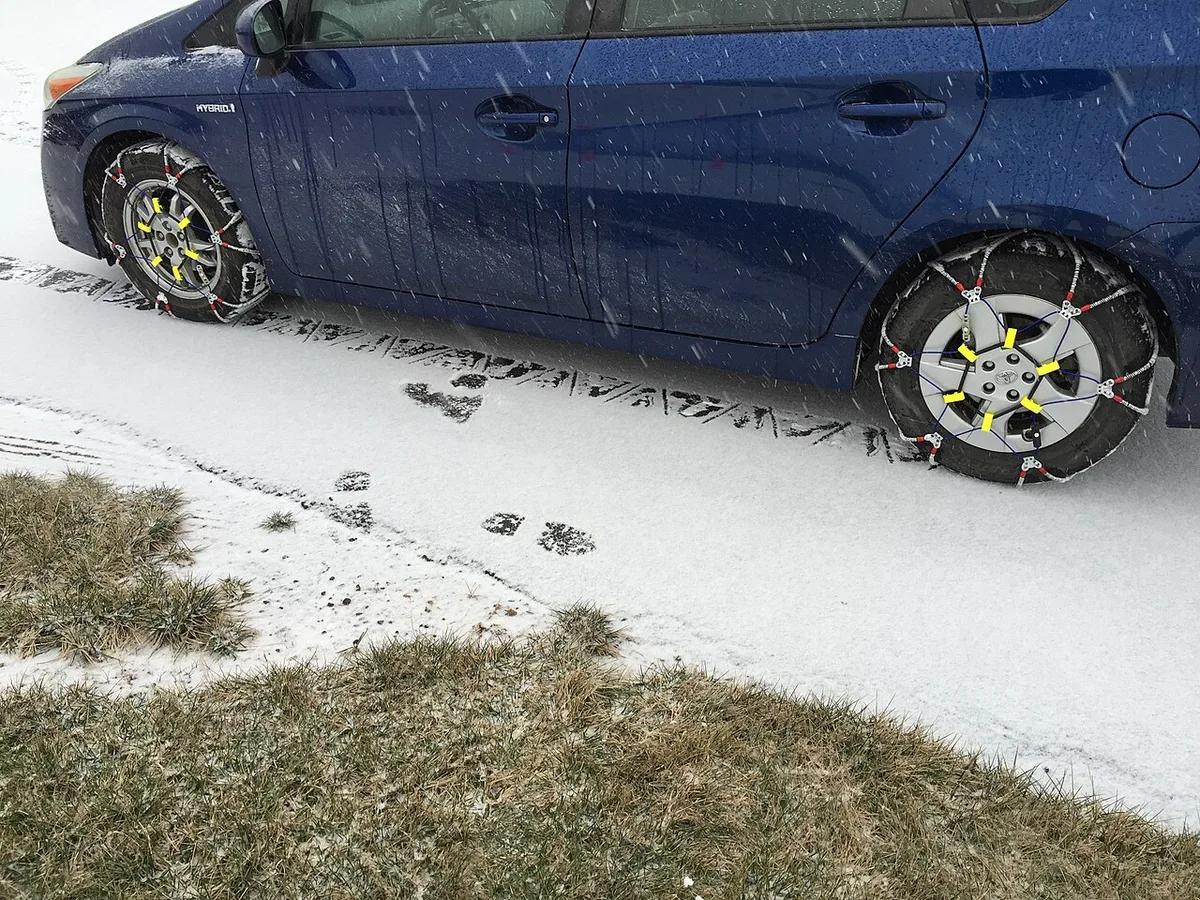
Properly installed chains provide critical traction in deep snow
Gentle Throttle, Braking, and Following Distance
- Accelerate/decelerate smoothly, jerky moves break traction.
- Brake early and lightly; ABS prevents skids if activated.
- Follow distance: 4 seconds on wet roads, 6+ in snow (count "one-one-thousand" after the car ahead passes a marker).
Hill Starts, Descents, and Getting Unstuck
- Uphill: Use low gear, avoid stopping mid-slope.
- Downhill: Engine brake in low gear; tap brakes gently.
- Stuck?: Rock the car (gentle back/forth) using low gear. Shovel snow from wheels and pack traction mats under drive tires.
Safety, Legal & FAQ
Winter driving laws vary, know your state’s rules. Always carry chains in mountain regions (e.g., Colorado requires them during snowstorms). Use headlights whenever wipers are on.
Never use cruise control on slippery roads.
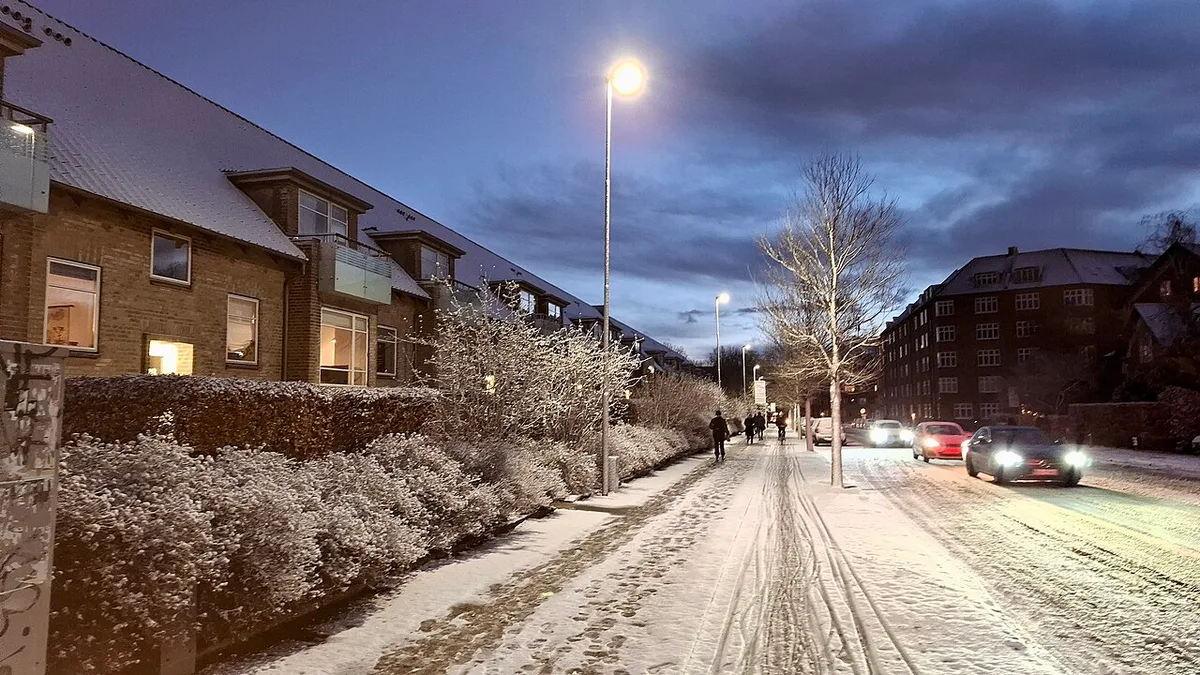
Headlights improve visibility and alert other drivers in snow
Frequently Asked Questions
What’s the best tire for light snow?
All-weather tires with 3-Peak Mountain Snowflake certification work well for occasional flakes. For deeper snow, dedicated studless snow tires outperform.
When should I use tire chains?
Install chains only on snow-covered roads. They damage pavement and are illegal on bare roads in most states. Carry them when forecast calls for >2 inches.
How do I prevent battery drain in cold weather?
Cold temps reduce battery efficiency by ~50%. Park indoors if possible, limit accessory use (heated seats/stereo), and ensure connections are clean and tight.
Why do my headlights fog up in snow?
Condensation forms when warm interior air meets cold exterior surfaces. Use defrosters and keep headlights clean. LED bulbs generate less heat and fog less than halogens.
What’s the biggest mistake in snow driving?
Overconfidence. AWD/4WD doesn’t defy physics, speeding, tailgating, and abrupt maneuvers cause most winter crashes. Slow down and double following distances.
Snow driving demands humility and preparation. Equip your vehicle, adjust your habits, and respect the road. Stay safe out there.
