
Most transmissions don't die of old age. They die of heat, contaminated fluid, and habits the owner never noticed. If you're searching for how to make a transmission last longer, the honest answer starts with three facts about your own car, not a generic checklist.
Get those right and 200,000 miles is realistic. Get them wrong and a $4,000 rebuild shows up early.
Heat is the variable that matters most. Long-standing industry testing holds that every 20°F above roughly 175°F cuts fluid life by about half, which is why a tow rig in Arizona and a commuter in Manchester run very different schedules. Manufacturer specs also name one exact fluid, and the wrong one is worse than old fluid.
Here's how to work out which path your car is on.
How to Make a Transmission Last Longer
Change the fluid before it degrades. Use the exact spec your manufacturer lists. Keep fluid temperatures under 200°F.
Drive smoothly and stop fully before changing direction. On severe duty, service every 30,000 miles.
Why Transmissions Actually Fail: Heat, Burnt Fluid, and Duty Cycle
Automatic transmission fluid (ATF) does four jobs at once. It powers the hydraulics, lubricates bearings, cools the clutch packs, and carries debris to the filter. When it overheats, it oxidizes.
Oxidized fluid stops lubricating properly and starts laying varnish on the valve body.
The 20-degree rule and what 250°F does to clutch facings
The rule of thumb is brutal. Every 20°F above about 175°F roughly halves fluid life. Run at 250°F and you're into varnish and hardened seals within a few thousand miles.
Clutch facings begin to glaze nearer 300°F.
Normal ATF temperature sits around 175 to 200°F. A tired thermostat, a clogged cooler, or a heavy trailer pushes you past that fast. SAE International publishes fluid and driveline test standards precisely because fluid life is measurable, not guesswork.
Adding boost lifts torque and heat together, so the fluid budget shrinks.
The four failure modes that cover almost every dead gearbox
- Heat: cooked fluid, glazed clutches, hardened seals.
- Contamination: clutch material in the valve body, coolant in the fluid.
- Pressure loss: worn bores, sticky solenoids, leaking seals.
- Driver input: riding a clutch, power braking, neutral drops.
Three of those four are service issues you can control. Only one lives under your right foot. That's the good news.
Three Questions That Decide Your Whole Plan
Before you buy a single quart, answer three things. Those answers pick your fluid, your interval, and whether the pan should come off at all.
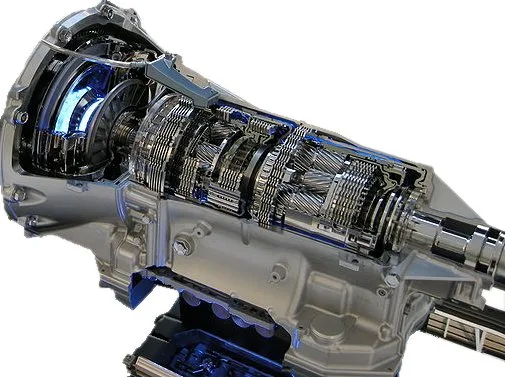
Image source: Wikimedia Commons / Silverxxx (talk) 04:33, 1 March 2009 (UTC) (CC BY-SA)
What transmission is in your car?
Check the shifter and the door sticker. A torque converter automatic, a continuously variable transmission (CVT), a dual-clutch (DCT), and a manual have different failure modes and different fluids. Guessing here is the most expensive mistake in this whole topic.
What's on the odometer, and has it ever been serviced?
Under 100,000 miles with unknown history, you baseline it gently. Past 150,000 with no records, you get cautious. A neglected unit can be pushed into failure by an aggressive fluid exchange.
What kind of miles are you actually doing?
Stop-and-go traffic, towing, dust, and mountain grades all qualify as severe service. Steady highway cruising is the easy life. Same car, same fluid, sometimes half the interval.
Branch One: Identify the Gearbox and the Fluid It Demands
Fluid spec is not a suggestion. Dexron, Mercon, ATF+4, Toyota WS, Honda HCF-2, Nissan NS-3, and the JASO CVT fluids are licensed specifications with different friction modifiers. Fit the wrong one and shift quality drops within a few hundred miles.
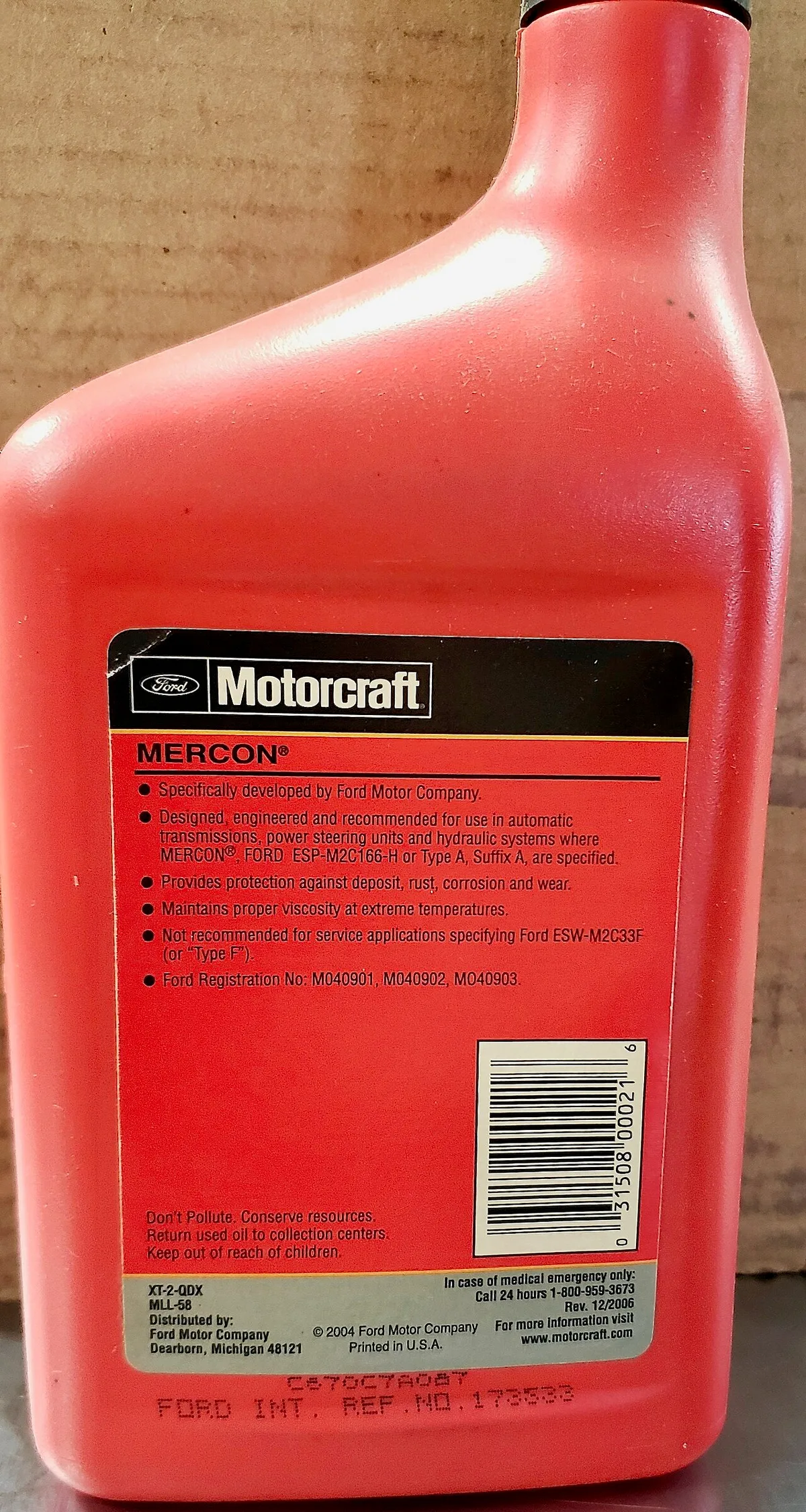
Image source: Wikimedia Commons / Hymn62 (CC BY-SA)
Torque converter automatic, CVT, eCVT, DCT, and manual
- Torque converter automatic: the most forgiving and the easiest to service.
- CVT: a belt or chain on pulleys, hypersensitive to wrong fluid and to heat.
- eCVT: a power-split planetary set with no belt, so failures look completely different.
- DCT: fast shifts, but wet-clutch units need their own fluid and a proper service.
- Manual: the clutch is the wear item, not the fluid.
Dexron, Mercon, ATF+4, WS, HCF-2, NS-3, and JASO: why the spec beats the brand
Buy by specification, not by bottle color. A "universal" fluid is a compromise, not a shortcut. Check the OEM part number and the license printed on the back label.
Sealed "lifetime fluid" units and dipstick-delete pans
Lifetime usually means warranty period, not vehicle life. Many sealed units still carry a drain plug and a level check plug. Filling one without the right procedure is easy to get wrong, and the correct top-up routine depends on temperature, not guesswork.
Branch Two: Mileage, Service History, and the Flush-or-Leave-It Call
Under 100k with unknown history: baseline with a drain-and-fill
Do a drain-and-fill, not a flush. You'll swap 4 to 7 quarts out of a 9 to 13 quart system, which dilutes old fluid gently. Drive 1,000 miles, then repeat.
Two or three rounds gets you most of the way there. While the pan is down, swapping the filter is cheap insurance.
Pull the codes before you touch anything. A basic scan tool that reads transmission codes and live temperature costs less than an hour of diagnosis. Catch used fluid in a pan and dispose of it through your local household hazardous waste program, following EPA guidance.
150k+ and never touched: why a full exchange can finish it off
On a high-mileage unit that's never been serviced, a pressurized exchange can push debris straight into the valve body. That's how a working transmission becomes a slipping one in a single afternoon. Drain-and-fill only, or leave it alone and monitor.
Reading the fluid and the magnets before you decide
Fresh ATF is red to amber and smells faintly sweet. Brown, black, or a burnt varnish smell means it has been hot. Then look at the pan magnets.
Fine fuzz is normal. Chunks, glitter, or clutch grit are a warning.
If the fluid is black and the unit already slips, servicing won't rescue it. Diagnose first.
Branch Three: Setting Your Interval by Duty Cycle
Normal vs. severe service, and why towing at 80% of rated capacity counts as severe
As of 2026, most owner's manuals still list two schedules, and most drivers qualify for the hard one without realizing it. Towing near the rated limit, repeated short trips, dust, and sustained heat all flip you to severe duty. That means 30,000 to 40,000 miles per service instead of 60,000 to 100,000.
Stop-and-go, desert heat, mountain grades, and the salt belt
- Urban stop-and-go: constant clutch cycling and no airflow. Hard on fluid.
- Desert heat: ambient above 95°F erases the safety margin fast.
- Mountain grades: long climbs, so use tow/haul mode and engine braking.
- Salt belt: cooler lines and pans rust through. Inspect them at every oil change.
When an auxiliary cooler earns its $150-$500
If you tow, live somewhere hot, or both, an auxiliary cooler is the cheapest insurance here. It shaves peak fluid temperature on climbs, which is exactly where fluid life gets decided. A set of wooden ramps turns the install into a driveway job.
Doing the Job Right: Workflow, Level Checks, and Habits That Add Miles
Three service methods exist, and choosing the wrong one for your mileage is how people create problems. Here's the short version.
| Method | What it swaps | Best for |
|---|---|---|
| Drain-and-fill | 4 to 7 of 9 to 13 quarts | High-mileage or unknown history |
| Pan drop with filter | Same, plus filter and magnet clean | Routine 30k to 60k intervals |
| Full fluid exchange | Nearly all of it | Low-mileage, well-documented units |
Drain-and-fill vs. pan drop with filter vs. full fluid exchange
A drain-and-fill is the safe default. A pan drop adds filter and magnet inspection, which is where you learn what's actually wearing. A full exchange is fine on a unit with records, and genuinely risky on one without.
Setting the level at the specified temperature, engine running, in Park or Neutral
Level checks are temperature-dependent, not eyeball-dependent. Most automatics want the fluid in a narrow window around 40°C to 50°C (roughly 104°F to 122°F) with the engine idling. Too cold and you overfill.
Too hot and you underfill. Both cause aeration, foam, and slipping.
Cycle through every gear position first, then check with the engine running in Park or Neutral as your manual states. Manufacturer specs confirm the exact procedure differs by model, so read yours.
Resetting adaptive learning, then the relearn drive cycle
Modern transmission control modules (TCMs) learn clutch fill volumes as parts wear. After a service, clear the adaptations and run the relearn drive cycle. Skip that step and the first few hundred miles can feel harsh, vague, or both.
Clutch technique, tow/haul mode, and coming to a full stop before R-to-D
In a manual, release the clutch fully and keep your foot off the pedal between shifts. Resting a hand on the lever wears the selector forks over time. In an automatic, stop completely before switching between Reverse and Drive, and use tow/haul when loaded.
Mistakes and Habits That Quietly Kill a Gearbox
Most failures trace back to a handful of repeat offenders. None of them feel dramatic at the time.
Overfilling, underfilling, and checking the level cold
Overfill causes foaming, and foam neither lubricates nor transmits pressure properly. Underfill causes slipping and heat. Checking the level cold is the usual root cause of both, and it's the single most common DIY error we see reported.
Coolant crossover through a failed in-tank cooler
When the radiator's internal cooler fails, coolant and ATF mix. You get the strawberry milkshake, and the transmission usually loses that fight. If either fluid looks wrong, check both together before you drive another mile.
Two-foot driving, power braking, hill-holding on the throttle, and neutral drops
- Two-foot driving confuses modern shift logic and slips clutch packs.
- Power braking overheats the torque converter in seconds.
- Hill-holding on throttle cooks the forward clutch.
- Neutral drops shock the entire driveline at once.
Ignoring cooler lines, TSBs, and the severe-service schedule
Cooler lines rust from the inside out, especially in the salt belt. Technical service bulletins often cover known shift faults and revised fluid specs for your exact model year. And if you tow near the limit, know your truck's rated recovery points and load figures before the trip.
Which Path Fits Your Car: Decision Guide
Cost reality check: drain-and-fill vs. rebuild vs. reman vs. new CVT
| Path | Typical US cost | When it makes sense |
|---|---|---|
| DIY drain-and-fill | $60 to $150 | Healthy unit, routine upkeep |
| Shop drain-and-fill | $150 to $350 | No space or no tools |
| Solenoid or valve body | $600 to $2,000 | One clear fault, rest is sound |
| Rebuild | $2,500 to $5,000 | Slipping but rebuildable |
| Reman or new CVT | $3,500 to $8,000+ | Major internal failure |
Service now, monitor with fluid analysis, or trade it
If the fluid is dark but the unit shifts cleanly, service it and recheck in 1,000 miles. If it already slips, new fluid won't rebuild worn clutches. Lab analysis of a fluid sample gives you hard wear-metal data before you commit to anything expensive.
When the quote passes half the car's value, trading is a legitimate answer.
Frequently Asked Questions
How often should you change transmission fluid?
Every 30,000 to 40,000 miles on severe duty, and 60,000 to 100,000 on steady highway miles. Follow the owner's manual for your exact model. "Lifetime" fluid usually means the warranty period, not the life of the vehicle.
Is it safe to flush a high-mileage transmission?
Often not. A pressurized exchange on a neglected unit can push debris into the valve body and finish it off. Above 150,000 miles with no service history, do a drain-and-fill instead, or leave it alone if it already slips.
Does towing ruin a transmission?
Towing doesn't ruin it, heat does. Pulling near the rated limit without an auxiliary cooler is what shortens life. Use tow/haul mode, keep fluid under 200°F, and halve your normal service interval.
CVT vs. automatic: which actually lasts longer?
A conventional torque converter automatic generally tolerates heat and neglect better. A CVT demands its exact fluid and fresher intervals. An eCVT with a planetary gear set has the fewest wear parts of the three, which is why hybrids often run long.
Why does my transmission shudder at low speed?
Usually the torque converter clutch. A shudder around 35 to 50 mph under light load often points to degraded fluid or a worn lockup surface. Start with a fluid service and a scan tool check before anyone mentions a rebuild.
