
When you get a small puncture on the road, knowing how to plug a tire can save you time and money. A proper plug restores pressure for a short distance until you can repair the tire. It works best on tread punctures no larger than a quarter inch in diameter.
The process is simple, but safety limits apply.
Our research shows most drivers complete the repair in five to ten minutes. Per DOT FMVSS 109, the plug must not exceed 50 mph and 35 psi pressure. After the fix, a test drive of ten miles confirms stability before continuing your journey.
How to Plug a Tire
Select a plug kit sized for the puncture and verify tire pressure. Clean the hole, insert the plug, and compress it fully. Inflate to the vehicle’s recommended PSI and test drive slowly.
Observe pressure for ten miles. Stop if the plug fails.
Problem & When a Plug Makes Sense
A tire plug fixes small tread punctures on the road. It restores pressure for a short drive to a repair shop. Use it only when the hole is clean and under a quarter inch.
Small tread punctures under ¼ in.
Nail or screw holes.
Emergency roadside when a spare isn’t available.
Sidewall damage or cracks.
Run‑flat tires.
Punctures larger than ¼ in.
DOT FMVSS 109 allows plugs only if the tire can reach 20 psi and stay under 50 mph. Some states prohibit plugs on passenger cars, so verify local rules before proceeding. For sidewall or run‑flat damage, replace the tire instead.
How a Tire Plug Works & What You Need
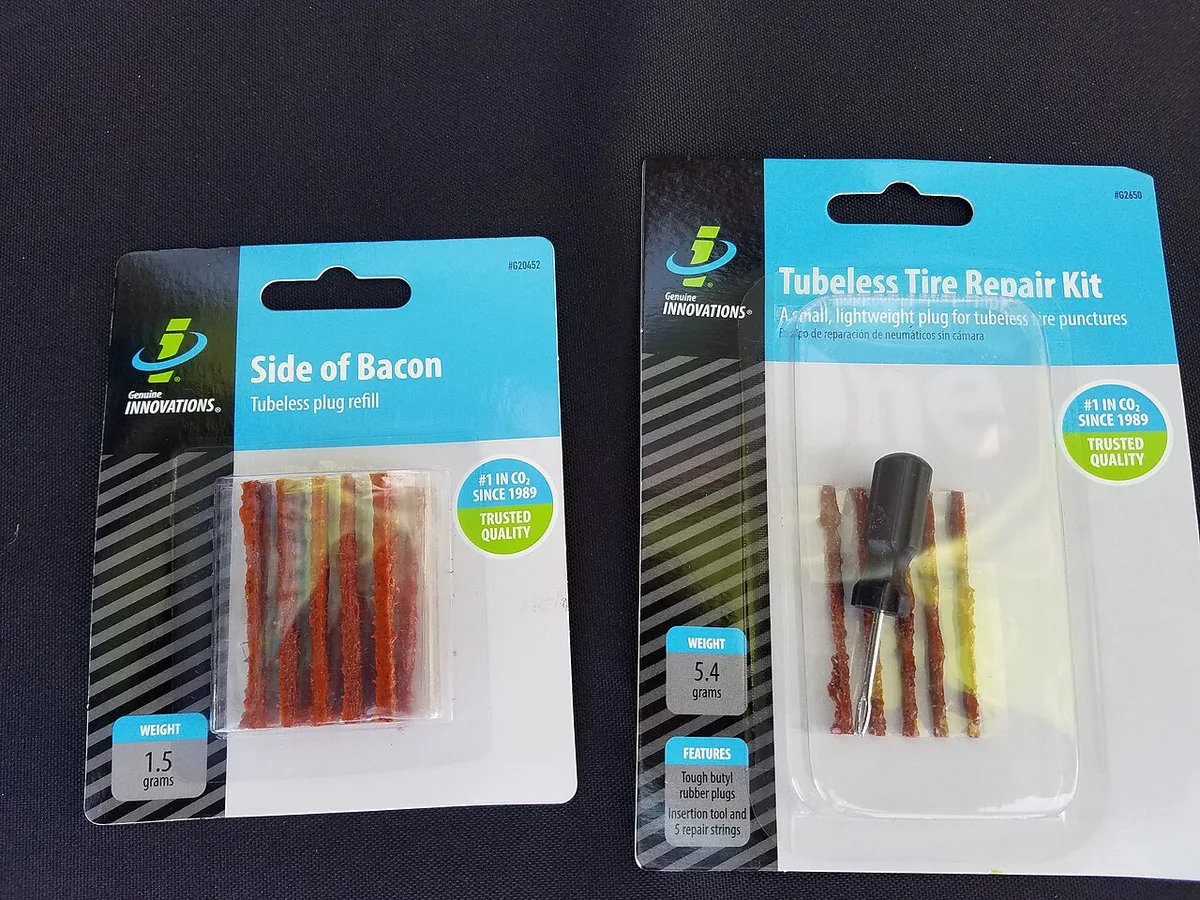
Image source: Wikimedia Commons / Richard Masoner / Cyclelicious (CC BY-SA)
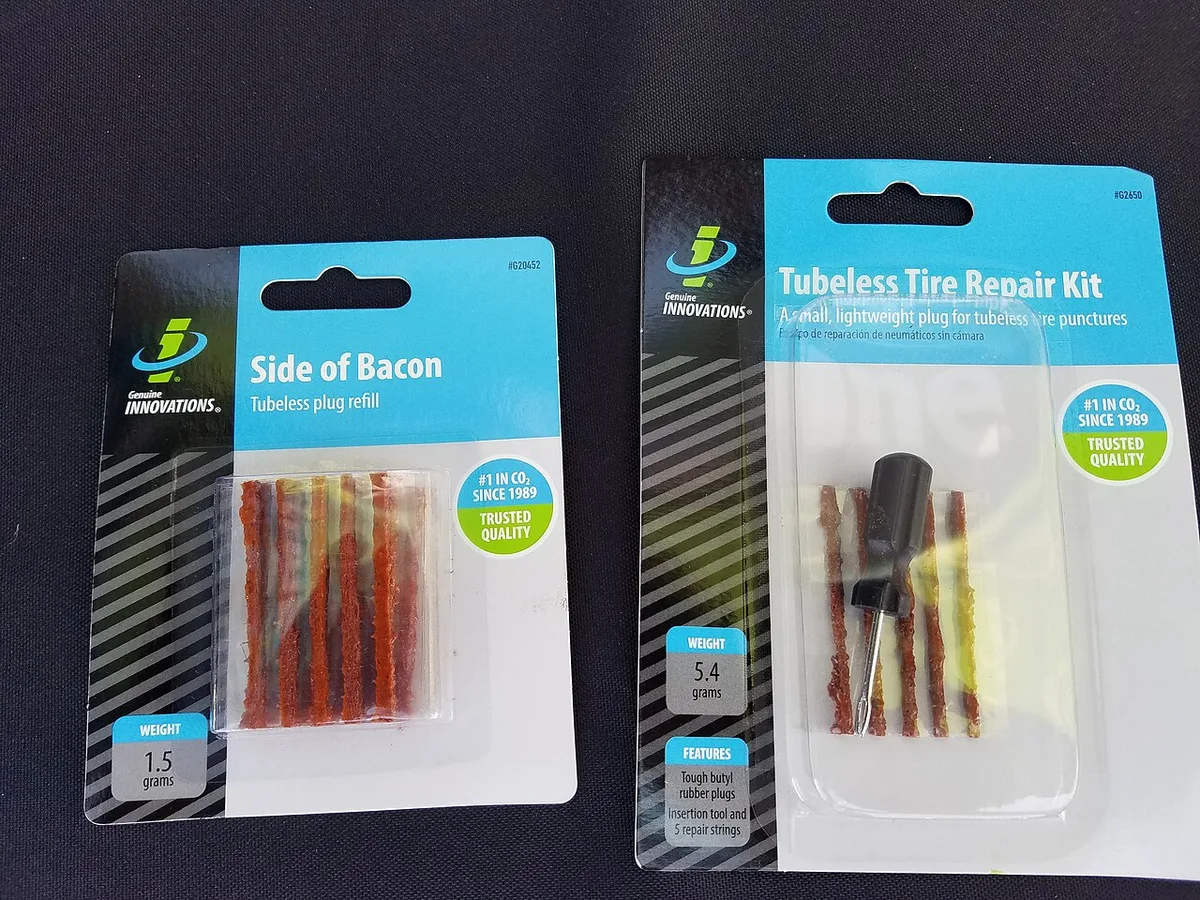
Image source: Wikimedia Commons / Richard Masoner / Cyclelicious (CC BY-SA)
The plug is made of vulcanized rubber that expands to fill the puncture hole. Manufacturer specifications require a Shore A hardness of 60‑70 for proper seal. When compressed, the plug creates a barrier that holds air until the tire is repaired.
| Component | Description |
|---|---|
| Plug kit | Rubber plug, rasp, sandpaper, glue |
| Plug insertion tool | Plugger gun or sturdy screwdriver |
| Tire pressure gauge | Digital or analog |
| Clean cloth and brush | For debris removal |
Compare this to the cost of a headlight bulb replacement, which often falls in the same price range, for a sense of replacement parts cost. If you need to tighten lug nuts later, a proper torque wrench is essential. For exact hardness and temperature ranges, refer to the ANSI D6079 guidelines.
Step‑by‑Step Decision Tree
Follow this decision tree to determine if a plug is safe and how to install it.
- Verify the tire is cool and has no visible sidewall damage.
- Locate the puncture and confirm it is in the tread, not the sidewall.
- Measure the hole; if larger than ¼ in, skip the plug and replace the tire.
- Select a plug sized to the puncture and clean the opening with sandpaper, similar to preparing a surface for installing accessories.
- Insert the plug using the plugger gun, compress until flush with the tread.
- Apply vulcanizing glue if the kit includes it, then let cure for 5 minutes per ANSI D6079 guidelines.
- Inflate to the vehicle’s recommended PSI and check for leaks.
- Test drive at 30 mph for ten miles; stop if pressure drops.
Costs, Safety & Legal Limits
As of 2026, plug kits typically cost $5 to $20, depending on brand and components. Compare this to the cost of a headlight bulb replacement, which often falls in the same price range, for a sense of replacement parts cost.
Safety requires wearing gloves and eye protection while inserting the plug. Just as you would inspect truck accessories before a trip, check the plug for proper seating to ensure safety.
Legal limits vary by state. Most follow DOT FMVSS 109 speed and pressure caps. For the exact speed and pressure caps, see the DOT FMVSS 109 page.
Some jurisdictions consider a plug a temporary repair, similar to how vehicle security features are regulated, so verify local rules before proceeding.
| Item | Approx. Cost |
|---|---|
| Plug kit | $5–$20 |
| Plug insertion tool | $0 (included) |
| Pressure gauge | $5 |
| Total | $15–$30 |
Frequently Asked Questions
Can I plug a run‑flat tire?
No. Run‑flat tires are designed to be driven without air, and plugging them can compromise the internal structure. Manufacturer guidelines explicitly prohibit plugs on run‑flat models.
Use a spare or professional repair instead. Driving on a plugged run‑flat may cause sudden failure and void warranty.
How long does a tire plug last?
A properly installed plug typically holds pressure for 50 to 100 miles or up to 50 mph, per industry testing. The exact duration depends on puncture size, tire age, and driving conditions. Plan to visit a shop for a permanent repair within that window.
Is a plug better than a spare tire?
A plug is faster and lighter, ideal for emergencies when a spare isn’t available. It provides temporary mobility at low speed, while a spare offers full tire performance. Choose a plug for quick roadside fixes.
Keep a spare for longer trips or when speed matters.
What if the plug leaks after a day?
If pressure drops within 24 hours, the puncture may be too large or the plug not seated correctly. Remove the plug, clean the hole, and reinstall with a new plug of the proper size. If leaks persist, replace the tire rather than risk a blowout.
Can I plug a tire in cold weather?
Cold temperatures stiffen the rubber plug, making insertion harder and the seal less reliable. Warm the plug with your hands or store it in a pocket before use. If the ambient temperature is below 20 °F, consider a professional repair or a spare instead.
