
Your 4WD light flashes and the truck stays in two-wheel drive. You need a clear look at how to replace a 4wd actuator before you pull the wrong part. The motor sits on the transfer case, so the job is about seeing the connector, bolts, and shift shaft.
Photos and diagrams matter more than a generic parts list.
Manufacturer specifications indicate a typical unit runs on 12 volts and mounts with two or three bolts. As of 2026, parts for common half-ton trucks still cost $25 to $150. Most DIY jobs take 30 minutes to two hours once the housing is in view.
Match what you see on the case before the first bolt comes out.
How to Replace a 4wd Actuator
How to replace a 4wd actuator starts with a visual match on the transfer case. Disconnect the battery before you touch any wires. Unbolt the old motor and unplug the harness.
Line up the new shaft with the shift linkage. Torque the bolts, then test 4WD engagement.
Visual Identification of the 4WD Actuator
A 4WD actuator is the electric motor that shifts the transfer case between 2WD and 4WD. You'll find it bolted to the case, usually on the side or the back. A useful photo shows a plastic housing, a locking plug, and a short shaft that enters the case.
Use these cues before you order a part.
| What you see | What it means |
|---|---|
| Black plastic housing | Electronic shift motor |
| Locking multi-pin plug | Release the tab before you pull |
| Two or three bolts | Model-specific mount |
| Gear teeth or a flat on the shaft | Alignment you must copy |
In our research, plug shape and bolt spacing change by model year more than housing color does. Silverado, F-150, and Ram units can look alike in a thumbnail. Trust the part on your truck.
If the dash light is flashing, pull codes with a basic code reader before you drop any shield.
Step-by-Step Visual Replacement Process
Work on level ground with the parking brake set. Disconnect the negative battery cable first. That kills power to the 12-volt circuit so you do not arc the plug.
If the housing sits low, simple wooden ramps give you a better view. Do not rush the connector. The lock tab is small, and it snaps if you pry on the motor side.
A diagram would show the tab on the harness, not on the actuator.
- Remove any shield that blocks the housing.
- Press the lock tab and pull the plug straight off.
- Mark the shaft flat with a paint pen if you can see it.
- Remove the mounting bolts with a hand socket.
- Slide the old actuator straight off the shaft.
- Set the new unit on that same flat or gear tooth.
- Snug the bolts, then torque them to the factory spec.
- Plug the harness in until the lock clicks.
- Reconnect the battery and cycle 2WD and 4WD.
Leave powered socket tools for lug nuts. These actuator bolts are small, and an impact can crack the plastic ears. Typical torque sits around 10 to 20 Nm, but your service manual is the one to follow.
If the shaft will not seat, stop. Forcing it shears the internal gears.
NHTSA groups drivetrain faults with overall vehicle safety. Shift through every mode in an empty lot before you trust 4WD on a slick road.
Key Visual Features and Components
The housing is usually glass-filled plastic with metal inserts around the bolts. A small DC motor inside turns a gear set that moves the shift fork. You will not see those gears until the unit is off the case.
A cutaway photo would show chipped teeth, a common failure past 100,000 miles.
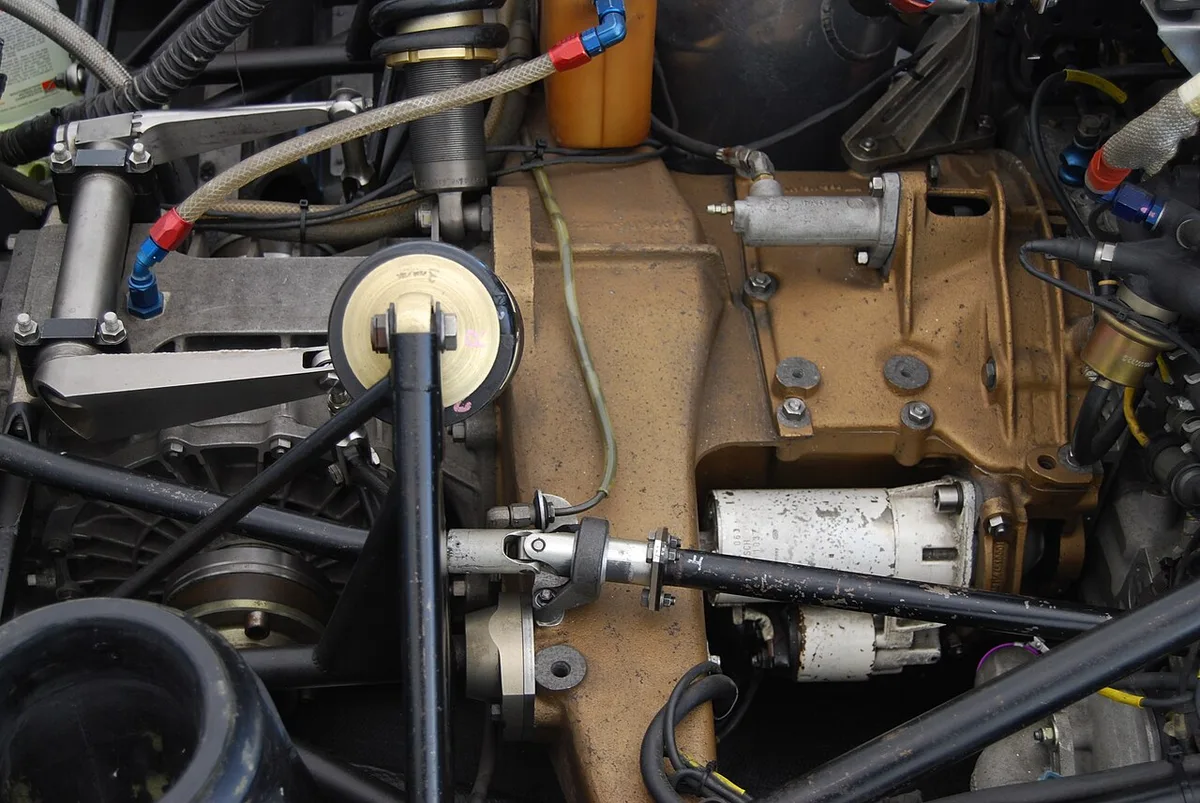
Image source: Wikimedia Commons / Bill Abbott (CC BY-SA)
Check the plug pins for green corrosion. Bent pins cause a failure to shift even with a new motor. The shaft end is a D-shape or a splined gear.
Match that shape exactly.
A spline that is close but wrong will bind as soon as you bolt it down. Thinner mounting tabs show up on some low-cost housings. Paying more for quality matters here, just as it does on steering parts.
OEM and decent aftermarket units both work when the shaft and plug match. If the bolt holes do not line up by eye, it is the wrong part.
If you nick a seal and see wetness, restore the right fluid level before any road test.
Common Visual Mistakes to Avoid
The biggest miss is orientation. The housing can look symmetrical, so people bolt the motor on backwards. The shaft flat fits only one way.
If it needs force, you have it turned the wrong way.
Watch for these visual errors.
- Breaking the connector lock with a screwdriver
- Reusing a cracked mounting ear
- Ignoring a wire rubbed shiny on the case
- Tightening until the plastic creeps
- Skipping the 4WD light check after the swap
Also look for a wire that has rubbed through the insulation. That bare spot throws the same light as a dead motor.
A new actuator will not fix a bad switch or a rubbed harness. Compare wire colors to the factory diagram before you condemn the motor. SAE practices sit behind those diagrams.
Your model manual is the copy you should follow on the truck.
Frequently Asked Questions
Where is the 4WD actuator located?
It bolts to the transfer case, on the side or the rear, behind or beside the transmission. You are looking for a small plastic motor with an electrical plug and two or three bolts. On many half-tons you can see it from under the truck once a shield is off.
Match the plug shape to your year before you buy.
How long does replacement take?
Plan on 30 minutes to two hours. Open access and a clean connector make it the short end. Rusted bolts, a skid plate, or a stubborn lock tab push you toward two hours.
The motor itself comes off in minutes once you can see the bolts.
Can I do this without a shop?
Yes, if you can see the housing and you own a socket set and a torque wrench. Disconnect the battery, align the shaft, and torque to the manual. Stop if the new unit will not sit flush.
That means the shift fork is off its mark, and forcing it ruins the gears.
What does a failing actuator look and sound like?
You may hear a click or a grind under the truck when you select 4WD, then nothing moves. The dash light flashes or stays on. Off the case, you often see chipped plastic gears.
A silent motor with a clean plug can still be dead, so a code check still helps.
Does a new actuator need programming?
Most bolt-on transfer case actuators do not need a dealer flash. They are motors, not coded modules. Clear stored codes, reconnect the battery, and cycle the switch.
If the light stays on after a correct install, check the plug pins before you book a shop visit.
