
A clunk over bumps or a wandering steering wheel often means you need to know how to replace a track bar. That bar, also called a panhard bar, stops a solid axle from sliding side to side. Worn bushings or a loose ball joint let the axle walk.
The steering then feels vague, and some trucks pick up death wobble at speed.
Factory service information sets the bolt torque, not a guess from a forum. As of 2026, a clean bolt-on job still runs about one to three hours. Rusted bolts or a damaged bracket can push it much longer.
Start by confirming the bar is actually the bad part.
How to Replace a Track Bar
How to replace a track bar starts with the axle supported. Match the new bar to front or rear. Unbolt the frame end and the axle end.
Center the axle, then install the new bar. Torque the bolts only at ride height.
When a Worn Track Bar Is Actually the Problem
A track bar is a lateral locating link. It does not steer the wheels. Control arms set the axle front to back.
The drag link and tie rod handle steering. Park on level ground with the tires planted. Have a helper turn the wheel left and right.
Watch the frame-side bracket and the axle mount. If either end shifts, the bushing, joint, or hole is worn.
A single clunk with no visible play can be a sway-bar link. A hard shake near highway speed makes the track bar a top suspect. It is still not the only cause.
Ball joints, caster, tire balance, and tie-rod ends cause the same shake. If the bar is already tight, pricier outer joints are worth a look before you buy another bar.
Also search open safety recalls for that VIN. Some solid-axle trucks have had track-bar hardware campaigns.
Pick the Bar: Front or Rear, Stock Height or Lifted
If the truck is at stock height and the old bar is straight, fit a fixed replacement. If the lift is past about 2 to 3 inches, a stock-length bar usually shoves the axle sideways. You then need an adjustable bar so you can recenter the housing.
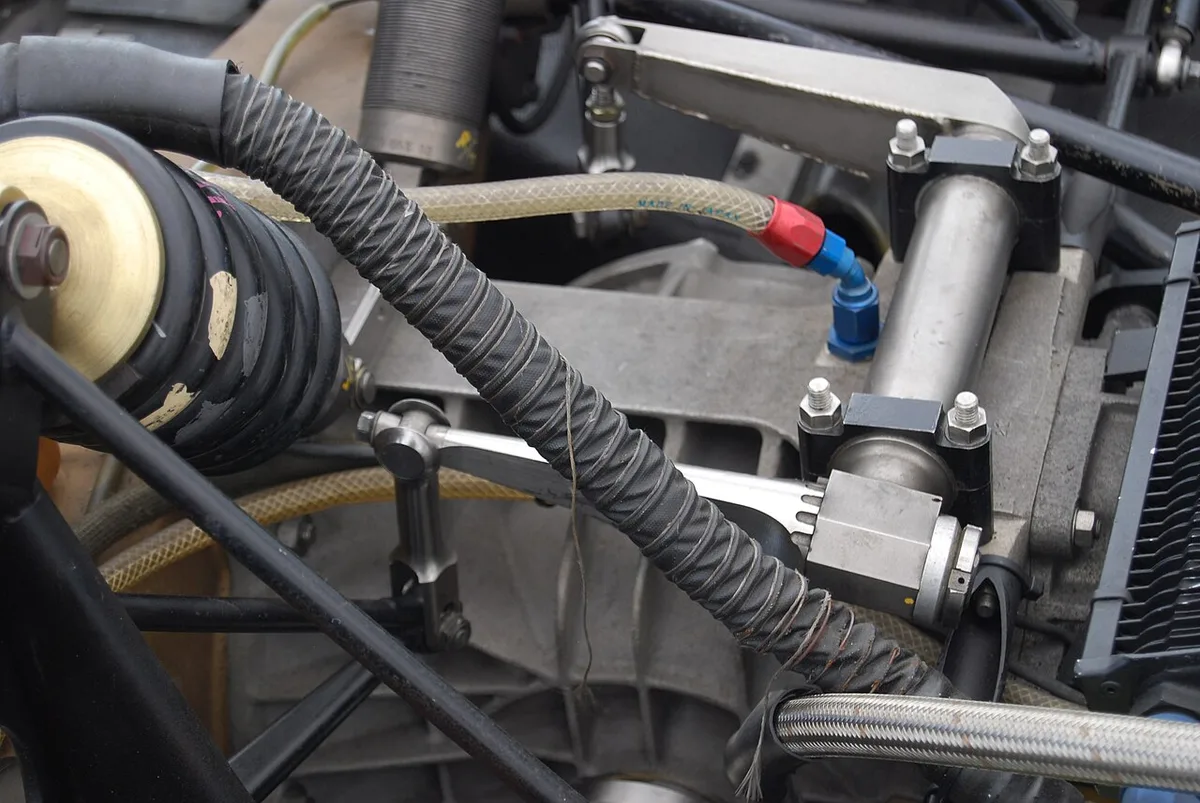
Image source: Wikimedia Commons / Bill Abbott (CC BY-SA)
A relocation bracket can work on a mild lift. It will not fix a bent bar. Front and rear bars do not swap, because length, bend, and bolt size differ.
Measure center to center at ride height before you order. Note which way the bend clears the differential or the exhaust.
Image source: Wikimedia Commons / Alan Wilson from Peterborough, Cambs, UK (CC BY-SA)
| What you find | What to install |
|---|---|
| Stock height, straight bar | Fixed OEM-style bar |
| Lift, or axle off center | Adjustable track bar |
| Oval holes in the bracket | Bracket repair, then the bar |
| Straight bar, worn bushing only | Bushing or joint rebuild |
Rubber stays quiet on the street. Polyurethane is firmer and can add noise. A heim joint holds the axle tight and needs regular checks.
Replace It and Torque the Bolts at Ride Height
Torque the bolts only at ride height. Service manuals we reviewed put the truck's weight on the tires first.
If a tire blocks the axle bolt, pull the wheel. Spinning those nuts free is the quick way out.
Chock the wheels and set the parking brake. Support the axle on jack stands before the last bolt comes out.
Soak the fasteners. Measure the old bar and mark the bend.
Unbolt the frame end and the axle end. Catch the bar as it comes free.
Set an adjustable bar so both tire-to-fender gaps match. Start both bolts by hand so you do not cross-thread the axle hole.
Do not torque the bar while the axle hangs. Twisted bushings tear on the first drive. Use simple wooden ramps only if they are rated for the truck and hold true ride height.
Bounce the bumper, then torque to the manual's spec.
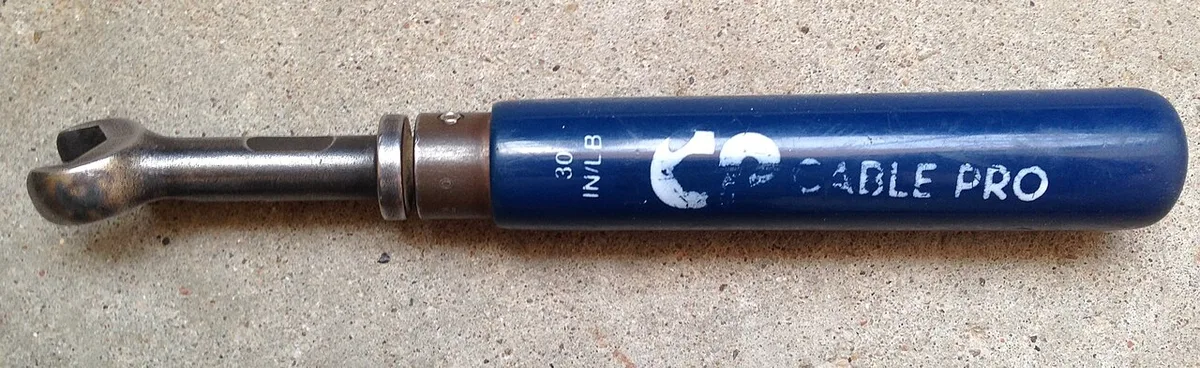
Image source: Wikimedia Commons / J.C. Fields (Talk) (Uploads) (CC BY-SA)
Many kits include Grade 8 bolts. That marking is an SAE strength grade, not a torque number.
Replace rusty, stretched, or one-time-use bolts. Use thread locker only when the factory procedure says so.
If the axle moved, recenter the steering wheel with the drag link. Book an alignment for toe.
Keep a calm hand position on the road test. Recheck torque after about 50 to 100 miles.
Mistakes That Leave the Axle Off-Center or the Clunk Intact
Image source: Wikimedia Commons / WhisperToMe
Match the tire-to-fender gap on both sides. If one side is tucked, the bar length is wrong.
- Torque in the air, and the new bushings preload. The clunk returns.
- A stock bar on a big lift pulls the axle off center. The wheel stays crooked.
- Oval bracket holes let a brand-new bar move. Repair the bracket first.
- Skip the drag link, and the steering wheel sits off to one side.
- Never drive with the bar disconnected. The axle can shift hard.
- A tight bar will not fix worn factory-style rod ends or bad ball joints.
If a bolt rounds off, stop and extract it. Forcing the new bar onto bad threads just moves the failure.
Frequently Asked Questions
How long does a track bar replacement take?
A straightforward swap takes about one to three hours. That assumes the bolts break free and the brackets are still round. Rusted hardware can add heat, extraction, or a bracket repair.
Plan closer to half a day if the frame bolts look crusty. The alignment stop comes after the axle is centered.
Do you need an alignment after replacing a track bar?
Yes, if the axle moved or the new bar is a different length. Recentering the housing changes toe and the steering wheel position. Have toe set and the wheel centered at minimum.
Check caster too if the control arms were changed. A same-length bar on a stock truck needs less work, but a check is still wise.
Can you drive with a bad track bar?
You should not. A loose bar lets the solid axle walk under the truck. You will feel wander, a clunk, or a hard shake.
At highway speed that shake can make the truck hard to hold straight. Park it until the bar, the bracket, and the related steering parts are tight.
Should track bar bolts be tightened in the air?
No. Torque them with the full weight of the vehicle on the suspension. Tightening while the axle hangs twists the bushings, and they tear early.
Use a torque wrench and the spec in the factory service manual. Recheck the bolts after about 50 to 100 miles of driving.
