
A sagging corner or a cracked bar is why most people search how to replace a torsion bar. This is not a casual unbolt-and-swap. The bar is a loaded spring.
Your year, make, adjuster condition, and actual bar damage decide the job.
Manufacturer specs treat ride height as a measurement, not a vibe. On many GM trucks that check is called Z-height, and the manual shows the two points. As of 2026, the safe order has not changed: unload the bar, match the side, then align the truck.
Start with the short version below.
How to Replace a Torsion Bar
How to replace a torsion bar starts with a fully unloaded bar. Support the frame on rated jack stands. Back off the adjuster until preload is gone.
Install the matching side with the same spline clock. Set ride height, then get a four-wheel alignment.
When to Replace a Torsion Bar
Replace the bar when it is cracked, permanently twisted, or broken. A low truck with a straight bar usually needs a height adjustment, not a new part.
In our research of service manuals, thread left on the adjuster means you turn the bolt first. If one side will not rise, or a spline shows a crack, replacement is the branch you take.
Replace the torsion key when the hex is rounded or the key is cracked. A bad key lets the bar slip even when the shaft looks fine. Do not jack the frame from a factory tow hook.
That point is for recovery, not support.
The National Highway Traffic Safety Administration treats poor suspension condition as a handling risk. A nose-down truck steers and brakes differently than the designer intended. Fix the height before highway speeds.
How Torsion Bars Work and Your Vehicle's Setup
A torsion bar suspension uses a spring-steel shaft that twists under load. One splined end sits in the lower control arm. The other sits in a crossmember anchor with a torsion key and an adjuster bolt.
The adjuster changes preload only. It does not change spring rate. A thicker bar, or a higher-rate aftermarket bar, is what stiffens the front end.
Left-hand and right-hand bars are usually directional. Swap them and the twist fights the arm. Match diameter, length, and spline count to the listing for that exact truck.
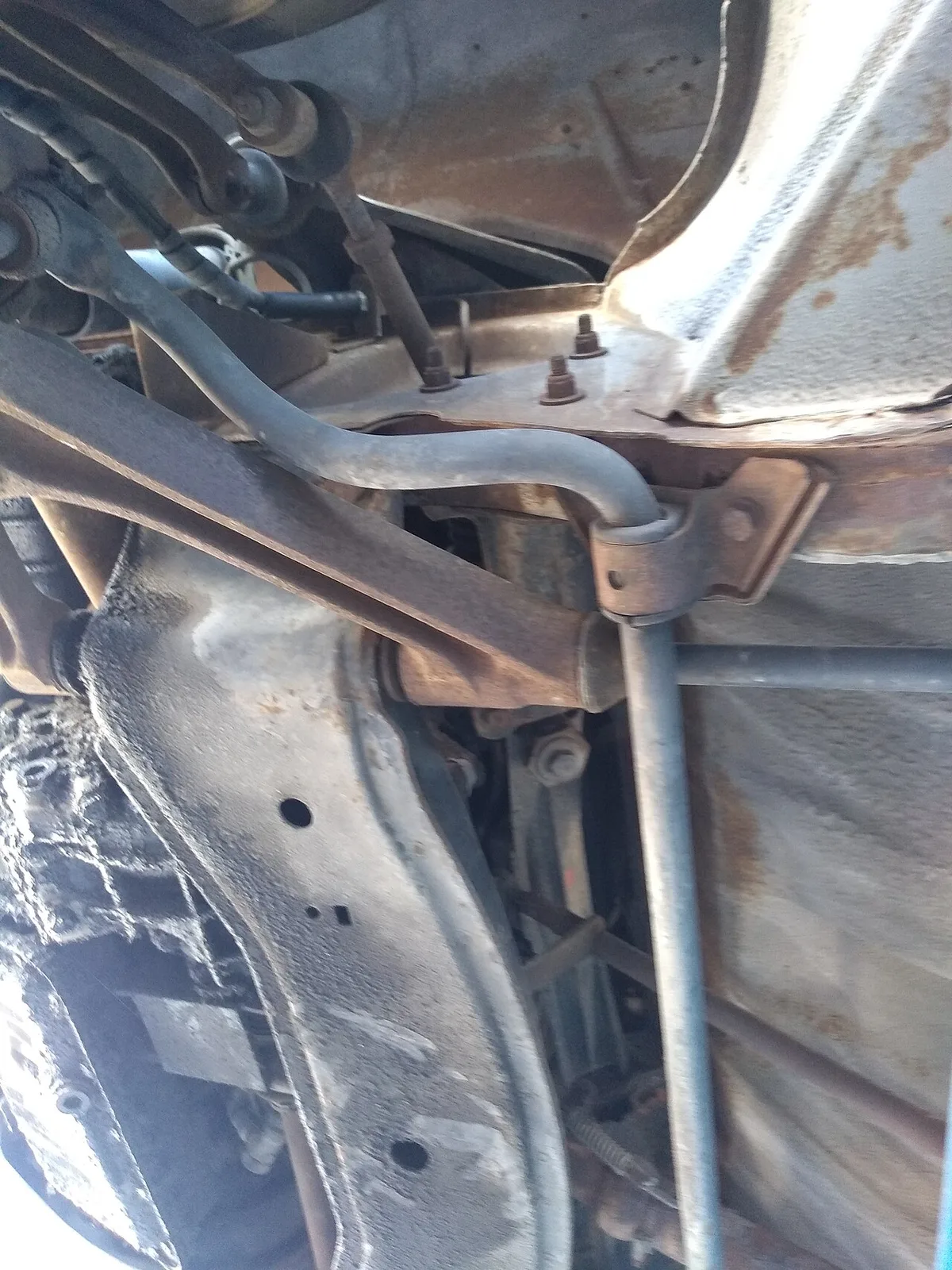
Image source: Wikimedia Commons / Soyuz72 (CC BY-SA)
SAE International treats spring rate and ride height as engineered specs. If your service manual is missing, stop before you unload anything.
Measure both sides on level ground first. Use one repeatable point, such as fender lip to hub center, plus Z-height if the manual lists it. Those numbers are your target after the swap.
Decision Tree: Replace vs Reindex and DIY vs Shop
Use this branch before you order parts.
| What you find | What to do |
|---|---|
| Bar cracked, bent, or broken | Replace the bar and inspect the key |
| Height low, bar straight, thread left | Adjust the bolt. Do not replace yet |
| Key cracked or splines rounded | Replace the key, then recheck the bar |
| Adjuster frozen after the bar is unloaded | Free it carefully, or use a shop |
| You tow heavy and want a stiffer front | Fit a higher-rate bar, then align |
| No stands, no manual, or heavy rust | Stop. This is a shop job |
DIY fits when the adjuster turns, the frame can sit on stands, and you have the torque specs. A shop fits when a loaded bar will not move, or when bushings and ball joints are worn out too.
Alignment often shows play in the steering. That is the time to price better-grade linkage parts. If you want a known chain, compare a familiar parts-counter brand before you buy.
Step-by-Step Replacement Process
Gather a service manual, a floor jack, and rated stands. You also need the adjuster socket, a torque wrench, a tape measure, penetrating oil, and eye protection.
Chock the rear wheels. Loosen the front lug nuts only if the wheels come off. If you break them free with a powered socket gun, finish the nuts by hand to spec.
Stripped studs mean fresh wheel fasteners, not a reused junk nut.
- Record ride height on both sides.
- Set the frame on jack stands rated for the truck. A homemade ramp setup can help you roll up. It is not a stand.
- Measure how far the adjuster bolt sticks out.
- Back the adjuster out until the torsion key is loose. The bar must be unloaded first.
- Remove the anchor hardware only after the key is loose. Slide the bar out the way the manual shows.
- Compare length, diameter, and side with the new bar.
- Install it on the same spline clock, with the key in the same orientation.
- Thread the adjuster to the old measurement, a little low.
- Torque the anchor fasteners to the service spec.
- Set the truck down, roll it, and bounce the front so the bushings settle.
- Measure again and adjust each side a little at a time.
- Get a four-wheel alignment before normal driving.
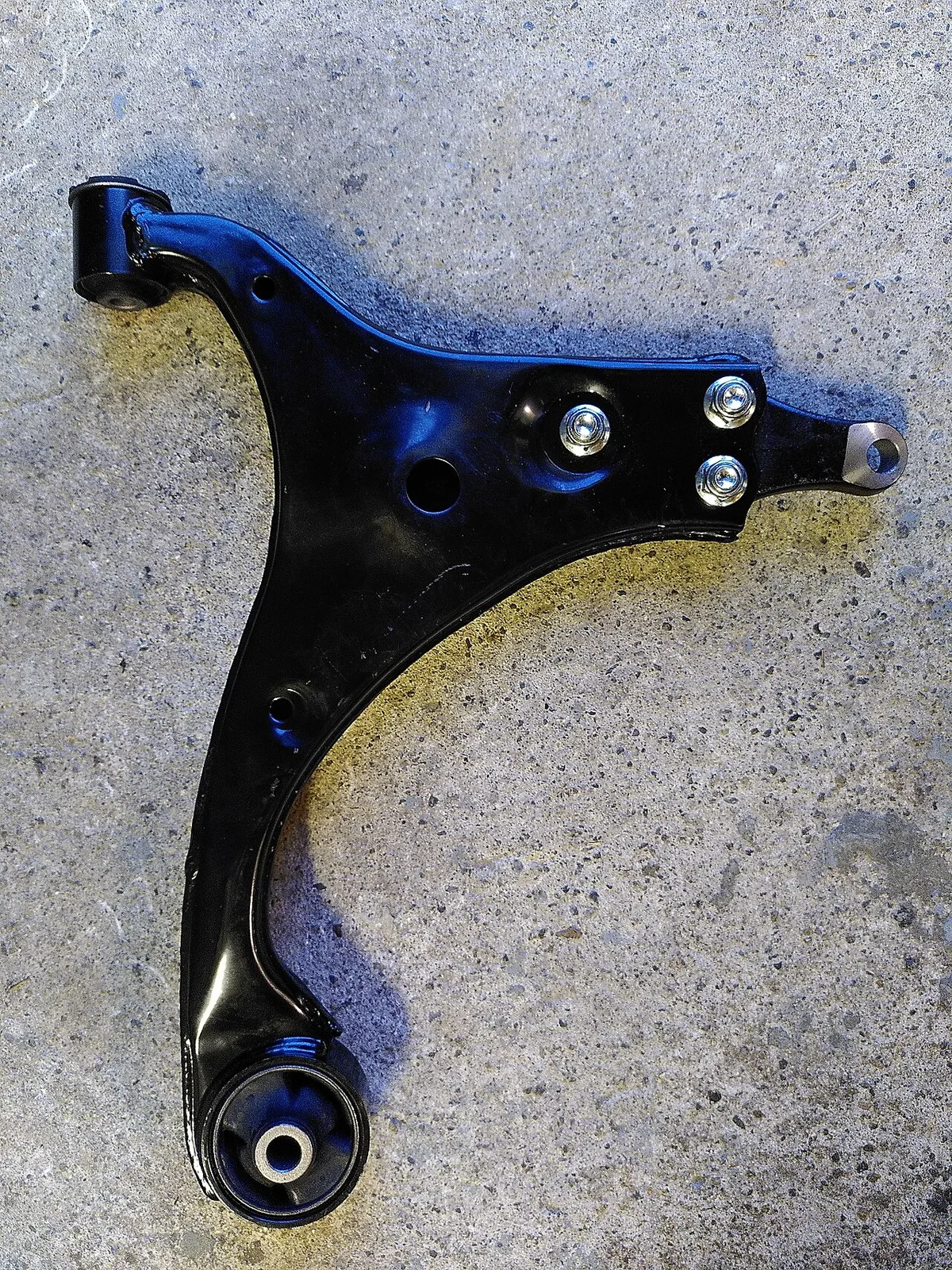
Image source: Wikimedia Commons / So9q (CC BY-SA)
The lower control arm is where one end of the bar anchors. If that arm drops hard while the adjuster is still tight, the bar is still loaded. Stop and unload it.
People swap left and right bars. They also pull an anchor while the adjuster is still tight.
Others max one side to hide a sagging frame. Then they skip the alignment and the truck wanders.
Wear eye protection and keep hands clear of the key. Never heat a torsion bar to free it. If the adjuster rounds off while the bar is still twisted, leave it for a shop.
Frequently Asked Questions
Can I just crank the torsion bars instead of replacing them?
Yes, if the bar is straight and the adjuster still has thread. Cranking adds preload and lifts the nose. It does not fix a cracked bar or one that has taken a set.
Measure after the truck settles, and align if the change is large.
How long does torsion bar replacement take?
With free adjusters and the right bar, many driveway jobs take a few hours. Seized bolts or a stuck key can take the rest of the day. Rust in salt-belt states is the usual delay.
Plan the alignment as its own stop once the height is set.
Are left and right torsion bars interchangeable?
No. Most trucks use directional bars with different spline clocks. A swapped bar twists the wrong way and will not hold ride height.
Match the side in the parts listing before it goes in. Keep the old bar as a pattern until the new one is seated.
Do I need an alignment after replacing a torsion bar?
Yes. Ride height changes caster, camber, and toe. Driving on the old settings wears the tires and can make the truck pull.
Book a four-wheel alignment after the height is set and the suspension has settled. Do that before highway miles.
What if the adjuster bolt will not turn?
Use the right socket and penetrating oil only after you know how that truck unloads. If the bolt still will not move, stop. Do not hammer or cut a bar that is still twisted.
A shop can unload that stored energy without the bar letting go.
