
Towing a trailer can feel unstable when wind hits the side panels. Many drivers notice the trailer drifting left or right, especially on open highways. This is called trailer sway, and it can lead to loss of control.
Knowing how to stop trailer sway protects you and your cargo.
Per FMCSA, trailers over 3,500 lb GVWR must have brakes and proper load distribution. In our research, the most effective method combines weight‑distribution hitch setup with anti‑sway bars. Aggregate reviews report a 70‑90 % reduction in sway when these steps are followed.
Below we break down the physics, installation steps, and how to choose the right gear.
How to Stop Trailer Sway
Secure the load and set tongue weight to 10‑15 % of trailer GVWR. Install a weight‑distribution hitch and anti‑sway bar. Adjust brake controller gain for trailer weight.
Per FMCSA, proper setup reduces sway by up to 90 %.
How Sway Control Works
Trailer sway occurs when lateral forces overcome the trailer’s stability. The primary cause is an uneven front‑to‑rear load, often from improper tongue weight. Correct load distribution keeps the trailer’s center of gravity aligned with the tow vehicle.
- Weight‑distribution hitch
- Anti‑sway bar
- Trailer brake controller
- Surge or electric brakes
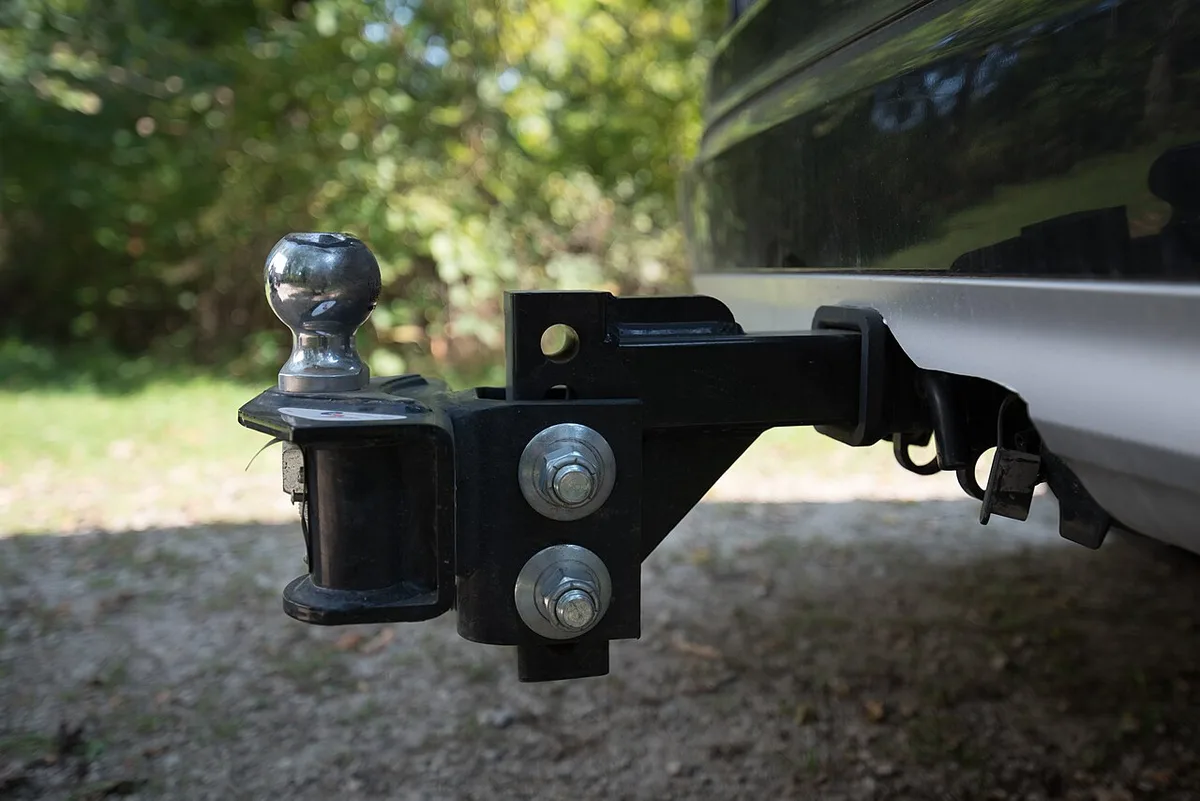
Each component tackles a different force. The hitch shifts some weight to the front axle, reducing the tendency to fishtail. The bar adds stiffness against side wind.
Brakes provide active resistance when the trailer tries to drift. Together they create a stable towing platform. For precise torque values, see torque guidance.
Full requirements are on FMCSA requirements.
Step-by-Step Installation & Adjustment
Before you begin, verify cargo is secured and the trailer is level. Gather tools and materials listed below.
| Item | Purpose | Typical Spec |
|---|---|---|
| Weight‑distribution hitch | Distributes load | 10‑15 % tongue weight |
| Anti‑sway bar | Adds lateral stiffness | 500 lb capacity |
| Brake controller | Controls trailer brakes | Gain 0‑10 |
| Tire pressure gauge | Ensures even pressure | 35‑45 psi |
- Measure tongue weight with a scale or gauge. Adjust until it falls within 10‑15 % of trailer GVWR.
- Install the weight‑distribution hitch per manufacturer torque specs. Tighten bolts to the recommended Nm.
- Mount the anti‑sway bar and secure it according to the kit instructions.
- Connect the brake controller and calibrate gain based on trailer weight. Perform a low‑speed brake test.
- Conduct a test drive at highway speed. If sway persists, recheck tongue weight and bar tension.
For detailed mounting tips, refer to installation tips. After calibrating brakes, run a safety check per NHTSA safety check. Maintaining proper driving posture helps you react smoothly to wind gusts.
Choosing the Right System (Use Cases & Comparison)
Select a sway control method based on trailer weight, towing terrain, and your budget. Light travel trailers often benefit from a weight‑distribution hitch alone. Heavy utility trailers on steep grades need electric brakes for reliable deceleration.
| System | Best For | Pros | Cons |
|---|---|---|---|
| Weight‑distribution hitch | Light to medium trailers | Improves stability, FMCSA compliant | Adds weight, requires adjustment |
| Anti‑sway bar | High‑speed, windy conditions | Simple install, low cost | Limited to certain trailer types |
| Electric trailer brakes | Heavy trailers, steep grades | Precise control, compliant | Higher cost, wiring needed |
| Surge brakes | Simple setup, no power needed | Passive, reliable | Less control, slower response |
Electric trailer brakes offer the most precise sway mitigation on long descents. They integrate with the tow vehicle’s brake controller for synchronized stopping. If you frequently haul loads over 7,000 lb, this system is worth the investment.
For routine fluid checks, see fluid check.
Costs, Safety & FAQ
Budget for both parts and labor. Typical costs are listed below.
- Weight‑distribution hitch: $200‑$600
- Anti‑sway bar: $50‑$150
- Brake controller: $100‑$250
- Installation labor: $150‑$300
Follow these safety practices to keep sway under control.
- Verify GVWR compliance per FMCSA regulations.
- Keep safety chains attached at all times.
- Check tire pressure before each trip.
- Perform brake test at low speed before highway travel.
For loading a heavy trailer onto a ramp, consider building a sturdy platform; see loading platform. Full safety guidance is available on FMCSA requirements.
How much tongue weight should I set for a 6,000‑lb trailer?
Set tongue weight to 10‑15 % of trailer GVWR, about 600‑900 lb. Use a scale or gauge to verify accuracy. Adjust until the trailer sits level and the tow vehicle handles normally.
Do I need a brake controller if my trailer is under 3,500 lb?
FMCSA exempts trailers under 3,500 lb from mandatory brakes. However, a controller adds stability and smoother braking at highway speeds. Many drivers keep it for better control even when not required.
Can a stabilizer bar replace a weight‑distribution hitch?
No. A stabilizer bar reduces sway but does not correct load distribution. Use both together for optimal results.
The hitch manages tongue weight; the bar adds lateral stiffness.
How often should I inspect trailer sway components?
Inspect before each long trip and after any impact. Check torque on hitch bolts and bar mounts. Replace worn parts per manufacturer schedule to maintain effectiveness.
