
Symptoms of a bad crankshaft position sensor can leave you stranded or cause the engine to misfire. You may notice the check engine light on or the vehicle struggling to maintain speed. This occurs because the sensor sends vital signals to the engine control module about the crankshaft's position and speed.
Manufacturer specifications indicate these sensors often fail between 80,000 and 120,000 miles. Ignoring the symptoms risks catastrophic engine damage that can exceed $2,000 in repairs. We'll explain the core facts and safe steps ahead as of 2026.
Symptoms of a Bad Crankshaft Position Sensor
Symptoms of a bad crankshaft position sensor include rough idle and hesitation. You may get a check engine light with codes like P0335. The engine could fail to start at all.
These signs usually appear in vehicles from 2000 onward. Catching them early avoids bigger problems.
Why Catching Symptoms of a Bad Crankshaft Position Sensor Early Prevents Engine Damage
A bad crankshaft position sensor failure can destroy your engine in minutes. The engine control module depends on precise RPM and position signals to run fuel injection and ignition timing. When the sensor gives false data the engine may overheat or knock.
Risk factors include aftermarket sensors that fail to match factory tolerances. Wiring harness damage from road salt or debris creates intermittent issues. High mileage vehicles see these failures more often.
Aggregate data shows catching the problem before it worsens saves around $1,500 on average. You should act fast to avoid towing fees or stranding. For more on related engine problems check out spark plug issues
Core Facts: How a Crankshaft Position Sensor Works With the Engine Control Module
The crankshaft position sensor detects the position and speed of the crankshaft. It uses either Hall effect technology or a variable reluctance coil. The engine control module uses this information to time fuel injection and spark.
Manufacturer specs confirm the sensor outputs a square wave signal. This signal helps the ECM keep the engine running smoothly. A faulty sensor sends false data causing all sorts of performance issues.
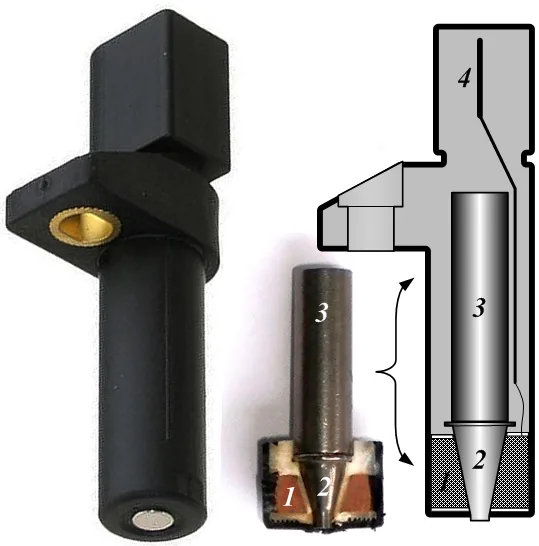
Image source: Wikimedia Commons / Tamasflex (CC BY-SA)
The image shows what a typical crankshaft position sensor looks like. It is mounted near the timing belt area in most vehicles.
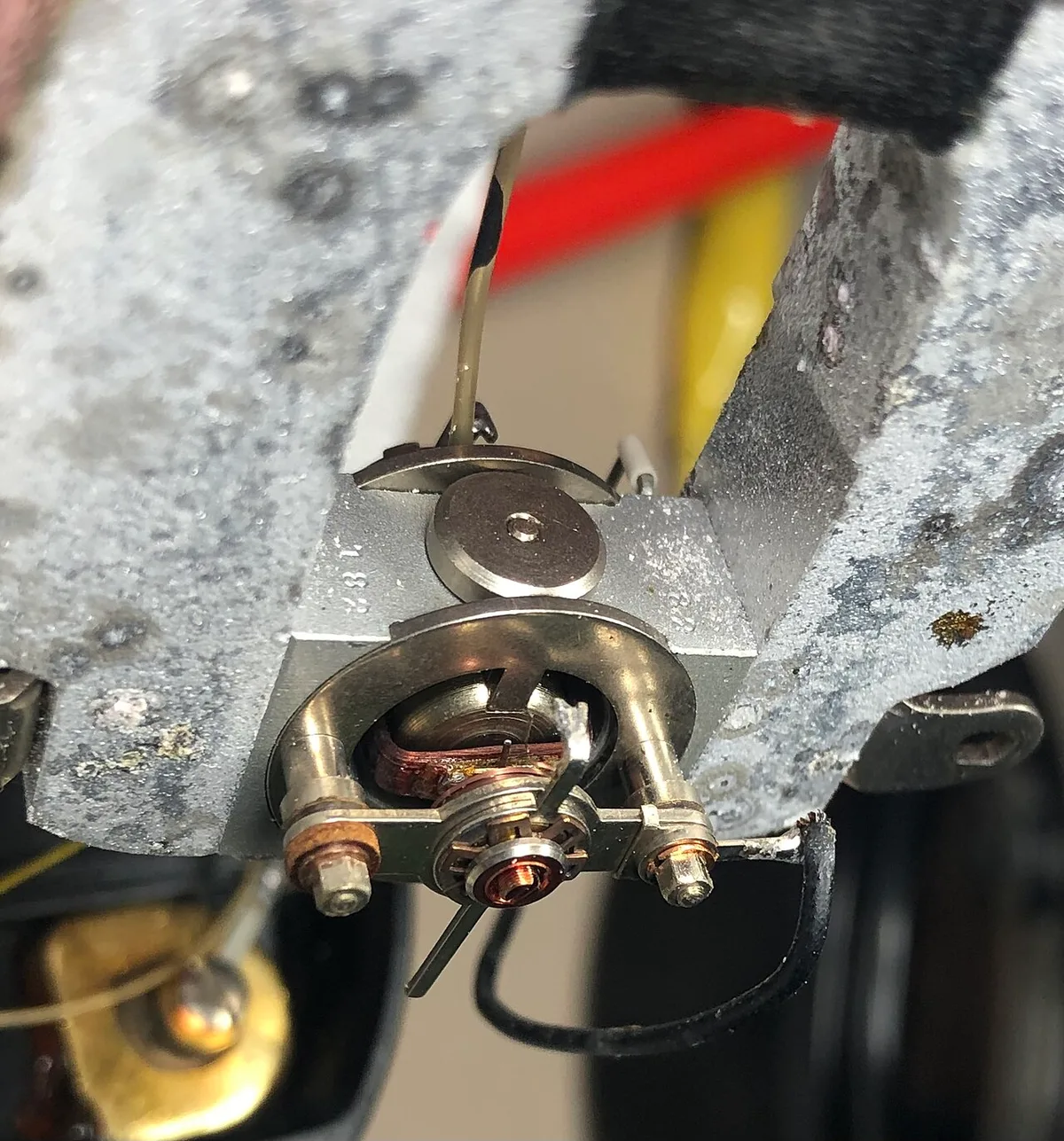
Image source: Wikimedia Commons / Pokiiri (CC BY-SA)
This magnetic pickup coil is key to its function. It generates voltage based on the reluctor wheel's movement. Without it the ECM cannot accurately control the engine.
In vehicles with timing chains the sensor prevents interference. Variable reluctance sensors remain common in older models but Hall effect is standard now.
Common Symptoms and Risk Factors
Common symptoms of a bad crankshaft position sensor include rough idle and hesitation. You may get a check engine light with codes like P0335 or P0336. The engine could fail to start at all.
These signs usually appear in vehicles from 2000 onward.
Risk factors include aftermarket sensors that fail to match factory tolerances. Wiring harness damage from road salt or debris creates intermittent issues. High mileage vehicles see these failures more often.
Damaged reluctor wheel teeth also trigger false readings. Ignoring these overlaps with other sensor problems wastes time and money.
Safe Testing Methods and When to Seek Professional Help
Safe testing starts with a visual inspection of the sensor and wiring for damage or corrosion. Use a multimeter to check resistance which should read between 500 and 1000 ohms. Scan for diagnostic trouble codes using an OBD-II tool to catch P0335 or P0336.
Analyze the signal waveform with advanced equipment if basic tests fail. Replace the sensor and perform ECM relearn if needed. For buying an obd2 scanner see how to buy an obd2 scanner
| Test Method | Expected Value | What It Means |
|---|---|---|
| Multimeter | 500-1000 ohms | Good sensor |
| Voltage test | 5V signal | Proper operation |
| Oscilloscope | Square wave pattern | Accurate waveform |
| Scan tool | P0335 or P0336 | Faulty sensor detected |
When to seek professional help if you lack the tools or experience or if the vehicle is under warranty. According to EPA OBD-II regulations accurate diagnostics remain required for emissions compliance. A bad sensor can also damage the catalytic converter.
Always verify timing belt tension after any repair.
